



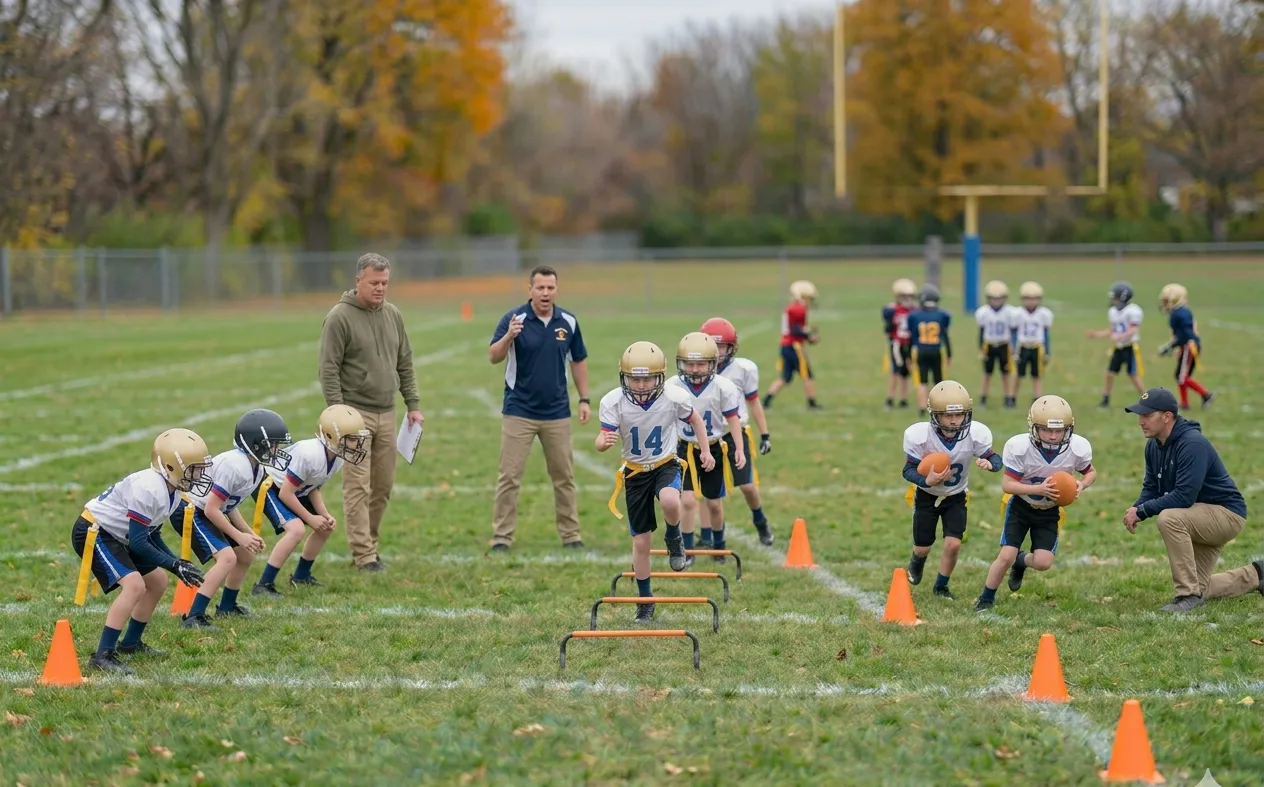
When I first started learning American football, I quickly realized that trying advanced moves too soon only led to mistakes. The biggest improvements came from practicing the basics first. The best football drills for beginners focus on footwork, passing, catching, agility, and ball security because these skills build the foundation every player needs before learning more advanced techniques or position-specific drills.
Whether you are a new player, a parent helping your child practice, or a coach planning a beginner session, this guide will help you start the right way. You’ll learn simple drills with easy setup instructions, step-by-step guidance, recommended repetitions, coaching tips, common mistakes to avoid, and a short practice plan that helps turn basic skills into confident game performance. . If you’re completely new to the game, start with our Football Fundamentals Drills guide before moving on to these beginner drills. To improve your movement and coordination alongside this guide, you can also practice our Football Speed & Agility Drills for Beginners.
What Are the Best Football Drills for Beginners?
The best football drills for beginners are High Knees, Quick Feet Ladder Drills, Four-Corner Cone Drills, Zig-Zag Cone Drills, One-Knee Throwing Drills, Target Passing Drills, Hand Catch Drills, High-and-Tight Ball Carry Drills, Basic Route-Running Drills, and Snap Exchange Drills. Together, these simple American football drills help beginners build footwork, balance, passing accuracy, catching technique, agility, and ball security before moving on to more advanced position-specific skills.
Most beginners should practice these drills at a controlled pace, focus on proper technique first, and increase speed only after they can perform each movement with confidence and consistency. If you are not sure where to begin, check out What are some basic football drills for beginners? Once you feel comfortable with the fundamentals, you can move on to What are the best quarterback football drills? to improve your passing, footwork, and pocket movement.
Key Takeaways
-
- Beginner players should focus on footwork, catching, and ball control.
-
- Simple drills build strong football fundamentals.
-
- Practice sessions should include warm-ups, agility drills, passing, and catching.
-
- Short practice sessions done regularly improve skills faster.
-
- Safety and correct technique are important for youth players.
Who Should Use These Football Drills?
These beginner football drills are suitable for:
- New American football players learning the basics
- Youth players building fundamental skills
- Parents practicing with their children at home
- Coaches planning beginner-friendly practice sessions
- Quarterbacks developing passing accuracy and footwork
- Wide receivers improving catching and route-running skills
- Running backs practicing ball security and agility
- Defensive players working on footwork, balance, and change of direction
- Players returning to football after a long break
- Anyone looking to improve basic football skills before learning advanced techniques
Beginner Practice Checklist
Before you begin, make sure you have the basics ready. A simple setup helps you focus on learning the drills instead of stopping to look for equipment.
- Football
- Four to six cones or training markers
- Safe, open practice area
- Athletic shoes or football cleats suitable for the playing surface
- Water bottle
- Comfortable athletic clothing
- Training partner (optional for passing and catching drills)
Coach’s Tip: Take a minute to inspect the practice area before every session. Remove any obstacles and avoid uneven or slippery surfaces so beginners can focus on proper technique safely
Skills You’ll Build with These Football Drills
- Footwork
- Passing accuracy
- Catching technique
- Ball security
- Agility and change of direction
- Speed and acceleration
- Balance and body control
- Coordination
- Reaction time
- Football confidence and game awareness
Beginner Football Drills at a Glance
| Drill | Primary Skill | Best For |
|---|---|---|
| High Knees | Running mechanics | Warm-up and coordination |
| Quick Feet Ladder Drill | Foot speed | Faster feet and coordination |
| Four-Corner Cone Drill | Agility | Change of direction and body control |
| Zig-Zag Cone Drill | Cutting ability | Balance and quick direction changes |
| One-Knee Throwing Drill | Throwing mechanics | Passing accuracy and arm technique |
| Target Passing Drill | Passing accuracy | Ball placement and consistency |
| Hand Catch Drill | Catching | Hand-eye coordination and receiving skills |
| High-and-Tight Ball Carry Drill | Ball security | Protecting the football while running |
| Basic Route-Running Drill | Route running | Timing, footwork, and separation |
| Snap Exchange Drill | Ball handling | Quarterback-center exchange fundamentals |
Football Drills by Skill
Learning football is easier when you focus on one skill at a time. The beginner football drills below are grouped by skill to help you improve movement, passing, catching, ball security, and position-specific techniques in a logical order.
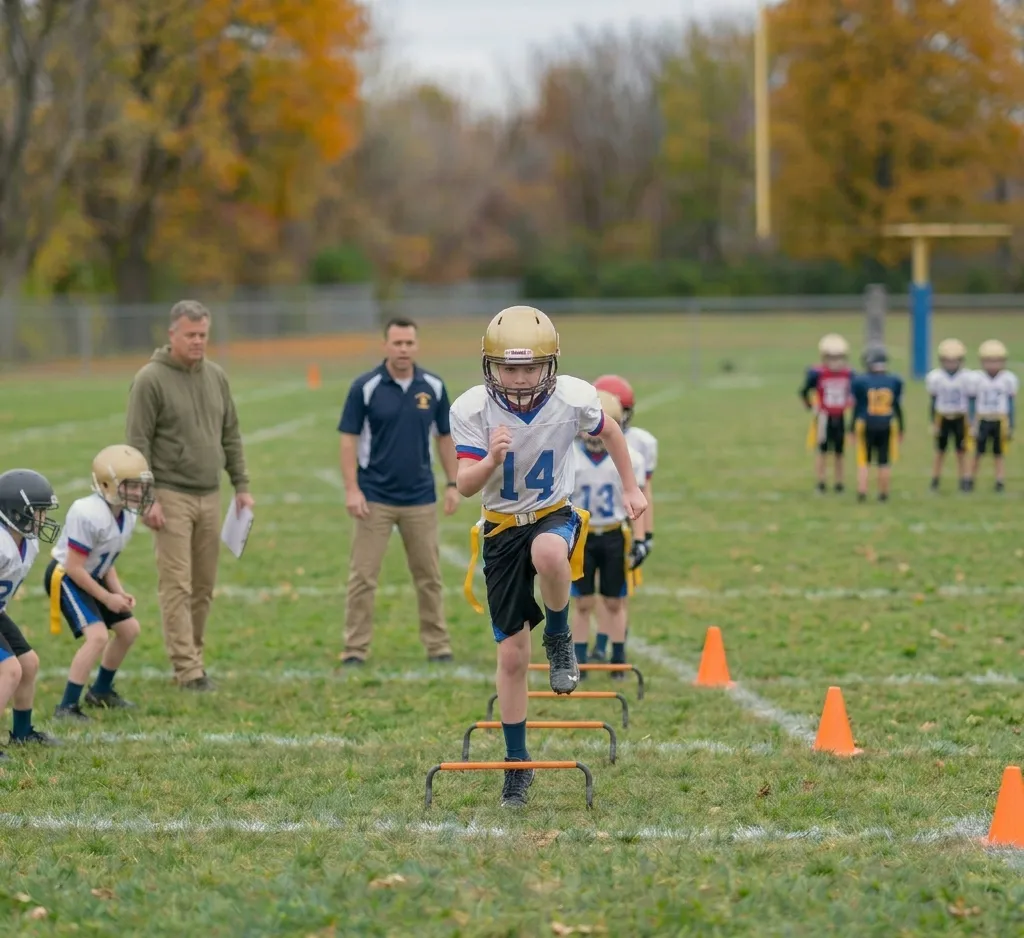
High Knees Drill
Steps
-
- Stand straight
- Start jogging slowly
- Lift each knee to waist height
- Move forward while doing the drill
This drill improves coordination and speed.
Common Mistakes
- Leaning too far backward while running.
- Lifting the knees too low.
- Landing heavily on the feet.
- Looking down instead of keeping the eyes forward.
- Moving too fast before learning the correct form.
Coach’s Tip
Start at a slow pace and focus on lifting each knee to waist height. Keep your chest up, land softly on the balls of your feet, and swing your arms naturally to improve balance and coordination.
Recommended Reps: Perform 2–3 sets of 20–30 seconds, resting 30–45 seconds between sets
Quick Feet Ladder Drill
Steps
-
- Place a ladder on the ground
- Step quickly into each square
- Keep your feet light and fast
Beginner players should focus on technique before speed. Proper footwork and catching form help players improve faster during early training. New coaches can also use our First Day Football Practice Drills to organize beginner training sessions.
Agility Football Drills for Beginners
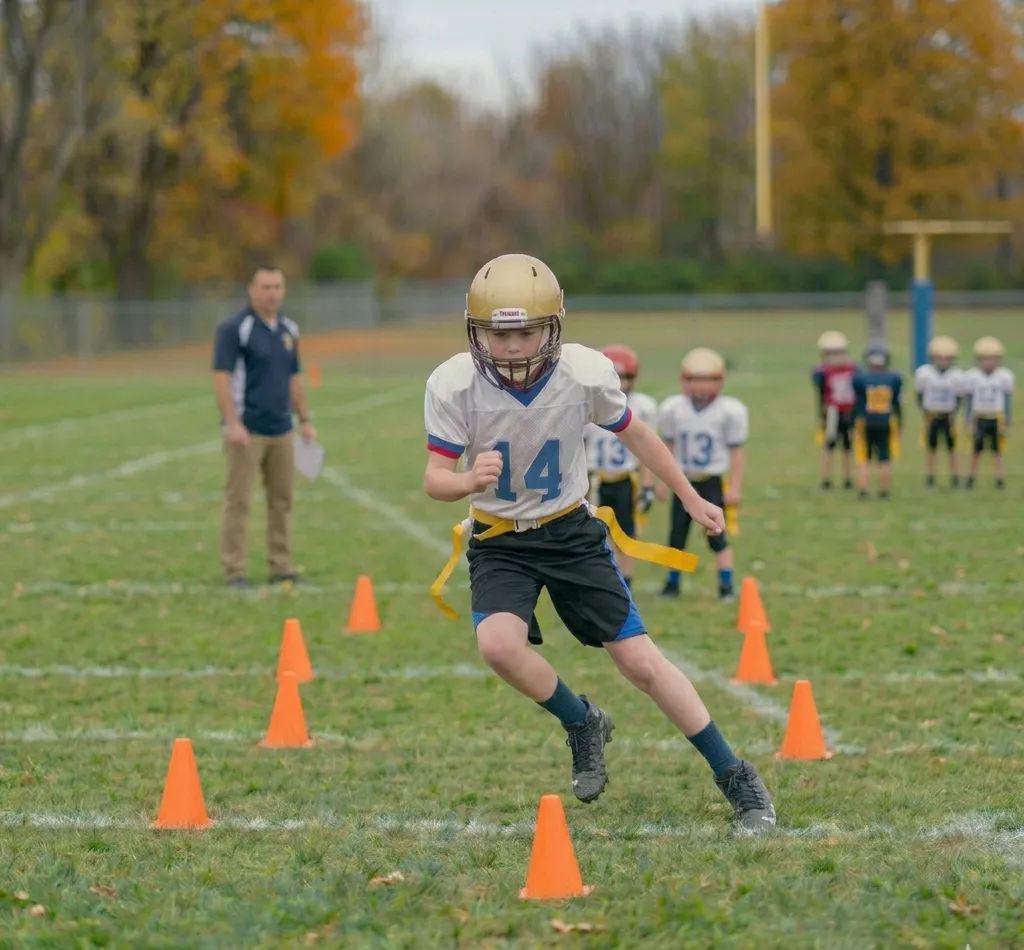
4-Corner Cone Drill
Steps
-
- Place four cones in a square
- Sprint from one cone to another
- Once you are comfortable with this drill, try our Football Cone Drills to practice more movement patterns.
Common Mistakes
- Standing too upright while changing direction.
- Taking long steps around the cones.
- Crossing your feet during turns.
- Looking down instead of keeping your eyes forward.
- Slowing down too much before each cone.
Coach’s Tip
Stay low with your knees slightly bent and keep your chest over your feet. Take short, quick steps around each cone and plant your outside foot firmly before changing direction. Focus on smooth movement and good control before increasing your speed.
Zig-Zag Cone Drill
Steps
-
- Place cones in a zig-zag line
- Run around each cone
- Keep steps short and controlled
Common Mistakes
- Taking wide turns around the cones.
- Crossing your feet while changing direction.
- Looking down instead of looking ahead.
- Taking long, slow steps between cones.
- Losing balance during quick cuts.
Coach’s Tip
Keep your knees bent and stay low throughout the drill. Use short, quick steps and plant your outside foot firmly before changing direction. Keep your eyes forward and focus on smooth, controlled movement before increasing your speed.
Passing and Throwing Drills for Beginners
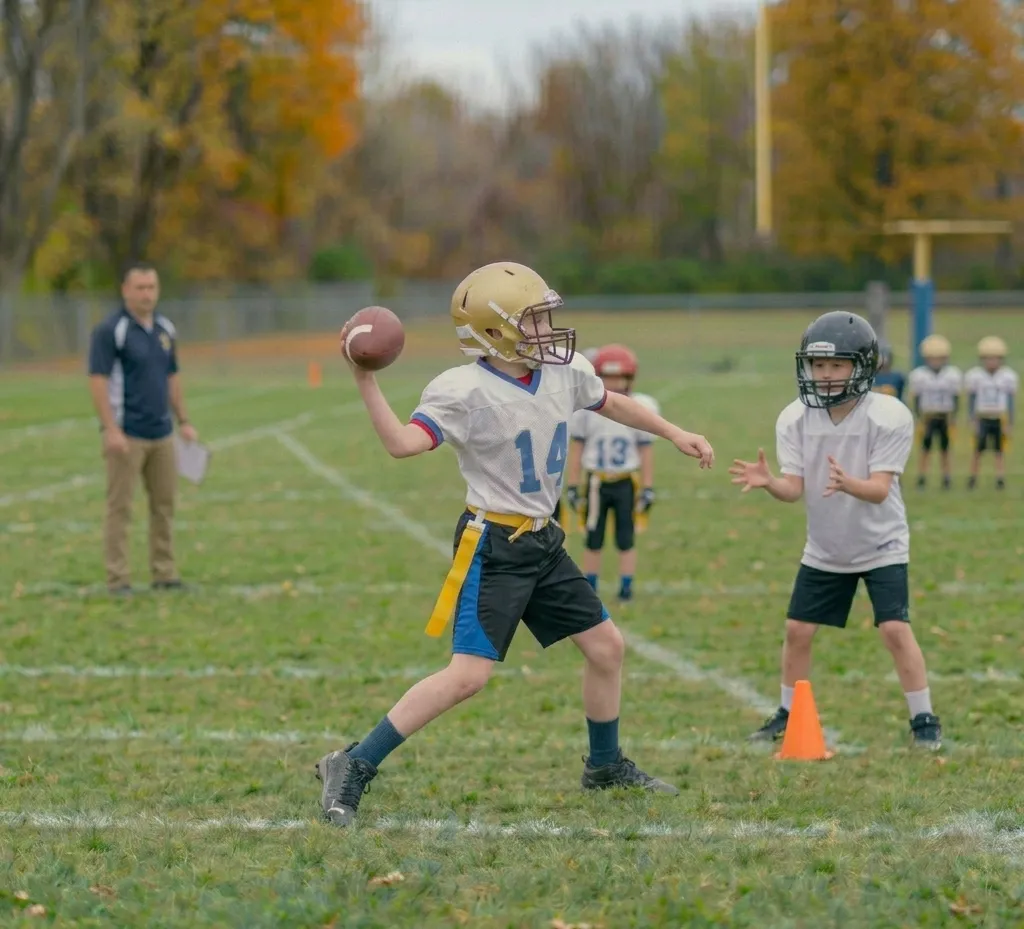
One-Knee Throwing Drill
Steps
-
- Kneel on one knee
- Hold the football correctly
- Throw the ball to your partner
This drill improves throwing form.
Common Mistakes
- Throwing with only the arm instead of using proper upper body rotation.
- Holding the football with a weak grip.
- Pointing the elbow too low during the throw.
- Rushing the throwing motion.
- Looking away from the target before releasing the ball.
Coach’s Tip
Keep your shoulders square to the target and hold the football with a firm grip. Rotate your upper body smoothly, follow through toward your target, and focus on accuracy before throwing with more power.
Target Passing Drill
Steps
-
- Place a cone as a target
- Throw the ball toward the cone
- Focus on accuracy
Common Mistakes
- Throwing too hard instead of aiming accurately.
- Looking away from the target before releasing the ball.
- Using poor throwing mechanics.
- Rushing each throw without setting the feet.
- Failing to follow through after releasing the football.
Coach’s Tip
Keep your eyes on the target and plant your front foot before each throw. Focus on smooth, accurate passes with proper follow-through. Build accuracy first, then gradually increase your throwing speed and distance.
Catching Drills for Beginners
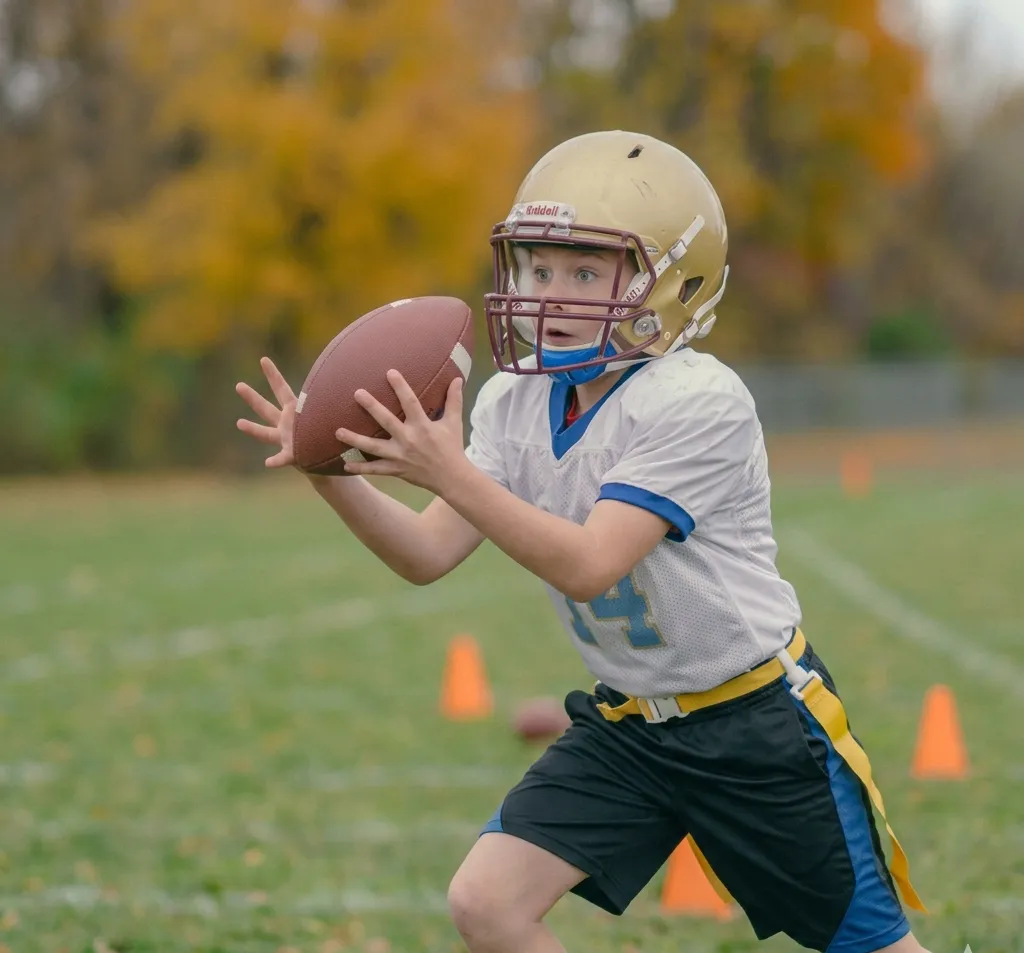
Hand Catch Drill
Steps
-
- Face your partner
- Keep your hands open
- Catch the ball using your fingers
- Bring the ball to your chest
Common Mistakes
- Catching the ball against the chest instead of with the hands.
- Taking your eyes off the football too early.
- Keeping your fingers closed before the catch.
- Reaching for the ball with stiff arms.
- Failing to secure the football after the catch.
Coach’s Tip
Watch the football all the way into your hands and keep your fingers spread to create a strong catching position. Catch the ball with soft hands, then bring it quickly to your chest to secure possession before making your next move.
Ball Security Drill
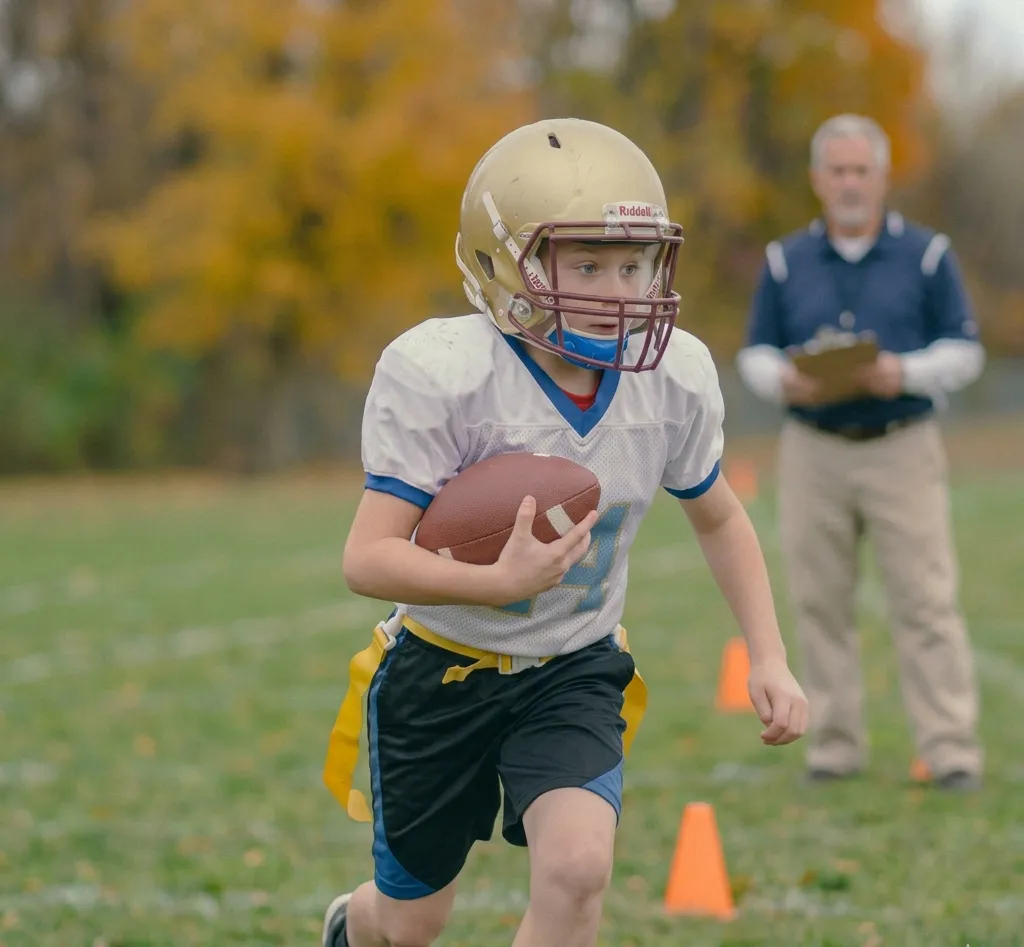
High-and-Tight Carry Drill
Steps
-
- Hold the football close to your chest
- Keep the elbow tight
- Cover the front of the ball
This helps prevent fumbles. Practice these techniques regularly with our Football Running Back Drills to improve ball security under pressure.
Common Mistakes
- Holding the football too low or away from the body.
- Keeping the elbow away from the ribs.
- Carrying the football with one hand unnecessarily.
- Forgetting to cover the front tip of the football.
- Switching the football between hands without control.
Coach’s Tip
Keep the football high and tight against your chest with your elbow close to your body. Cover the front tip of the football with your hand and keep your grip firm while running. Practice proper ball security first, then add speed and direction changes.
Beginner Football Drills by Position
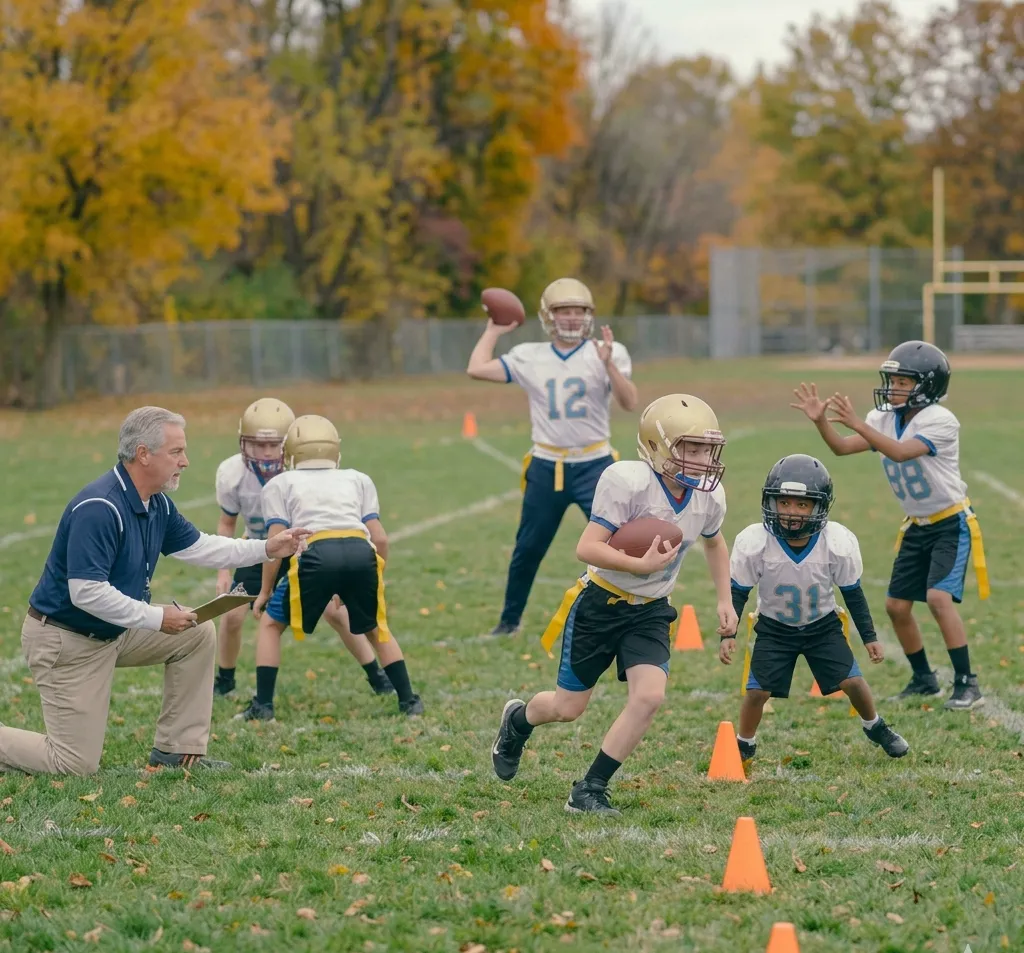
Quarterback Drills
Under Center Snap Drill
Steps
-
- Stand behind the center
- Place hands under the center
- Receive the snap
Common Mistakes
- Standing too far behind the center.
- Placing the hands incorrectly under the center.
- Looking down instead of keeping the eyes forward.
- Pulling away too early before securing the football.
- Failing to protect the football immediately after the snap.
Coach’s Tip
Stand in a balanced stance with your hands placed correctly under the center. Keep your eyes forward, receive the snap with soft hands, and secure the football before taking your first step. Practice smooth, controlled exchanges before increasing your speed.
Running Back Drill
Cone Cut Drill
Steps
-
- Run toward the cones
- Cut quickly around each cone
Common Mistakes
- Taking wide cuts around the cones.
- Slowing down before changing direction.
- Looking down while running.
- Carrying the football loosely.
Coach’s Tip
Stay low, plant your outside foot firmly, and make quick, controlled cuts around each cone. Keep the football secure and your eyes forward throughout the drill.
Wide Receiver Drill
Route Running Drill
Steps
-
- Run forward
- Cut at the cone
- Catch the pass
Common Mistakes
- Rounding the route instead of making sharp cuts.
- Slowing down too early before the break.
- Looking back for the ball too soon.
- Failing to catch the football with the hands.
Coach’s Tip
Run at full speed, make sharp cuts, and keep your eyes forward until it’s time to catch the ball. Finish every route with strong hands and secure the football quickly.
Continue with our Wide Receiver Drills to improve route running and catching skills.Blocking Drills for Beginners
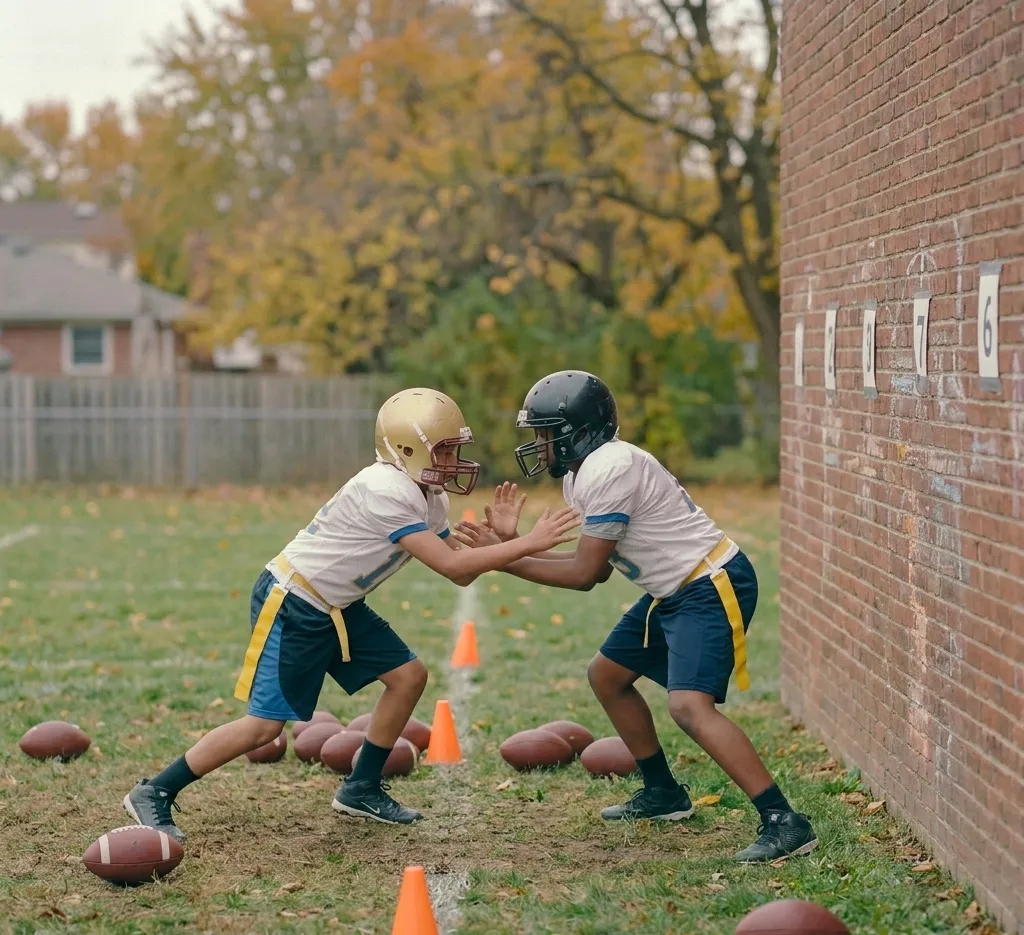
Basic Drive Block Drill
Steps
-
- Start in a low stance
- Keep your back straight
- Push forward using your legs. Once you learn this basic technique, practice more exercises in our Football Blocking Drills guide.
Common Mistakes
- Standing too upright at the start.
- Bending at the waist instead of the knees.
- Stopping the feet after contact.
- Leading with the head instead of the shoulders.
Coach’s Tip
Stay in a low stance with your back straight and keep your feet moving through the block. Drive with your legs and maintain good balance from start to finish.
Tackling Drill for Beginners
Form Tackling Drill
Steps
-
- Keep your head up
- Wrap arms around the opponent
- Drive forward using your legs. Once you are comfortable with the basics, continue with our Football Tackling Drills to practice safe tackling techniques.
Common Mistakes
- Dropping the head before contact.
- Reaching instead of wrapping the arms.
- Stopping the feet on contact.
- Tackling with poor body position.
Coach’s Tip
Keep your head up, wrap your arms securely, and drive with your legs through the tackle. Practice proper technique first before adding speed or contact.
Football Drills Beginners Can Practice Alone
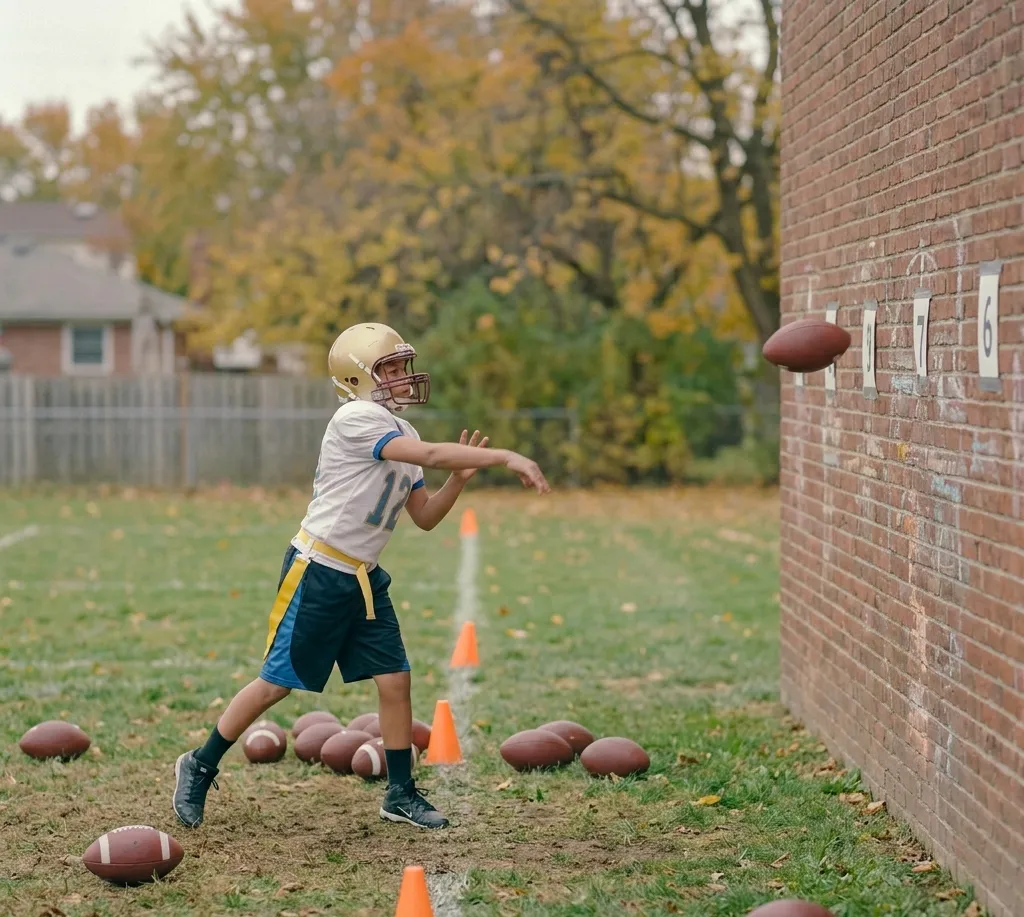
Wall Passing Drill
Throw the ball against a wall and catch it.
This drill improves hand-eye coordination, catching consistency, and reaction time.
Footwork Ladder Drill
Practice fast foot movement.
This drill builds balance, coordination, and quicker footwork for game situations.
Reaction Ball Drill
Drop a reaction ball and catch it after the bounce. Add more solo exercises with our Backyard Football Practice Drills.
This drill improves reaction speed, focus, and hand-eye coordination.
30 Minute Beginner Practice Plan
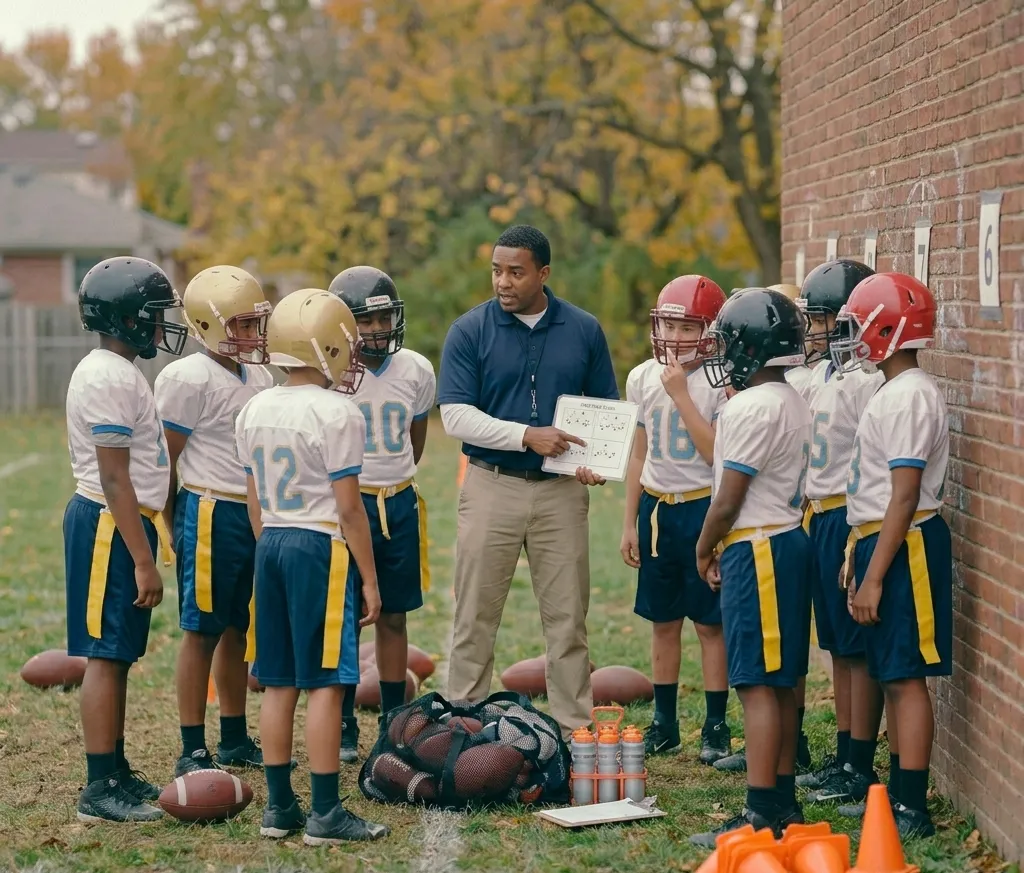
30-Minute Beginner Practice Plan
This simple practice plan helps beginner players practice important football skills in a short training session.
| Time | Practice Activity |
|---|---|
| 5 minutes | Warm-up drills such as high knees and ladder footwork |
| 10 minutes | Agility drills including cone drills and quick movement practice |
| 10 minutes | Passing drills such as one-knee throws and target passing |
| 5 minutes | Catching drills like hand catches and over-shoulder catches |
Weekly Beginner Practice Plan
The table below shows an example weekly practice schedule for beginner football players.
| Day | Focus Area |
|---|---|
| Day 1 | Footwork and agility drills |
| Day 2 | Passing drills and catching practice |
| Day 3 | Ball security drills and running drills |
| Day 4 | Complete beginner practice routine |
Beginner Goals After 4 Weeks of Practice
If beginners practice consistently, they should notice steady improvement within a few weeks. The goals below can help players, parents, and coaches measure progress.
- Catch the football with confidence.
- Throw short passes with better accuracy.
- Move quickly through basic footwork drills.
- Protect the football while running.
- Complete a full practice session with good technique.
Mistakes to Avoid During Practice
Avoid These Beginner Mistakes
- Skipping warm-ups
- Training too fast
- Looking down while running
- Holding the football loosely
- Ignoring rest and hydration
Common Beginner Football Mistakes
-
- Watching the ball late
-
- Slow foot movement
-
- Weak ball protection. Follow our Football Workout Plan for Beginners to build better control and confidence during practice.
-
- Poor throwing technique
Common Coaching Mistakes
- Teaching speed before technique
- Giving too many instructions at once
- Skipping water breaks
- Practicing contact too early
Equipment Needed for Football Drills
- Football
- Cones
- Agility ladder
- Training markers
- Athletic shoes or football cleats
- Water bottle
Safety Tips for Beginner Football Training
-
- Start slowly and increase training intensity over time.
- Focus on proper form before practicing at full speed.
- Drink water before, during, and after practice.
- Wear the right football gear, including properly fitted shoes.
- Warm up before drills and cool down after every session.
- Avoid hard contact drills until basic tackling technique is learned.
- Stop practicing if you feel pain or dizziness.
- Practice under the supervision of a coach or responsible adult whenever possible.
Conclusion
Learning football takes time, patience, and consistent practice. Many beginners struggle during their first few training sessions because they are still building the basic skills. This is a normal part of the learning process. With simple drills and regular practice, every player can improve step by step.
Players who focus on football fundamentals early often develop better technique, confidence, and overall performance as they gain more experience. Footwork drills improve movement, catching drills build confidence, and ball security drills help players protect the football during games.
Stay consistent, focus on proper technique, and practice one skill at a time. As your fundamentals become stronger, more advanced football skills will become easier to learn. Every great player started with the basics, and your progress begins with the first drill.
Coach’s own experience for new players
What’s one simple football drill that improved your game the most?
One simple drill that improved my game most in football was “1-on-1 mirror tech.” I spent 10–15 minutes daily with a partner. Start in a two‑point stance facing each other about 5 yards apart. The defender mirrors the offensive player’s first step; the offense practices explosive jam releases, inside and outside rip moves, swim moves, and quick lateral cuts to gain separation. Each rep lasts 5–8 seconds, then reset for 15–20 seconds; do 10–15 reps per set for 3 sets. After few weeks I noticed faster reaction time, stronger hand placement, and more consistent separation off the line. It’s low‑equipment, simulates game contact, and directly improves one‑on‑one winning techniques.
What Helped Me Improve as a Beginner
When I first started coaching beginner football players, I noticed that the biggest improvements came from practicing the same fundamental drills consistently rather than trying too many advanced exercises. Players who mastered footwork, passing, catching, and ball security first usually learned new skills faster and played with more confidence during games.
Frequently Asked Questions
What are the best football drills for beginners?
The best football drills for beginners focus on basic skills such as footwork, passing, catching, agility, and ball security. These drills help players build a strong foundation before moving on to more advanced training.
How often should beginners practice football drills?
Most beginners improve by practicing three to four times per week. Short, consistent practice sessions with proper rest usually produce better results than long, exhausting workouts.
Can beginners practice football drills at home?
Yes. Many beginner football drills can be practiced at home with a football and a small open space. Wall passing, footwork drills, and reaction drills are good options for solo practice.
What equipment do I need for beginner football drills?
You only need a football, a few cones, and an open practice area to start. An agility ladder is helpful but optional for beginners.
Which football skills should beginners learn first?
Beginners should first learn footwork, catching, passing, ball security, and basic agility. These core skills make it easier to learn position-specific drills later.
How long should a beginner football practice last?
A beginner practice session should last 30 to 45 minutes. This gives enough time for a warm-up, skill drills, and a cool-down without causing unnecessary fatigue.
Are football drills different for each position?
Yes. Every position has different responsibilities. Quarterbacks focus on throwing, wide receivers practice catching and route running, while running backs work on ball security and quick cuts.
How can beginners improve faster in football?
Practice consistently, focus on proper technique, and master the fundamentals before increasing speed. Regular training, good coaching, and steady improvement are more effective than rushing into advanced drills.
Should beginners learn football positions before drills?
No. Most beginners should learn basic football skills such as footwork, passing, catching, agility, and ball security first. Once these fundamentals become consistent, position-specific drills for quarterbacks, running backs, wide receivers, or defensive players become much easier to learn.
