



Introduction
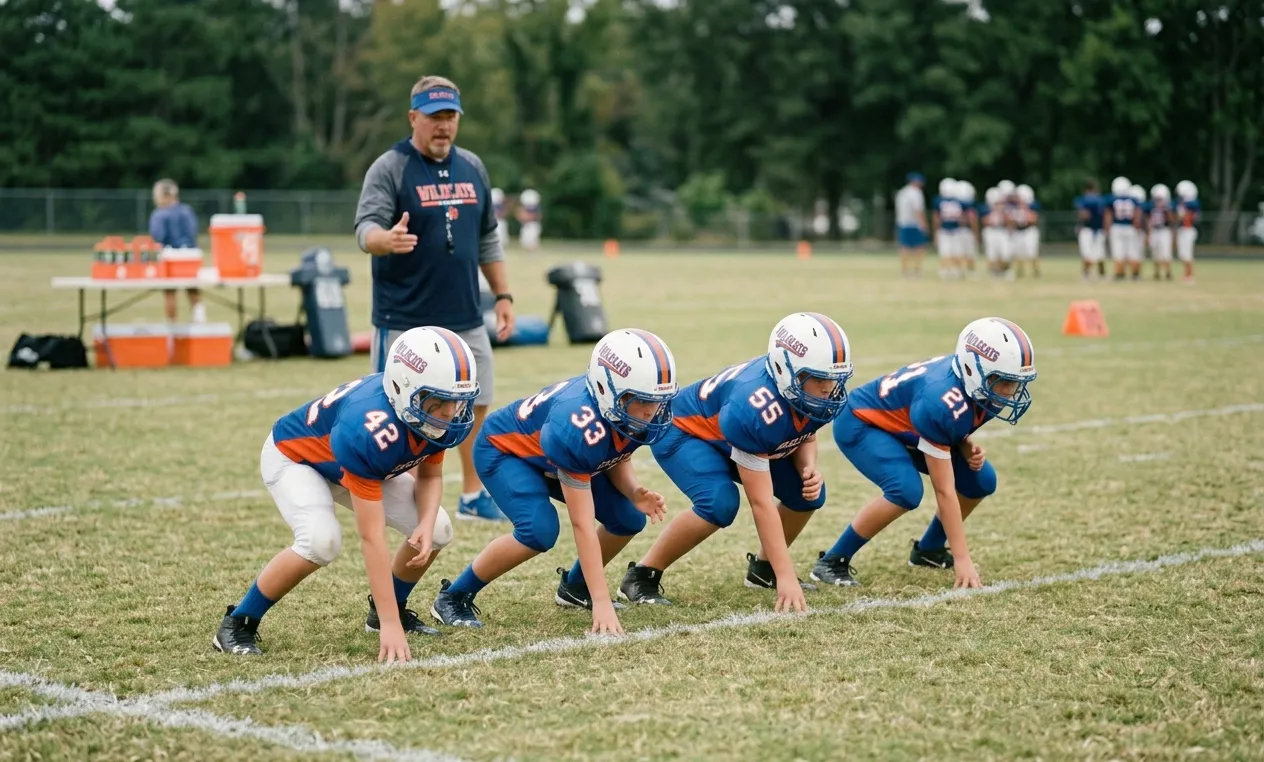
Learning how to block can feel confusing for beginners. Many players struggle with balance, hand placement, and timing during practice. They often lose control on contact or stand too high, which makes blocking less effective. This is where football blocking drills for beginners help players understand the basics in a simple and clear way.
From coaching and practice experience, beginners improve faster when they follow a step-by-step approach and focus on safe technique. Parents also want drills that are easy and safe for their kids, while new coaches need simple ways to teach blocking without confusion. This guide solves those problems with clear steps, safe drills, and practical tips.
What is Blocking in Football
Blocking means stopping a defender from reaching the ball. Players use their body, hands, and feet to stay in front of a defender.
Blocking is used in:
- Running plays
- Passing plays
Without blocking, plays break down fast. This is why young players should learn blocking early.
Why Football Blocking Drills for Beginners Matter
Blocking is one of the most important skills in football.
- It gives time to the quarterback
- It opens running lanes
- It helps the team move the ball forward
Beginners who learn blocking early improve faster. Coaches often build their offense around strong blocking.
Key Blocking Fundamentals for Beginners
Strong basics make every drill better. These fundamentals are important for players, parents, and coaches.
Base and Balance
Keep your feet shoulder-width apart. Stay low and stable.
Hand Placement
Place hands inside the defender’s chest, near the numbers. This gives control.
Leverage
Stay lower than the defender. Lower pad level gives better control and power.
Foot Drive
Keep your feet moving. Do not stop after contact.
Pad Level
Bend your knees. Do not stand tall.
Step-by-Step Football Blocking Drills for Beginners Technique
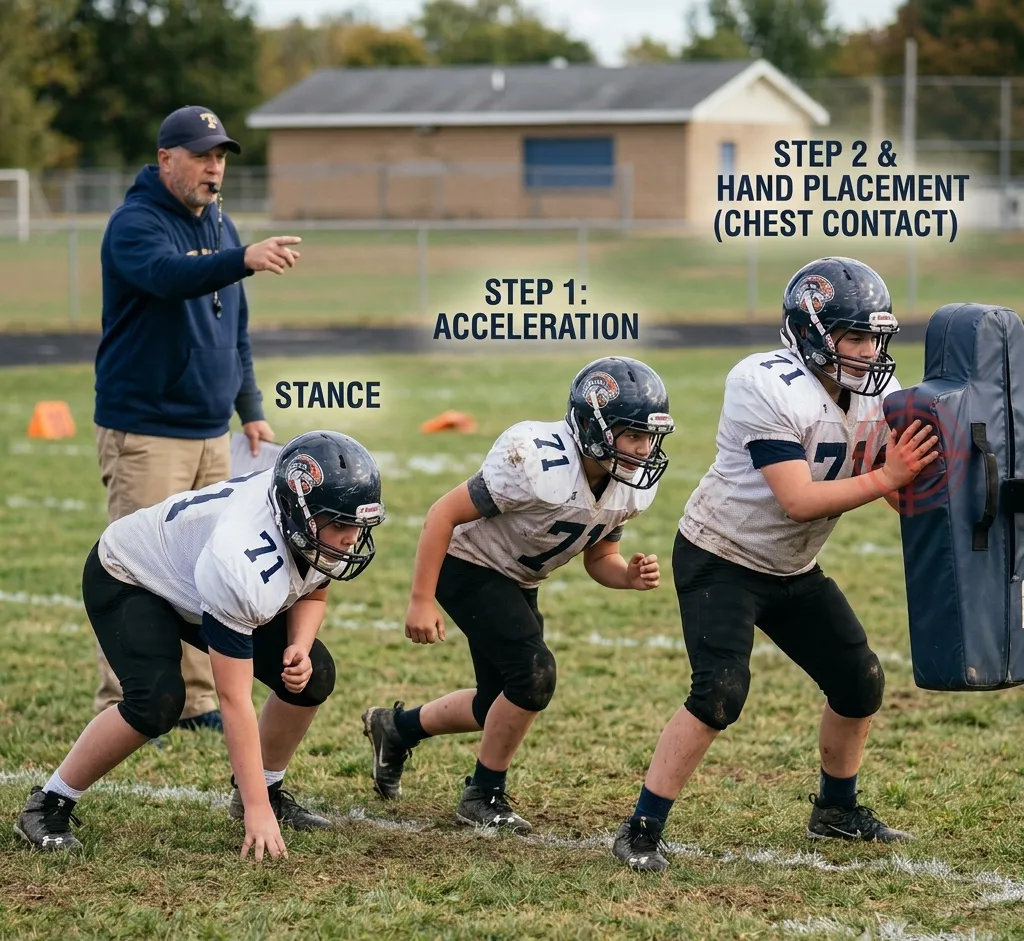
Players should learn blocking step by step before full-speed drills.
Proper Stance
- Feet apart
- Knees bent
- Back straight
First Step and Footwork
Take a short, quick step forward. Stay balanced and develop proper football footwork drills habits to improve blocking performance.
Contact and Hand Placement
Hit with your hands first. Keep elbows in.
Drive and Maintain Position
Drive forward with your legs. Stay between the defender and the ball.
Finish the Block
Keep driving until the play ends.
Beginner Progression Plan
- Learn stance and balance
- Practice hand placement
- Add simple drills
- Move to controlled contact drills
Best Football Blocking Drills for Beginners and Youth Players
Use these drills to build skill step by step. These drills are simple, safe, and useful for both practice and home training.
Drive Blocking Drill
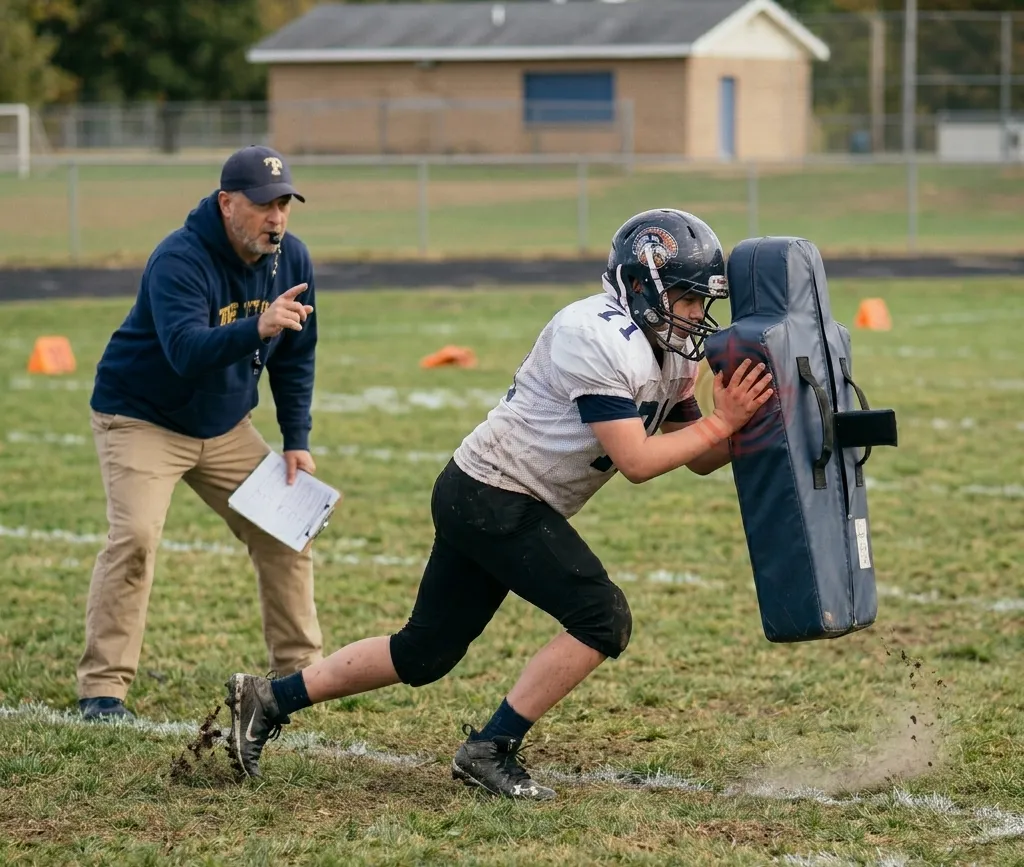
- Setup: One blocker and one partner or blocking pad
- Steps:
- Start in proper stance
- Take a short first step forward
- Drive forward with legs
- Coaching Tip: Keep feet moving and stay low
- Who it helps: Great for young players learning strength and control
Mirror Drill
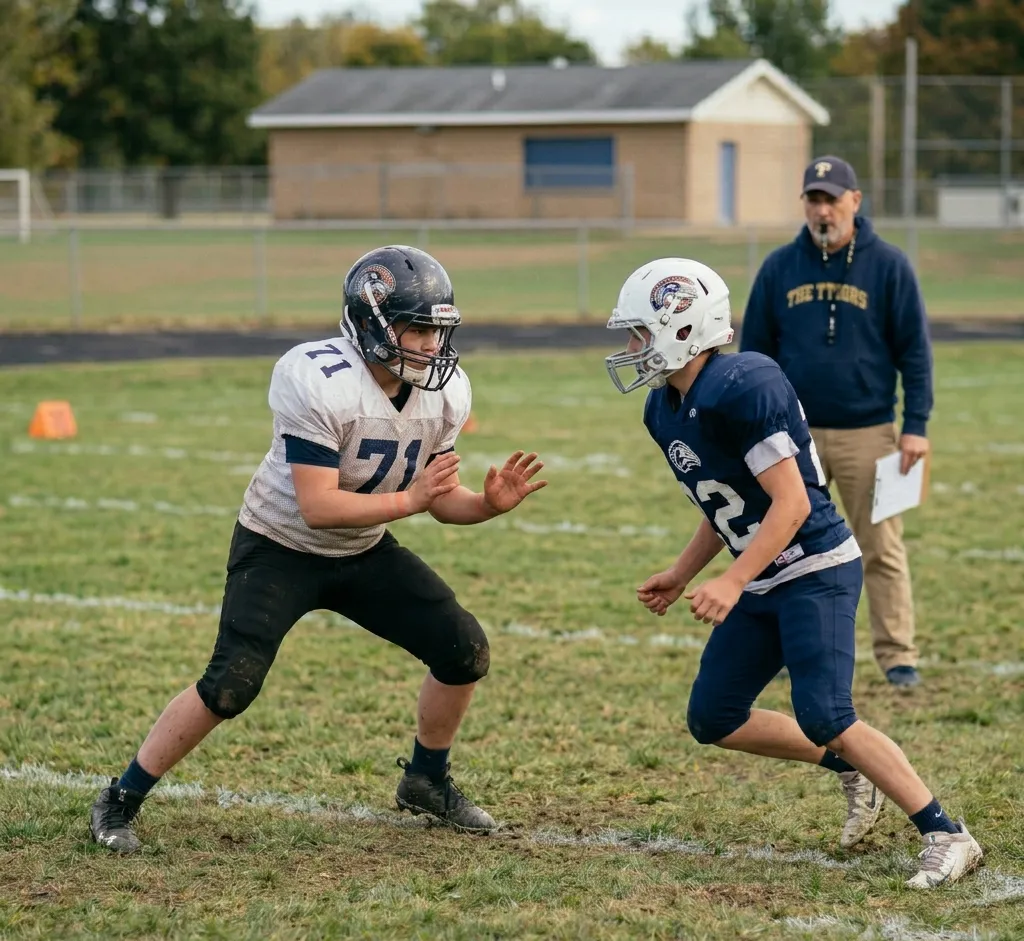
- Setup: Two players facing each other
- Steps:
- One player moves side to side
- Blocker follows and stays in front
- Coaching Tip: Stay balanced and do not cross your feet
- Who it helps: Improves balance and reaction
Punch Drill
- Setup: Use a pad or dummy
- Steps:
- Start in stance
- Punch forward with both hands
- Coaching Tip: Keep hands inside and elbows tight
- Who it helps: Builds strong hand placement
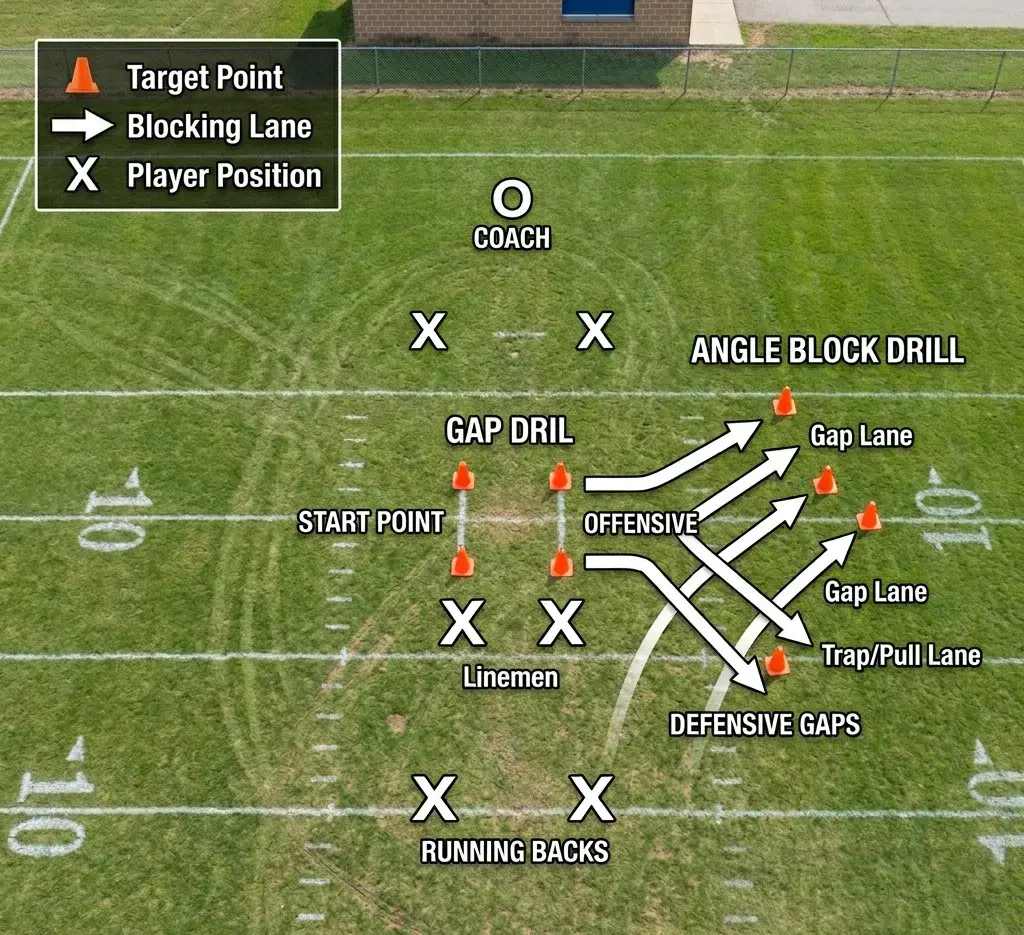
Angle Blocking Drill
Players block at an angle. This helps in real game situations and improves movement skills. Practicing cone drills for football can also help players develop better body control and change direction more efficiently.
- Coaching Tip: Take the correct angle and stay low
- Who it helps: Improves positioning
Double Team Blocking Drill
Two players work together to move one defender.
- Coaching Tip: Work in sync and keep hips low
- Who it helps: Builds teamwork
Gap Blocking Drill
Players attack a small space quickly. Focus on first step.
- Coaching Tip: Explode off the line
- Who it helps: Improves quick reaction
Pass Blocking (Set and Punch Drill)
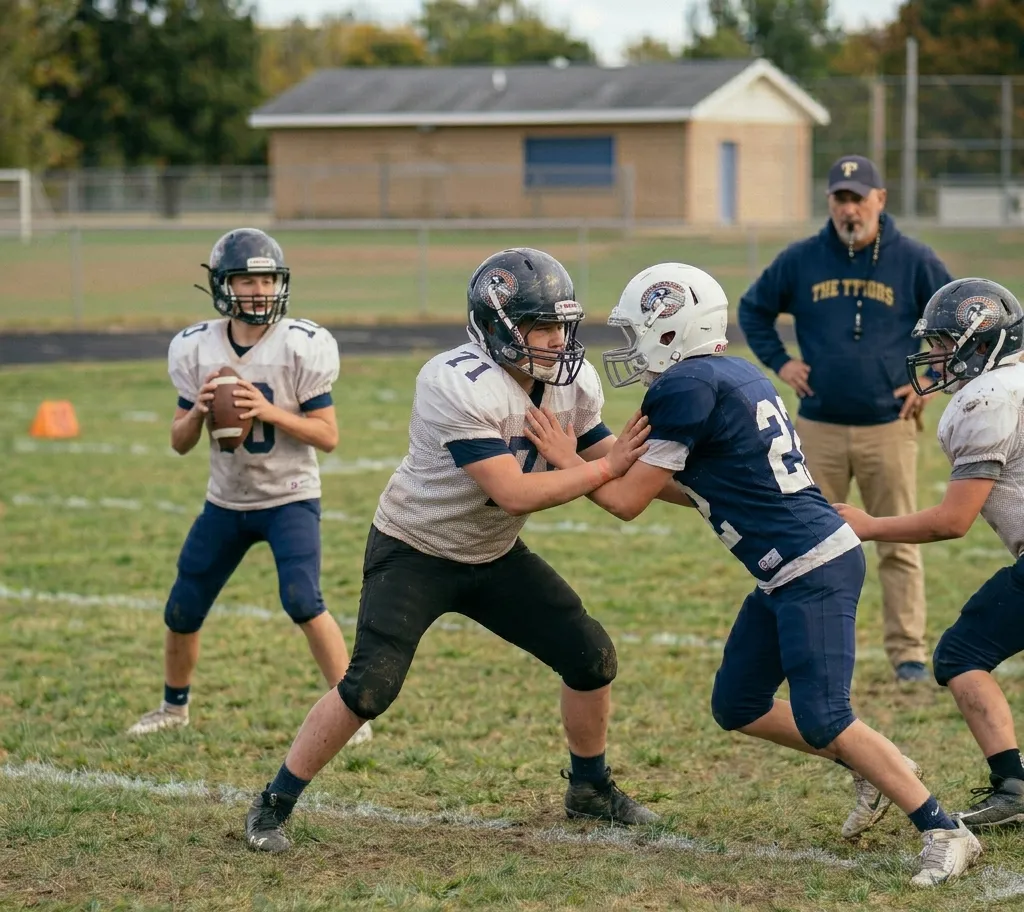
Players kick step back while keeping a wide base, stay balanced, and use hands to stop the defender.
- Coaching Tip: Keep eyes up and hands ready
- Who it helps: Important for protecting the quarterback
| Drill Name | Skill Focus | Best For | Difficulty |
|---|---|---|---|
| Drive Blocking Drill | Strength & Power | Beginners | Easy |
| Mirror Drill | Balance & Movement | Kids & Beginners | Easy |
| Punch Drill | Hand Placement | All Players | Easy |
| Angle Blocking Drill | Positioning | Game Situations | Medium |
| Double Team Drill | Teamwork | Offensive Line | Medium |
| Gap Blocking Drill | Quick Reaction | Beginners | Easy |
| Pass Blocking Drill | Protection | QB Support | Medium |
Football Blocking Drills for Beginners by Type
Run Blocking Drills
Run blocking pushes the defender forward to create space for the runner.
Pass Blocking Drills
Pass blocking protects the quarterback and focuses on balance.
Angle and Zone Blocking Drills
Angle blocking helps seal defenders and control positioning.
Position-Based Football Blocking Drills for Beginners
Offensive Line Blocking Drills
Focus on strength, footwork, and teamwork. Players who want to improve line play can also practice football trench drills for beginners to build better blocking and engagement skills.
Running Back Blocking Drills
Focus on quick reaction and pass protection.
Tight End Blocking Drills
Mix of strength and movement skills.
Common Blocking Mistakes Beginners Make
- Standing too high
- Poor hand placement
- Leaning forward
- Crossing feet
- Stopping feet on contact
Blocking Technique Checklist
- Keep a low pad level
- Hands inside the defender
- Feet always moving
- Eyes up at contact
- Stay balanced
Safe Football Blocking Drills for Beginners
- Keep your head up
- Use hands, not helmet
- Do not lead with the helmet
- Keep eyes up at contact
- Start with slow drills
Parents and coaches should always focus on safe training.
Simple Football Blocking Practice Plan
Warm-up (5–10 minutes)
Light running and stretching
Technique Drills
Focus on stance and steps
Contact Drills
Practice with control
Cool Down
Stretch and relax
When to Use Each Blocking Drill
- Use Mirror Drill for balance
- Use Drive Blocking Drill for strength
- Use Punch Drill for hand placement
- Use Pass Blocking Drill for protection
At-Home Football Blocking Drills for Beginners
- Wall drill
- Mirror drill
- Footwork drills
These drills help parents train kids at home.
Quick Takeaways
- Focus on basics like stance and hand placement
- Use simple drills for faster improvement
- Keep drills safe and controlled
- Practice regularly for best results
Conclusion
Blocking is one of the most important skills in football, and beginners need time to learn it the right way. In real practice sessions, players who focus on basics like stance, hand placement, and foot movement improve much faster. Simple drills done the right way build confidence and help players perform better during games.
From a coaching point of view, the best results come when drills are kept simple, safe, and repeated regularly. Players do not need complex techniques at the start. They need clear steps and proper guidance. When beginners follow these drills and stay consistent, they build strong blocking skills that support both performance and safety on the field.
What are the best football blocking drills for beginners?
The best football blocking drills for beginners include the drive blocking drill, mirror drill, punch drill, and pass blocking drill. These drills help improve balance, hand placement, and basic technique.
How do you teach football blocking drills for beginners?
Start with simple steps like stance, footwork, and hand placement. Then use basic football blocking drills for beginners to build skills slowly and safely.
What is proper hand placement in football blocking?
Proper hand placement means keeping your hands inside the defender’s chest, near the numbers. This helps you control the block and stay balanced.
