



Introduction
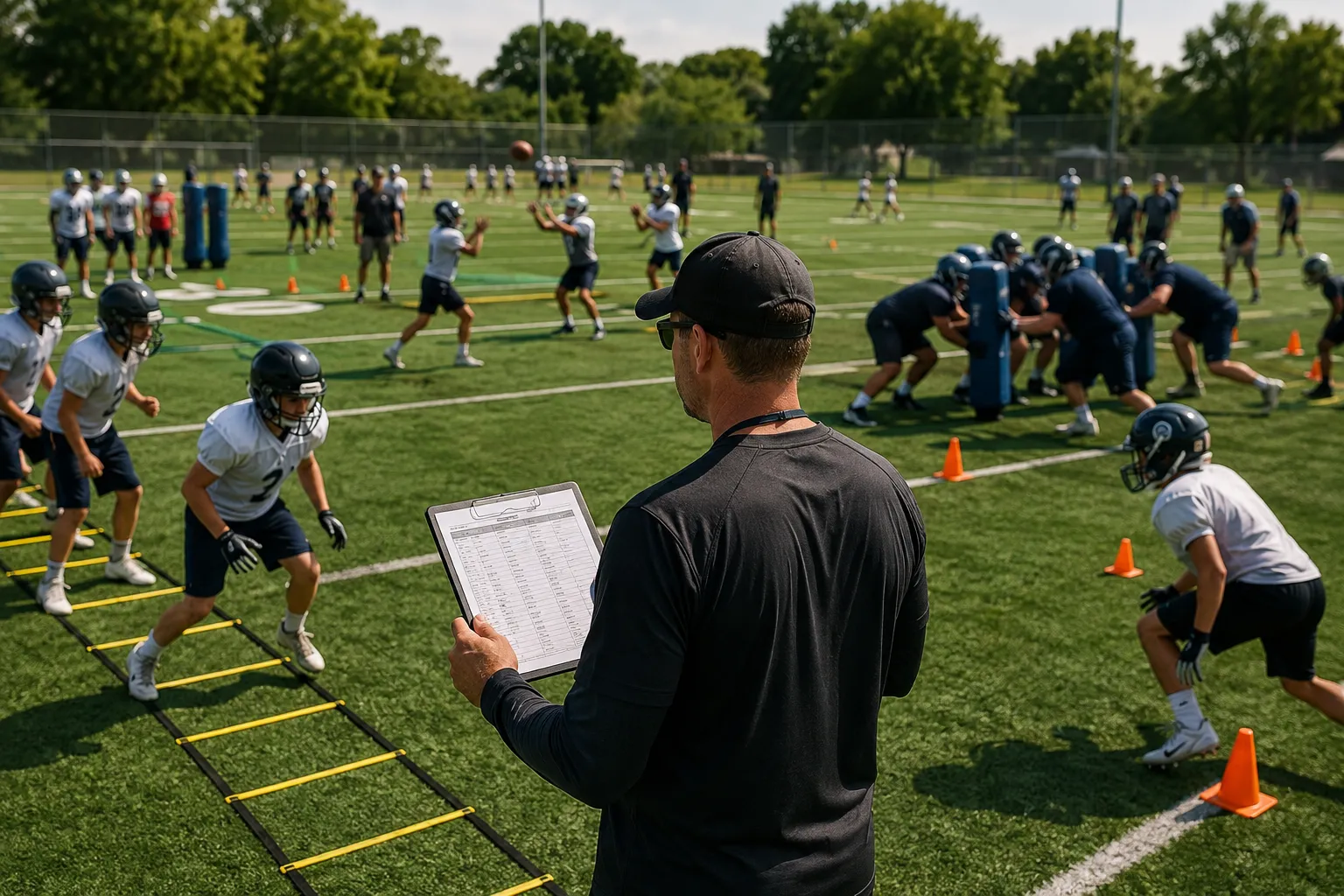
If you have ever walked onto the field wondering where to start, you are not alone. Many beginner coaches, youth football coaches, assistant coaches, and volunteer coaches struggle to organize an effective football practice plan with drills. They often wonder which football drills for beginners to run first, how to manage practice time, and how to keep every player active. Without a clear practice structure, players spend too much time waiting. They also miss valuable repetitions and struggle to build strong football fundamentals, teamwork, communication, and football IQ. A well-organized practice gives every drill a purpose and helps every player learn, improve, and gain confidence.
From my experience studying successful coaching methods and reviewing effective football practice plans, I have found one common pattern. Successful coaches build practices around simple training blocks, clear coaching objectives, and steady player development. They prepare before practice starts, organize position drills, team drills, offense, defense, and special teams into a logical order. They also adjust every session based on player progress. This approach creates a better learning environment and keeps practices productive throughout the football season. In this guide, you will find ready-to-use football practice plans with drills, beginner-friendly coaching tips, sample practice schedules, and proven practice routines. These resources will help you improve technique, build game awareness, and prepare players for real game situations.
Why Football Practice Plans Matter
A well-structured football practice plan with drills gives every practice a clear purpose. Instead of deciding what to do on the field, coaches can follow an organized plan that keeps practice moving from one activity to the next. This approach helps coaches stay organized, makes better use of practice time, and ensures every important skill receives enough attention throughout the session.
A clear practice plan also keeps players active instead of standing in line, increases the number of quality repetitions, and gives every player more repetitions to build confidence and improve performance. By organizing drills into logical training blocks, coaches can reduce wasted practice time, maintain a steady practice tempo, and create a better learning environment. Players stay engaged, develop stronger football fundamentals, improve teamwork and communication, and become better prepared for real game situations throughout the football season.
What Makes an Effective Football Practice Plan?

Set Clear Practice Goals and Objectives
Every football practice should begin with a clear purpose. Before stepping onto the field, decide what players should learn or improve during the session. Clear practice goals and coaching objectives help coaches choose the right football drills, organize effective training blocks, and measure player progress. When players understand the goal of each drill, they stay motivated, learn faster, and gain confidence after every practice.
Divide Practice Into Training Blocks and Maintain Practice Flow
Breaking practice into short training blocks keeps players focused and creates a smooth practice flow from start to finish. Each block should build on the previous one so players develop skills step by step instead of jumping between unrelated activities. A simple football practice structure may include:
- Warm-up and movement preparation
- Individual skill drills
- Position-specific drills
- Group drills
- Team offense and defense
- Special teams practice
- Conditioning
- Cool-down and practice review
This organized structure improves drill transitions, reduces wasted practice time, increases repetitions, and helps coaches cover every important skill without rushing through practice.
Plan Drill Progression
A successful football practice plan follows a logical drill progression. Start with football fundamentals and basic technique before introducing more challenging drills. Move from individual drills to quarterback drills and other position-specific activities, then group activities, team drills, and finally game situations. This step-by-step progression improves skill development, decision-making, football IQ, and player confidence while helping players understand how every drill connects to real game performance.
Balance Individual and Team Drills
Players need strong individual skills before they can perform well as a team. Spend time developing football passing drills, catching, blocking, tackling fundamentals, ball security, footwork, and position technique before combining players into small-group and team drills. Use station rotation whenever possible to keep players active, increase quality repetitions, reduce waiting time, and give coaches more opportunities to provide individual feedback. This approach helps every player contribute more effectively during offensive football drills, team defense, and special teams periods. Players can also improve their movement by practicing football footwork drills between team sessions.
Assign Coaching Responsibilities
Every coach should know their role before practice begins. The head coach should oversee the practice plan, while assistant coaches manage assigned drill stations, demonstrate techniques, and provide coaching feedback. Clear coaching assignments improve communication, keep practice organized, create smoother transitions between drills, and allow players to receive more individual instruction throughout the session.
Manage Practice Time
A good coach respects the practice schedule and uses every minute wisely. Give each drill a specific time limit and move to the next activity once players achieve the objective. Avoid long explanations, prepare equipment before practice starts, and keep drill transitions short. This helps maintain practice tempo, keeps players engaged, and allows more repetitions without extending the overall practice time.
Adjust the Plan for Your Team
No two football teams are exactly alike. Younger players often need shorter drills, extra coaching, more water breaks, and additional practice on football fundamentals. Older or more experienced teams can handle longer practice periods, faster drill progression, and more advanced game situations. Review player progress regularly and adjust drill difficulty, coaching points, repetitions, and practice intensity based on your team’s age, skill level, and beginner football training schedule.
Keep Safety First
Player safety should remain the top priority during every football practice. Begin each session with a dynamic football warm-up drills and finish with a proper cool-down to support muscle recovery and injury prevention. Inspect the field, check all equipment before practice begins, teach proper technique before increasing speed or contact, and schedule regular hydration breaks. A safe practice environment builds player confidence, supports long-term player development, and allows every athlete to learn, compete, and improve throughout the football season.
Equipment Needed for Football Practice
Before practice begins, make sure all equipment is ready and placed near each drill station. Preparing equipment in advance reduces transition time and keeps players active throughout the session. Most beginner football practices only require a few basic items.
Basic equipment includes:
- Footballs
- Cones
- Agility ladder
- Blocking shields or pads
- Tackling dummies (for tackle football)
- Flag belts (for flag football)
- Whistle
- Stopwatch or timer
- Field markers
- Water bottles
- First aid kit
Football Practice Plans With Drills
The best football practice plans with drills give coaches a simple roadmap for every practice. Instead of creating a new schedule each day, use a proven practice plan that balances skill development, team play, and conditioning. The examples below can be adjusted for different age groups and team experience.
30-Minute Football Practice Plan
A 30-minute football practice plan works well for beginners, younger players, or short training sessions. It is also a great starting point if you are creating your first football practice plan for beginners and want to build consistent practice habits.
| Time | Activity | Goal |
|---|---|---|
| 5 minutes | Dynamic warm-up | Prepare the body for movement |
| 8 minutes | Ball handling and footwork drills | Improve coordination and control |
| 7 minutes | Passing and catching drills | Build basic offensive skills |
| 7 minutes | Small group offense vs. defense drill | Apply skills in game situations |
| 3 minutes | Cool-down and coaching review | Reinforce key lessons |
Recommended drills
- High knees
- Butt kicks
- Ladder footwork
- Partner passing
- Catch-and-turn drill
- Cone reaction drill
Best for first-year coaches, youth teams, preseason practices, or limited field time.
60-Minute Football Practice Plan
A 60-minute session gives coaches enough time to teach fundamentals while adding team concepts. Coaches can later expand this routine into a first week football practice plan as players become more comfortable.
| Time | Activity | Goal |
|---|---|---|
| 10 minutes | Dynamic warm-up | Increase mobility and reduce injury risk |
| 10 minutes | Football fundamentals | Stance, starts, ball security, and movement |
| 10 minutes | Position drills | Improve position-specific techniques |
| 10 minutes | Offensive drills | Passing, routes, blocking, or running plays |
| 10 minutes | Defensive drills | Pursuit, tackling form, coverage, or flag pulling |
| 5 minutes | Conditioning | Build fitness and endurance |
| 5 minutes | Cool-down and team discussion | Review progress and answer questions |
Recommended drills
- Mirror drill
- Cone shuffle
- Passing progression
- Route running
- Pursuit angle drill
- Ball security drill
- Sprint relay
Ideal for weekly youth football practices focused on fundamentals.
90-Minute Football Practice Plan
A 90-minute practice allows coaches to cover individual skills, team play, and game preparation in one session.
| Time | Activity | Goal |
|---|---|---|
| 10 minutes | Dynamic warm-up | Prepare players for practice |
| 15 minutes | Individual skill drills | Build strong fundamentals |
| 15 minutes | Position drills | Improve position techniques |
| 15 minutes | Group drills | Develop communication and teamwork |
| 20 minutes | Team offense and defense | Practice game situations |
| 5 minutes | Special teams | Work on kicking, returning, or coverage |
| 5 minutes | Conditioning | Improve fitness |
| 5 minutes | Cool-down and review | Finish practice safely |
Recommended drills
- Agility ladder
- W-drill
- Quarterback throwing drill
- Wide receiver route tree
- Running back ball security drill
- Offensive line blocking drill
- Defensive pursuit drill
- Seven-on-seven passing period
- Team scrimmage
Best for experienced youth teams preparing for competitive games.
Printable Football Practice Plan Template (30–90 Minutes)
| Time | Practice Block | Drill | Coaching Focus |
|---|---|---|---|
| 0–10 min | Warm-Up | Dynamic Warm-Up | Movement and mobility |
| 10–25 min | Individual Skills | Position Drills | Fundamentals and technique |
| 25–45 min | Group Work | Small Group Drills | Communication and execution |
| 45–70 min | Team Period | Offense and Defense | Game situations |
| 70–80 min | Conditioning | Speed and Agility | Endurance and effort |
| 80–90 min | Cool-Down | Stretching and Review | Recovery and coaching feedback |

Tips for Using These Practice Plans
These practice plans are flexible. If your players struggle with one skill, spend a few extra minutes on that drill and reduce time from another activity. Keep instructions short, demonstrate each drill before players begin, and give quick feedback between repetitions. Rotate drills often to keep players active and avoid long waiting lines. As the season progresses, increase the difficulty by adding more decision-making, faster game speed, and competitive team periods while keeping the same practice structure.
Warm-Up Drills

Every football practice plan with drills should begin with a proper warm-up. A good warm-up prepares the body for movement, increases blood flow, and helps reduce the risk of injuries. It also improves balance, coordination, and focus before players move into skill drills. Spend about 8 to 12 minutes on this part of practice and gradually increase the intensity.
A simple warm-up routine can include dynamic jogging, high knees, butt kicks, carioca, side shuffles, backpedal to sprint, football footwork drills such as agility ladder exercises, and cone acceleration drills. These movements improve footwork, speed, body control, and change of direction. Keep players moving with short rest periods and explain the purpose of each drill before starting. As players become more comfortable, increase the pace until they are ready for position drills and full-speed football activities.
Position-Specific Football Drills

This drills help players develop the skills they use most during games. Every football practice plan with drills should include time for quarterbacks, running backs, wide receivers, offensive linemen, defensive linemen, linebackers, and defensive backs. Working on position fundamentals improves football IQ, technique, footwork, ball security, throwing accuracy, route running, blocking, pass protection, tackling form, coverage, pursuit angles, reaction time, hand placement, balance, coordination, and overall player development. Keep players in small groups so they receive more repetitions, coaching feedback, and game-like practice.
Each position should focus on its most important responsibilities instead of trying to master every skill in one session. Quarterbacks should improve passing mechanics, decision-making, and pocket movement. Running backs should practice vision, quick cuts, and protecting the football. Wide receivers need consistent catching, route running, and separation, while offensive linemen should build blocking technique, leverage, and footwork. Defensive linemen, linebackers, and defensive backs should improve pursuit, tackling fundamentals, coverage skills, communication, and defensive awareness. Once players gain confidence in their position drills, combine them into small-group and team drills to improve timing, execution, and teamwork in game situations.
Team Drills
Team drills bring individual skills together and help players perform as one unit. Every football practice plan with drills should include offense, defense, and special teams to prepare players for real game situations. These drills improve communication, timing, execution, teamwork, football awareness, decision-making, and player confidence while helping coaches evaluate assignments and correct mistakes during practice.
A balanced team period can include inside run drills, seven-on-seven passing drills, team offense, team defense, red zone drills, goal line drills, pursuit drills, kickoff coverage, punt coverage, kick return, and field goal practice. Encourage players to communicate before every snap, line up correctly, protect the football, maintain proper spacing, and finish every play at game speed. As the season progresses, increase the difficulty by adding live repetitions, situational football, clock management, and controlled scrimmages to improve game execution without losing focus on fundamentals.
Conditioning and Cool-Down
Conditioning and cool-down are the final parts of an effective football practice plan with drills. Football conditioning helps players build speed, endurance, agility, acceleration, stamina, explosive power, and overall athletic performance. Short, football-specific conditioning drills such as sprint intervals, shuttle runs, cone drills, relay races, and tempo runs prepare players for the repeated high-intensity efforts required during games. Adjust the workload based on the players’ age, fitness level, practice intensity, and time of the season to avoid overtraining.
Finish every practice with a proper cool-down to support muscle recovery and reduce post-practice soreness. A simple routine should include a light jog, walking, static stretching, deep breathing, and hydration. Focus on stretching the hamstrings, quadriceps, calves, hip flexors, groin, shoulders, and lower back while reviewing the main coaching points from practice. Ending each session with recovery, player feedback, and a short team discussion helps improve readiness for the next practice while reinforcing good habits, injury prevention, and long-term player development.
Football Practice Planning Tips
Plan Before Practice Starts
Successful football practice plans with drills begin with good preparation instead of last-minute decisions. Before every football practice, create a written practice plan, set clear practice goals, organize training blocks, and prepare the equipment you need. A consistent practice structure helps players stay focused while allowing coaches to manage practice time, improve player development, and cover the most important football skills without rushing through the session.
Keep Players Active and Learning
Keep instructions short, demonstrate each drill, and give simple coaching feedback after every repetition. Use small groups to increase player touches, reduce waiting time, and improve communication, teamwork, and execution. As players gain confidence, add game situations, situational football, decision-making, and controlled competition to build football IQ and reinforce good habits. Review the session at the end of practice, identify areas for improvement, and adjust future football practice plans based on player progress, season goals, and team needs.
Sample Weekly Football Practice Schedule
| Day | Practice Focus | Practice Blocks | Recommended Drills | Coaching Focus |
|---|---|---|---|---|
| Monday | Football Fundamentals | Warm-Up, Individual Skills, Conditioning | Dynamic Warm-Up, Ball Security Drill, Passing Drill, Footwork Drill | Stance, technique, ball control, movement fundamentals |
| Tuesday | Position Development | Warm-Up, Position Drills, Group Work | Quarterback Passing, Running Back Ball Security, Wide Receiver Route Running, Offensive & Defensive Line Drills | Position technique, repetitions, coaching feedback |
| Wednesday | Team Offense & Defense | Warm-Up, Team Drills, Conditioning | Inside Run Drill, Seven-on-Seven, Pursuit Drill, Team Defense | Communication, execution, teamwork, football IQ |
| Thursday | Game Preparation | Warm-Up, Situational Football, Special Teams | Red Zone Drill, Goal Line Drill, Kickoff Coverage, Punt Coverage, Field Goal Practice | Decision-making, game awareness, special teams execution |
| Friday | Review & Recovery | Walkthrough, Light Practice, Cool-Down | Passing Review, Route Review, Static Stretching | Correct mistakes, reinforce fundamentals, prepare for game day |
| Game Day | Pre-Game Preparation | Dynamic Warm-Up, Position Review, Team Meeting | Movement Prep, Ball Security, Short Passing, Special Teams Review | Confidence, communication, focus, game readiness |
Conclusion
From my experience reviewing successful coaching methods and football practice resources, the best results come from consistency rather than complicated practice sessions. Use these football practice plans with drills as a flexible guide, then adjust your practice planning, training blocks, position drills, team drills, conditioning, and cool-down to match your team’s age, skill level, and season goals. Keep building football fundamentals, player development, football IQ, communication, offense, defense, and special teams through quality repetitions and regular practice reviews. Small improvements after every session often produce the biggest gains over an entire football season, helping players become more confident, more prepared, and more effective in real game situations.
Coach Practice Checklist
Frequently Asked Questions
What is a football practice plan with drills?
A football practice plan with drills is a structured schedule that organizes each practice into warm-ups, individual drills, position drills, team drills, conditioning, and a cool-down. It helps coaches use practice time efficiently while improving player development and football fundamentals.
How long should a football practice last?
The ideal practice length depends on the players’ age and experience. Beginner teams usually benefit from 30 to 60 minutes, while youth football teams often practice for 60 to 90 minutes. Keep each session focused, organized, and appropriate for your team’s skill level.
What should every football practice include?
Every football practice should include a dynamic warm-up, football fundamentals, position-specific drills, offense, defense, special teams, team drills, conditioning, and a cool-down. This structure helps players build skills safely and consistently.
How many drills should I include in one football practice?
Most football practice plans include 6 to 10 drills. Choose drills that match your practice goals instead of trying to teach every skill in one session. Fewer, well-organized drills often produce better results than a long list of activities.
What is the best football practice plan for beginners?
The best football practice plan for beginners focuses on simple football fundamentals, short training blocks, and plenty of repetitions. Start with a dynamic warm-up, teach one new skill at a time, and finish with team drills and a cool-down to reinforce learning.
How do I organize football drills during practice?
Organize football drills in a logical order. Begin with a warm-up, continue with individual and position drills, move into group and team drills, and finish with conditioning and recovery. This practice structure keeps players engaged and improves skill progression.
How can I keep players active during football practice?
Reduce long waiting lines by creating small groups or multiple drill stations. Rotate players regularly, keep coaching instructions short, and prepare equipment before practice begins. This gives every player more repetitions and keeps the practice moving.
How often should a youth football team practice?
Most youth football teams practice two or three times each week. A consistent schedule gives players enough time to improve football skills, recover between sessions, and prepare for game day.
What equipment do I need for football practice drills?
Basic football practice equipment includes footballs, cones, an agility ladder, blocking shields, tackling dummies for tackle football, flag belts for flag football, whistles, field markers, stopwatches, water bottles, and a first aid kit.
How do I know if my football practice plan is working?
Review each practice after it ends. Look at player progress, drill execution, communication, and overall engagement. If players continue improving their football fundamentals, understand their assignments, and perform better in game situations, your practice plan is working effectively.
