



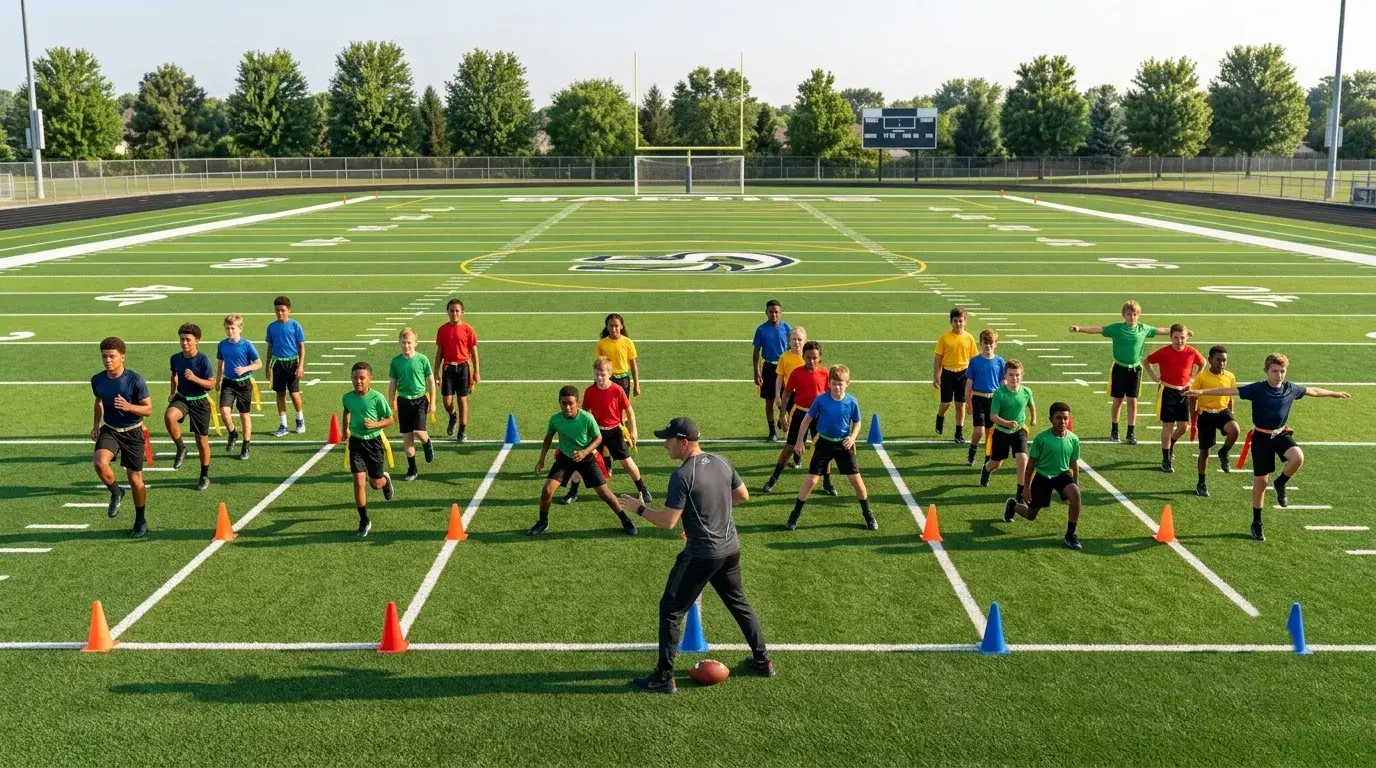
Flag football warmup drills are often the most overlooked part of practice, yet they can have one of the biggest impacts on player performance and safety. Many new coaches, volunteer parents, and PE teachers start passing, sprinting, or running plays before players prepare their muscles and joints. This can lead to poor movement, slow reactions, missed catches, and a higher chance of common sports injuries. From coaching players who are new to flag football, I have learned that the first few minutes of practice often determine how focused, confident, and ready players feel for the rest of the session.
A proper warm-up does much more than raise body temperature. It prepares players for sprinting, cutting, backpedaling, throwing, catching, and flag pulling while improving balance, coordination, mobility, and reaction time. Whether you are coaching your first youth team or leading a PE class, this guide gives you a simple warm-up routine you can use before every practice. You will also learn practical coaching tips, common mistakes to avoid, and beginner-friendly progressions that help every practice start safely and confidently.
What Are Flag Football Warmup Drills?
Flag football warmup drills are simple movements and football activities that prepare players before practice or a game. They raise your heart rate, improve blood flow, and loosen the muscles and joints. A proper warm-up also helps players move with better balance, coordination, and control.
Unlike a regular jog, flag football warmup drills include movements that match the actions used during the game. Players practice sprinting, shuffling, backpedaling, changing direction, catching, throwing, and pulling flags. After warming up, players can continue improving these skills with flag football passing drills. These movements prepare the body for football skills instead of only increasing body temperature.
Most coaches begin with light movement, then add dynamic stretches, and finish with football-specific drills. This gradual approach helps players feel ready without becoming tired before practice starts.
A complete warm-up usually takes 5 to 10 minutes. The exact time depends on the players’ age, experience, and practice schedule. Younger players may need a shorter routine, while older teams often spend more time preparing before high-intensity drills.
Dynamic Warm-Up vs. Static Stretching
Many beginners wonder if they should stretch before practice. The answer depends on the type of stretching.
A dynamic warm-up uses active movements that keep the body moving. If you want a complete post-practice routine, explore these football stretching drills to improve flexibility and recovery. These exercises prepare the muscles for running, passing, cutting, and quick changes of direction.
Static stretching means holding one position for several seconds. While static stretches can improve flexibility, they are usually better after practice when the body is cooling down.
The table below shows the difference.
| Dynamic Warm-Up | Static Stretching |
|---|---|
| Best before practice | Best after practice |
| Keeps the body moving | Holds one position |
| Raises heart rate | Helps muscles relax |
| Prepares players for football movements | Helps improve flexibility after activity |
For most beginners, a dynamic warm-up is the best way to start a flag football practice. It prepares the body for movement while helping players feel quicker, more balanced, and ready for the first drill.
Benefits of Flag Football Warmup Drills

A proper warm-up does more than prepare players to start practice. It helps the body and mind get ready for fast football movements. Even a short routine can improve performance and reduce the chance of common injuries.
Improves Blood Flow and Muscle Activation
Light movement increases blood flow to the muscles. As a result, players feel less stiff and more ready to run, jump, and change direction. Warm muscles also respond faster during football drills.
Increases Speed and Agility
Many flag football plays require quick feet and fast reactions. Dynamic warm-up drills prepare players for sprinting, shuffling, backpedaling, and cutting. This helps them move with better speed, balance, and body control.
Lowers the Risk of Injury
Cold muscles and tight joints are more likely to get strained during practice. A proper warm-up improves mobility and flexibility before high-speed movements begin. This can help lower the risk of muscle pulls, ankle injuries, and other common sports injuries.
Improves Passing and Catching
Throwing and catching become easier when the shoulders, arms, and core are warmed up. Players often make cleaner passes and stronger catches after completing a football-specific warm-up.
Builds Better Coordination and Reaction Time
Warm-up drills train players to react quickly. Activities like cone drills, partner passing, and reaction games improve hand-eye coordination, footwork, and decision-making before practice starts.
Prepares Players Mentally
A warm-up is also a chance to focus. Players can listen to coaching instructions, communicate with teammates, and get into a game-ready mindset. Starting practice with energy and focus often leads to better effort throughout the session.
Helps Coaches Run a Better Practice
A structured warm-up creates a smooth start to every practice. Players stay active instead of standing in line, and coaches can quickly move into flag football passing drills, flag football defense drills, or team activities without wasting time
Coach’s Tip: Keep every player moving during the warm-up. Avoid long lines or waiting turns. The more players move, the more prepared they will be for the rest of practice.
When Should You Warm Up?

Start your warm-up about 10 to 15 minutes before practice or a game. This gives your body enough time to prepare without becoming tired.
If the weather is cold, spend a little more time on dynamic movement. In hot weather, shorten the warm-up slightly and remind players to drink water before practice begins.
A good warm-up should end just before football drills begin so the muscles stay active.
Adjusting Your Warm-Up for Different Conditions
Weather can affect how players prepare for practice. A small change to your warm-up routine helps players stay comfortable and ready to perform.
Warming Up in Cold Weather
Cold weather can make muscles and joints feel stiff. Start with two or three extra minutes of light jogging, lateral shuffles, and dynamic stretches before increasing the pace. Keep players moving between drills instead of standing in long lines so their muscles stay warm.
Warming Up in Hot Weather
In hot weather, players usually warm up faster. Keep the routine shorter if needed, encourage players to drink water before practice, and include short water breaks during longer sessions. Watch for signs of fatigue and reduce the intensity if players become overheated.
Warming Up Indoors

When practicing in a gym or another small space, shorten sprint distances and focus on cone drills, quick feet, partner passing, reaction drills, and body control exercises. These activities prepare players for football movements without needing a full field.
Equipment Needed for Flag Football Warmup Drills
Most flag football warmup drills use simple equipment that many teams already have. You do not need expensive training gear to prepare players for practice. Many of these items are also useful for at-home football drills. A few basic items are enough to create an effective warm-up.

| Equipment | Purpose |
|---|---|
| Football | Passing, catching, and ball-handling drills |
| Cones | Mark running lanes, turning points, and drill stations |
| Flag Belts | Practice flag pulling and game-like movement |
| Agility Ladder (Optional) | Improve foot speed and coordination |
| Stopwatch or Timer | Keep drills short and organized |
| Water Bottles | Help players stay hydrated during practice |
Coach’s Tip: Set up your equipment before players arrive. This keeps the warm-up moving and gives players more time to practice.
Who Can Use This Warm-Up Routine?

These flag football warmup drills work well for many groups, including:
- Beginner players
- Youth flag football teams
- Recreational leagues
- School PE classes
- Parents practicing with their children
- New coaches building their first practice plan
The drills can also be adjusted for different ages and skill levels by changing the speed, distance, or number of repetitions.
If you coach younger athletes, explore our flag football drills for kids for age-appropriate practice ideas and beginner-friendly activities.
Why Coaches Choose a Structured Warm-Up
Many new coaches are unsure how to begin practice. Starting with random drills can leave players confused or standing in line.
A structured warm-up solves this problem by giving players a clear routine. It keeps everyone moving, prepares the body for football skills, and creates a smooth transition into passing drills, defensive drills, and team practice.
Even if this is your first season coaching, following the same warm-up routine each week helps players know what to expect and makes practices easier to manage.
If You Only Have Five Minutes
Many youth coaches have limited practice time. If your session is short, complete the 5-minute routine below before moving into football drills.
If you have more time, continue with the full warm-up and individual drills explained later in this guide.
5-Minute Flag Football Warm-Up Routine
If you only have a few minutes before practice or a game, this simple routine will prepare players for football movement without making them tired.

| Time | Activity | Main Focus |
|---|---|---|
| 1 Minute | Light Jog | Increase body temperature |
| 1 Minute | Dynamic Stretches | Improve mobility and flexibility |
| 1 Minute | Agility Movements | Footwork and quick feet |
| 1 Minute | Partner Passing | Throwing and catching |
| 1 Minute | Reaction Drill | Fast decisions and movement |
This routine works well for youth teams, beginners, PE classes, and short practice sessions.
Best Flag Football Warmup Drills
The following warm-up drills move from low intensity to football-specific movement. This order helps players prepare safely before skill drills and team practice.
1. Light Jog Around the Field
Purpose
A light jog slowly raises the heart rate and increases blood flow to the muscles. It also prepares players for faster movements later in the warm-up.
How to Do It
- Jog around the field for one minute.
- Keep a comfortable pace.
- Relax your shoulders.
- Swing your arms naturally.
- Breathe normally.
Coaching Points
- Stay together as a group.
- Do not sprint.
- Keep good posture.
- Look forward while running.
Common Mistakes
- Starting too fast.
- Talking instead of focusing.
- Sprinting before the body is ready.
2. High Knees
Purpose
High knees activate the hip flexors, core, and leg muscles. They also improve running form and quick foot movement.
How to Do It
- Run forward for 15 to 20 yards.
- Lift each knee to about waist height.
- Pump your arms.
- Land softly on the balls of your feet.
Repeat two or three times.
Skills Developed
- Speed
- Coordination
- Balance
- Running mechanics
Coaching Points
- Keep your chest up.
- Stay light on your feet.
- Move your arms quickly.
Coach Cue: Tell players to focus on quick, controlled steps instead of lifting their knees as high as possible. Good running form is more important than speed during the warm-up.
Common Mistakes
- Leaning backward.
- Taking slow steps.
- Looking at the ground.
Beginner Progression
Start by walking with high knees to learn the movement. Next, perform the drill at a light jogging pace. As players become more comfortable, increase the speed and finish with short bursts over 15 to 20 yards while maintaining good running form.
3. Butt Kicks
Purpose
This drill warms up the hamstrings while improving leg speed and running rhythm.
How to Do It
- Jog forward.
- Kick each heel toward your hips.
- Keep your knees pointing down.
- Swing your arms naturally.
Repeat for 20 yards.
Skills Developed
- Leg speed
- Running mechanics
- Coordination
Coaching Points
- Stay relaxed.
- Keep a steady pace.
- Do not lean too far forward.
4. Lateral Shuffle
Purpose
Flag football players move sideways during defense, coverage, and flag pulling. The lateral shuffle prepares players for these movements.
How to Do It
- Bend your knees slightly.
- Face forward.
- Shuffle sideways without crossing your feet.
- Shuffle back to the starting point.
Repeat in both directions.
Skills Developed
- Defensive movement
- Balance
- Agility
- Body control
Coaching Points
- Stay low.
- Keep your feet moving.
- Do not let your feet cross.
Coach Cue: Remind players to stay in an athletic stance and keep their hips low. This movement prepares them for defensive coverage and quick changes of direction.
Common Mistakes
- Standing too tall.
- Crossing the feet.
- Looking down.
5. Carioca Drill
Purpose
The carioca drill improves hip mobility, coordination, and body control. It also prepares players for quick changes of direction.
How to Do It
- Move sideways.
- Cross one foot in front of the other.
- Then cross behind.
- Swing your arms naturally.
- Keep moving without stopping.
Repeat for 15 to 20 yards.
Skills Developed
- Hip mobility
- Footwork
- Coordination
- Balance
Coaching Points
- Keep your shoulders facing forward.
- Stay smooth.
- Focus on rhythm instead of speed.
6. Walking Lunges
Purpose
Walking lunges activate the glutes, hamstrings, quadriceps, and core. Strong lower-body muscles improve balance and power during football movements.
How to Do It
- Step forward with one leg.
- Lower until both knees are bent.
- Push through your front foot.
- Bring your back leg forward.
- Repeat with the opposite leg.
Skills Developed
- Lower-body strength
- Stability
- Balance
- Mobility
Coaching Points
- Keep your back straight.
- Do not let your front knee move past your toes.
- Take controlled steps.
7. Arm Circles
Purpose
Arm circles prepare the shoulders for throwing, catching, and flag pulling.
How to Do It
- Extend both arms to the sides.
- Make small circles for 15 seconds.
- Gradually make larger circles.
- Reverse the direction.
Skills Developed
- Shoulder mobility
- Throwing preparation
- Joint flexibility
Coaching Points
- Keep your arms straight.
- Move slowly at first.
- Stay relaxed.
By this point, players should feel warm, loose, and ready for football-specific drills. The next part of the warm-up adds a football and introduces passing, reaction, and change-of-direction drills that closely match real game situations.
8. Backpedal to Sprint
Purpose
Football players often move backward before changing direction. This drill teaches players to backpedal under control and then explode into a sprint. It prepares defenders to react quickly during a game.
How to Do It
- Place two cones about 10 yards apart.
- Start at the first cone.
- Backpedal to the second cone.
- Plant your outside foot.
- Sprint back to the starting cone.
Repeat 4 to 6 times.
Skills Developed
- Change of direction
- Acceleration
- Defensive footwork
- Body control
Coaching Points
- Stay on the balls of your feet.
- Keep your knees slightly bent.
- Do not lean too far backward.
- Drive your arms when you sprint.
Common Mistakes
- Crossing the feet while backpedaling.
- Standing too straight.
- Taking slow first steps after turning.
9. Two-Line Passing Drill
Purpose
This drill prepares quarterbacks, receivers, and beginners for accurate passing and clean catches before practice begins.
How to Do It
- Divide players into two lines facing each other.
- Stand 8 to 10 yards apart.
- The first player throws the football.
- The receiver catches the pass using both hands.
- After the catch, both players move to the back of the opposite line.
Continue for 3 to 5 minutes.
Skills Developed
- Throwing accuracy
- Catching technique
- Hand-eye coordination
- Communication
Coaching Points
- Keep your eyes on the football.
- Step toward the target before throwing.
- Catch the ball with soft hands.
- Call for the football before each pass.
Coach Cue: Encourage players to throw accurate passes instead of hard passes. Good mechanics during the warm-up lead to better passing throughout practice.
Common Mistakes
- Throwing too hard.
- Looking away before the catch.
- Standing still after passing.
Coach’s Tip: As players improve, increase the distance between the lines to add a new challenge.
Beginner Progression
Begin with short passes from 5 yards apart. Once players throw and catch consistently, increase the distance to 8 to 10 yards. Advanced players can add movement by taking a few steps before throwing or catching the football.
10. Quick Catch Reaction Drill
Purpose
Players need quick reactions during every game. This drill improves focus, reaction time, and catching under pressure.
How to Do It
- Players work in pairs.
- One player stands ready.
- The partner throws quick passes to different sides.
- The receiver moves to catch each pass.
- Switch roles after 30 seconds.
Skills Developed
- Reaction time
- Catching
- Footwork
- Balance
Coaching Points
- Stay on your toes.
- Move your feet before reaching for the ball.
- Keep your hands ready.
Common Mistakes
- Reaching without moving.
- Looking down while catching.
- Standing flat-footed.
11. Cone Change-of-Direction Drill
Purpose
Quick cuts are a big part of flag football. This drill teaches players to stop, plant, and change direction with control.
How to Do It
- Place five cones in a zigzag pattern.
- Sprint to the first cone.
- Plant your outside foot.
- Cut around the cone.
- Continue through the course.
Repeat 3 to 5 times.
Skills Developed
- Agility
- Balance
- Acceleration
- Body control
Coaching Points
- Lower your hips before changing direction.
- Keep your steps short.
- Push off the outside foot.
Common Mistakes
- Taking long steps.
- Turning too slowly.
- Standing upright while cutting.
Beginner Progression
Walk through the cone pattern first to learn the footwork. Then jog through the course while focusing on balance. Finally, complete the drill at game speed with quick cuts and controlled body movement.
12. Flag Pull Tag Game
Purpose
This fun game helps players practice flag pulling while staying active. It also builds confidence before moving into defensive drills.
How to Do It
- Every player wears a flag belt.
- Mark a small playing area with cones.
- One or two players start as taggers.
- Players avoid losing their flags while moving around the area.
- A player becomes the next tagger after losing a flag.
Play for 3 to 5 minutes.
Skills Developed
- Defensive movement
- Agility
- Reaction speed
- Team awareness
Coaching Points
- Stay low when pulling a flag.
- Watch the player’s hips instead of the football.
- Keep moving at all times.
Coach Cue :Teach players to stay under control before reaching for the flag. Good positioning is usually more effective than diving or lunging.
Common Mistakes
- Reaching too early.
- Diving for the flag.
- Stopping after missing a pull.
How to Progress Your Warm-Up
A good warm-up should become more challenging step by step instead of starting at full speed. This helps players prepare their muscles, improve movement quality, and stay focused throughout practice.
Follow this simple progression:
- Light movement to increase body temperature.
- Dynamic stretches to improve mobility.
- Footwork and agility drills.
- Football-specific passing and catching.
- Reaction and change-of-direction drills.
- Move into the first football practice drill.
If you coach beginners, increase the speed only after players perform each movement with good technique. Building proper habits is more valuable than rushing through the warm-up.
Sample 10-Minute Flag Football Warm-Up Plan
Many beginner coaches ask how to put these drills together. The plan below creates a smooth transition from warm-up to skill practice.
| Time | Activity |
|---|---|
| 1 Minute | Light Jog |
| 1 Minute | High Knees and Butt Kicks |
| 1 Minute | Lateral Shuffle and Carioca |
| 1 Minute | Walking Lunges and Arm Circles |
| 2 Minutes | Backpedal to Sprint |
| 2 Minutes | Two-Line Passing Drill |
| 1 Minute | Quick Catch Reaction Drill |
| 1 Minute | Cone Change-of-Direction Drill |
By the end of this routine, players should feel warm, alert, and ready for football-specific practice.
How to Adjust These Drills for Different Group Sizes
Small Groups
If you have four or five players, reduce the number of cones and rotate quickly so everyone stays active.
Large Groups
Split players into smaller stations. Rotate every one or two minutes to reduce waiting time.
Mixed Skill Levels
Pair experienced players with beginners. This helps new players learn proper technique while keeping the practice organized.
What Should Come After the Warm-Up?
A warm-up prepares players for football movement, but it is only the first part of a complete practice.
After the warm-up, move into football-specific drills while the players are still active.
A simple practice order looks like this:
- Passing drills
- Catching drills
- Route running
- Flag pulling
- Offensive team drills
- Defensive drills
- Small-sided games or scrimmage
- Cool-down and stretching
Following this order helps players build skills without rushing into high-intensity activities.
Coaching Tips for New Coaches
If you are leading your first practice, keep your instructions short and easy to follow.
Show each drill before asking players to perform it.
Keep every player active by creating small groups instead of long lines.
Give positive feedback during each drill, and correct one mistake at a time. This helps beginners learn faster without feeling overwhelmed.
Common Warm-Up Mistakes to Avoid
Even experienced coaches sometimes rush the warm-up. Avoiding these mistakes helps players perform better and lowers the risk of injury.
Skipping the Warm-Up
Players who start practice without warming up are more likely to feel stiff and slow.
Using Only Static Stretching
Static stretches are useful after practice. Before practice, dynamic movements prepare the body more effectively.
Starting at Full Speed
The warm-up should gradually increase intensity. Sprinting too early can tire players before practice begins.
Standing in Long Lines
Players should keep moving. Long waiting times reduce the value of the warm-up.
Ignoring Upper-Body Movement
Throwing, catching, and flag pulling all depend on the shoulders and arms. Include arm circles and passing drills in every warm-up.
Signs Your Team Is Ready for Practice
A successful warm-up prepares both the body and the mind.
Your players are ready when they:
- Move without stiffness.
- Breathe comfortably.
- Throw accurate passes.
- Catch the football with confidence.
- Change direction quickly.
- Stay focused on coaching instructions.
- Communicate well with teammates.
At this point, you can move into passing drills, defensive drills, route running, or team practice with confidence.
How to Keep Flag Football Warm-Ups Fun
A good warm-up should prepare players without feeling repetitive. Young athletes stay focused when activities change every few minutes. Adding short games and partner challenges also helps build teamwork and confidence.
Here are a few simple ways to make warm-ups more enjoyable:
- Change partners after each drill.
- Turn passing drills into friendly competitions.
- Use relay races to practice speed and teamwork.
- Add reaction games that require quick thinking.
- Rotate between footballs, cones, and movement drills.
- Praise good effort as much as good results.
A fun warm-up keeps players active from the first whistle. It also creates a positive learning environment before practice begins.
Warm-Up Before Practice vs. Before a Game
Although the basic movements stay the same, the goal of the warm-up changes depending on the situation.
| Before Practice | Before a Game |
|---|---|
| Focus on learning skills | Focus on game readiness |
| Introduce new drills | Use familiar drills |
| Moderate intensity | Slightly higher intensity |
| More coaching and instruction | Short reminders and communication |
| Longer warm-up if needed | Keep the routine short and efficient |
Before a game, players should finish the warm-up feeling confident and energized. They should never feel tired before the first play.
When Should Players Move to the Next Drill?
There is no need to rush through the warm-up. Players should move to the next activity only after they show good movement and proper technique.
Look for these signs:
- Players run smoothly without stiffness.
- Passes are more accurate.
- Catches become more consistent.
- Players change direction with good balance.
- Communication improves.
- Everyone stays focused and ready to learn.
Once these signs appear, the team can move into passing drills, defensive drills, route running, or a full practice session.
Coach’s Reminder: You do not need a complicated warm-up to prepare your team. A short routine that players repeat before every practice is often more effective than changing drills every week. Consistency helps players build confidence, improve movement, and develop better football habits over time.
Frequently Asked Questions
How long should flag football warmup drills last?
Most warm-ups last between 5 and 10 minutes. Younger players may need only five minutes, while older teams often benefit from a longer routine before practice or games.
Should beginners stretch before flag football?
Yes, but use dynamic stretches before practice. Save static stretching for after practice when the muscles are cooling down.
What is the best warm-up before a flag football game?
A good game-day warm-up includes a light jog, dynamic stretches, agility movements, partner passing, and reaction drills. The goal is to prepare the body without causing fatigue.
Can kids use the same warm-up drills?
Yes. Many warm-up drills work well for kids. Coaches should lower the intensity, shorten the distance, and keep activities fun and easy to follow.
What equipment is needed for flag football warmup drills?
Most warm-ups require only a football, cones, and flag belts. An agility ladder and stopwatch are helpful but optional.
Why are dynamic warm-up drills better than static stretching?
Dynamic movements prepare the muscles for football actions like sprinting, cutting, passing, and catching. Static stretching is more useful after practice to improve flexibility.
What should players do after warming up?
Players should move into football-specific practice, such as passing drills, defensive drills, route running, or team plays while their muscles are still warm.
Can players warm up without footballs?
Yes. Many drills focus on movement, agility, balance, and coordination. After those activities, coaches can add footballs for passing and catching practice.
Conclusion
From my experience coaching beginner flag football players, the strongest teams are not always the fastest or the most skilled. They are the teams that build good habits before practice even begins. A consistent warm-up prepares players physically and mentally, improves communication, and helps coaches transition smoothly into passing drills, defensive drills, and team activities. Small improvements at the start of practice often lead to better performance throughout the season.
Keep your warm-up simple, keep every player moving, and focus on proper technique before increasing speed. As players become more comfortable with each movement, you can gradually add more challenging drills and game-like situations. By using these flag football warmup drills consistently, you will build safer practices, more confident players, and a stronger foundation for long-term skill development.
