



Introduction
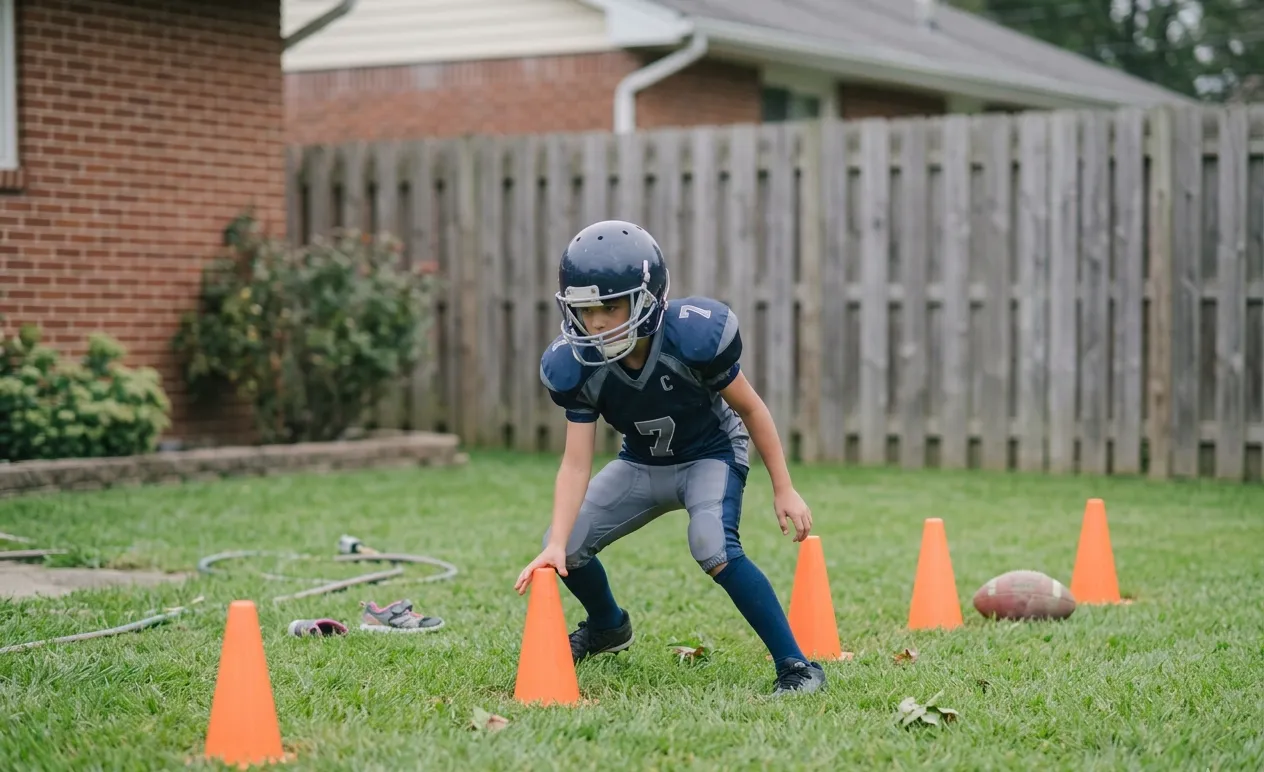
Practicing football at home can feel confusing at first, especially if you are just starting. Many beginners search for at home football drills for beginners because they do not have a field, a coach, or a clear plan. Kids get bored quickly, parents are not sure what is safe, and teens often try random drills without seeing real progress.
I have seen this happen many times with new players. They want to improve but do not know where to start, so they either do too much or quit early. The good news is simple. You do not need a big space or special equipment. With the right drills and a simple routine, you can build strong basics and start improving step by step.
Key Takeaways
- You can practice football at home with little space
- Simple drills improve footwork, control, and reaction
- No equipment is needed for most drills
- Short daily practice works better than long sessions
- Safety and proper form are important for beginners
Why Practice Football at Home Works
Practicing at home helps you stay consistent. You can train every day, even for 10–15 minutes. Small daily sessions add up fast.
Home training also builds strong basics. You focus more on control, balance, and movement. These are key skills for beginners.
How to Set Up Your Home Football Practice Space

You do not need a big area. A small space works fine.
Indoor vs Outdoor Practice
Indoor space is good for control and footwork. Outdoor space is better for movement.
How Much Space Do You Need
You need only 6–10 feet of space for most drills.
Safe Practice Area Tips
Remove sharp objects. Avoid slippery floors. Use shoes with grip if needed.
Parents should supervise younger players during practice.
Quick Home Setup Checklist
- Clear a small safe space
- Remove sharp or hard objects
- Wear proper shoes
- Keep water nearby
- Start with a warm-up
Quick Warm-Up Before You Start
Do a short warm-up.
- light jogging in place
- arm circles
- leg swings
- quick steps side to side
Best At Home Football Drills for Beginners
These at home football drills are simple and effective.
Do each drill for 30–45 seconds or 10–15 reps
Keep it fun and take short breaks if needed
Footwork Drills

Hex Jumps – improves balance and quick feet
Jump Cut Drill – improves agility
Shuffle and Switch – improves coordination
Agility and Movement

X Drill – improves speed and movement
Cone Routes – keep routes short in small space
Ball Control and Simple Passing Drills

This drill focuses on ball control, which is the base for better passing.
Pocket Presence Drill – improves balance
Wall Passing / Reaction Routes – improves control and reaction
Reaction Drills
Mirror Drill (solo) – improves reaction and movement
Safe Tackling Practice
Shadow Tackling – no contact
Agility Steps – body control
Do not practice full tackling at home
| Drill | Focus | Time |
|---|---|---|
| Hex Jumps | Footwork | 30 sec |
| Jump Cut | Agility | 10–15 reps |
| Shuffle | Coordination | 30 sec |
| X Drill | Speed | 30 sec |
| Wall Passing | Control | 10 reps |
Football Drills Without Equipment
- use bottles as cones
- use tape for lines
- use wall for passing
Can You Practice Football at Home Alone?

Yes. Many drills are solo.
- footwork
- wall drills
- reaction drills
This helps build confidence.
Simple Weekly Plan
3 Days:
- footwork
- passing
- rest
5 Days:
- footwork
- agility
- passing
- reaction
- mix
Common Mistakes
Safety Tips
- check space
- avoid hard surfaces
- wear proper shoes
Tips to Improve Faster
- stay consistent
- track progress weekly
- practice 10–15 min daily
Conclusion
From my experience, beginners improve the most when they keep things simple and stay consistent. You do not need long training sessions or perfect conditions. Just a few minutes of focused practice each day can make a big difference. Over time, your footwork gets quicker, your control improves, and your confidence starts to grow.
The key is to follow a simple plan and trust the process. Focus on basic drills, practice safely, and do not rush results. Small progress each day leads to real improvement. If you stay consistent, you will see results and become a better player step by step.
FAQS
1.Can I do at home football drills as a beginner?
Yes, beginners can easily do at home football drills. You only need a small space and simple drills to start improving basic skills like footwork and control.
2. What are the best at home football drills for beginners?
The best at home football drills for beginners include footwork drills, wall passing, reaction drills, and simple agility exercises. These help build strong basics.
3. How can I practice football at home alone?
You can practice football at home alone by doing solo drills like footwork, wall passing, and reaction drills. These do not require a partner and are easy to follow.
4. Do I need equipment for football drills at home?
No, you do not need special equipment. You can use simple items like bottles, tape, or a wall to practice football drills at home.
5. How much time should beginners spend on football drills at home?
Beginners should practice for 10–20 minutes daily. Short and regular practice sessions help improve skills faster.
6. Are at home football drills safe for kids?
Yes, at home football drills are safe for kids if done in a clean and open space. Adult supervision is also recommended for younger players.
