



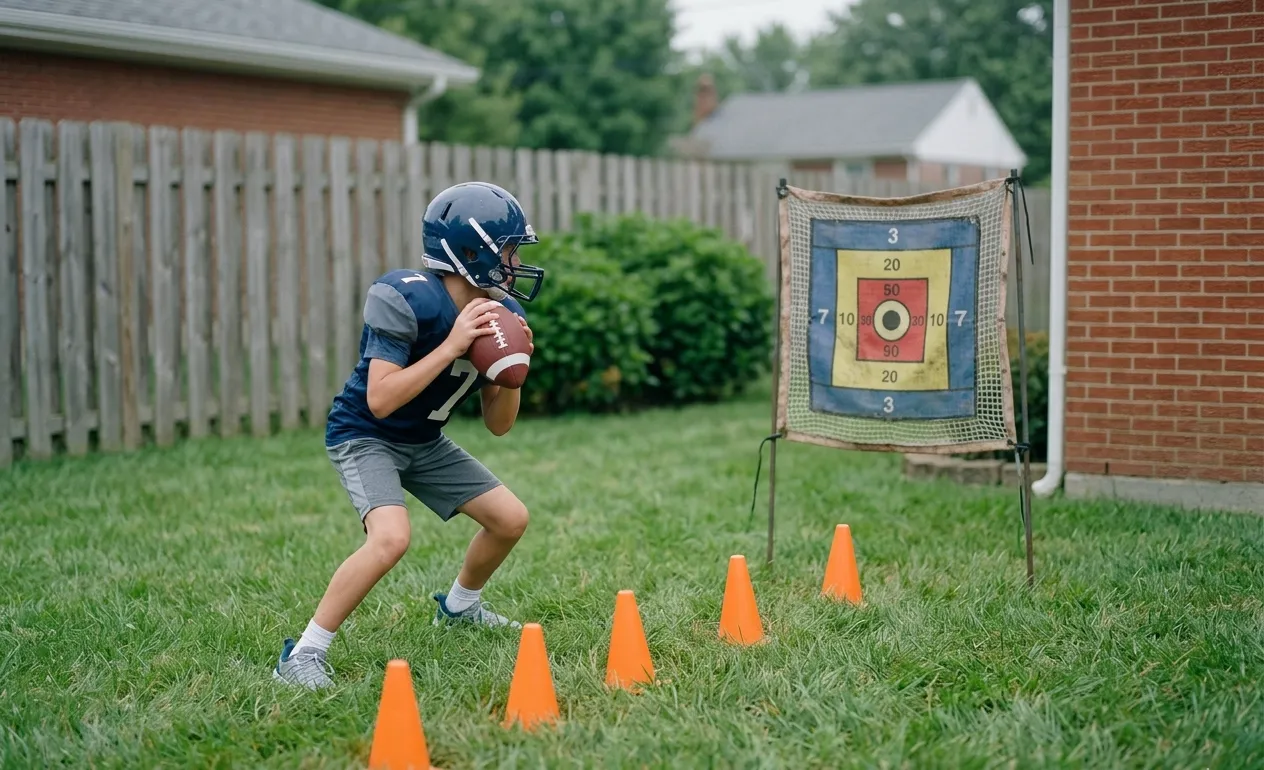
No partner football drills for beginners are often the only way to keep practicing when you have no one to train with. Many beginners face this problem. You want to improve, but there is no one to throw or catch with you. After a few days, practice slows down and motivation drops. This is one of the biggest reasons new players struggle to stay consistent.
I have seen this again and again with beginner players. When they switch to simple solo drills, things change quickly. They get more repetitions, better control, and more confidence. You do not need perfect conditions to improve. You just need the right drills and a clear plan.
Key Takeaways
- You can improve football skills without a partner
- Focus on simple drills like throwing, catching, and footwork
- Use a wall or target for solo practice
- Start with short routines and increase time slowly
- Consistency matters more than long practice sessions
What Are No Partner Football Drills?
No partner football drills are simple exercises you can do alone.
You do not need a teammate. You can practice using a wall, a target, or open space. These drills help you improve throwing, catching, footwork, and ball control.
They are perfect for beginners who want to train consistently and build confidence step by step.
Why Beginners Should Practice Football Alone
Training alone can help you improve faster.
- You control your pace
- You get more repetitions
- You focus on weak areas
- You can train anytime
Because of this, solo practice is very useful for beginners. It also helps you build focus and discipline.
How to Set Up Solo Football Practice at Home

You do not need a perfect setup to start.
Space
- Small space works for footwork drills
- Backyard works for throwing and running
Simple setup ideas
- Use a wall for rebound practice
- Use a bucket or cone as a target
- Mark space with cones or shoes
Equipment (optional)
- Football
- Cones
- Ladder (optional)
Start simple. Even with limited space, you can still practice important skills.
Quick Warm-Up Before Solo Training
Before you start drills, warm up your body.
- Light jogging for 2 minutes
- Arm circles and shoulder movement
- Simple stretches
Always start slow, especially if you are new. This helps prevent injury and improves performance.
Best No Partner Football Drills for Beginners
Now let’s look at the most effective drills you can do alone.
Start with easy drills and move to harder ones as you improve.
Quarterback Throwing Drills Without a Partner

Target Throwing Drill
Stand 5–10 yards away from a target.
Steps:
- Aim at the same spot
- Throw with control
- Repeat 10–15 times
Tip: Focus on accuracy first, then increase distance.
Beginner: Start close
Next level: Increase distance gradually
Bucket Accuracy Drill
Place a bucket or box ahead.
Steps:
- Start at a short distance
- Try to land the ball inside
- Repeat multiple times
Tip: Move farther away as you improve
Beginner: Use a larger target
Next level: Use a smaller target
Catching Drills You Can Do Alone

Self Toss Catch Drill
Steps:
- Toss the ball in the air
- Keep your eyes on it
- Catch with both hands
Tip: Keep your hands soft and relaxed
This is a great starting drill for beginners
Wall Rebound Catch Drill
(This is for practice only, not a real game situation.)
Steps:
- Throw the ball at a wall
- Stay ready
- Catch the rebound quickly
Tip: Keep knees slightly bent and stay balanced
Tennis Ball Reaction Drill
(This helps improve hand-eye coordination.)
Steps:
- Drop or toss the ball
- React quickly
- Catch it before it falls
Footwork Drills Without a Partner

Quick Feet Drill
Steps:
- Stay on your toes
- Move feet quickly in place
- Keep balance
Cone Movement Drill
Steps:
- Set 3–4 cones
- Move side to side
- Stay low
Tip: Stay controlled and do not rush
Dropback Footwork (QB Basics)
Steps:
- Start in ready position
- Take 3 or 5 steps back
- Stay balanced
Tip: Keep your eyes forward
Speed and Agility Drills for Solo Practice

Short Sprint Drill
Steps:
- Mark a short distance
- Sprint fast
- Walk back and repeat
Change of Direction Drill
Steps:
- Run forward
- Stop quickly
- Change direction
Tip: Focus on control, not just speed
Ball Security Drills (No Partner Needed)
High and Tight Carry Drill
Steps:
- Hold the ball close to your body
- Keep it tight
- Move slowly
Hand Switch Drill
Steps:
- Switch the ball between hands
- Keep control
- Move while switching
These drills help prevent fumbles.
Drill Summary Table
| Drill Type | Main Focus | Skill Level |
|---|---|---|
| Throwing Drills | Accuracy & Control | Beginner |
| Catching Drills | Hand Control & Reaction | Beginner |
| Footwork Drills | Movement & Balance | Beginner |
| Speed Drills | Quickness & Reaction | Beginner |
| Ball Security Drills | Ball Control & Protection | Beginner |
How to Practice Passing and Catching Without a Partner
This is a common problem for beginners.
Here are simple solutions:
- Use a wall for rebound practice
- Use a target for throwing
- Toss the ball to yourself
- Use controlled throws
If you do not have a wall:
- Throw the ball up and catch it
- Use soft bounce methods carefully
Even without a partner, you can improve your passing and catching.
What If You Have Limited Space or No Equipment?
You can still train.
- Use small space for footwork drills
- Do stationary catching drills
- Practice quick movements
No equipment?
- Use shoes as markers
- Use any object as a target
Keep it simple and stay consistent.
Simple Solo Football Training Plan for Beginners
10-Minute Routine
- 2 min warm-up
- 4 min footwork
- 4 min catching
20-Minute Routine
- 5 min warm-up
- 5 min throwing
- 5 min catching
- 5 min speed
30-Minute Routine
- 5 min warm-up
- 10 min drills
- 10 min skill work
- 5 min cool down
Training Plan Table
| Routine | Time | Focus |
|---|---|---|
| Quick Practice | 10 Minutes | Footwork + Catching |
| Balanced Training | 20 Minutes | Throwing + Catching + Speed |
| Full Session | 30 Minutes | Warm-up + Drills + Skill Work |
Weekly Progression Plan for Training Alone
- Day 1: Throwing + catching
- Day 2: Footwork + speed
- Day 3: Light practice
- Day 4: Repeat Day 1
- Day 5: Full routine
Increase repetitions each week. Track your progress. Small progress leads to big improvement.
Common Mistakes When Practicing Without a Partner
- Poor technique
- No plan
- Training too fast
- Skipping basics
Fix these early.
Tips to Improve Faster When Training Alone
- Stay consistent
- Focus on basics
- Train with purpose
- Track progress
You do not need a team to improve. You just need regular practice.
Conclusion
You do not need a partner to become better at football. From experience, players who train alone with basic drills often improve faster because they repeat the same skills again and again. This builds strong fundamentals, better focus, and real confidence over time.
Stick to these no partner football drills for beginners, keep your practice simple, and stay consistent. Real progress does not come from complex training. It comes from small daily effort and doing the basics the right way.
