



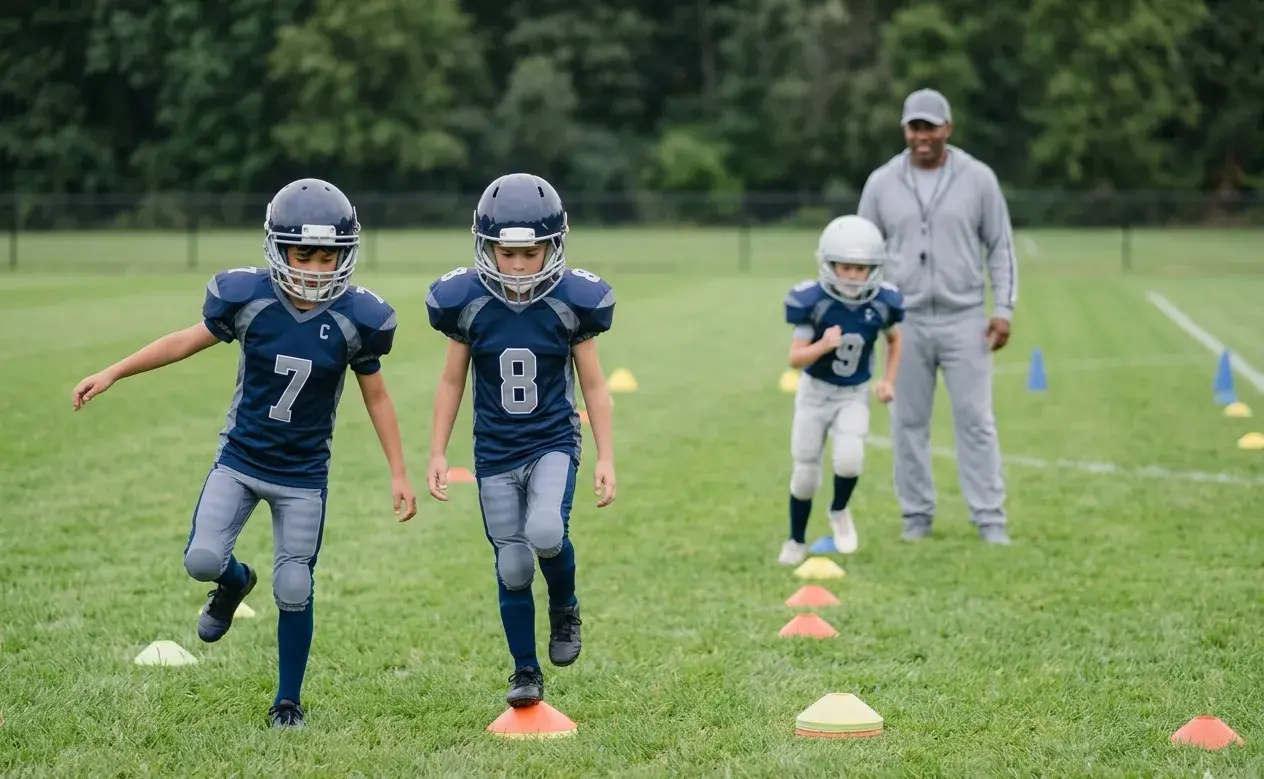
Introduction
Injuries are common for beginners, especially during early practice sessions. Many players get hurt because they skip warm-ups or use poor technique during drills. If you are just starting, you may not know which movements are safe. That is why using the right injury prevention drills for beginners is important from day one.
I have seen many beginners lose confidence after small injuries that could have been avoided. Parents often worry about safety, and new coaches are not always sure how to run safe practice. The truth is simple: most injuries happen due to poor control and rushing. When you follow simple, structured drills, you build safe habits and reduce risk over time.
Key Takeaways
- Injury prevention drills help beginners move safely
- Focus on balance, control, and proper landing
- Always warm up before practice
- Do drills 2–3 times per week
- Avoid rushing and poor technique
What Are Injury Prevention Drills?
Injury prevention drills are simple movements that train your body to move safely. They improve balance, strength, and control.
These drills focus on:
- body control
- balance
- safe landing
- smooth direction changes
These drills help reduce injury risk by improving balance, control, and body movement.
Why Injury Prevention Matters in Football
Beginners often get injured during:
- sudden stops
- fast turns
- bad landing
When your body is not ready, small mistakes can cause injuries. These drills prepare your body for real football movement like sprinting, stopping, and changing direction.
Parents and coaches can use these drills to build safe habits early.
Best Injury Prevention Drills for Beginners
Do each drill:
- 2–3 sets
- 10–20 seconds each
- rest 20–30 seconds
These drills help during quick direction changes, sprint stops, and body control in football practice. Coaches can also use these drills in beginner training sessions.
1. Single-Leg Balance Drill
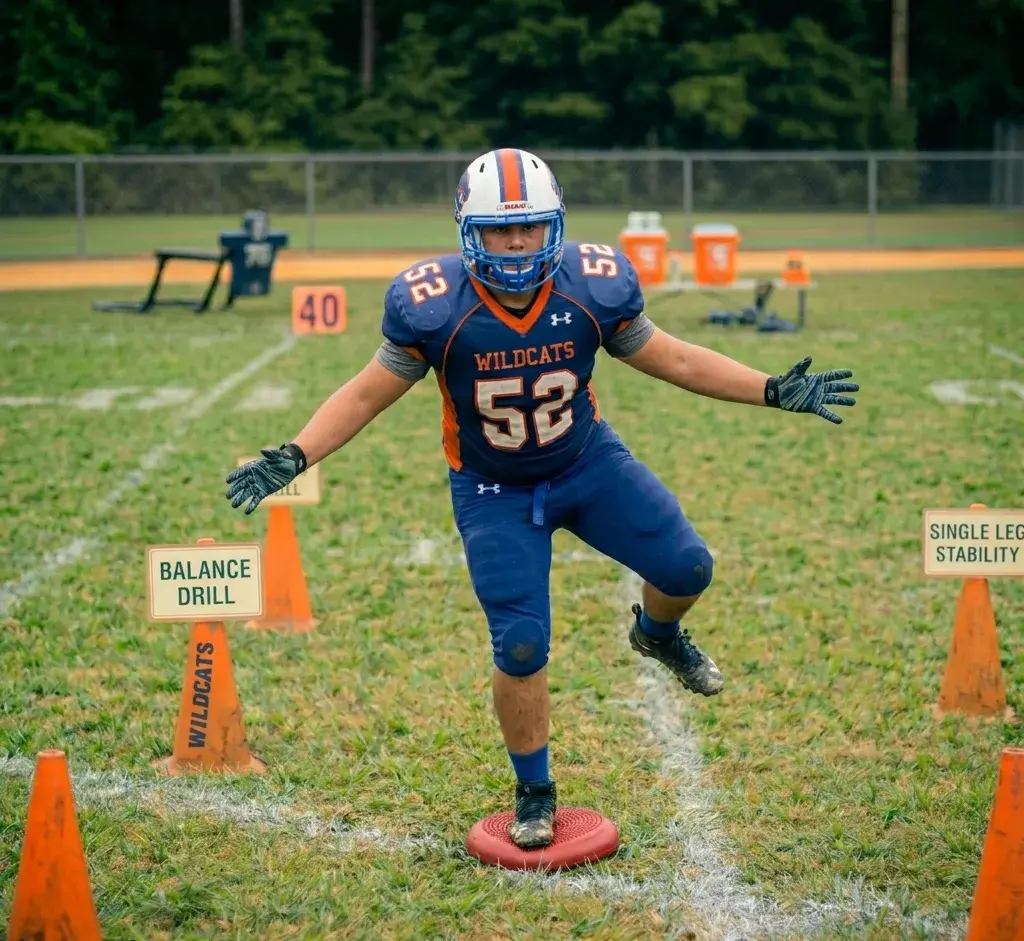
Setup: Stand on one leg
Steps:
- Lift one foot off the ground
- Hold balance for 15–20 seconds
- Switch legs
Tip: Keep your core tight
Coaching cue: Keep your chest up and eyes forward
Mistake: Looking down or losing balance
2. Cone Control Drill
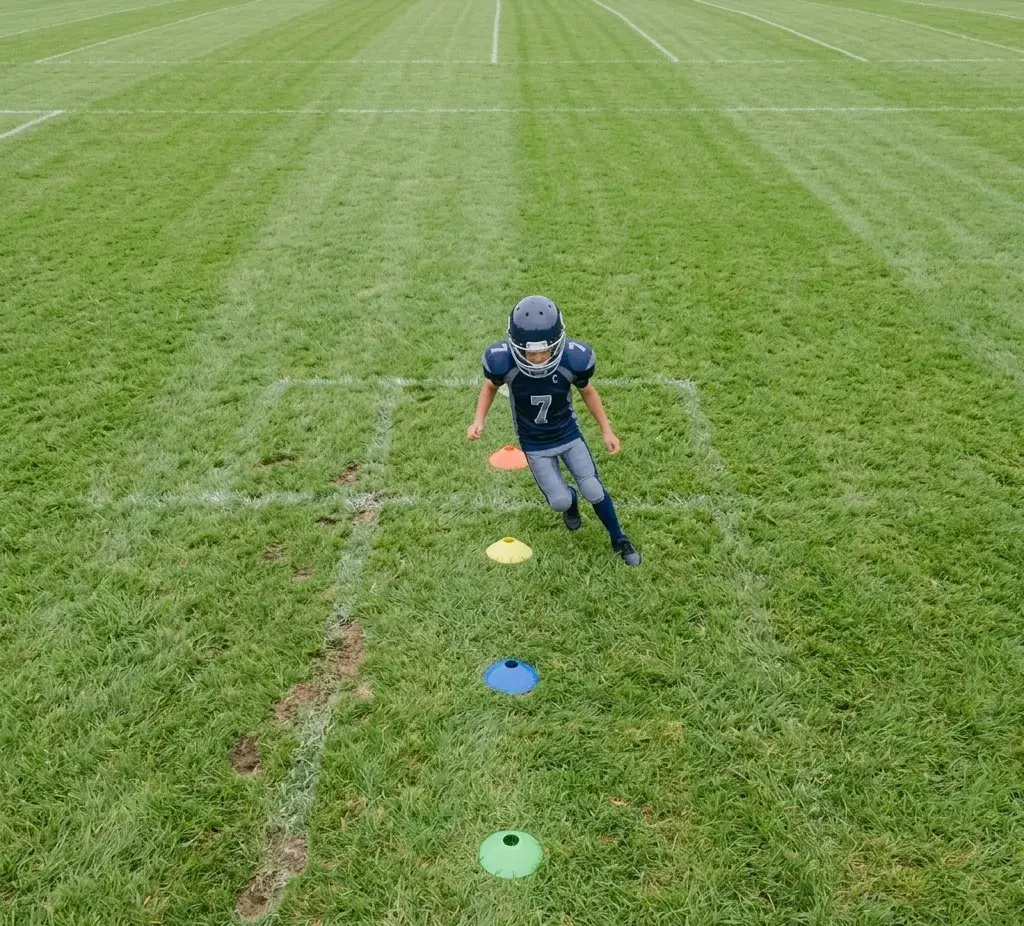
Setup: Place 3–4 cones in a straight line
Steps:
- Jog forward through cones
- Stay light on your feet
- Keep control
Tip: Move slowly at first
Coaching cue: Take short, controlled steps
Mistake: Rushing and losing control
3. Deceleration Drill
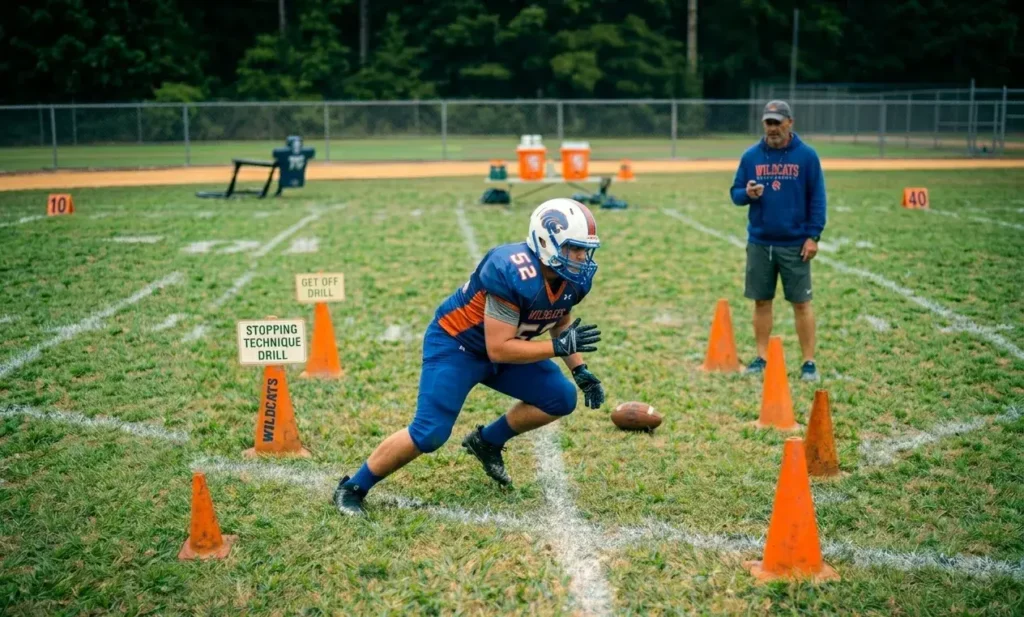
Setup: Mark a short running lane
Steps:
- Sprint for 5–10 yards
- Stop slowly with short steps
Tip: Bend knees when stopping
Coaching cue: Lower your body as you slow down
Mistake: Stopping too fast
4. Landing Control Drill
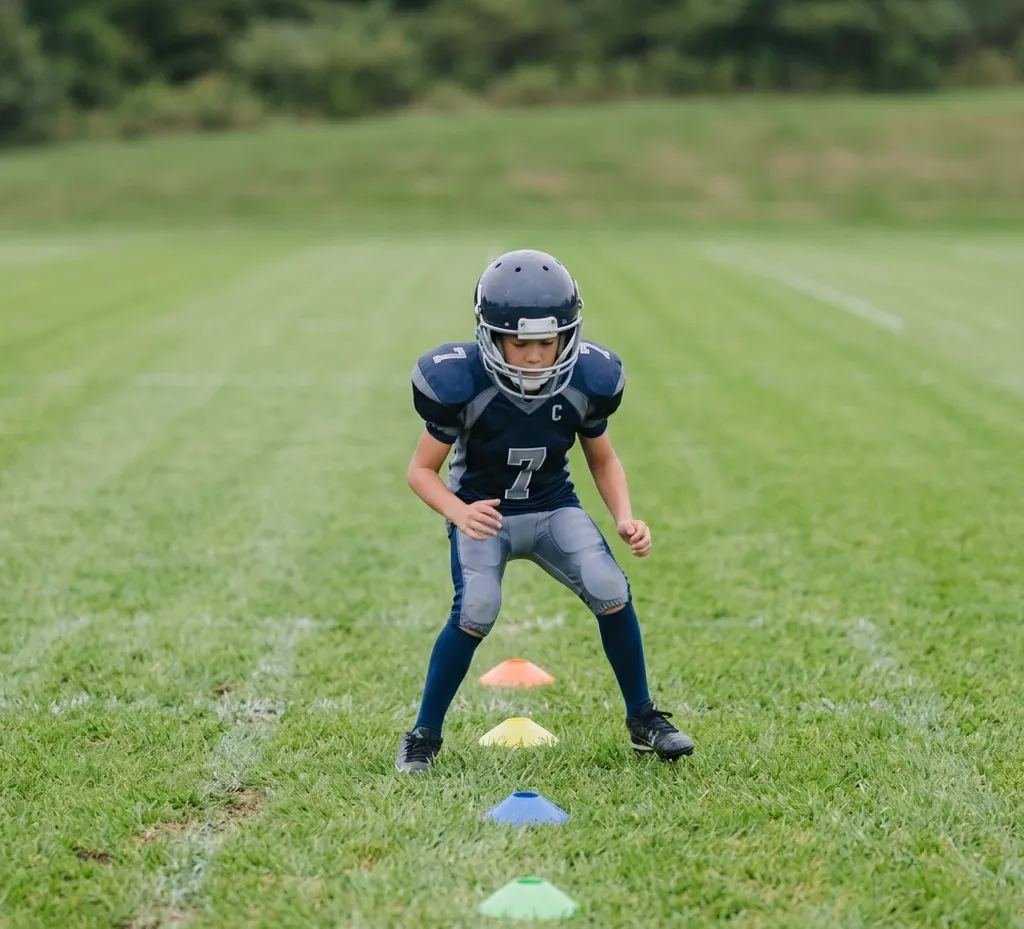
Setup: Stand in place
Steps:
- Jump up
- Land softly on both feet
Tip: Keep knees slightly bent
Coaching cue: Land quietly with control
Mistake: Stiff landing
5. Lateral Shuffle Drill
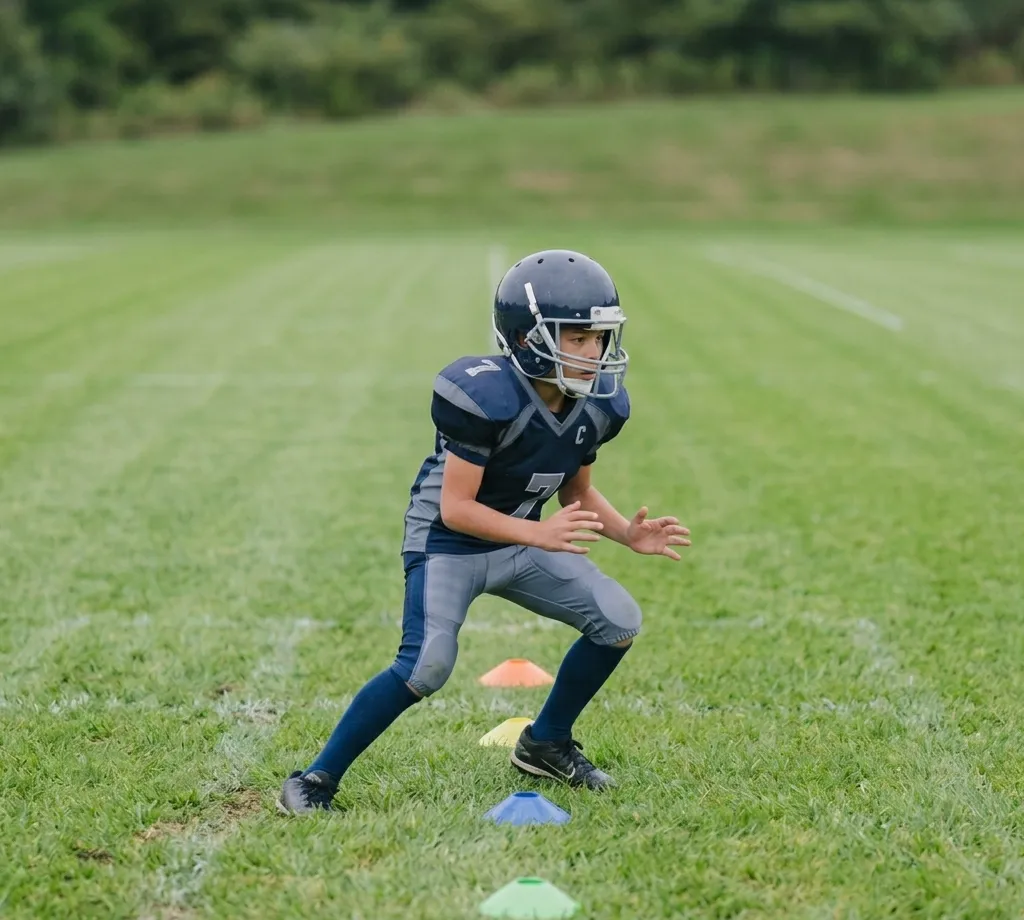
Setup: Mark side-to-side space
Steps:
- Move sideways
- Stay low
- Keep feet active
Tip: Stay balanced
Coaching cue: Keep hips low and steady
Mistake: Crossing feet
| Drill | Purpose | Time | Focus |
|---|---|---|---|
| Balance | Stability | 15–20s | Ankle |
| Cone Drill | Control | 10–20s | Coordination |
| Deceleration | Stopping | 5–10y | Knee |
| Landing | Impact | 8–10 reps | Joints |
| Shuffle | Movement | 10–20s | Agility |
Warm-Up Injury Prevention Drills Before Practice (10-Min Plan)
Warm muscles move better and are less likely to get injured.
- 3 min: light jogging
- 4 min: shuffle + cones
- 3 min: balance + landing
Coaches can use this as a quick team warm-up routine.
Common Mistakes That Cause Injuries
- skipping warm-up
- rushing drills
- poor landing
- overtraining
Parents should make sure beginners move with control.
Simple Weekly Injury Prevention Plan for Beginners
| Day | Activity | Focus |
|---|---|---|
| Day 1 | Drills + Practice | Control |
| Day 2 | Recovery | Rest |
| Day 3 | Drills + Practice | Balance |
| Day 4 | Rest | Recovery |
Quick Safety Checklist
- Warm up before training
- Start slow
- Use proper gear
- Stop if you feel pain
Conclusion
Injury prevention drills for beginners may look simple, but they play a big role in keeping you safe. From experience, most early injuries happen when players rush, skip warm-ups, or ignore proper movement. When you stay consistent with these drills, you improve balance, control, and confidence in every session.
These drills also support safe training for everyone involved. Coaches can use them to run better practice sessions, and parents can feel more confident about their child’s safety. Start slow, focus on control, and build your routine step by step. This approach helps you stay injury-free and improve the right way.
What are the best injury prevention drills for beginners?
The best injury prevention drills for beginners include balance drills, landing control drills, deceleration drills, and cone control drills. These drills improve stability, body control, and safe movement during practice.
How can beginners avoid injuries in football practice?
Beginners can avoid injuries by using proper warm-up drills, moving with control, and not rushing movements. Following simple injury prevention drills for beginners helps build safe habits and reduces injury risk.
Do injury prevention drills really reduce injury risk?
Yes, injury prevention drills help reduce injury risk by improving balance, strength, and movement control. When done regularly, these drills prepare the body for safe training and game situations.
Which drills help prevent knee and ankle injuries?
Deceleration drills, landing control drills, and single-leg balance drills are best for knee and ankle safety. These drills improve stability and help protect joints during movement.
How often should beginners do injury prevention drills?
Beginners should do injury prevention drills 2–3 times per week. Short sessions with proper rest help improve control and reduce injury risk over time.
Are injury prevention drills safe for kids and young players?
Yes, injury prevention drills are safe for kids when done with proper control and supervision. Parents and coaches should make sure beginners focus on correct form and avoid rushing.
Can coaches use these drills in team practice?
Yes, coaches can use these injury prevention drills in team practice. These drills are simple, safe, and easy to include in warm-up routines for beginner players.
