



INTRODUCTION
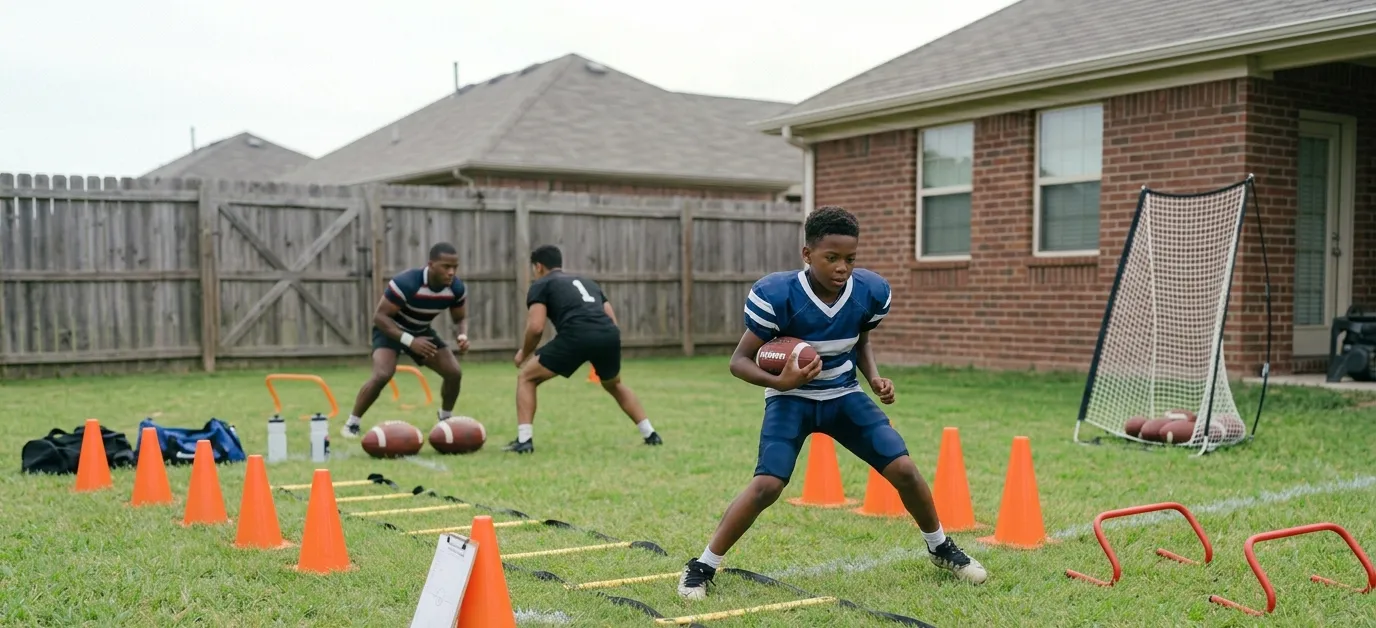
Backyard football practice drills are a great way to improve your football skills when you do not have access to a full field, a coach, or daily team practices. Many beginner players struggle to get enough repetitions during the week, which can make it harder to improve catching, throwing, footwork, and confidence on the field. The good news is that you can develop many important football fundamentals right from your backyard with very little equipment.
As a youth football coach, I have seen how consistent home practice can help young players build better habits and gain confidence over time. A small backyard, driveway, or open space can provide plenty of room to work on skill development. In this guide, you will learn simple backyard football practice drills, solo training ideas, and structured routines that can help you become a better football player. These drills are ideal for youth football players, parents helping their children practice, and coaches looking for simple football skill development activities.
Key Takeaways
- Backyard football practice drills help players improve football fundamentals at home.
- Most drills require only 10 to 20 yards of space.
- Many drills can be performed without special equipment.
- Solo drills allow players to practice without teammates.
- Consistent practice can improve catching, throwing, footwork, agility, and ball security.
- A structured weekly practice plan helps beginners develop skills faster.
What Are Backyard Football Practice Drills?
Backyard football practice drills are football exercises that can be performed at home in a backyard, driveway, park, or other small training area.
These drills help players improve:
- Catching
- Throwing
- Footwork
- Agility
- Speed
- Ball security
- Route running
- Hand-eye coordination
- Change of direction
Most backyard football drills focus on skill development rather than full-game situations. This makes them a great choice for beginners and youth football players.
Benefits of Backyard Football Practice
Backyard football training offers several benefits.
Practice Without a Team
Many beginner players do not have access to teammates every day. Backyard football practice drills make it easier to improve skills on your own.
Improve Skills More Often
Team practices only happen a few times each week. Backyard training gives you more opportunities to work on important football skills.
Build Confidence
Repeating football drills helps players feel more comfortable during games and team practices.
Train in Small Spaces
Many football drills can be performed without a full football field.
Stay Active
Football practice helps improve coordination, athletic development, movement, and conditioning.
How to Set Up a Backyard Football Practice Area

Before starting your backyard football practice drills, create a safe training area.
Is My Backyard Big Enough?
Many football drills only require 10 to 20 yards of space. Even a small backyard, driveway, or open area can be enough for beginner football training.
How Much Space Do You Need?
Most drills can be done in an area that is 10 to 20 yards long.
Even a small backyard can be enough for:
- Catching drills
- Footwork drills
- Agility drills
- Throwing drills
Basic Equipment
You only need a few items:
- Football
- Cones
- Agility ladder
- Water bottle
Equipment Alternatives
If you do not have training equipment, use household items.
- Water bottles instead of cones
- Chalk instead of an agility ladder
- A wall for passing drills
Backyard Football Warm-Up Routine
Always warm up before training.
Dynamic Stretching
Spend one minute moving your arms, legs, and hips through a comfortable range of motion.
High Knees
Run in place while lifting your knees.
Perform for 30 seconds.
Lateral Shuffle
Shuffle sideways for 10 yards and back.
Repeat two times.
Backpedal and Sprint
Backpedal for five yards and then sprint forward.
Repeat three times.
| Drill | Best For | Primary Focus |
|---|---|---|
| Wall Passing Drill | Quarterbacks, Receivers | Throwing Accuracy, Catching |
| Cone Weave Footwork Drill | Running Backs, Wide Receivers, Defensive Backs | Footwork, Balance |
| Figure Eight Running Drill | Running Backs, Wide Receivers, Defensive Backs | Agility, Coordination |
| Backpedal and Break Drill | Defensive Backs, Linebackers | Reaction Speed |
| Quick Feet Drill | All Positions | Foot Speed |
| Zig Zag Sprint Drill | Running Backs, Wide Receivers, Defensive Backs | Acceleration, Agility |
| Reaction Catch Drill | Wide Receivers, Defensive Backs | Hand-Eye Coordination |
| Target Throwing Drill | Quarterbacks | Throwing Accuracy |
| Shuffle and Sprint Drill | Defensive Backs, Running Backs | Lateral Movement |
| Route Running Drill | Wide Receivers, Tight Ends | Route Running |
| Ball Security Drill | Running Backs, Quarterbacks | Ball Protection |
Best Backyard Football Practice Drills
These backyard football practice drills help develop multiple football skills at the same time.
Self Toss Catch Drill
Purpose: Improve hand-eye coordination and catching.
Best For: Wide Receivers, Tight Ends, Beginners
Focus: Catching, Hand-Eye Coordination
How to do it:
- Toss the football into the air.
- Move under the ball.
- Catch it with both hands.
- Repeat 15 times.
Wall Passing Drill

Purpose: Improve reaction time and catching.
Best For: Quarterbacks, Wide Receivers, Tight Ends, Beginners
Focus: Throwing Accuracy, Catching, Hand-Eye Coordination
How to do it:
- Stand several feet from a wall.
- Throw the football against the wall.
- Catch the rebound.
- Continue for one minute.
Cone Weave Footwork Drill

Purpose: Improve footwork and body control.
Best For: Running Backs, Wide Receivers, Defensive Backs
Focus: Footwork, Balance, Body Control
How to do it:
- Place cones in a straight line.
- Run through the cones.
- Stay under control.
- Repeat several times.
Figure Eight Running Drill
Purpose: Improve agility and balance.
Best For: Running Backs, Wide Receivers, Defensive Backs
Focus: Agility, Change of Direction, Coordination
How to do it:
- Place two cones several feet apart.
- Run around them in a figure-eight pattern.
- Keep your feet moving quickly.
Backpedal and Break Drill
Purpose: Improve defensive movement.
Best For: Defensive Backs, Linebackers
Focus: Backpedaling, Reaction Speed, Change of Direction
How to do it:
- Backpedal for five yards.
- Plant your foot.
- Sprint forward.
Repeat 10 times.
Quick Feet Drill
Purpose: Improve foot speed.
Best For: All Positions
Focus: Foot Speed, Coordination, Athletic Development
How to do it:
- Move your feet as quickly as possible.
- Stay on your toes.
- Continue for 20 seconds.
Zig Zag Sprint Drill
Purpose: Improve change of direction.
Best For: Running Backs, Wide Receivers, Defensive Backs
Focus: Acceleration, Agility, Change of Direction
How to do it:
- Set up cones in a zig-zag pattern.
- Sprint from cone to cone.
- Make sharp cuts at each cone.
Reaction Catch Drill
Purpose: Improve focus and reactions.
Best For: Wide Receivers, Defensive Backs, Tight Ends
Focus: Catching, Reaction Time, Hand-Eye Coordination
How to do it:
- Have a partner toss the ball unexpectedly.
- React quickly.
- Secure the catch.
Target Throwing Drill
Purpose: Improve passing accuracy.
Best For: Quarterbacks, Beginners
Focus: Throwing Accuracy, Ball Placement, Arm Control
How to do it:
- Place a target in the yard.
- Throw at the target.
- Track successful throws.
- Coaching Tip: Focus on accuracy first. Increase throwing distance only after you can consistently hit your target.
Shuffle and Sprint Drill
Purpose: Improve football movement skills.
Best For: Defensive Backs, Linebackers, Running Backs
Focus: Lateral Movement, Acceleration, Agility
How to do it:
- Shuffle sideways.
- Sprint forward on command.
- Repeat several times.
Route Running Drill
Purpose: Improve receiver movement.
Best For: Wide Receivers, Tight Ends, Running Backs
Focus: Route Running, Footwork, Change of Direction
How to do it:
- Set up cones as route markers.
- Run simple football routes.
- Focus on sharp cuts.
Coaching Tip: Stay low when making cuts to improve balance and maintain speed.
Ball Security Drill
Purpose: Protect the football.
Best For: Running Backs, Wide Receivers, Quarterbacks
Focus: Ball Security, Body Control, Football Fundamentals
How to do it:
- Hold the football tightly against your body.
- Run through a short course.
- Keep control of the ball at all times.
Coaching Tip: Keep the football high and tight against your body throughout the drill.
Solo Backyard Football Drills
Solo football drills are helpful for players who want extra practice outside of team sessions. These drills can improve football fundamentals without needing a training partner.
Many players train alone. These solo football drills are perfect for individual practice.
Wall Catch Challenge
Throw and catch the ball repeatedly against a wall.
Target Throw Accuracy Drill
Aim at a specific target during every throw.
Tennis Ball Reaction Drill
Use a tennis ball to improve hand-eye coordination and reactions.
Shadow Route Running
Run football routes without a partner.
Focus on sharp breaks and quick movements.
Backyard Football Drills for Small Spaces
A small backyard can still be useful. Parents can use these backyard football games to make practice more enjoyable while helping young players build basic football skills.
10-Yard Backyard Drills
Focus on:
- Footwork
- Catching
- Quickness
- Ball security
Narrow Yard Drills
Use straight-line drills such as:
- Backpedal and sprint
- Quick feet
- Target throwing
Driveway Football Drills
Practice:
- Passing accuracy
- Wall catches
- Footwork patterns
Backyard Football Drills Without Equipment
You do not need expensive gear to improve.
Use Water Bottles as Cones
Place bottles on the ground to create drill stations.
Use Chalk for Footwork Training
Draw ladder patterns on a driveway.
Use a Wall for Passing Practice
A wall can replace a training partner for many drills.
Choosing the Right Backyard Drill for Your Position

Different positions require different football skills.
Quarterback Drills
Quarterbacks need throwing accuracy, footwork, and ball control.
Recommended drills:
- Target Throwing Drill
- Wall Passing Drill
- Quick Feet Drill
Wide Receiver Drills
Wide receivers rely on catching ability, route running, and hand-eye coordination.
Recommended drills:
- Self Toss Catch Drill
- Reaction Catch Drill
- Route Running Drill
Running Back Drills
Running backs need ball security, acceleration, and change-of-direction skills.
Recommended drills:
- Ball Security Drill
- Zig Zag Sprint Drill
- Figure Eight Running Drill
Defensive Back Drills
Defensive backs need quick reactions, footwork, and speed.
Recommended drills:
- Backpedal and Break Drill
- Shuffle and Sprint Drill
- Reaction Catch Drill
Backyard Football Drills for Kids
Football should be fun for young players.
Target Toss Game
Award points for hitting targets.
Catch and Score Game
Players earn points for successful catches.
Reaction Challenge Game
Players react to visual or verbal signals.
Accuracy Competition
Challenge friends or family members to hit targets.
20-Minute Backyard Football Practice Routine
5 Minutes of Catching
Use self toss catches and wall catches.
5 Minutes of Footwork
Perform quick feet drills and cone weaves.
5 Minutes of Agility
Complete zig-zag runs and figure-eight drills.
5 Minutes of Throwing Accuracy
Aim for targets and track successful throws.
How to Progress Backyard Football Drills
Beginner Level
Focus on learning proper technique before increasing speed.
Intermediate Level
Increase training intensity while maintaining good form.
Advanced Beginner Level
Combine multiple drills into training circuits.
Weekly Backyard Football Training Plan
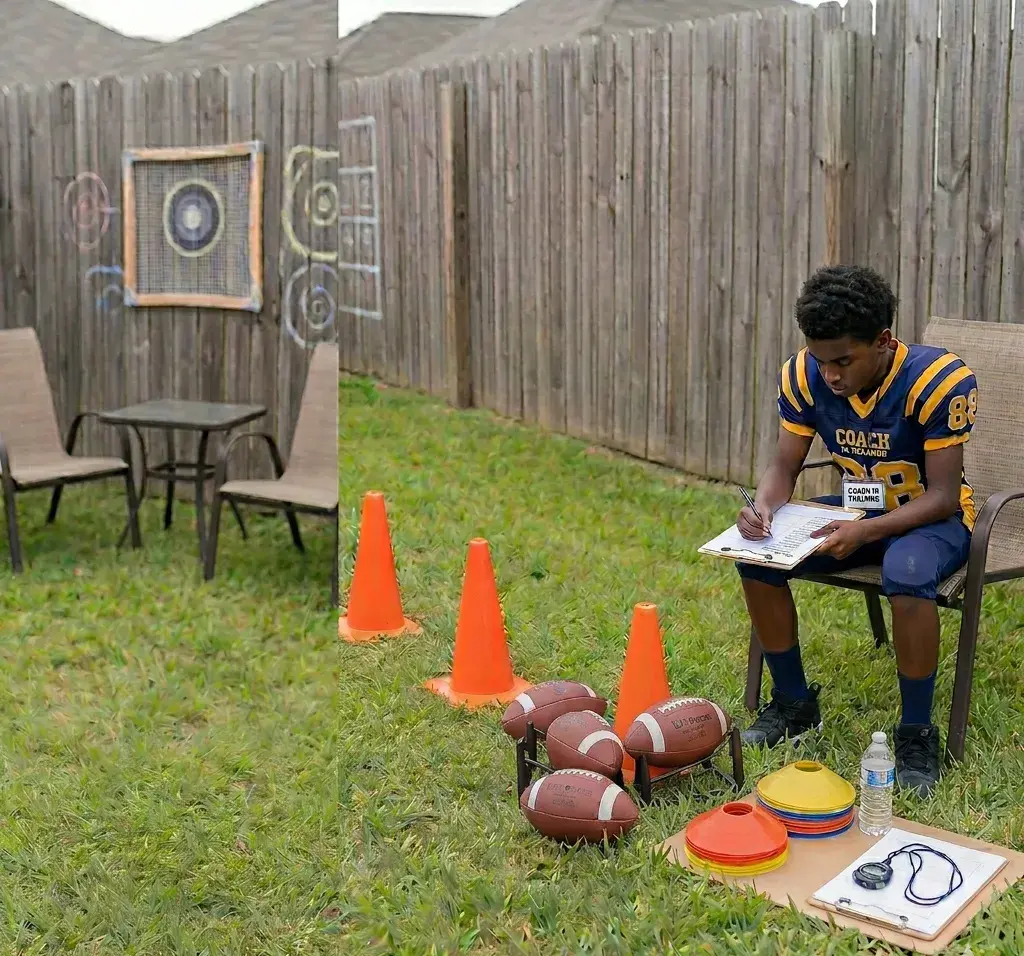
This sample schedule is designed for beginner youth football players who want structured practice at home.
| Day | Training Focus |
|---|---|
| Monday | Catching and Hand-Eye Coordination |
| Tuesday | Footwork and Route Running |
| Wednesday | Agility and Change of Direction |
| Thursday | Throwing Accuracy and Quarterback Skills |
| Friday | Mixed Football Skills |
| Saturday | Football Games and Challenges |
| Sunday | Recovery and Stretching |
Monday
Catching drills and hand-eye coordination.
Tuesday
Footwork drills and route running.
Wednesday
Agility and change-of-direction drills.
Thursday
Throwing accuracy and quarterback drills.
Friday
Mixed football skill training.
Saturday
Backyard football games and challenges.
Sunday
Light recovery and stretching.
Safety Tips for Backyard Football Practice
Adult Supervision for Young Players
Parents should supervise younger children during backyard football activities to help create a safe practice environment.
Check the Training Surface
Remove rocks, toys, and other obstacles before training.
Wear Proper Shoes
Good footwear improves traction and safety.
Stay Hydrated
Drink water before, during, and after practice.
Use Proper Technique
Focus on quality repetitions rather than speed.
Train Within Your Ability
Master football fundamentals before progressing to more difficult drills.
Common Backyard Football Practice Mistakes
Skipping Warm-Ups
Cold muscles can increase injury risk.
Practicing Without a Goal
Always focus on a specific football skill.
Ignoring Footwork
Good footwork helps every position on the field.
Using Poor Throwing Mechanics
Practice proper throwing technique during every session.
Coach’s Recommendation
If you are a beginner, focus on proper technique before trying to perform drills at full speed. Consistent practice with good form is usually more effective than rushing through drills. Start with catching, footwork, and throwing fundamentals, then gradually add agility and reaction-based drills as your confidence improves.
CONCLUSION
Backyard football practice drills can help beginner players improve important skills such as catching, throwing, footwork, agility, and ball security without needing a full football field. While team practices are valuable, many players make their biggest improvements through short and consistent practice sessions at home. Even a small backyard can be enough to build strong football fundamentals.
As a youth football coach, I have found that players who spend extra time working on basic skills often develop confidence faster and perform better during organized practices. Focus on proper technique, follow a simple training plan, and stay consistent with your practice. Small improvements made each week can add up and help you become a more complete football player over time.
