



Introduction
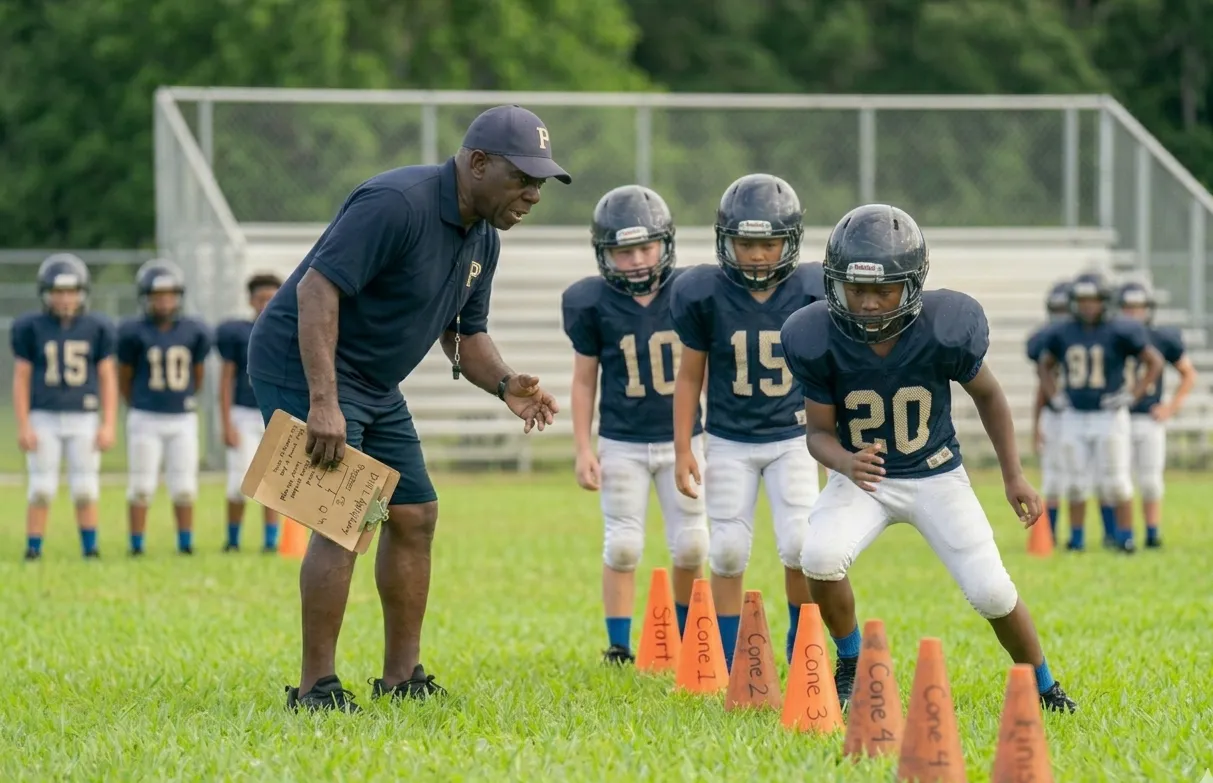
The first day youth football practice drills can feel stressful for new coaches, volunteer parents, and beginner players. Many young athletes arrive excited but unsure where to stand, how to hold a football, or what to expect during practice. Without a clear plan, players become distracted, coaches feel overwhelmed, and valuable practice time is lost.
After coaching beginner youth football players, I’ve found that the first practice is usually where coaches either build confidence or lose the team’s attention. Many kids have never lined up in an athletic stance, held a football correctly, or followed football practice routines. If I introduce too many drills too quickly, they start watching instead of learning. Keeping each activity short, simple, and easy to understand helps players stay engaged and gives them early success they can build on throughout the season. The goal of the first practice is not to teach an entire playbook. It is to introduce football fundamentals, build confidence, and create a positive learning environment where every player feels comfortable trying new skills.
In this guide, you’ll learn the best first day youth football practice drills, how to organize a beginner-friendly practice, which skills to teach first, common coaching mistakes to avoid, and a simple 60-minute practice plan that keeps young players engaged from start to finish. If you are completely new to coaching, our Football Drills for Beginners guide explains the core skills every young player should learn before moving on to practice plans.
What Are the Best First Day Youth Football Practice Drills?
The best first day youth football practice drills are athletic stance drills, stance and start drills, ball security drills, passing and catching drills, cone movement drills, pursuit drills, and fun relay games. I recommend teaching one skill at a time and giving every player several repetitions before moving to the next drill. This helps beginners stay focused, builds confidence, and keeps the first practice fun instead of overwhelming. Keep the session simple, avoid heavy contact, and focus on football fundamentals that prepare players for future practices.
Key Takeaways
- Keep the first practice simple, organized, and fun.
- Focus on football fundamentals before teaching plays or advanced techniques.
- Teach one new skill at a time so players can learn with confidence.
- Start with athletic stance, movement, ball security, and passing drills.
- Spend about 5 to 10 minutes on each drill before rotating to the next activity to keep players focused and involved.
- Use positive coaching, clear demonstrations, and short instructions instead of long speeches.
- Avoid heavy contact on the first day and concentrate on building proper technique and teamwork.
- Finish practice with encouragement and a fun activity so players leave excited for the next session.
This guide is for:
- Youth football coaches running first practice
- Beginner coaches with no experience
- Parents who want to understand practice
What Should Happen on the First Day of Youth Football Practice?
The first day of youth football practice should be simple, fun, and well organized. This is the time to help players feel comfortable, learn the basics, and enjoy being on the field.
From my experience, new coaches sometimes try to teach too much on the first day. Young players learn better when you introduce one skill at a time and keep drills short. This helps them stay focused and build confidence.
Instead of teaching plays, focus on football fundamentals like athletic stance, movement, ball security, and basic passing. End practice with a fun activity so players leave excited for the next session. After the first practice, you can continue building these skills with our Youth Football Drills for Beginners guide, which introduces more beginner-friendly drills step by step.
Coach’s Tip: Don’t worry about teaching everything on Day 1. A few well-taught skills are much more valuable than rushing through lots of drills.
Goals of the First Practice
The goal of the first practice is to build a strong foundation for the rest of the season. Players do not need to learn everything in one day. Focus on these simple goals.
Build Confidence
Many players feel nervous during their first practice. Encourage effort, celebrate small wins, and make every player feel included.
Teach Football Fundamentals
Start with basic skills like athletic stance, movement, ball security, and passing. These fundamentals make future practices much easier. USA Football recommends teaching football fundamentals through step-by-step skill progressions before introducing higher levels of contact or more advanced drills.
Introduce Team Rules
Explain how practice works, when players should listen, and how to respect coaches and teammates. Clear expectations help practices run smoothly.
Evaluate Players
Watch how players run, catch, throw, and follow instructions. This helps you understand their strengths and where they need more coaching.
Make Football Fun
One thing I’ve learned is that players remember how much fun they had more than how many drills they completed. Finish with a relay race or simple team game to keep everyone excited for the next practice.
Coach’s Tip: Keep your expectations realistic. If every player learns one or two new skills and leaves smiling, your first practice was a success.
Younger players often learn best through short, fun activities. If you’re coaching younger athletes, see our Football Drills for Ages 6–8 guide for age-appropriate drills and practice ideas.
For older beginners who are ready for more structured sessions, our Football Drills for Ages 9–12 guide includes longer practice plans and skill progressions.
Equipment Checklist Before Practice
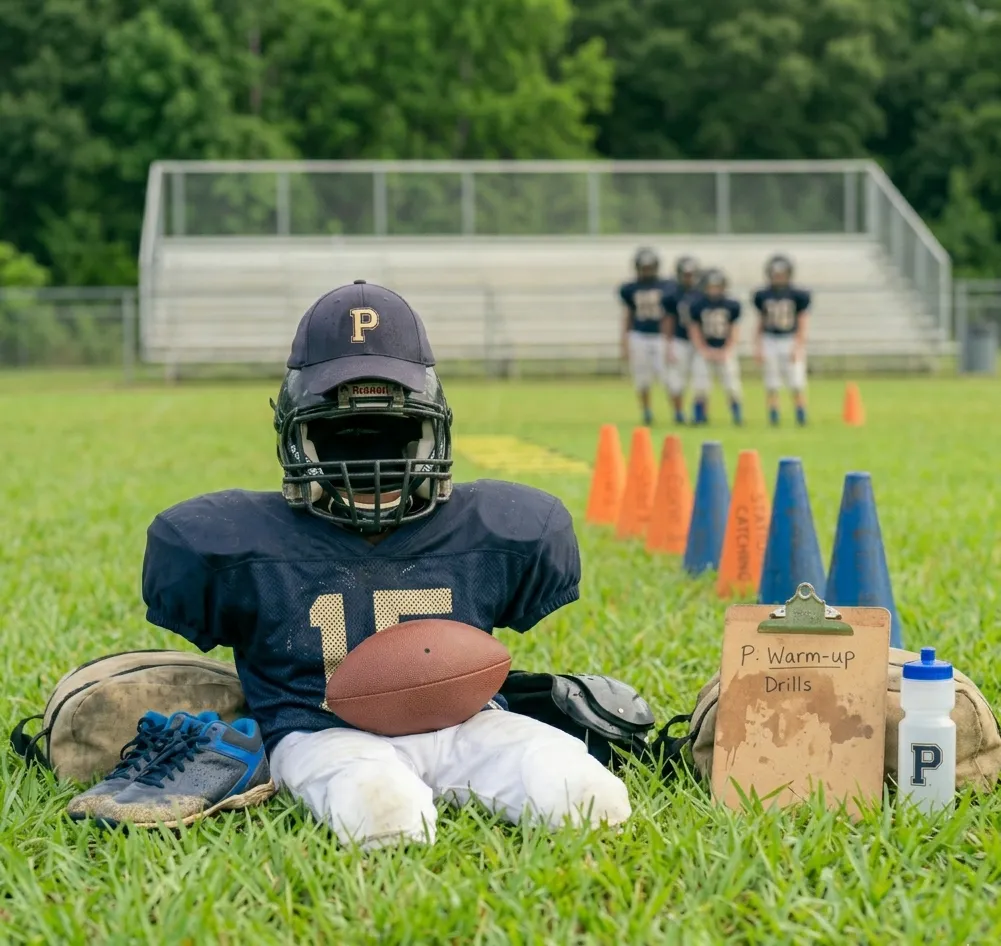
Having your equipment ready before practice saves time and keeps players moving. It also helps you stay organized throughout the session.
For a beginner practice, you only need a few basic items.
Coach’s Equipment
- Footballs
- Training cones
- Whistle
- Practice jerseys or pinnies
- First-aid kit
- Water or a hydration station
- Agility ladder (optional)
- Flags or blocking pads (optional)
Player Equipment
- Helmet
- Shoulder pads
- Mouthguard
- Cleats
- Athletic clothing
- Water bottle
Before practice starts, check that every player’s equipment fits properly. Loose helmets or missing mouthguards can become safety problems.
Coach’s Tip: I always set up cones and drill stations before players arrive. It keeps practice moving and gives kids less time to stand around waiting.
Coach Introduction and Team Expectations
Before starting any drills, take a few minutes to introduce yourself and welcome the players. A friendly start helps everyone feel more relaxed, especially beginners who may be nervous.
Introduce the coaching staff and let each player say their name. Then explain a few simple team rules.
Set Clear Expectations
- Listen when a coach is speaking.
- Respect coaches and teammates.
- Try your best on every drill.
- Stay with your group.
- Have fun and encourage each other.
From my experience, spending just a few minutes setting expectations at the beginning makes the rest of practice much easier. Players know what to do, and coaches spend less time correcting behavior later.
Coach’s Tip: Keep team rules simple. Young players remember three or four clear rules much better than a long speech.
Warm-Up and Stretching
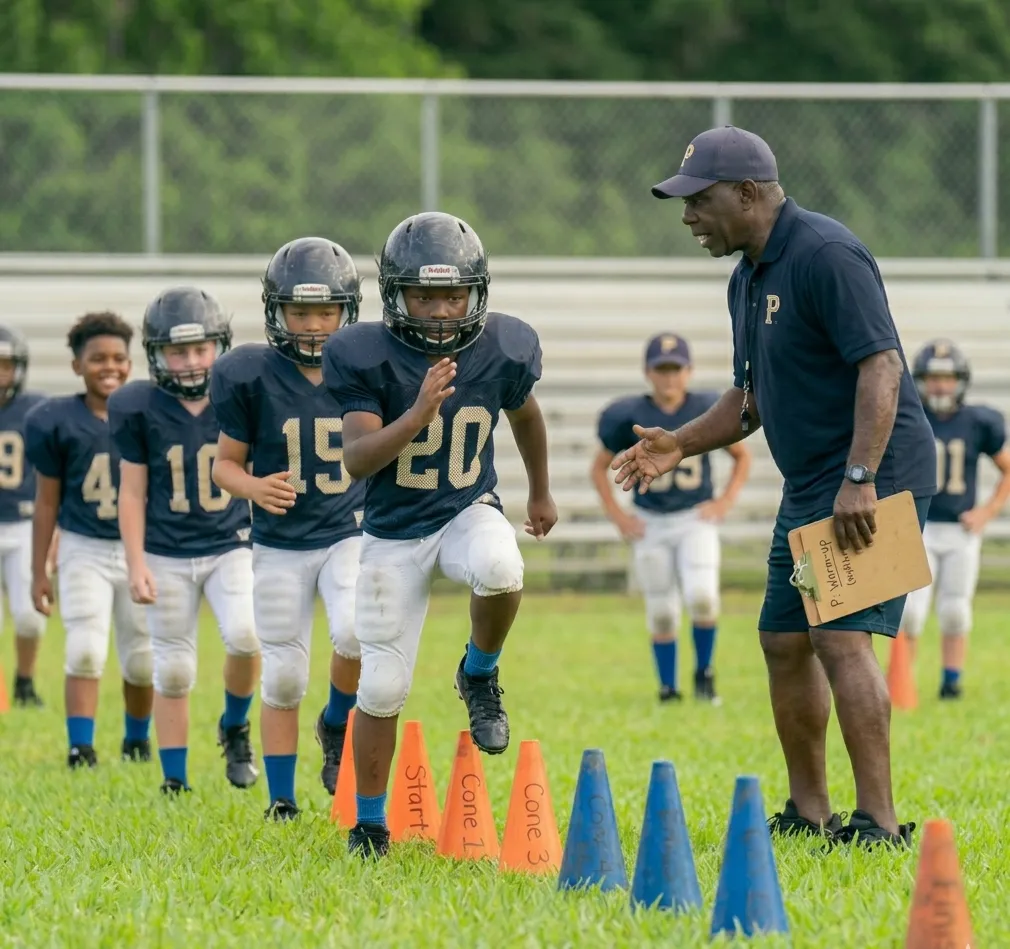
A good warm-up prepares players for practice and helps reduce the risk of injury. It also gets everyone moving before football drills begin. USA Football recommends structured practice routines and gradual athlete preparation.
Keep the warm-up light and active. The goal is to wake up the muscles, improve movement, and get players focused.
Recommended Warm-Up Routine
- Light jog
- High knees
- Butt kicks
- Side shuffles
- Arm circles
- Walking lunges
- Quick stretching
From what I’ve seen, long long warm-ups can make young players lose focus. I keep the warm-up to about 5 to 10 minutes, then move into the first skill drill while everyone is still engaged.
After players finish warming up, simple football footwork drills can help improve balance and movement before more advanced practice begins.
Common Warm-Up Mistakes
- Making the warm-up too long.
- Starting with intense sprints.
- Skipping movement drills.
- Letting players stand around between exercises.
Coach’s Tip: Demonstrate each warm-up exercise before players begin. Young athletes learn much faster when they can watch the movement first instead of only listening to instructions.
Best First Day Youth Football Practice Drills
The first practice should focus on simple drills that teach football fundamentals and build confidence. From my experience, young players learn much faster when each drill has one clear goal and lasts only a few minutes. Keep instructions short, demonstrate the drill first, and give players plenty of repetitions before moving to the next activity.
Athletic Stance Drill

The athletic stance is the starting position for almost every football skill. Teaching it first helps players stay balanced and move more quickly during practice.
How to Do It
- Stand with feet shoulder-width apart.
- Bend your knees slightly.
- Keep your back straight and chest up.
- Look forward with your hands ready.
- Hold the stance for a few seconds, then reset.
Coach’s Tip: I always teach the stance before any other drill. Once players learn good body position, every other skill becomes easier to coach.
Stance and Start Drill
This drill teaches players how to explode forward with good balance and control.
How to Do It
- Start in an athletic stance.
- Blow the whistle.
- Take three quick, powerful steps forward.
- Stop under control.
- Return to the starting line and repeat.
Avoid letting players stand up too early. Staying low helps build better movement habits.
Ball Security Drill

Learning to protect the football is one of the first skills every beginner should practice.
How to Do It
- Hold the football high and tight against your body.
- Cover the front of the ball with your hand.
- Walk or jog through a short cone course.
- Keep control of the football at all times.
One mistake I often see is beginners carrying the football away from their body. Fixing this habit early helps reduce fumbles later in the season.
Passing and Catching Drill
Simple passing drills help players build confidence and improve hand-eye coordination.
How to Do It
- Pair players with a partner.
- Stand about 5 to 10 yards apart.
- Throw short, accurate passes.
- Catch the ball with both hands.
- Switch roles after several throws.
Focus on accuracy before distance. Good technique is more important than throwing the ball far.
Cone Movement Drill
This drill improves footwork, balance, and change of direction.
How to Do It
- Place four or five cones in a straight line.
- Run around each cone using short, quick steps.
- Stay balanced while changing direction.
- Finish with a short sprint.
Keep players under control instead of racing through the cones. Good footwork always comes before speed.
Pursuit Drill
The pursuit drill teaches defenders to take good angles and move together as a team.
How to Do It
- Line players up on one side of the field.
- Point to a ball carrier or coach.
- Players run at a controlled angle.
- Finish under control without making heavy contact.
For the first practice, focus on teamwork and positioning instead of tackling.
Relay Competition
Relay races add energy to practice while improving speed and teamwork.
How to Do It
- Divide players into small teams.
- Set up a short cone course.
- One player runs the course and returns.
- The next teammate starts after a tag.
- Continue until every player finishes.
From my experience, relay races are one of the easiest ways to keep beginners excited while still developing athletic movement.
Team Huddle Review
Finish every first practice with a short team huddle.
Praise effort, review one or two key lessons, and remind players what they learned during practice. Keep the message positive and encourage everyone to come ready for the next session.
Coach’s Tip: I always end practice by recognizing effort instead of mistakes. Young players leave feeling more confident, and they’re usually excited to come back for the next practice.
How to Organize Skill Stations
Divide players into small groups. Rotate them through stations.
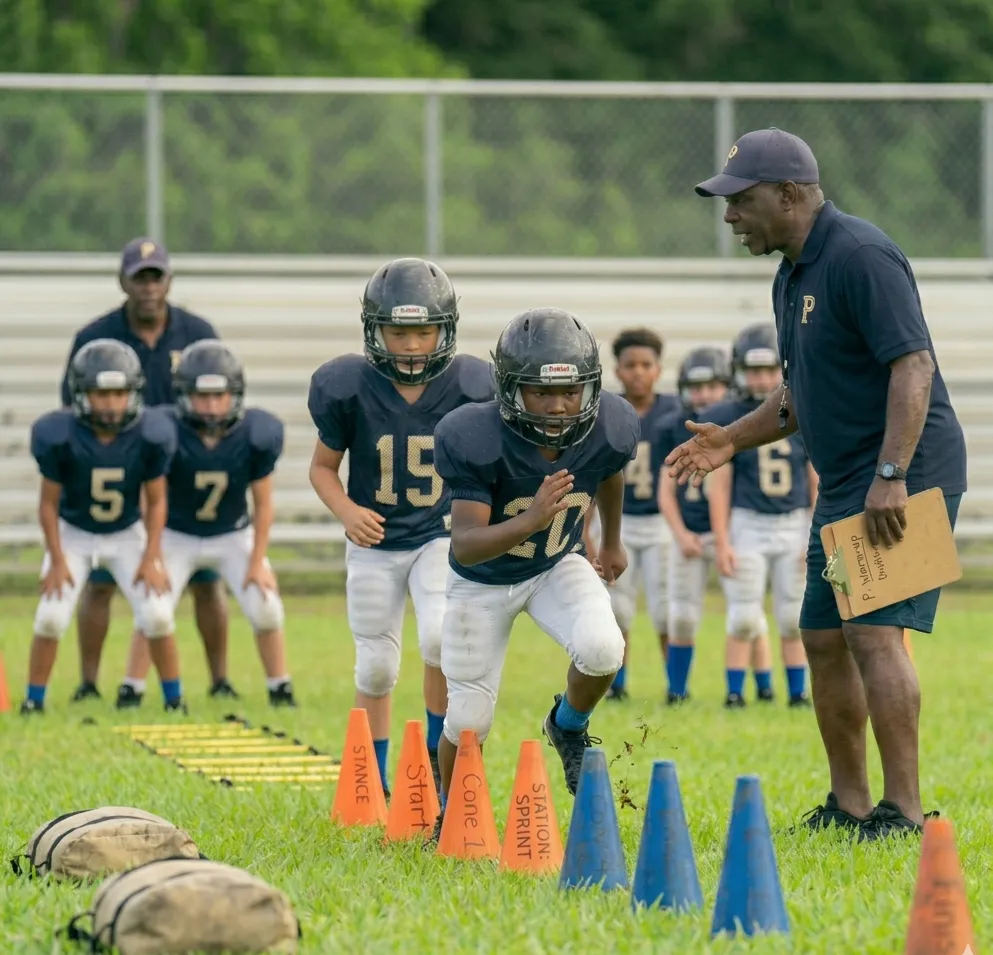
Skill stations help keep every player active and reduce waiting time. Instead of having the whole team do one drill together, divide players into small groups and rotate them through different stations.
For the first practice, use 3 to 4 stations and spend about 5 to 10 minutes at each one. This gives every player plenty of repetitions without feeling rushed.
A simple setup could look like this:
| Station | Drill |
|---|---|
| Station 1 | Athletic Stance Drill |
| Station 2 | Ball Security Drill |
| Station 3 | Passing and Catching Drill |
| Station 4 | Cone Movement Drill |
Before players rotate, explain the drill and demonstrate it once. I have found that beginners learn much faster when they can watch the movement before trying it themselves.
Drill Timing by Age Group
| Age Group | Recommended Practice Length | Main Focus |
|---|---|---|
| 5–7 years | 30–40 minutes | Fun, movement, and basic football skills |
| 8–10 years | 45–60 minutes | Athletic stance, passing, catching, ball security, and teamwork |
| 11–12 years | About 60 minutes | Football fundamentals, skill development, teamwork, and game awareness |
Tips for Running Skill Stations
- Keep groups small.
- Give short and simple instructions.
- Demonstrate each drill first.
- Rotate every 5 to 10 minutes.
- Encourage players while they wait for their turn.
- End each station with quick feedback before moving on.
Coach’s Tip: Set up all your stations before practice starts. This keeps players moving, saves time, and helps the entire practice run more smoothly.
60-Minute First Day Practice Plan

A simple practice plan keeps players active and helps coaches stay organized. The goal is to teach a few football fundamentals without rushing.
| Time | Activity | Goal |
|---|---|---|
| 0–10 min | Coach introduction and dynamic warm-up | Help players feel comfortable and get them moving |
| 10–20 min | Athletic Stance and Stance & Start Drills | Teach balance and proper movement |
| 20–30 min | Ball Security Drill | Build good ball-handling habits |
| 30–40 min | Passing and Catching Drill | Improve coordination and confidence |
| 40–50 min | Cone Movement Drill and Relay Competition | Develop footwork and teamwork |
| 50–60 min | Team Huddle Review | Praise effort, answer questions, and explain the next practice |
This schedule gives players enough time to learn without feeling overwhelmed. If a drill takes longer than expected, it’s better to skip one activity than rush through everything.
Coach’s Tip: Stay flexible. If players need more practice with one skill, spend a few extra minutes on it and adjust the rest of the schedule.
Should Beginners Tackle on the First Day?
In most cases, no. The first practice should focus on football fundamentals, movement, and player safety instead of full-contact tackling.
Young players first need to learn an athletic stance, body control, balance, and proper movement. Once they understand these basics, coaches can safely introduce tackling techniques during future practices.
If your league allows contact, begin with simple tackling positions and body mechanics instead of live tackling drills.
From what I’ve seen, players develop better habits when they learn the correct technique before adding speed or contact.
Coach’s Tip: Build confidence first. Players who understand good body position usually learn tackling much faster later in the season.
Once players develop good body control and confidence, you can introduce safe contact using our Youth Tackling Progression guide, which teaches tackling techniques step by step.
Common First-Day Coaching Mistakes
Even experienced coaches can make mistakes during the first practice. Avoiding these common problems helps players learn faster and enjoy the experience.
| Mistake | Why It’s a Problem | Better Approach |
|---|---|---|
| Teaching too many drills | Players become confused | Focus on 4 to 6 simple drills |
| Talking too much | Players lose attention | Keep instructions short and demonstrate each drill |
| Skipping the warm-up | Increases injury risk | Start with a 5 to 10-minute dynamic warm-up |
| Long waiting lines | Players become bored | Use small groups and skill stations |
| Focusing only on mistakes | Players lose confidence | Praise effort and give positive feedback |
| Ending without a team talk | Players miss key reminders | Finish with a short review and encouragement |
One mistake I’ve seen new coaches make is trying to run a perfect practice. The first day doesn’t have to be perfect. If players learn a few basic skills, stay engaged, and leave smiling, you’ve had a successful first practice.
Coach’s Tip: Keep your first practice simple. You can always teach more next week, but it’s much harder to rebuild a player’s confidence if they feel frustrated on Day 1.
Tips to Keep Young Players Engaged
Keeping players engaged is one of the biggest challenges during the first practice. Young athletes have short attention spans, so practices should move at a steady pace.
Here are a few simple ways to keep players focused:
- Keep drills short and active.
- Demonstrate each drill before players begin.
- Divide players into small groups.
- Give everyone plenty of turns.
- Praise effort, not just results.
- Use players’ names when giving feedback.
- End practice with a fun relay or team game.
From my experience, players stay focused when they are moving instead of waiting in long lines. The more chances they get to practice a skill, the more confident they become.
Coach’s Tip: If players start losing focus, switch to the next drill or add a quick team challenge. A small change can quickly bring their energy back.
First Day Practice Checklist
Before ending your first practice, make sure you have:
- Introduced the coaches and players.
- Explained the team rules and expectations.
- Completed a dynamic warm-up.
- Taught the athletic stance and basic movement.
- Practiced ball security.
- Included passing and catching drills.
- Given every player a chance to participate.
- Kept drills short and easy to follow.
- Avoided heavy contact and full tackling.
- Finished with a positive team huddle and encouragement.
Build Better Youth Football Practices
Use these guides to teach beginner skills, plan age-based sessions, and introduce safe football progressions.
Football Drills for Beginners
Learn simple drills for footwork, passing, catching, movement, and basic football skills.
Read the guide Youth TrainingYouth Football Drills for Beginners
Follow easy drills that help young players build confidence, coordination, and safe habits.
Explore the drills Ages 6–8Football Drills for Ages 6–8
Use short and fun drills for movement, ball control, teamwork, and beginner skills.
View the drills Ages 9–12Football Drills for Ages 9–12
Plan structured sessions with skill work, safe progressions, and age-based practice ideas.
View the practice guide Safe TacklingYouth Tackling Progression
Teach stance, body position, controlled contact, and tackling technique step by step.
Learn the progression Practice PlanningYouth Football Practice Plan
Organize warm-ups, skill periods, team drills, water breaks, and practice reviews.
Build your practiceConclusion
The first day youth football practice drills should help players build confidence, learn football fundamentals, and enjoy being part of the team. You do not need a complicated practice plan to have a successful first session. A few simple drills, clear instructions, and positive coaching can make a big difference.
From what I’ve learned coaching beginners, players improve the most when they feel comfortable asking questions, making mistakes, and trying again. Focus on teaching one skill at a time, keep practice organized, and celebrate every small success.
A great first practice builds excitement for the rest of the season. When players leave smiling and looking forward to the next session, you’ve already achieved one of your biggest coaching goals.
Frequently Asked Questions
What is the most important thing to teach on the first day of youth football practice?
The most important thing is football fundamentals. Start with an athletic stance, movement, ball security, and simple passing. These basic skills help players build confidence before learning more advanced techniques.
How many drills should I include in the first practice?
Keep it simple with 4 to 6 drills. Giving players enough time to practice each skill is much more effective than rushing through a long list of activities.
How do I keep every player involved during practice?
Use small groups and skill stations so players stay active instead of waiting in long lines. Rotate groups every 5 to 10 minutes and make sure every player gets plenty of repetitions.
What if some players have never played football before?
That is completely normal. Many youth teams have beginners every season. Teach one skill at a time, use simple instructions, and encourage effort instead of expecting perfect technique.
Should I teach offense and defense on the first day?
Keep it basic. Introduce player positions and simple movement, but spend most of the practice on football fundamentals. Save offensive and defensive plays for future practices.
What should I do if players lose focus?
Switch to a new drill, shorten your instructions, or add a fun relay challenge. From my experience, young players stay engaged when they keep moving and get lots of chances to participate.
Is it okay if my first practice doesn’t go perfectly?
Yes. The goal is not to run a perfect practice. A successful first practice is one where players learn a few new skills, have fun, and leave excited to come back.
What do parents expect from the first football practice?
Most parents want to see a safe, organized, and positive practice where every child gets a chance to participate. Clear communication, simple drills, and encouragement help build trust with both players and parents.
References
- USA Football. Football Development Model (FDM): How It Works. https://fdm.usafootball.com/how-it-works
- USA Football. Practice Guidelines for Youth Football. https://usafootball.com/coaches-organizations/practice-guideline
