



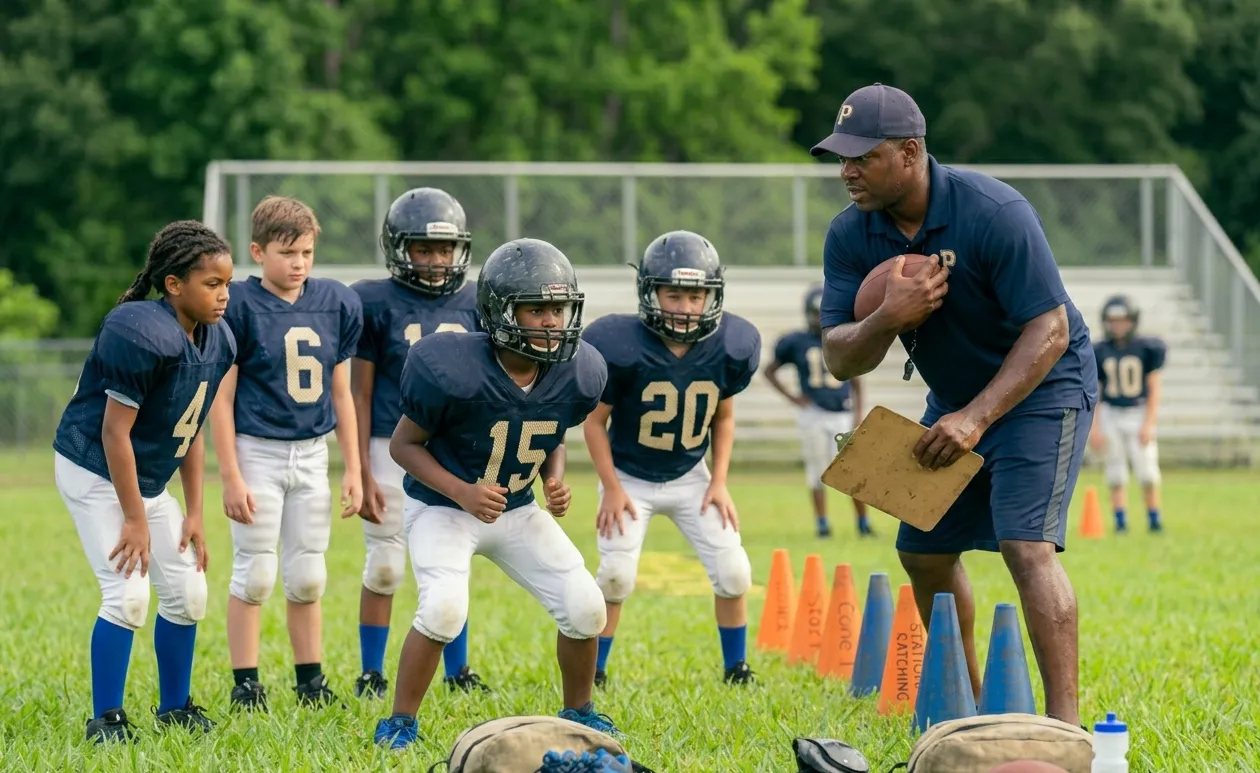
Teaching tackling to young players can feel stressful. Many youth coaches worry about doing it wrong. Parents ask about concussions. Players get nervous before contact drills. Some freeze when it is time to tackle. Others drop their head because they panic. If you move too fast, confidence drops. If you move too slow, players are not ready for games. This is why a proper youth tackling progression is so important for young players.
This youth tackling progression helps coaches teach tackling in a safe and structured way. Over time, one thing becomes clear. Most tackling problems happen because steps are skipped. When coaches rush into contact, technique breaks down. But when you follow a proper youth tackling progression, players improve faster and stay safer. This guide gives you that clear path.
Quick Takeaway for Youth Coaches
- Do not rush live tackling
- Master stance before contact
- Use shoulder, not helmet
- Move forward only after 8/10 clean reps
- If form breaks, go back one step
What Is Youth Tackling Progression in American Football?
Youth tackling progression is a step-by-step system to teach tackling safely. Players move from no contact to full contact in stages.
The idea is simple:
- Teach body position
- Add movement
- Add controlled contact
- Move to live situations
Each step builds confidence and control.
Why Youth Tackling Progression Is Important for Safety
Young players are still learning body control. They need structure and repetition.
A proper youth tackling progression:
- Reduces helmet contact
- Builds confidence before live contact
- Improves tackling form
- Helps answer parent safety concerns
When players learn the right way early, they perform better in games.
Youth Tackling Progression by Age Group
This youth tackling progression works best for ages 8–14.
Ages 6–8
- No live tackling
- Focus on stance and balance
- Use bags only
- Build confidence
9–11
- Controlled partner drills
- Angle tackling
- Limited live reps
12–14
- Add pursuit drills
- Controlled game situations
- Focus on consistency
Players should only move forward when technique stays safe.
Tackling Progression Ladder (Step-by-Step System)
| Step | Focus | Contact Level |
|---|---|---|
| 1 | Stance and position | None |
| 2 | Fit and drive | Bag contact |
| 3 | Movement drills | Controlled |
| 4 | Partner tackling | Low speed |
| 5 | Pursuit tackling | Moderate |
| 6 | Live reps | Controlled |
| Stage | Goal | Drill | Advance When |
|---|---|---|---|
| 1 | Stance | Position drill | Head up every rep |
| 2 | Drive | Fit drill | Wrap is consistent |
| 3 | Movement | Angle tackle | Good breakdown |
| 4 | Contact | Hawk roll | No helmet use |
| 5 | Pursuit | Shimmy drill | Good angles |
| 6 | Live | Scrimmage | Form holds |
Step 1: Tackling Position
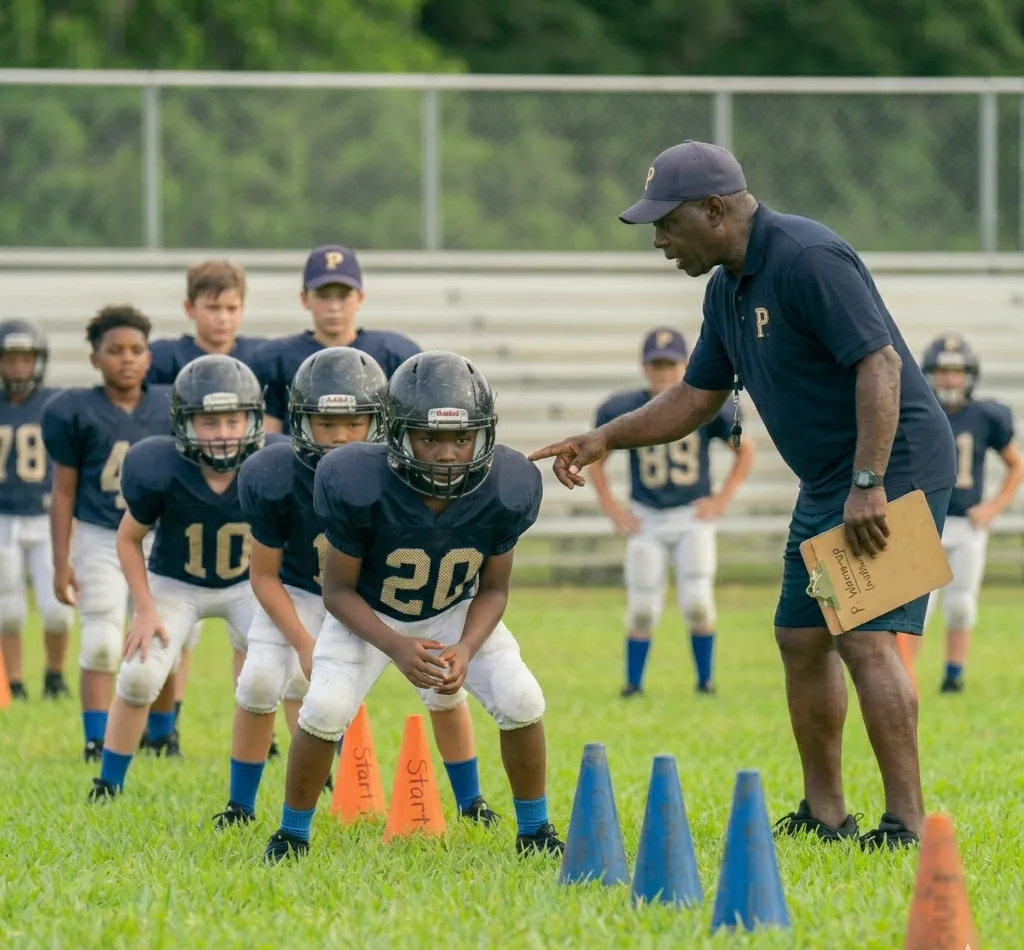
Players learn stance:
- Knees bent
- Head up
- Chest up
Cue: “Eyes up, hips down”
Step 2: Fit and Drive
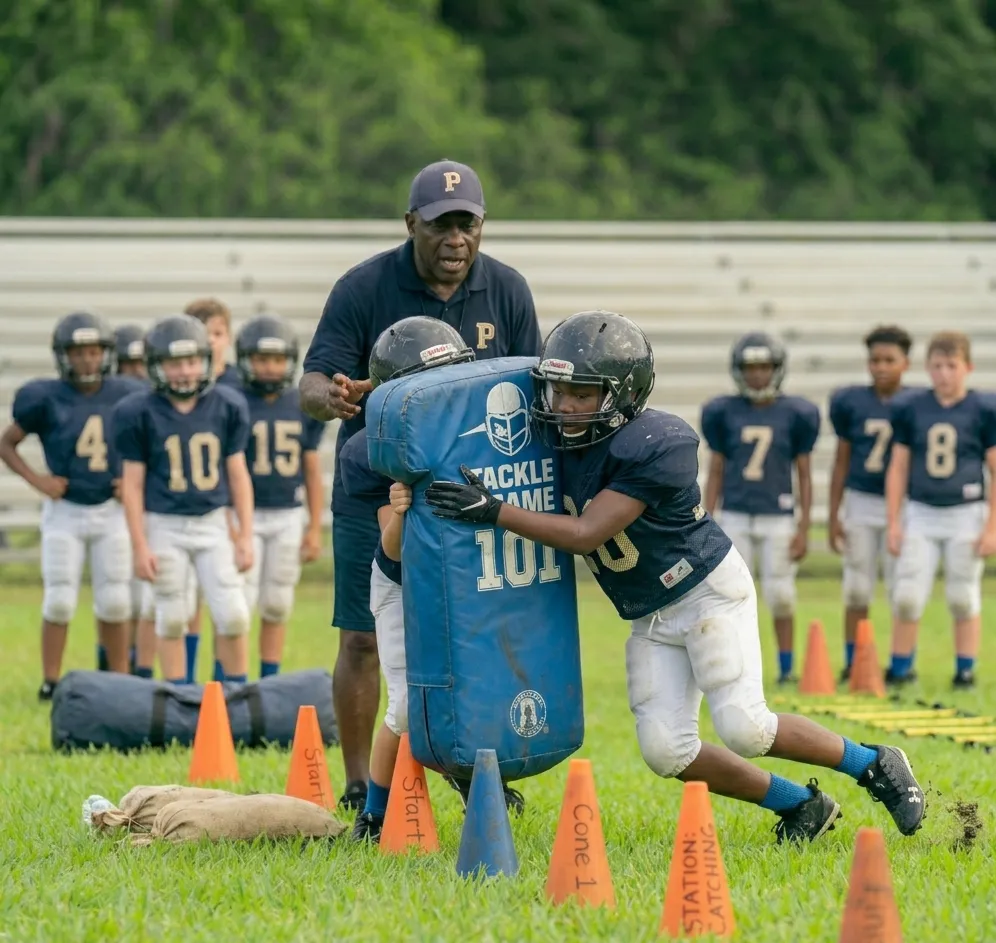
Players learn contact position.
- Shoulder contact
- Wrap
- Drive legs
Cue: “Wrap and drive”
Step 3: Movement Drills
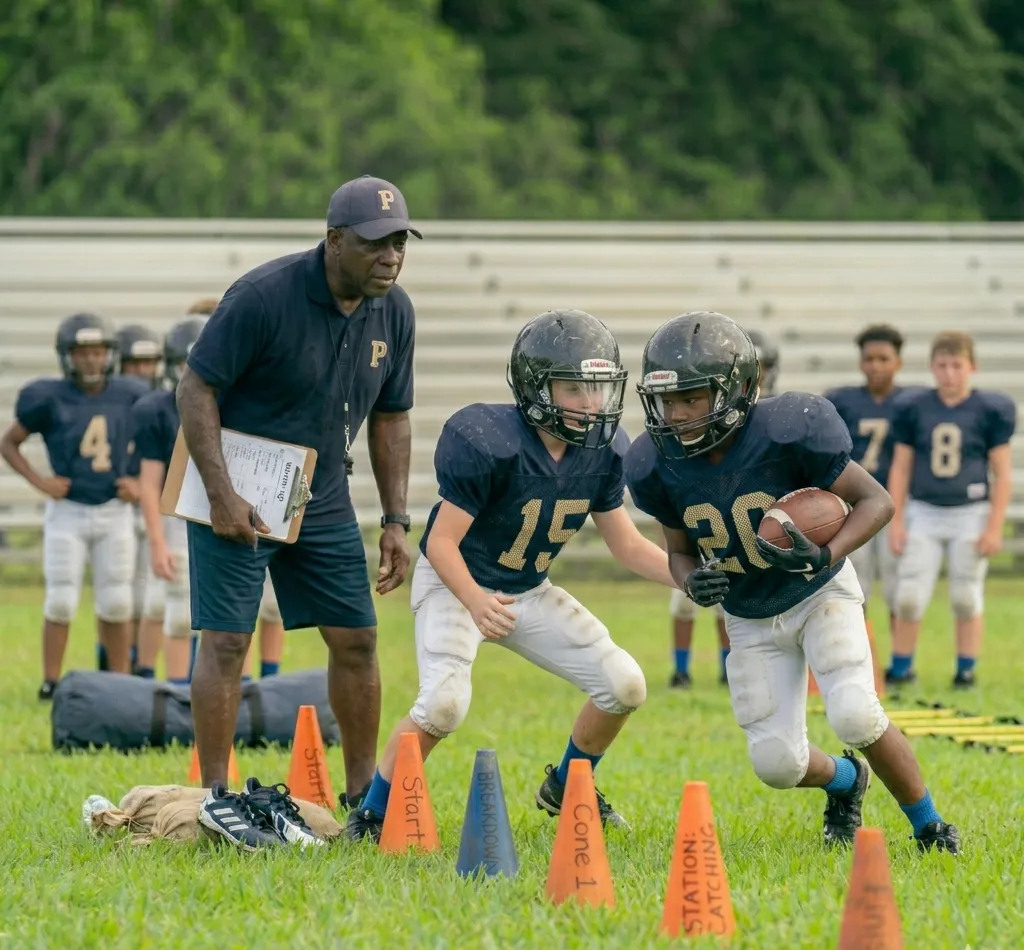
Players add motion.
- Track ball
- Break down
- Stay balanced
Cue: “Near foot, near shoulder”
Step 4: Controlled Tackling
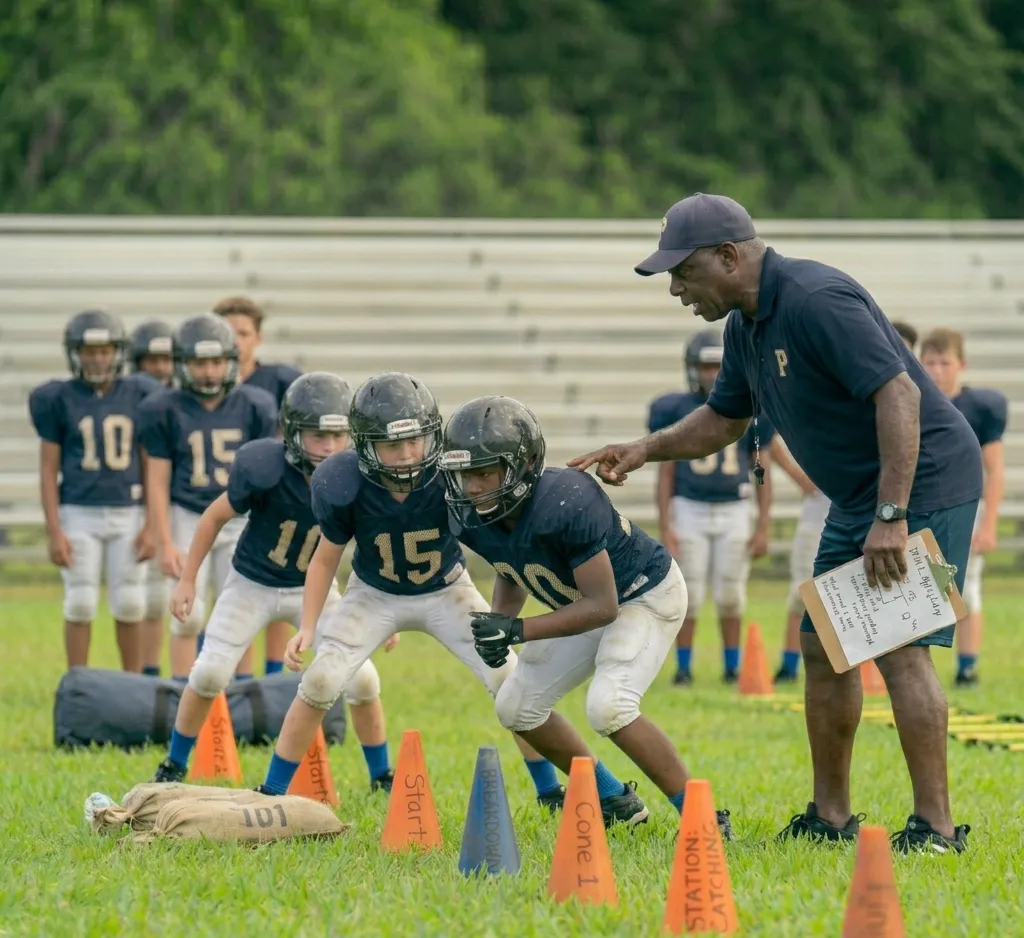
- Low speed contact
- Focus on form
- Stop if unsafe
Drills:
- Hawk roll
- Drive for 5
Step 5: Pursuit and Angles
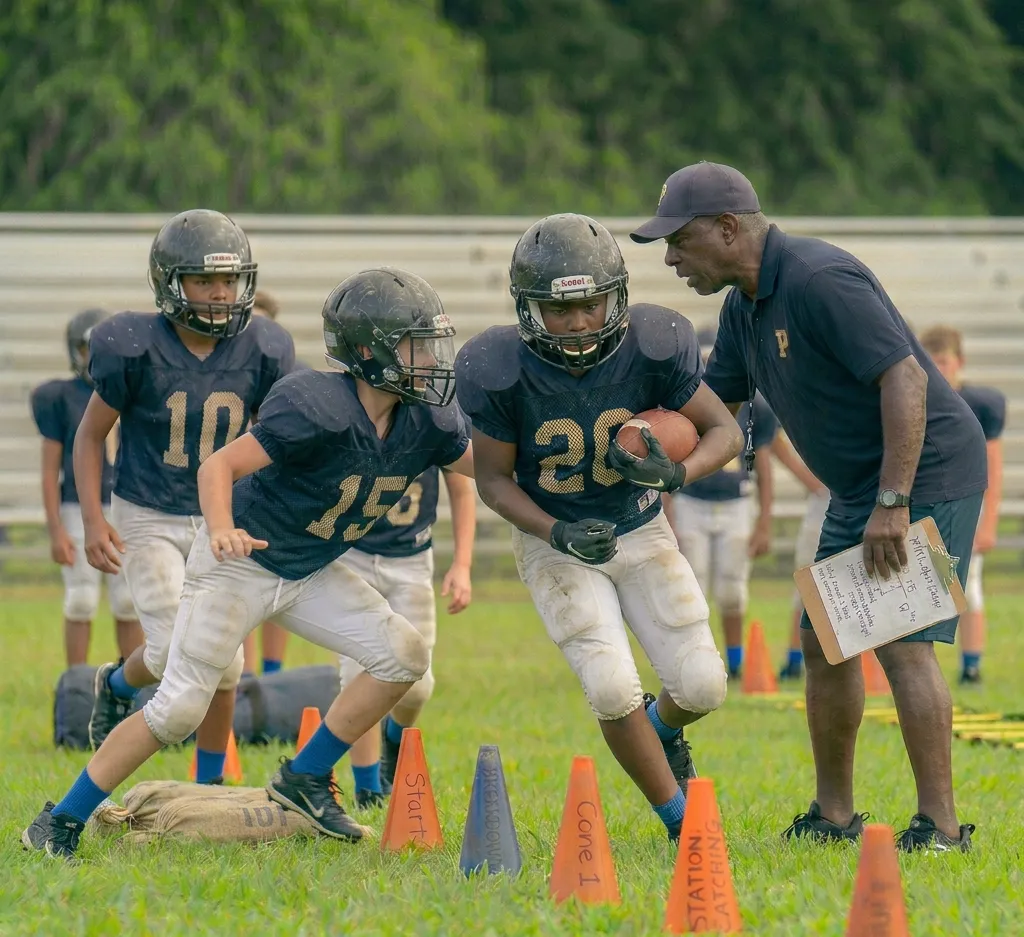
- Close space
- Stay under control
- Finish strong
Step 6: Live Tackling
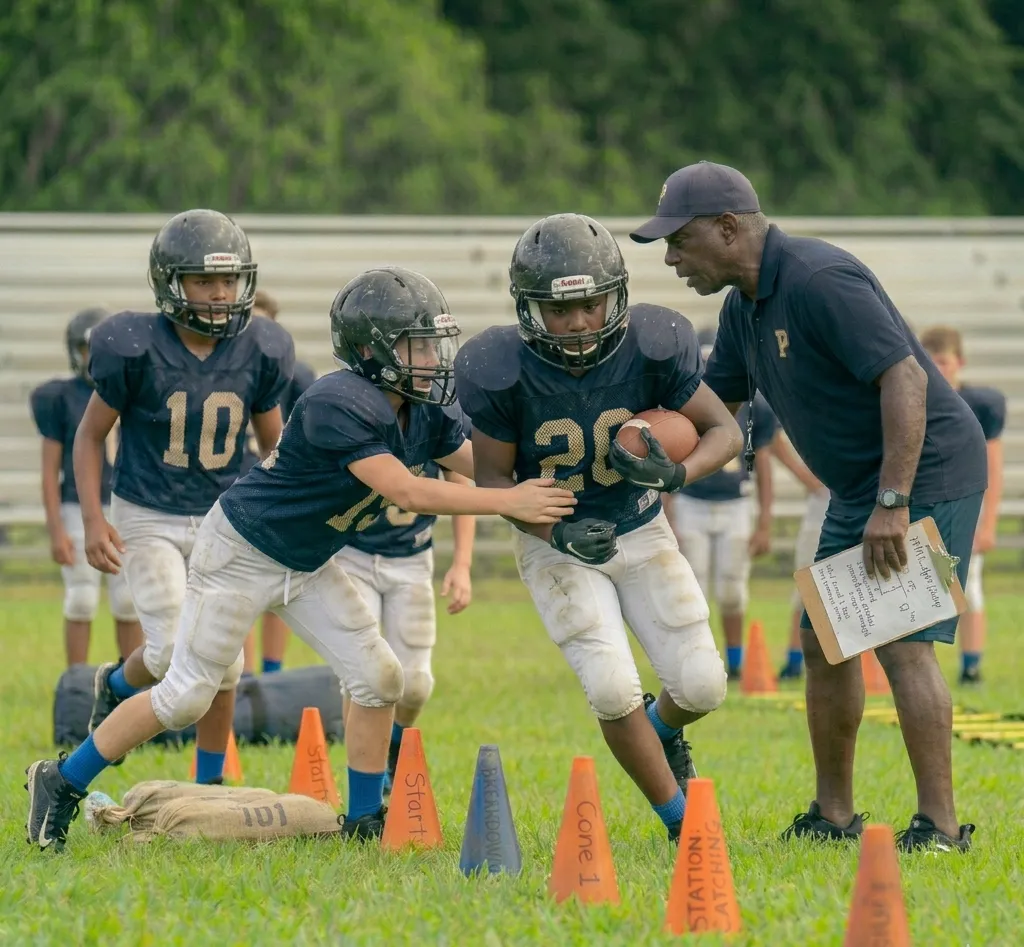
- Controlled scrimmage
- Game-like reps
- Only after readiness
The 5 Fights Framework for Better Tackling
- Track
- Prepare
- Connect
- Accelerate
- Finish
This gives structure to every tackle
Safety Rules and Contact Limits
- Limit full-speed reps
- Rotate players
- Stop drill if form breaks
What Parents Should Know
- No live tackling at start
- Safety taught first
- Contact builds slowly
- Coaches monitor technique
Tackling Timeline for Youth Players
- Early steps: 1–2 weeks
- Middle steps: 2–3 weeks
- Live reps: only after readiness
Youth Tackling Progression Practice Plan (30 Minutes)
- 5 min stance
- 5 min fit drill
- 5 min bag work
- 5 min angle drill
- 5 min partner
- 5 min review
Youth Tackling Progression Benchmarks
- 8/10 clean reps
- Proper head position
- Strong wrap
- No fear
Common Tackling Mistakes to Avoid
- Leading with helmet
- Stopping feet
- Poor breakdown
Stop the Drill Immediately If:
- Head goes down
- Eyes close
- Feet stop
- Player looks scared
Tackling Progression Flow
Stance → Fit → Movement → Contact → Pursuit → Live
conclusion
Youth tackling progression works best when coaches slow things down and teach each step with purpose. In real youth practices, rushing players into contact often leads to poor form and hesitation. When coaches focus on stance, control, and safe contact first, players become more confident and consistent. A clear tackling progression gives players a simple and safe path to follow.
From practical coaching experience, the biggest gains come from repetition and patience. Players who master each step before moving forward tackle better and avoid risky habits. This approach not only improves performance but also creates a safer learning environment. A structured youth tackling progression builds confident and controlled players who are ready for real game situations.
