



Introduction
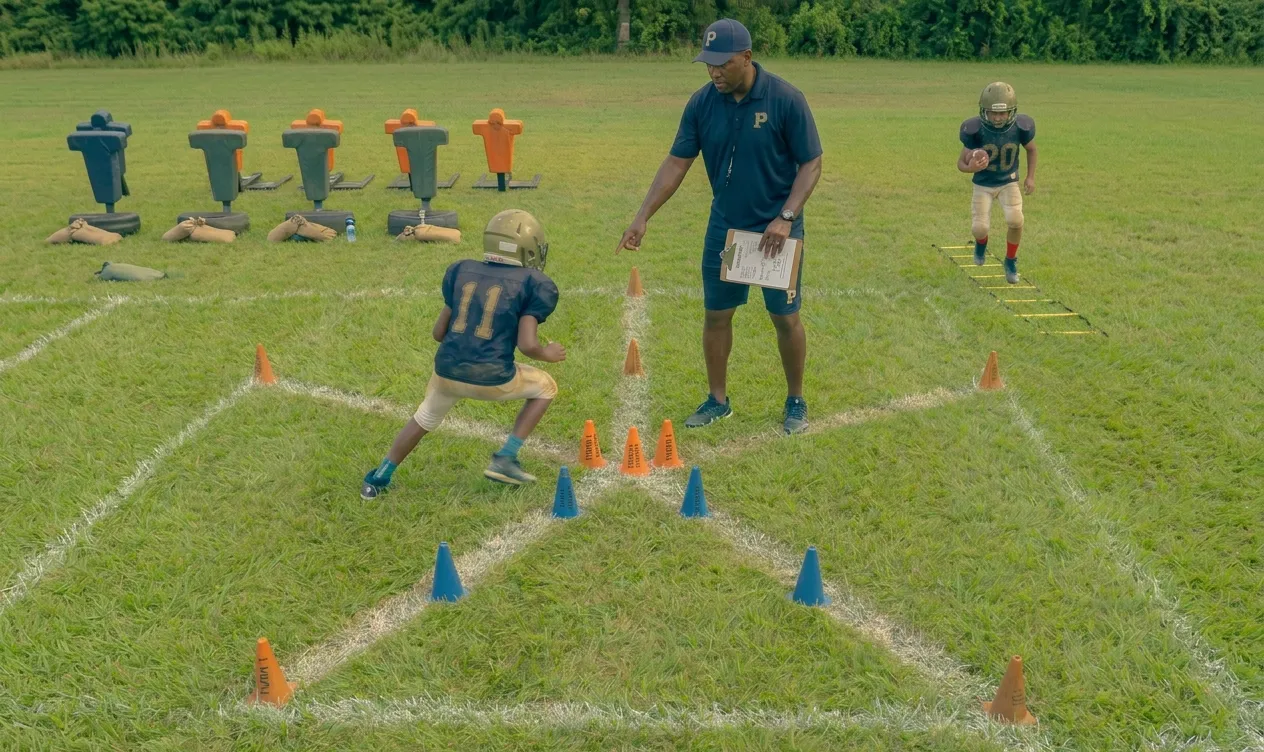
Many players train hard but still feel slow on the field. They struggle to change direction, lose balance during cuts, or react too late in key moments. These problems are often linked to poor movement, which is why football footwork drills play such an important role in improving performance. If you’re just starting out, practicing football drills for beginners alongside footwork training can help build a strong foundation before moving on to more advanced skills.
These footwork drills help improve how your feet move, stop, and change direction. From real training experience, I have seen beginner and youth players improve quickly once they focus on proper footwork. Their cuts become sharper, their balance improves, and their reactions get faster. This guide is built for players, coaches, and parents who want simple drills that actually work. To improve even faster, combine these exercises with football agility drills that develop quicker direction changes and better body control.
Quick Drill Finder
| If your goal is… | Start with… |
|---|---|
| Improve first-step quickness | Quick Feet Ladder Drill |
| Better change of direction | W Cone Drill |
| Improve balance | Single-Leg Hop Drill |
| Better route running | Cone Weave Drill |
| Faster reaction | Mirror Drill |
Quick Takeaways
- Footwork is the base of speed,balance, and quick reaction
- Short, fast steps are better than long steps
- Practice footwork drills 3–4 times per week
- Focus on control first, then speed
- Simple drills can improve your game quickly if done consistently
What Are Football Footwork Drills
These drills are exercises that train your feet to move quickly and correctly. They focus on short steps, balance, and control. Players who struggle to stay stable during cuts can improve with football balance drills.. They also support many football agility drills by improving movement efficiency and body control.
These drills help you:
- move faster
- change direction quickly
- stay balanced
- react faster during plays
Why Football Footwork Drills Matter for Performance
Footwork is important for every player on the field. It helps you stay in control and react quickly.
Good footwork helps you:
- run clean routes
- make sharp cuts
- avoid defenders
- stay balanced while blocking or tackling
Better footwork also improves agility by helping players change direction quickly, stay balanced during movement, and improve coordination and timing, which are key qualities for athletic performance according to the National Strength and Conditioning Association (NSCA) in Essentials of Strength Training and Conditioning.
How to Warm Up Before Football Footwork Drills
Start with light jogging, high knees, butt kicks, and dynamic stretches for 5 to 10 minutes. Following a proper football warm-up before practice prepares your muscles, improves mobility, and helps reduce the risk of injury before footwork training. (ACSM’s Guidelines for Exercise Testing and Prescription, 12th ed.)
Football Footwork Drills
Now let’s look at the main types of football footwork drills. Start slow, then increase speed as you improve.
Equipment Needed
- Agility ladder
- Training cones
- Football
- Open training space
Ladder Drills
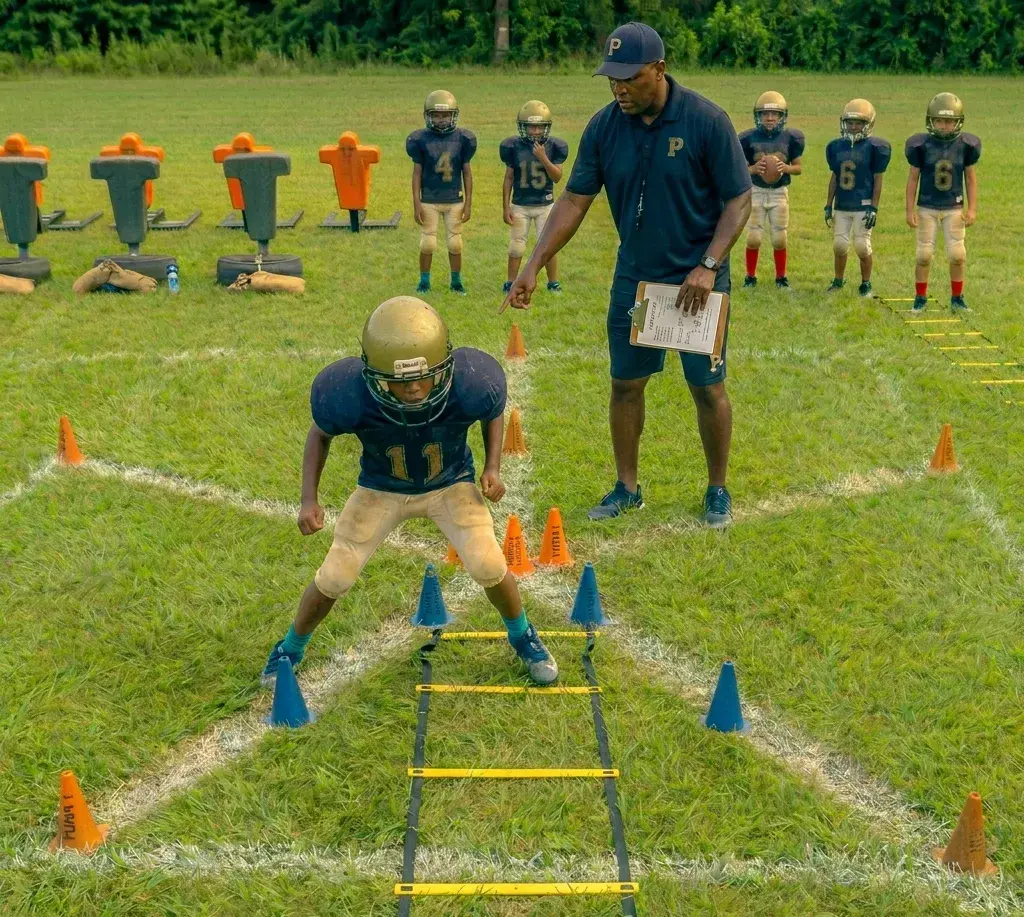
These drills are some of the best quick feet drills for football because they improve coordination, balance, and movement speed. This improves quick feet, coordination, and rhythm.
1. One Foot In Each
- Step one foot in each box
- Move forward quickly
- Tip: stay on your toes
2. Two Feet In Each
- Place both feet in every box
- Keep a steady rhythm
- Tip: keep your knees bent
3. Ickey Shuffle
- Step in, step out, move sideways
- Tip: use your arms for balance
4. In-In-Out-Out
- Step both feet inside, then outside
- Keep movement smooth
5. Lateral Run
- Move sideways through the ladder
- Stay low and controlled
Coaches: use 2–3 sets for each drill.
Mastering these ladder drills builds the foundation for faster cuts, cleaner route running, and better body control. Once these movements become natural, progress to cone drills for football to improve change of direction and continue with football agility drills to develop faster game-speed movement.
Best For
- Wide receivers who need quicker releases off the line of scrimmage.
- Running backs working on fast foot turnover through traffic.
- Quarterbacks improving pocket movement.
- Beginners building coordination and body control.
Cone Drills
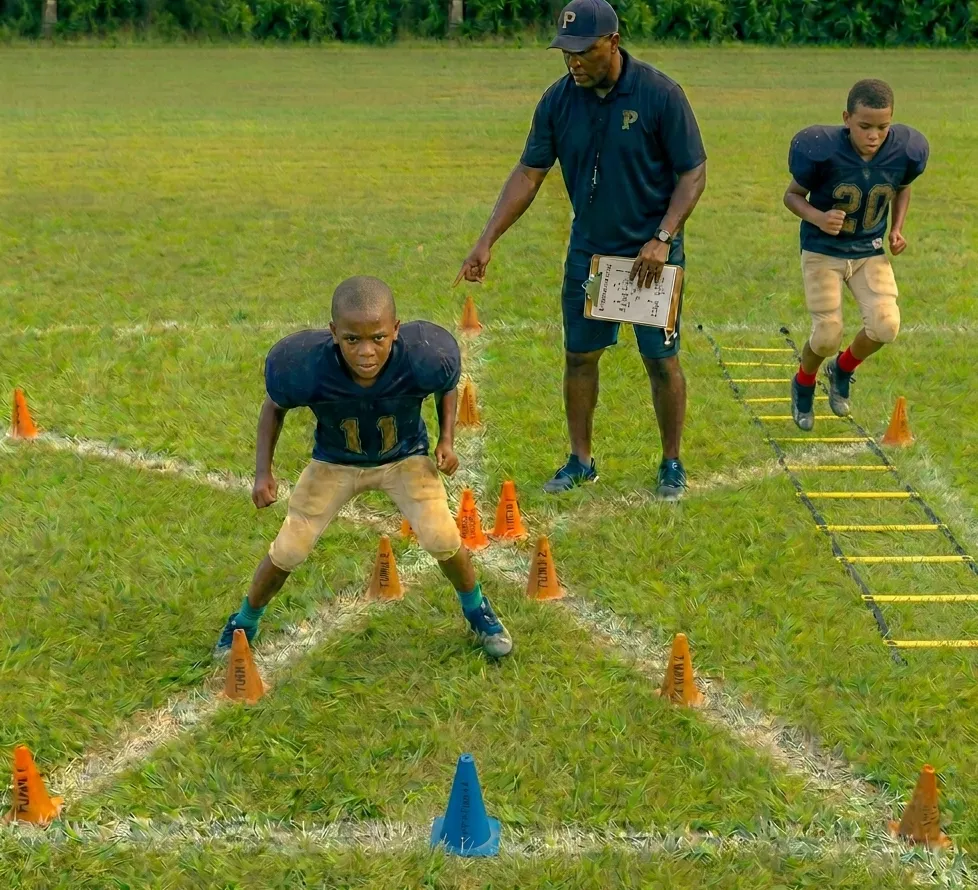
These drills improve change of direction, body control, and balance. If you want to learn more variations and coaching tips, check out our complete guide to cone drills for football.
1. Cone Drill
- Run between cones
Tip: take short, quick steps - Recommended Time: 20–30 seconds per repetition.
2. Zig-Zag Drill
- Run in a zig-zag pattern
- Plant your foot and push off
3. Box Drill
- Run in a square shape
- Change direction at each corner
4. 5-10-5 Shuttle Drill
- Sprint 5 yards right
- Sprint 10 yards left
- Finish 5 yards right
Tip: stay low and explode out of turns
Best For
- Players improving change of direction.
- Defensive backs reacting to receivers.
- Running backs practicing sharp cuts.
- Beginners learning controlled movement around obstacles.
Pro Tip: Lower your hips before every cut and push off your outside foot to stay balanced and accelerate faster.
Want detailed setup, coaching tips, common mistakes, progressions, and performance benchmarks? Read our complete guides:
Cone Drills for Football
Agility Drills
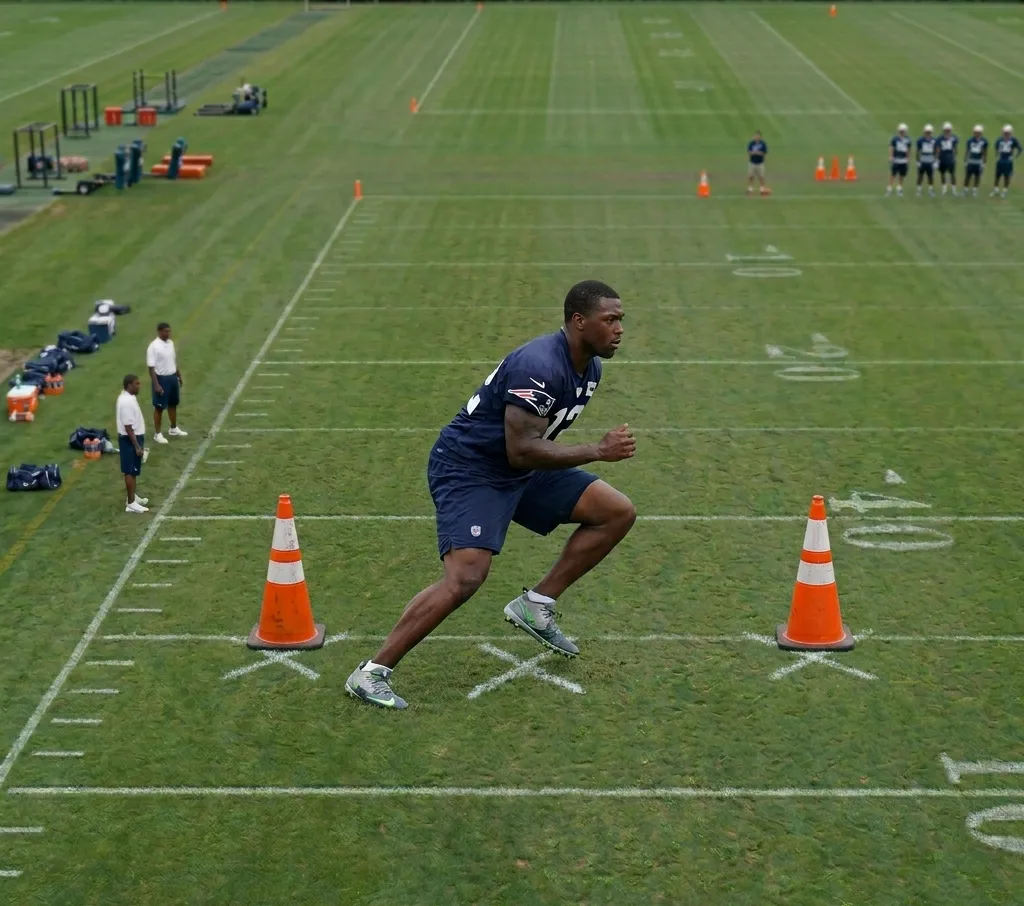
Agility drills improve speed, balance, body control, and change of direction. They help players react quickly and move efficiently during football practice and game situations.
1. Side Shuffle
- Shuffle side to side without crossing your feet.
- Stay low and keep your movements controlled.
2. Sprint and Stop
- Sprint forward for a short distance.
- Stop quickly while staying balanced.
Best for: Beginners, wide receivers, running backs, linebackers, and defensive backs improving agility and body control.
Pro Tip: Stay low with your knees bent and keep your feet moving. Focus on controlled direction changes instead of just moving faster.
Learn more: Read our complete Football Agility Drills guide
Balance and Control Drills
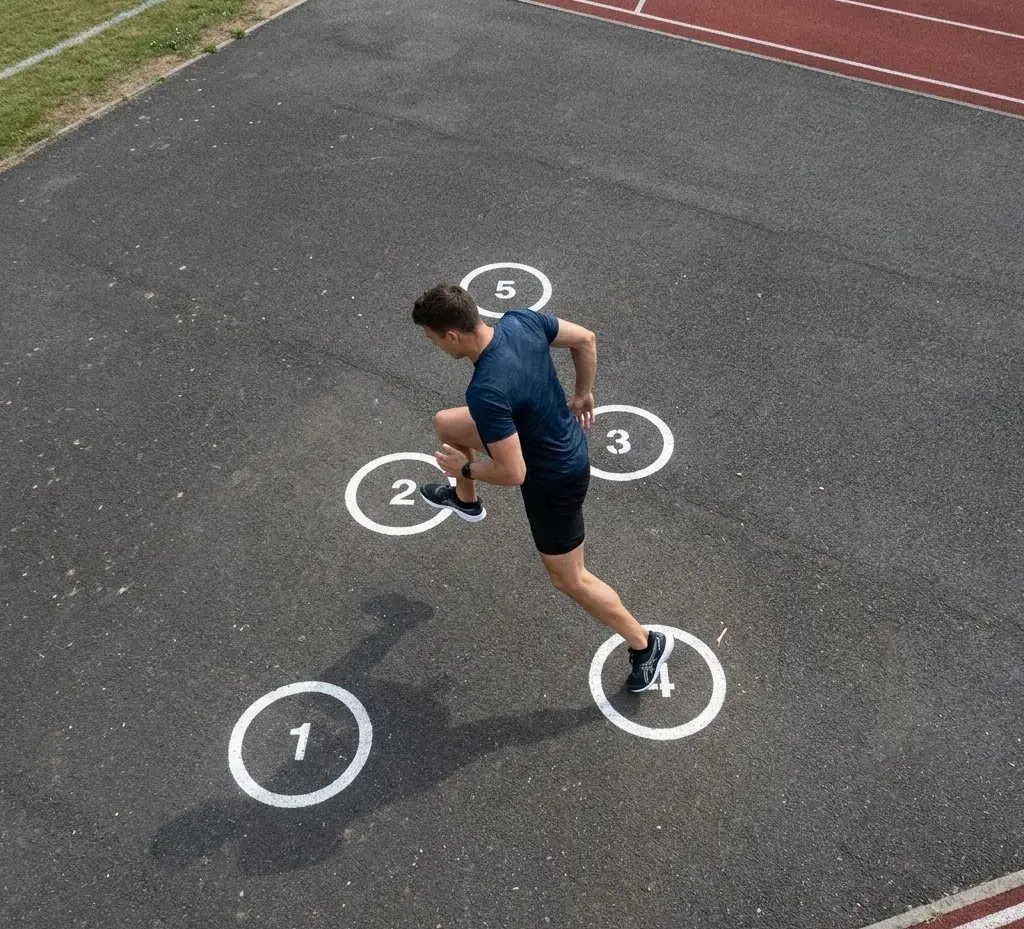
Balance and control drills improve stability, coordination, and body control. They help players stay balanced while cutting, accelerating, and changing direction. Better balance also reduces unnecessary movements that may increase injury risk. Learn more in our Injury Prevention for Football Players guide.
1. Single-Leg Balance Drill
- Stand on one foot.
- Keep your body steady and maintain good posture.
- Switch legs and repeat.
Best for: Beginners, running backs, wide receivers, and defensive players improving balance and body control.
Pro Tip: Keep your core engaged and your eyes forward. Focus on staying stable before increasing the difficulty.
2. Single-Leg Hops
- Hop forward on one foot.
- Land softly and regain your balance before the next hop.
Best for: Beginners, running backs, wide receivers, and players improving single-leg balance and lower-body control.
Pro Tip: Land with a slightly bent knee and stay balanced before taking the next hop.
3. Dot Drill
- Jump between the dots using quick, controlled movements.
- Land softly and stay balanced throughout the pattern.
Best for: Beginners and players improving balance, coordination, and foot speed.
Pro Tip: Focus on accuracy and smooth rhythm before increasing your speed.
Want more balance drills, coaching tips, and progressions? Read our complete Balance and Stability Drills for Football guide
Backpedal Drills
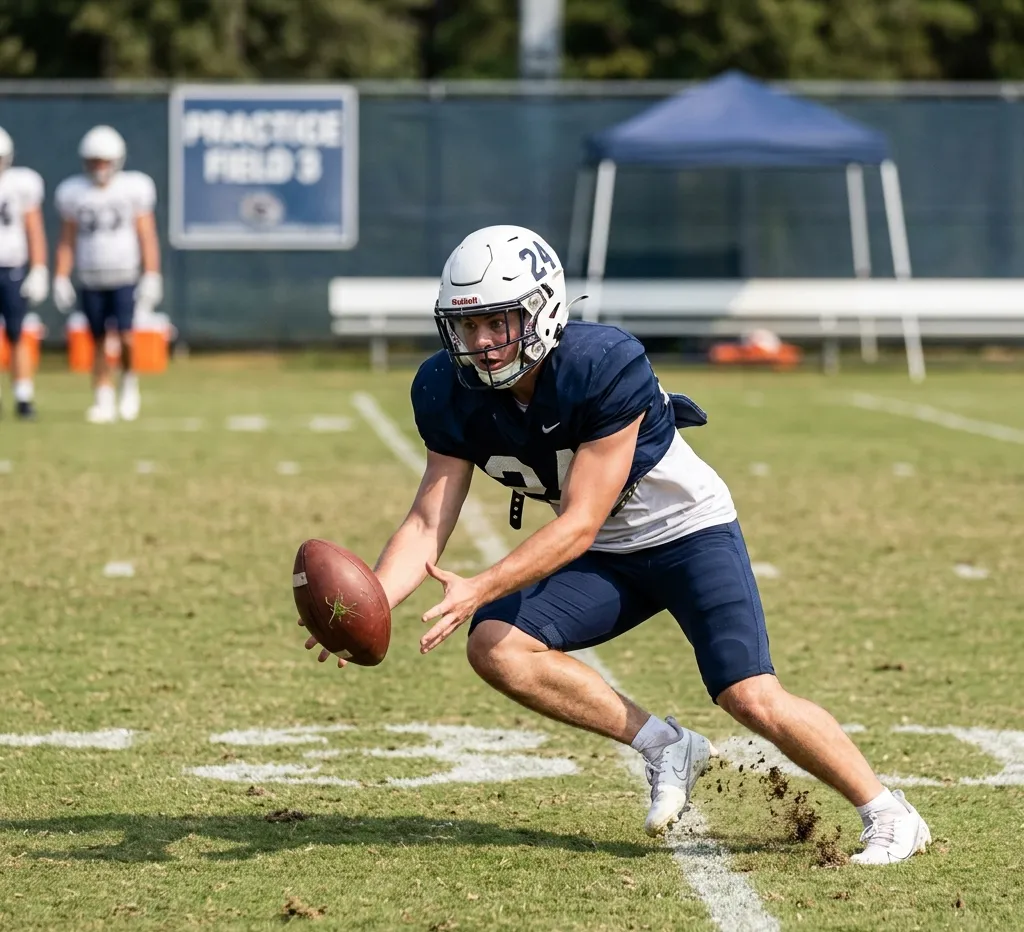
1.Backpedal Drill
The backpedal drill helps players move backward with balance, control, and quick transitions. It is especially useful for defensive positions that need to react and change direction quickly.
- Move backward using short, quick steps.
- Stay low with your eyes forward and chest slightly over your hips.
Best for: Defensive backs, linebackers, safeties, and quarterbacks improving footwork and backward movement.
Pro Tip: Avoid crossing your feet. Stay balanced so you can transition smoothly into a forward sprint.
Reaction Footwork Drills
Reaction footwork drills improve reaction time, balance, and defensive movement. They teach players to read an opponent and respond quickly instead of guessing the next move.
1. Mirror Drill
- Face a partner in an athletic stance.
- Mirror every movement while staying low and balanced.
Best for: Defensive backs, linebackers, beginners, and players improving reaction speed and one-on-one defensive footwork.
Pro Tip: Watch your partner’s hips instead of their feet. The hips provide the earliest clue about their next movement.
Learn more: Read our complete Mirror Drill Guide
Ball Drop Drill
- Drop a football or tennis ball from shoulder height.
- React quickly and catch it before the second bounce.
Best for: Wide receivers, defensive backs, running backs, and beginners improving reaction time and hand-eye coordination.
Pro Tip: Stay on the balls of your feet with your knees slightly bent. React to the ball’s first movement instead of guessing where it will bounce.
Drill Comparison Table
| Drill Type | Best For | Skill Improved | Difficulty |
|---|---|---|---|
| Ladder Drills | Quick feet | Speed, coordination | Easy |
| Cone Drills | Direction change | Agility, control | Medium |
| Reaction Drills | Game situations | Reaction time | Medium |
| Balance Drills | Stability | Body control | Easy |
| Backpedal Drills | Defensive movement | Balance, awareness | Easy |
Football Footwork Drills by Position
Running Back Footwork Drills
Running backs need quick footwork to find running lanes, avoid defenders, and stay balanced after contact.
Recommended drills:
- Jump cuts
- Lateral shuffle drills
- Cone drills
- Single-leg hops
Coach’s Tip: Stay low, plant your outside foot firmly, and explode through every cut instead of slowing down.
Want position-specific training? Check out Running Back Drills.
Quarterback Footwork Drills
Quarterbacks rely on balanced footwork to maintain passing rhythm, move inside the pocket, and throw accurately under pressure.
Recommended drills:
- 3-step and 5-step dropbacks
- Pocket movement
- Ladder drills
- Cone drills
Coach’s Tip: Keep a balanced base and avoid crossing your feet while moving in the pocket.
Learn more in Quarterback Drills for Beginners.
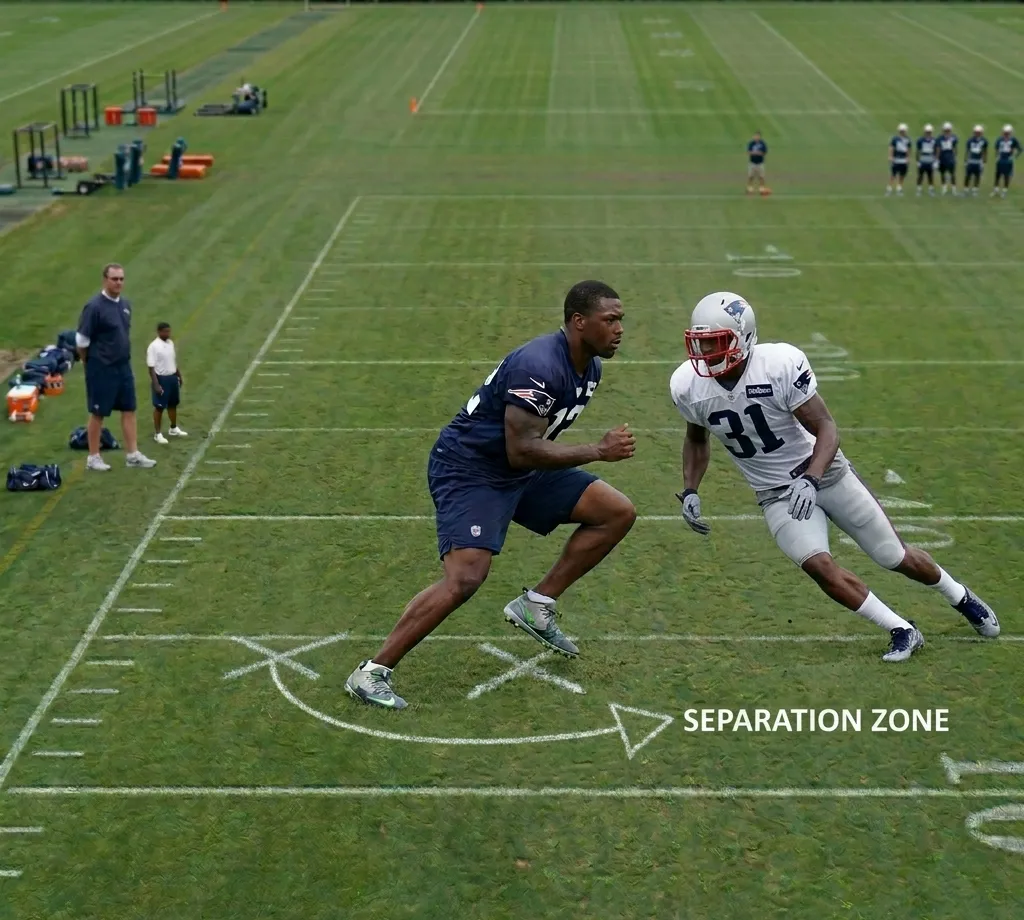
Wide Receiver Footwork Drills
Wide receivers use quick footwork to create separation, run cleaner routes, and stay balanced before making catches.
Recommended drills:
- 45° and 90° route cuts
- Ladder drills
- Cone drills
- Reaction drills
Coach’s Tip: Plant hard, stay low, and explode out of every break.
Continue with Football Catching Drills.
Defensive Back Footwork Drills
Defensive backs need quick, controlled footwork to stay with receivers, react to route changes, and break on the football.
Recommended drills:
- Backpedal drills
- Mirror drills
- Cone drills
- Reaction ball drills
Coach’s Tip: Watch the receiver’s hips, stay balanced, and avoid crossing your feet.
Improve further with Defensive Back Drills.
Conditioning Drills to Maintain Quick Footwork
Conditioning helps players maintain quick, controlled footwork throughout practice and games. Better endurance allows you to keep moving efficiently, react faster, and maintain proper technique even when you become tired.
Recommended Conditioning Drills
- Perform short burst sprints to improve first-step quickness and acceleration.
- Include repeat sprint drills to build endurance for repeated football plays.
- Practice quick recovery movements by sprinting, stopping, and changing direction with minimal rest.
Players who want to improve overall acceleration can also practice Football Speed Drills for more advanced sprint training.
Coach’s Tip
As fatigue increases, focus on maintaining proper footwork instead of simply moving faster. Good technique should always come before speed.
Beginner vs Advanced Football Footwork Drills
Beginner Drills
- Simple ladder drills
- Basic cone drills
Advanced Drills
- Reaction drills
- Combination movements
Many youth football players start with ladder drills, cone drills, and side shuffle drills before progressing to more advanced reaction drills
Football Footwork Drills at Home
You can train at home without equipment.
Try:
- quick feet drills in place
- line drills
- shadow movement
Common Football Footwork Mistakes
- taking long steps
- standing too upright
- moving too slow
- losing balance
Fix: use short steps, stay low, and stay on your toes.
Not Every Footwork Drill Improves Game Performance
Learning more drills does not always make you a better football player. The best footwork drills improve movements that actually happen during a game. If a drill doesn’t match real football situations, its impact on the field may be limited.
What Makes a Footwork Drill Effective?
A useful football footwork drill should help you:
- Improve your first step and body control.
- Change direction without losing balance.
- React quickly instead of following a memorized pattern.
- Move the same way you would during a real play.
Signs a Drill Needs More Challenge
If every repetition feels exactly the same, your footwork may improve in practice but not during games.
Consider adding:
- A football to carry or catch.
- A coach’s verbal command.
- A visual cue, such as a colored cone.
- A teammate acting as a defender.
These small changes force you to react instead of simply repeating the same movement.
Coach’s Tip
The goal of footwork training is not to complete drills perfectly. The goal is to move confidently when the play changes unexpectedly. As your technique improves, gradually make drills more game-like by adding reaction, timing, and decision-making.
When Should You Practice Football Footwork Drills?
Most players get the best results when they practice footwork drills after a warm-up and before heavy conditioning. Fresh legs help you maintain proper technique and movement quality. For beginners, 15 to 20 minutes of focused footwork training 3 to 4 times per week is usually enough.
Football Footwork Myths vs Reality
Learning football footwork is easier when you avoid common misconceptions. Here are a few myths that can hold beginners back.
| Myth | Reality |
|---|---|
| Ladder drills make you game faster. | They improve coordination, not game speed by themselves. |
| Faster feet always win. | Efficient movement beats extra steps. |
| Every player needs the same drills. | Your position determines the best drills. |
| Longer workouts build better footwork. | Quality reps matter more than workout length. |
| Mastering one drill is enough. | Great footwork comes from practicing different game situations. |
Coach’s Insight (2026): Modern football training focuses on reaction and decision-making drills, not just ladder speed. Many coaches now combine footwork with visual cues or live defenders to help players move more naturally during games.
7-Day Beginner Football Footwork Training Plan
| Day | Focus | Duration |
|---|---|---|
| Monday | Ladder Drills + Balance Drills | 20–25 min |
| Tuesday | Active Recovery (Light Stretching or Walking) | 15–20 min |
| Wednesday | Cone Drills + Reaction Drills | 20–25 min |
| Thursday | Mobility and Recovery Exercises | 15–20 min |
| Friday | Position-Specific Footwork (QB, WR, RB, or DB) | 20–30 min |
| Saturday | Combined Footwork Circuit + Conditioning | 25–30 min |
| Sunday | Rest and Recovery | — |
Beginner Tip: Focus on proper technique before increasing speed. If you feel tired or your form starts to break down, take a short break or reduce the intensity. Consistent practice with good technique leads to better long-term improvement than rushing through the drills.
Which Drill Fixes Your Biggest Weakness?
| Problem | Drill |
|---|---|
| Slow feet | Ladder |
| Poor balance | Single Leg Hop |
| Slow cuts | Cone |
| Slow reaction | Mirror Drill |
| Bad backpedal | Backpedal Drill |
Safety Tips for Football Footwork Drills
- Warm up before every session.
- Start slowly and focus on technique.
- Wear shoes with good traction.
- Practice on flat surfaces.
- Increase speed gradually.
Good form helps prevent injuries and improves long-term performance.
Recovery Tips After Footwork Training
Cool down after training and stay hydrated. Light stretching and proper rest help your body recover and prepare for the next session.
🏈 Beginner Footwork Self-Check
Before moving on to more advanced football footwork drills, use this checklist to evaluate your progress. If you can confidently complete each skill with proper technique, you’re ready to increase the difficulty of your training.
🏆 Weekly Footwork Challenge
Challenge yourself to complete these goals before moving to more advanced football footwork drills.
Which Football Footwork Drills Should Beginners Master First?
If you’re new to football, don’t try to learn every footwork drill at once. Start with the fundamentals and gradually build speed, balance, and reaction skills. Follow this progression to develop strong footwork before moving to more advanced drills.
| Step | Focus | Recommended Drills | Goal |
|---|---|---|---|
| Step 1 | Build Coordination | Ladder Drills | Learn proper foot placement, rhythm, and quick feet. |
| Step 2 | Improve Balance | Balance Drills & Single-Leg Hops | Develop stability and body control during movement. |
| Step 3 | Master Change of Direction | Cone Drills | Improve cutting, acceleration, and lateral movement. |
| Step 4 | Increase Reaction Speed | Mirror Drills & Ball Drop Drill | React faster to opponents and unexpected movements. |
| Step 5 | Apply Game Movement | Backpedal Drills & Position-Specific Footwork | Perform football-specific movements with confidence and control. |
Beginner Tip
Don’t move to the next step until you can complete the current drills with good technique. Building strong fundamentals first will improve your speed, balance, and overall performance much more than rushing into advanced drills.
Advanced Footwork Concept: Reading Defenders Before Moving Your Feet
Once you have mastered basic footwork drills, the next step is learning when to move—not just how to move. Experienced players don’t rely on quick feet alone. They watch the defender first and then react with the right movement.
Focus on these game cues:
- Watch the defender’s hips instead of their hands.
- Notice whether the defender is leaning inside or outside.
- Stay balanced until the defender commits.
- Explode only after creating an advantage.
Coach’s Tip
Many beginners rush their footwork as soon as the play starts. Experienced players stay patient for a split second, read the defender’s movement, and then make a decisive cut. Good footwork is not just about speed—it is about making the right move at the right time.
Want to improve reaction time as well? Combine these footwork drills with reaction drills and agility training to make your movements more game-ready.
Conclusion
From real training experience, players who focus on footwork often improve their overall performance. Better footwork leads to quicker movement, sharper cuts, and stronger control during plays. You do not need complex training. Simple drills done with the right technique and consistency can make a big difference. Stick to these football footwork drills, stay consistent, and you will start to notice real improvement on the field. Consistent footwork practice is an important part of football agility training because it helps players move with more speed, control, and confidence.
FAQs
1. Which football footwork drill should beginners start with?
Beginners should start with ladder drills because they build coordination, balance, and quick foot movement. Once you can perform ladder drills with good technique, progress to cone drills, mirror drills, and reaction drills to improve game-like movement.
2. How often should I practice football footwork drills?
Most beginners benefit from practicing football footwork drills 2 to 4 times per week. Focus on proper technique before increasing speed, and allow enough recovery between sessions to avoid fatigue.
3. How long does it take to improve football footwork?
Many beginners notice better coordination and balance within two to four weeks of consistent practice. Improvement depends on training frequency, proper technique, and gradually increasing drill difficulty.
4. Can I practice football footwork drills at home?
Yes. Many football footwork drills can be practiced in a backyard, driveway, garage, or any open space. If you don’t have an agility ladder or cones, you can use tape, chalk, or household objects to mark drill patterns.
5. Which football positions benefit the most from footwork drills?
Every football position benefits from footwork training. Quarterbacks improve pocket movement, running backs develop quicker cuts, wide receivers create better separation, and defensive backs react faster while covering receivers.
6. Should I focus on speed or technique first?
Technique should always come before speed. Learning proper foot placement, balance, and body control helps prevent bad habits and allows you to move faster as your skills improve.
7. What’s the difference between football footwork drills and agility drills?
Football footwork drills focus on foot placement, coordination, and movement control. Football agility drills build on those skills by improving change of direction, reaction time, and overall athletic movement during game situation.
8. What should I practice after mastering football footwork drills?
Once you’ve mastered the basics, continue with football agility drills, football speed drills, cone drills, and position-specific training to apply your footwork in game situations.
🏈 What’s Next?
Ready to keep improving? Continue your football training with these beginner-friendly guides:
- Football Agility Drills – Improve change of direction and body control.
- Football Speed Drills – Build acceleration and explosive movement.
- Cone Drills for Football – Develop sharper cuts and faster footwork.
References
- American College of Sports Medicine (ACSM). ACSM’s Guidelines for Exercise Testing and Prescription (12th Edition). Available at: https://acsm.org/education-resources/books/guidelines-exercise-testing-prescription/
- National Strength and Conditioning Association (NSCA). Essentials of Strength Training and Conditioning (5th Edition). Available at: https://www.nsca.com/certification/cscs/essentials-of-strength-training-and-conditioning-5th-edition/
