



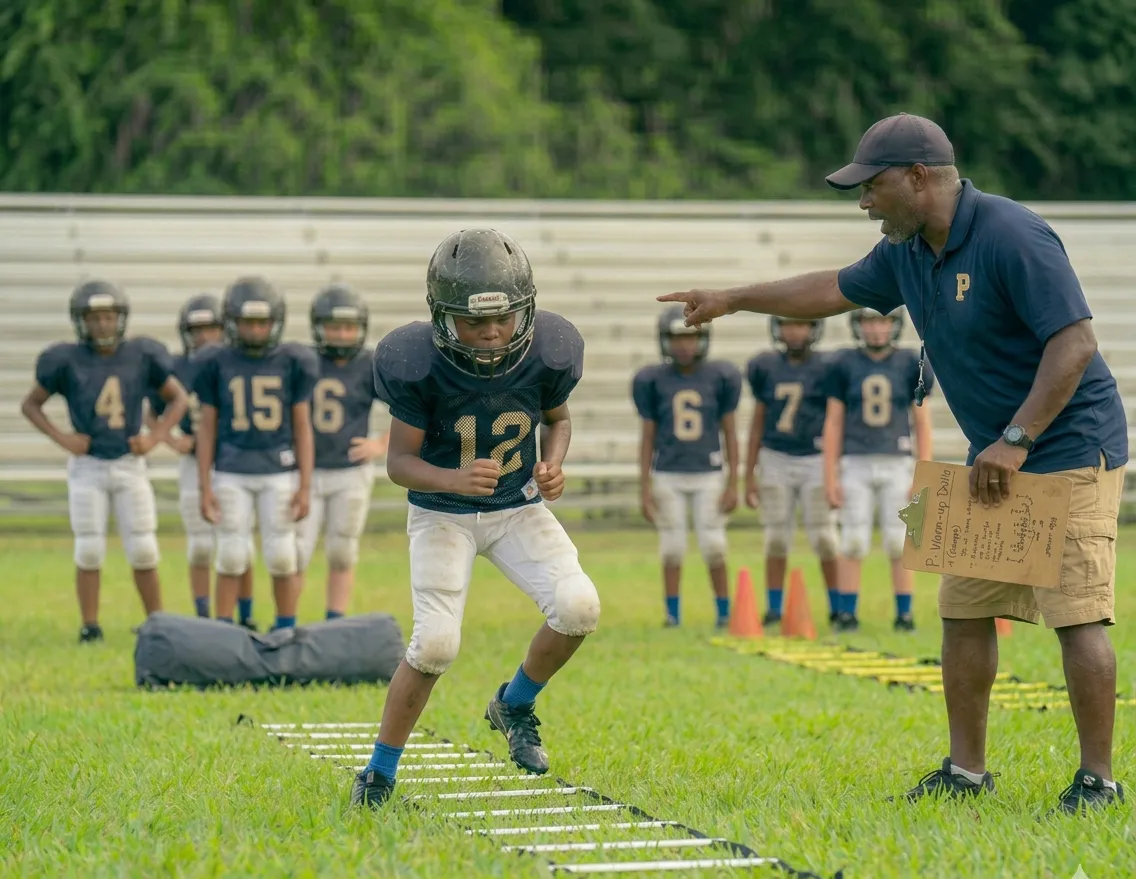
If you are searching for football speed and agility drills for beginners, you are in the right place. Speed helps you run faster, while agility helps you change direction, stay balanced, and react quickly during a play. Beginners need to train both skills together to move with more control and confidence on the football field.
Many new players struggle with slow footwork, poor balance, or delayed reactions. These challenges are normal and improve with consistent practice. You do not need advanced equipment or difficult workouts to get started. Along with these exercises, practicing football footwork drills will help you build better movement mechanics and body control. If you are completely new to the sport, start with our football drills for beginners guide before following this training plan. By learning the right drills and following a simple training plan, you can build better movement one step at a time.
Quick Takeaways
- Start slowly and focus on proper technique before increasing speed.
- Train 3 to 4 times per week for steady improvement.
- Practice simple cone, ladder, and change-of-direction drills.
- Stay low and balanced while changing direction.
- Be consistent, because small improvements add up over time.
What Are Football Speed and Agility Drills for Beginners?
Football speed and agility drills are training exercises that help players run faster, change direction quickly, stay balanced, and react under control during a game. Speed drills improve straight-line acceleration, while agility drills develop quick cuts, lateral movement, and body control. Beginners should practice both skills together because they work as a team in almost every football play.
What Is the Difference Between Speed and Agility?
| Speed | Agility |
|---|---|
| Improves straight-line running | Improves quick direction changes |
| Focuses on acceleration and sprinting | Focuses on balance, reaction, and body control |
| Used to create distance | Used to avoid defenders and stay under control |
Why Should Beginners Train Speed and Agility Together?
| Football Speed | Football Agility |
|---|---|
| Sprinting in a straight line | Changing direction quickly |
| Builds acceleration | Builds balance and body control |
| Helps create separation | Helps avoid defenders |
| Focuses on maximum running speed | Focuses on controlled movement |
How Should Complete Beginners Start?
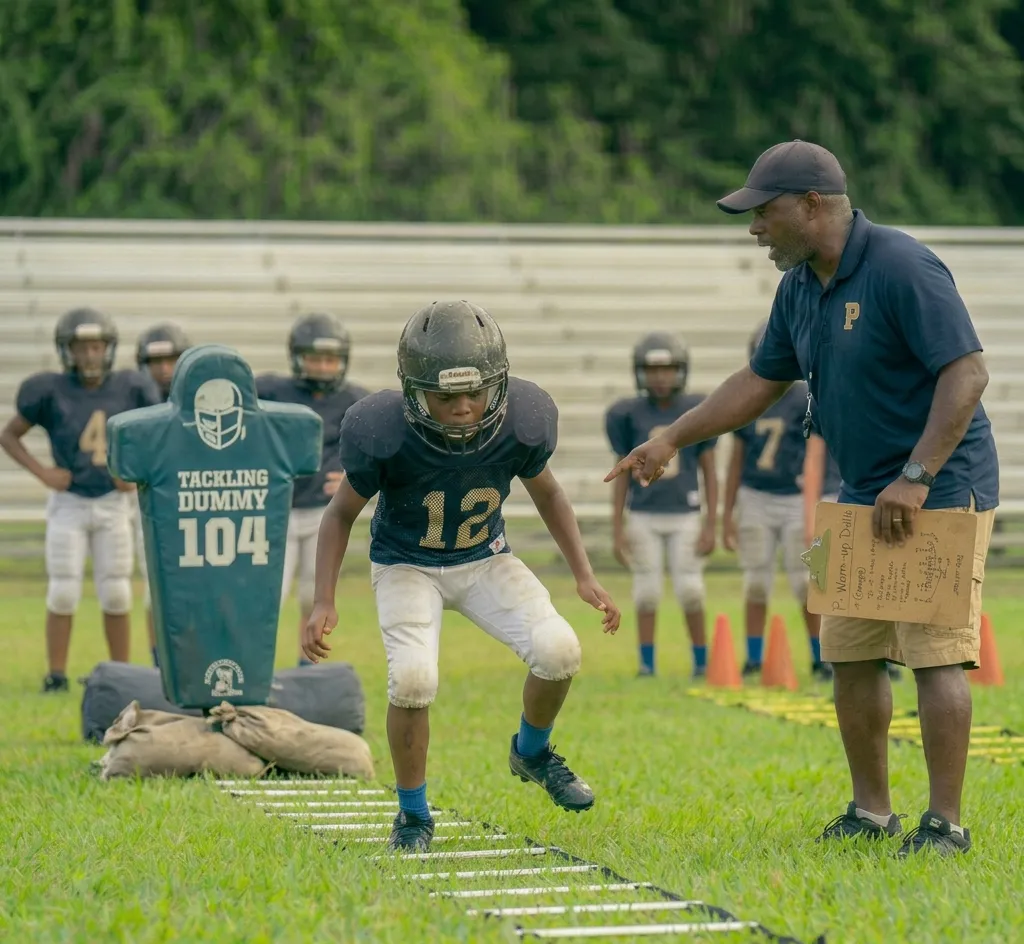
If you are just starting, keep things simple.
- Move slowly first
- Focus on balance and control
- Do fewer drills but do them correctly
- Master technique before increasing speed.
Most beginners try to go too fast. This slows progress. You will improve faster if you stay patient and focus on form.
What Skills Will You Improve?
Speed and agility drills help you move better during a game.
They improve:
- Balance
- Quick feet
- Body control
- Acceleration
- Change of direction
Football is not just about running straight. Players stop, turn, and react quickly. That is why training these skills is very important. If you want to stay stable during every movement, practice football balance drills as part of your weekly training.
Key Components of Agility
To improve agility, focus on these basics.
Balance
Stay stable while moving.
Coordination
Your body parts must work together.
Reaction Time
React quickly during plays.
Body Control
Change direction without losing control.
These are the base skills every beginner needs.
Supplies Needed
You do not need much equipment.
| Equipment | Required | Alternative |
|---|---|---|
| Cones | Yes | Water bottles |
| Agility ladder | Optional | Tape or chalk |
| Open space | Yes | Backyard or park |
You can also train at home using simple markers.
Warm-Up Exercises
Always warm up before drills.
- Light jogging (2 minutes)
- High knees (30 seconds)
- Butt kicks (30 seconds)
- Arm swings (30 seconds)
This short routine prepares your body for training. If you want a complete warm-up routine, follow our football warm-up drills before practice guide. According to the USA Football Player Development Model and the National Strength and Conditioning Association (NSCA) a dynamic warm-up prepares your muscles for quick starts, stops, and direction changes while helping reduce the risk of injury.
How to Practice These Drills
Isme sirf 5 short bullets:
- Train 3–4 times per week.
- Choose 3–5 drills per session.
- Rest 30–60 seconds between drills.
- Focus on technique before speed.
- Stop if your form starts to break down.
Football Speed Drills for Beginners
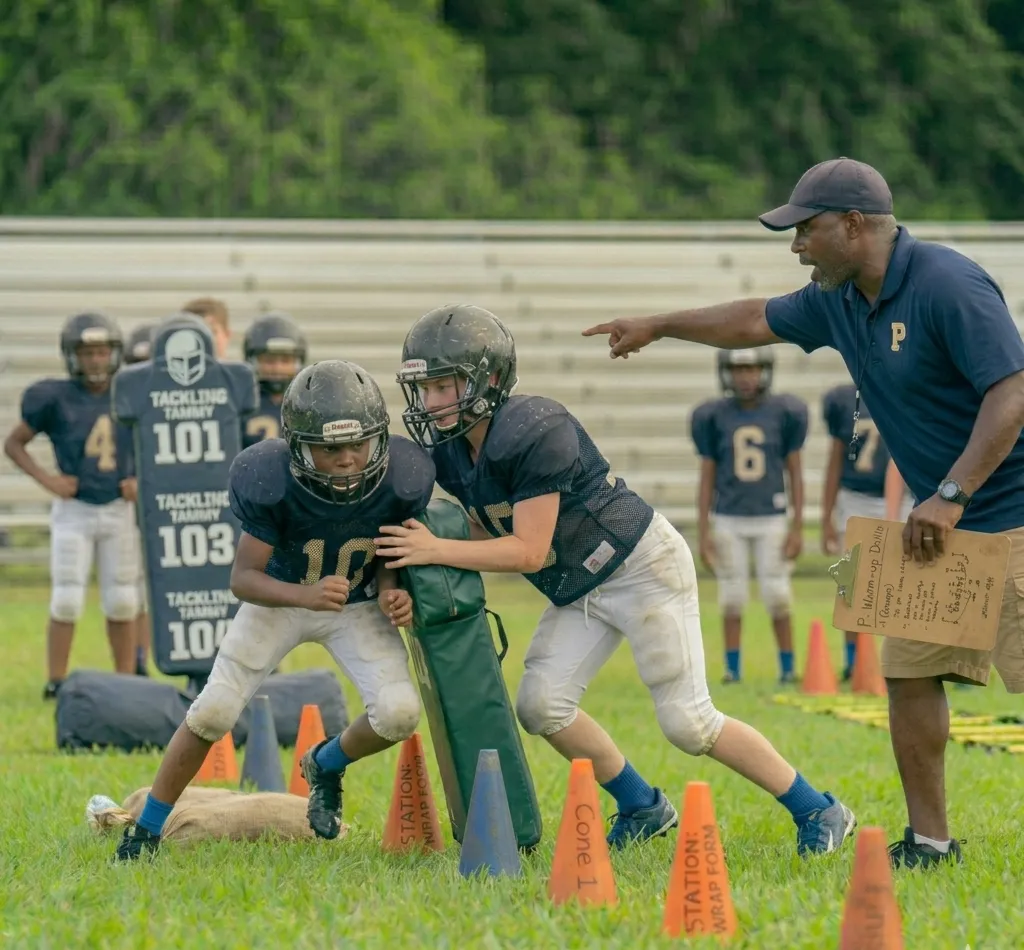
These drills help you run faster.
Short Sprints
Purpose
Improve acceleration and explosive starts.
How to Perform
- Sprint 10–20 yards.
- Walk back to recover.
- Repeat 4–6 times.
Coach Tip
Focus on powerful first steps instead of reaching full speed immediately.
High Knees
Purpose: Improve running rhythm, knee drive, and coordination.
How to Perform
- Run in place while lifting your knees to about hip height.
- Pump your arms naturally as you move.
- Continue for 20–30 seconds, then rest before repeating.
Coach Tip: Keep your chest up and land lightly on the balls of your feet instead of your heels.
Falling Starts
Purpose: Improve acceleration and explosive first steps.
How to Perform
- Stand tall with your feet shoulder-width apart.
- Lean your body forward until you begin to lose balance.
- As you start to fall, drive forward and sprint for 10–15 yards.
- Walk back to recover and repeat 4–6 times.
Coach Tip: Push off quickly with your first step instead of taking small, slow steps.
Football Agility Drills for Beginners
Start with these simple drills to improve quick feet, balance, and change-of-direction skills. If you want detailed coaching tips, progressions, and drill variations, explore our football agility drills guide after completing this beginner workout.
Ladder Drills
How to Perform
- Step in each box
- Keep feet light
Best For
Helps with quick foot movement.
Foot Fire Drill
How to Perform
- Move feet quickly in place
Best For
Builds quick reaction speed.
Cone Drills
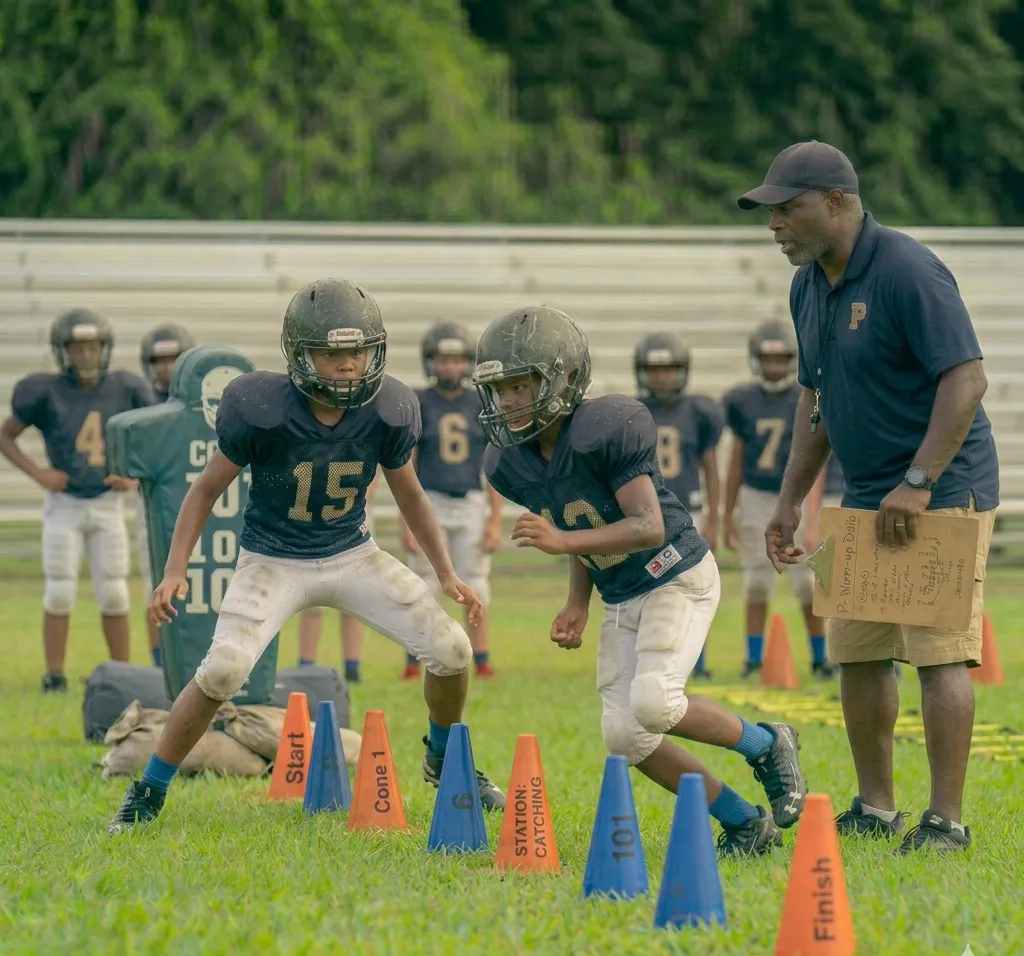
How to Perform
- Run around cones
- Change direction
Best For
Helps with sharp cuts in games.
Zig-Zag Drill
How to Perform
- Run through cones
- Cut at each point
Best For
Helps with fast direction changes.
Shuttle Runs
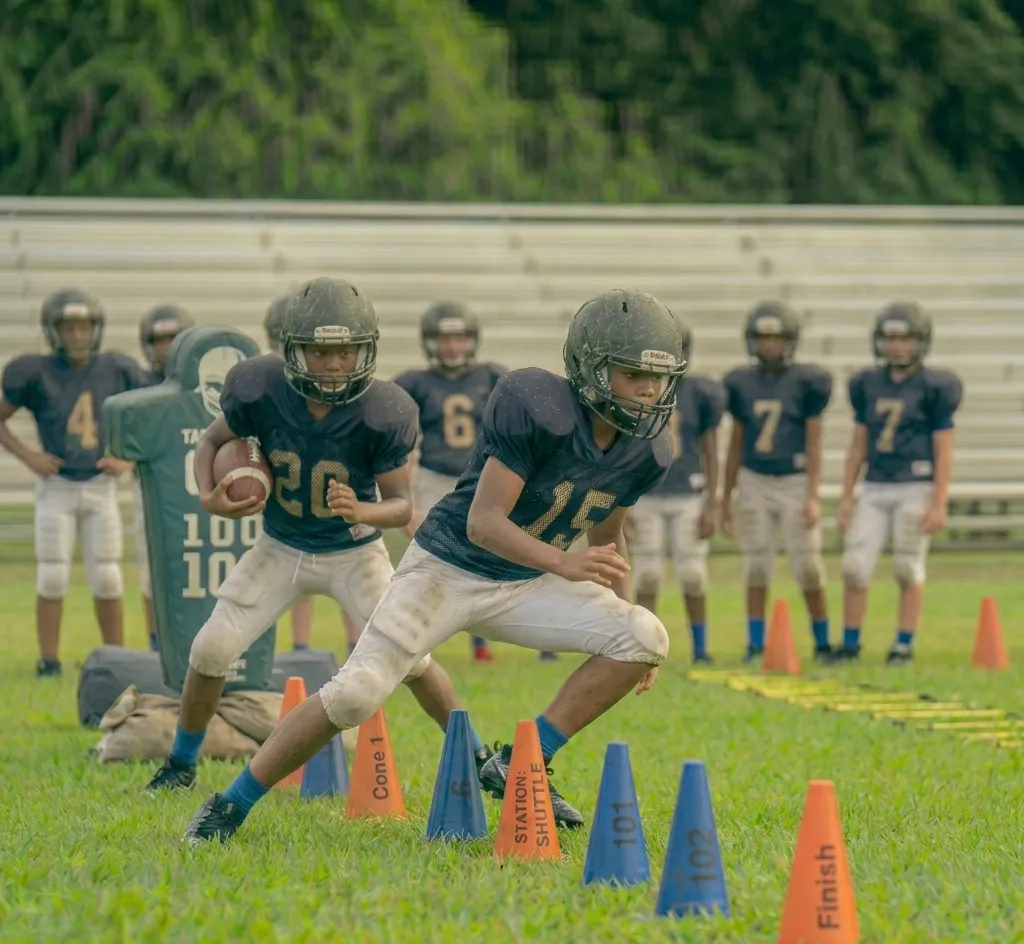
- Run 5–10 yards
- Turn and return
Builds speed and control.
T Drill
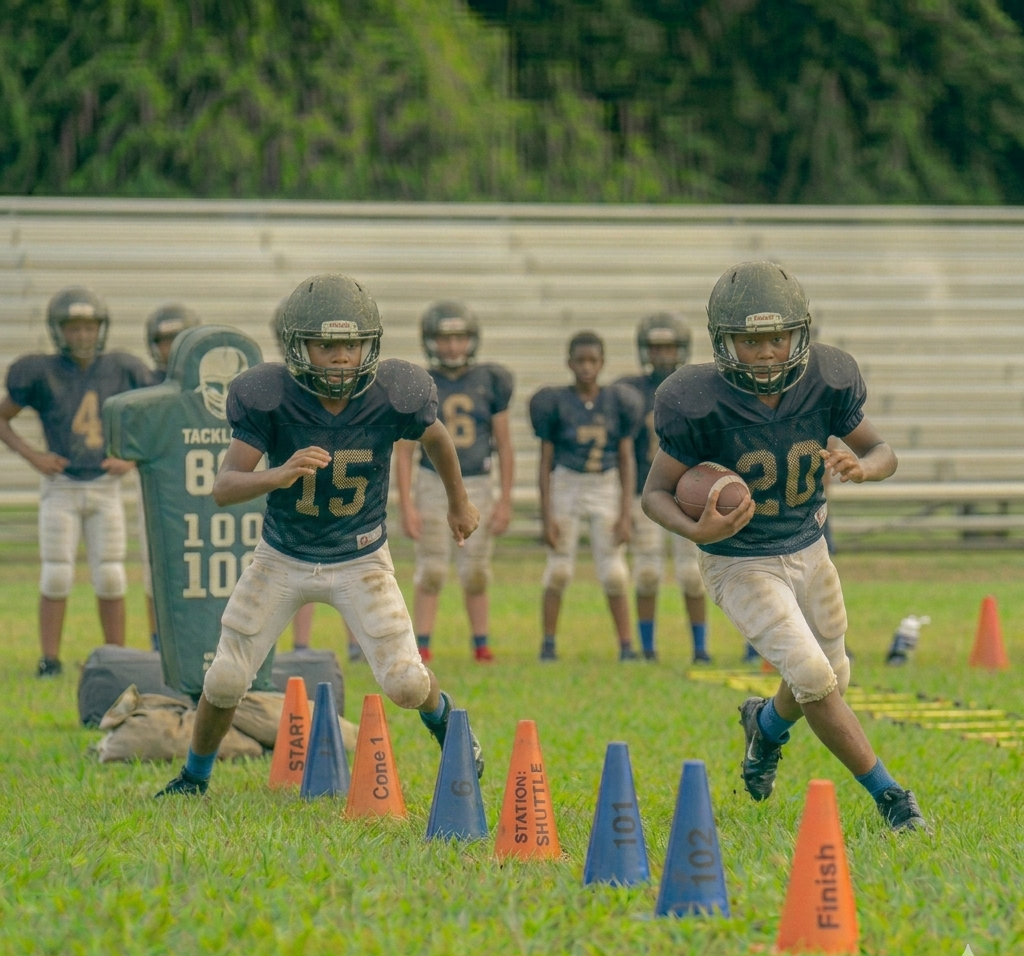
- Sprint, shuffle, backpedal
Best For
Improves multi-direction movement.
5-10-5 Drill
How to Perform
- Run short distances
- Change direction fast
Best For
Used by coaches to test agility.
| Drill | Focus | Use |
|---|---|---|
| Ladder | Foot speed | WR, RB |
| Cone | Direction | All |
| Shuttle | Speed | RB, DB |
| T Drill | Movement | Defense |
No Equipment Football Drills for Beginners

These simple drills are ideal for home workouts or days when you do not have access to cones or a ladder. For more ways to practice in limited space, explore our at-home football drills guide.
- Sprint in Place: Run in place as fast as you can for 20 seconds.
- Line Footwork: Step quickly over a line for 20–30 seconds while staying balanced.
- Side Shuffles: Shuffle left and right for 10–15 yards, then repeat.
These simple drills are ideal for home workouts or days when you do not have access to cones or a ladder.
15-Minute Beginner Speed and Agility Workout
| Time | Activity |
|---|---|
| 5 minutes | Dynamic warm-up |
| 5 minutes | Speed drills |
| 5 minutes | Agility drills |
Keep it simple and repeat regularly.
Weekly Training Plan for Beginners
| Day | Focus |
|---|---|
| Day 1 | Speed Drills |
| Day 2 | Agility Drills |
| Day 3 | Rest or Light Recovery |
| Day 4 | Mixed Speed and Agility |
| Day 5 | Repeat or Review Weak Areas |
Train 3–4 days each week and take at least one recovery day to help your body adapt and reduce fatigue.
Common Mistakes
- Standing upright
- Long steps
- Looking down
- Moving too slow
Fix these early.
How to Fix It
| Common Mistake | Quick Fix |
|---|---|
| Standing upright | Bend your knees and stay in an athletic stance. |
| Taking long steps | Use short, quick steps. |
| Looking down | Keep your eyes forward. |
| Moving too slowly | Start under control, then increase speed gradually. |
Measuring Improvement
| What to Measure | Example |
|---|---|
| Sprint Time | Time your 10–20 yard sprint. |
| Drill Repetitions | Count how many quality repetitions you complete. |
| Balance | Stay under control during every direction change. |
| Technique | Focus on smooth footwork instead of rushing. |
Focus on steady improvement instead of trying to become faster in a single workout.
Beginner Training Checklist
Beginner Training Checklist
- ☐ Warm up before every training session.
- ☐ Choose 2–3 drills for each workout.
- ☐ Focus on proper technique before increasing speed.
- ☐ Train 3–4 times per week with at least one recovery day.
- ☐ Track your progress by recording sprint times or drill repetitions.
- ☐ Wear athletic shoes with good traction for better grip and stability.
- ☐ Stop training if you feel pain instead of normal muscle fatigue.
Conclusion
Improving speed and agility in football takes consistent practice, but every beginner can make steady progress by following a simple training plan and focusing on proper technique. Start with the basic drills in this guide, train regularly, and increase your speed only after you can perform each movement with good balance and control.
As your skills improve, continue building your football fundamentals by practicing footwork, change-of-direction drills, and position-specific training. Small improvements made consistently will lead to faster movement, better body control, and greater confidence on the field.
Frequently Asked Questions
What are football speed and agility drills?
Football speed and agility drills are exercises that help players improve acceleration, quick direction changes, balance, coordination, and body control. Beginners should train both skills together because they are used on almost every football play.
What is the difference between speed and agility in football?
Speed is your ability to run fast in a straight line. Agility is your ability to stop, change direction, and react while staying balanced. Football players need both skills to perform well during games.
How often should beginners practice speed and agility drills?
Most beginners should train 3 to 4 times per week. Include at least one recovery day each week to allow your body to recover before the next session
Which speed and agility drill should beginners learn first?
Start with simple drills such as High Knees, Short Sprints, Ladder Drills, and Cone Drills. These exercises build good movement habits before progressing to more advanced drills.
Can I improve football speed and agility without equipment?
Yes. You can practice Sprint in Place, Line Footwork, Side Shuffles, and other bodyweight drills at home. While cones and agility ladders are helpful, they are not required to begin training.
How long should a beginner speed and agility workout last?
A 15 to 20-minute session is enough for most beginners. Begin with a dynamic warm-up, practice a few speed drills, then finish with agility drills while focusing on proper technique.
How long does it take to improve speed and agility?
Most beginners notice better balance, coordination, and movement within a few weeks of consistent practice. The biggest improvements come from regular training, good technique, and gradual progression.
What are the most common mistakes beginners make during speed and agility drills?
Common mistakes include taking long steps, standing too upright, looking down, skipping the warm-up, and trying to move too fast before learning proper technique. Correcting these habits early helps improve performance and reduces the risk of injury.
Should beginners train speed before agility?
You can train both during the same workout. A simple approach is to complete your speed drills first while you are fresh, then finish with agility drills that focus on balance, reaction, and change of direction.
What should I learn after mastering beginner speed and agility drills?
Once you can perform these drills with good control and consistent technique, move on to football footwork drills, advanced agility drills, cone drills, and position-specific training to continue improving your football skills.
📚 References
The training recommendations in this guide are supported by trusted football coaching and sports performance resources.
