



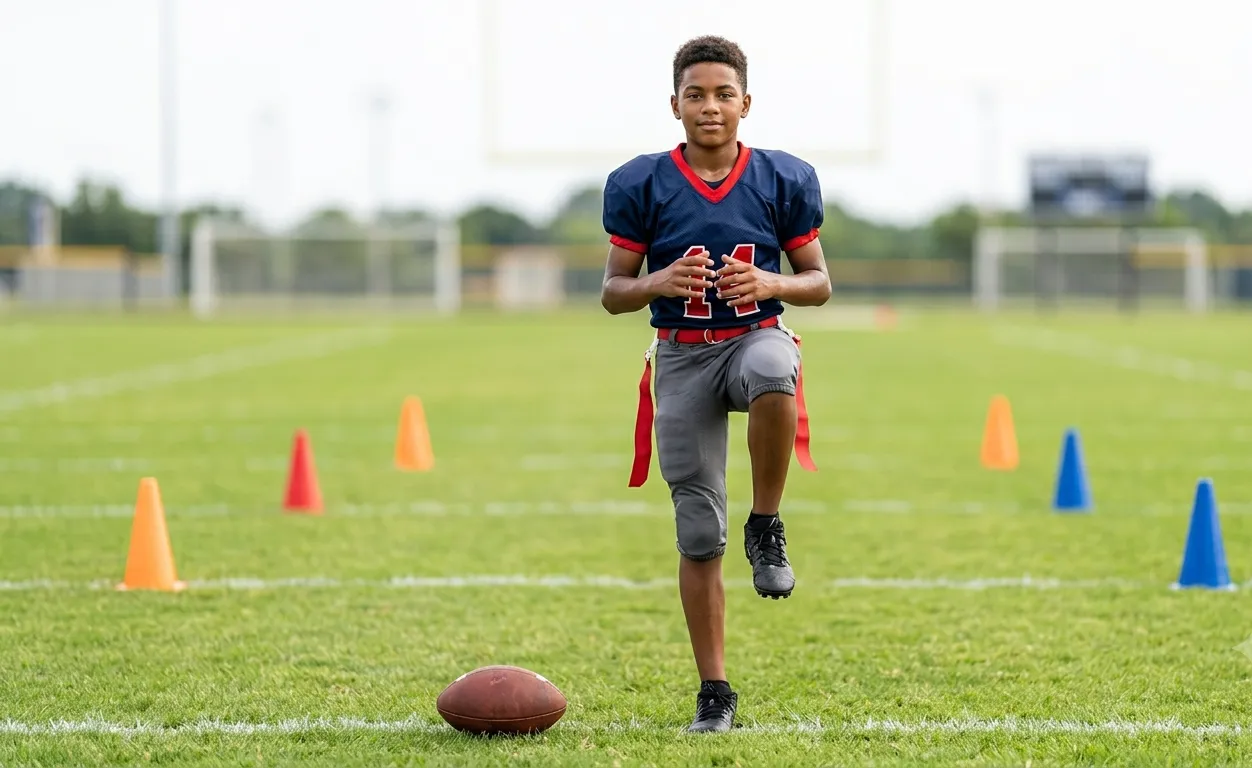
Every football player wants to run faster, catch better, and stay on their feet after contact. Those skills all start with one thing: balance. Football balance drills help players stay stable while moving, landing, reaching, or absorbing force from another player. Whether you are new to the game or looking to improve your fundamentals, football balance drills build the stability and body control needed for better movement on the field.
Many beginners spend most of their practice time on throwing, catching, or running. Balance training often gets ignored because it looks simple. In reality, even basic balance exercises challenge your muscles, joints, and nervous system to work together. That teamwork improves movement quality before players add speed or contact.
The best part is that you do not need a fully equipped gym. Most football balance drills use your body weight and only require a few feet of open space. A short balance session before practice can help players develop better control throughout the season.
In this guide, you will learn why football balance drills matter, how they improve stability and body control, and which beginner-friendly exercises can help you build a stronger foundation for the game. Once you develop better balance, you can continue with our Football Speed and Agility Drills for Beginners to improve overall athletic performance.
Why Balance Is an Essential Football Skill
Football is full of moments where players must stay under control.
A receiver lands after making a catch near the sideline. A running back stays upright after brushing past a defender. A linebacker plants one foot before changing body position to make a tackle.
Each movement depends on balance before anything else.
Good balance allows players to keep their center of gravity under control while moving. Instead of fighting to stay upright, they can focus on making the next play. As players develop better stability, they are better prepared to progress to our Football Speed and Agility Drills for Beginners, where they can apply that control during faster movements.
Balance also supports proper body alignment. When players keep their hips, knees, ankles, and core working together, movements become smoother and more efficient.
Sports performance experts at the National Strength and Conditioning Association explain that balance and postural control are key parts of athletic development because they help athletes produce controlled movement and maintain stability during sport-specific activities.
Benefits of Football Balance Drills
Balance training supports much more than standing on one leg. Regular practice develops movement skills that players use throughout every game.
Better Body Control
Balance exercises teach players how to control their movements from start to finish. Instead of wobbling after each step or landing, they learn to stay steady and recover more quickly.
Improved Core Stability
Your core connects your upper and lower body. A stronger, more stable core helps maintain posture during football movements, especially while reaching, landing, or absorbing contact.
More Stable Landings
Football includes jumping for passes, blocking, and reacting to loose balls. Learning how to land with control reduces unnecessary movement and helps players prepare for the next action.
Greater Joint Stability
The ankles, knees, and hips all play an important role in balance. Controlled balance exercises strengthen the muscles that support these joints and improve overall movement quality.
According to the American College of Sports Medicine (ACSM), balance and neuromotor exercise are important parts of a well-rounded fitness program and can help improve balance, coordination, and functional movement.
What Makes a Good Football Balance Drill?
Not every football exercise builds balance.
A good balance drill asks your body to stay stable while performing a controlled movement. Instead of moving as fast as possible, players focus on posture, body alignment, and control. Once players can maintain good stability and body control, they can build on those skills with our Football Footwork Drills, where controlled balance supports more efficient foot placement and movement.
Most beginner balance drills include one or more of these elements:
- Standing on one leg
- Maintaining posture during movement
- Controlling a landing
- Reaching without losing stability
- Keeping the core engaged throughout the exercise
If you find yourself rushing through the drill, slow down. Quality matters much more than speed during balance training.
Before You Begin
Spend five to ten minutes warming up before balance work.
A simple warm-up may include:
- Light jogging
- Leg swings
- Walking lunges
- Hip circles
- Bodyweight squats
- Arm circles
If you need a complete pre-practice routine, follow our Football Warm-Up Drills guide before starting these balance exercises.
Choose a flat, non-slip surface and wear athletic shoes or football cleats that match your training area.
One coaching tip makes a big difference: keep your eyes looking ahead instead of down at your feet. Your body naturally maintains better posture when your head stays in a neutral position.
Best Football Balance Drills for Beginners
Start with the basic drills below before trying more advanced balance exercises.
1. Single-Leg Balance Hold

This drill builds the foundation for almost every balance exercise in football.
How to perform the drill
- Stand on one foot.
- Lift your other knee until it feels comfortable.
- Keep your chest tall and your shoulders relaxed.
- Tighten your core muscles.
- Hold the position for 20 to 30 seconds.
- Repeat on the opposite leg.
Coaching tips
- Keep your hips level.
- Avoid locking your standing knee.
- Breathe normally.
- If the drill becomes easy, slowly turn your head from side to side while staying balanced.
Why this drill works
The Single-Leg Balance Hold improves postural stability and teaches your body to stay controlled without unnecessary movement. It also strengthens the small muscles around the ankle and hip that help maintain balance during football activities. This helps players stay balanced after catching a pass near the sideline or absorbing light contact.
2. Clock Reach Drill

This beginner-friendly drill challenges balance while adding controlled movement.
How to perform the drill
- Stand on your left foot.
- Picture a clock on the ground around you.
- Reach your right foot toward 12, 3, 6, and 9 o’clock without placing your full weight on the ground.
- Return to the center after each reach.
- Complete one full round before switching legs.
Coaching tips
- Move slowly.
- Keep your supporting knee slightly bent.
- Maintain an upright posture.
- Control every reach instead of stretching as far as possible.
Why this drill works
The Clock Reach Drill improves single-leg stability, body awareness, and lower-body control. It also teaches players to stay balanced while reaching for the football, adjusting their body position, or preparing for contact during a play.
3. Airplane Balance Drill

This drill improves single-leg stability while teaching players to control their upper and lower body at the same time.
How to perform the drill
- Stand on one leg.
- Slowly lean your upper body forward.
- Extend your free leg behind you.
- Stretch both arms out to the sides like airplane wings.
- Hold the position for 5 to 10 seconds.
- Return to the starting position and repeat.
- Switch legs after 6 to 8 repetitions.
Coaching tips
- Keep your back as flat as possible.
- Avoid twisting your hips.
- Move slowly through the entire exercise.
- Keep your standing knee slightly bent.
Why this drill works
The Airplane Balance Drill improves hip stability, postural control, and body awareness. These qualities help players stay balanced while reaching for a pass, recovering after light contact, or maintaining control near the sideline.
4. Bodyweight Single-Leg Romanian Deadlift

Despite the long name, this is a beginner-friendly balance exercise when performed without weights.
How to perform the drill
- Stand on one foot.
- Hinge at your hips while extending your other leg behind you.
- Reach both hands toward your standing knee or shin.
- Return to an upright position under control.
- Complete 8 repetitions before changing legs.
Coaching tips
- Keep your back straight.
- Move from your hips instead of bending your spine.
- Maintain a slow and steady pace.
- Stop if you lose proper posture.
Why this drill works
This exercise strengthens the muscles around the hips while improving balance and movement control. It also teaches players to stay stable while planting one foot before blocking, tackling, or changing body position.
5. Hop and Stick Landing Drill

Football players jump for catches, react to tipped passes, and land after leaving the ground. Learning to land with control is an important skill.
How to perform the drill
- Stand on both feet.
- Jump forward a short distance.
- Land softly.
- Hold your landing position for two to three seconds.
- Repeat six to eight times.
As players improve, they can perform the same drill on one leg.
Coaching tips
- Land quietly.
- Bend your hips and knees.
- Keep your chest tall.
- Avoid letting your knees collapse inward.
Why this drill works
The Hop and Stick Landing Drill teaches controlled landings instead of rushed recoveries. It also improves body alignment and helps players maintain stability after leaving the ground. This movement is useful when receivers land after jumping for a catch or defenders react to a tipped pass.
6. Single-Leg Catch Drill

This drill combines balance with hand-eye coordination.
How to perform the drill
- Stand on one leg.
- Have a partner toss a football from a short distance.
- Catch the ball under control.
- Return the pass without placing your other foot on the ground.
- Complete 8 to 10 catches before switching legs.
Players training alone can bounce the ball gently against a wall.
Coaching tips
- Use an easy throwing distance at first.
- Stay relaxed.
- Keep your core engaged.
- Reset your balance between catches if needed.
Why this drill works
The drill challenges players to maintain stability while focusing on another task. It closely matches game situations where players must track the football, secure a catch, and stay balanced for the next movement.
7. Plank Shoulder Taps

Balance is not just about your legs. Your core helps stabilize every movement on the field.
How to perform the drill
- Begin in a high plank position.
- Keep your body in a straight line.
- Lift one hand and tap the opposite shoulder.
- Return your hand to the ground.
- Repeat on the other side.
- Continue for 20 to 30 seconds.
Coaching tips
- Keep your hips as still as possible.
- Tighten your abdominal muscles.
- Move under control instead of rushing.
Why this drill works
Plank Shoulder Taps improve core stability and teach players to control body movement while shifting weight from one side to the other. A stable core helps players maintain posture during blocking, tackling, and other football movements.
Coaching Tips for Better Balance Training
Good balance develops through consistent practice, not difficult exercises.
Keep these coaching tips in mind during every session:
- Focus on movement quality instead of repetition speed.
- Perform every drill with good posture.
- Train both sides of the body equally.
- Take short breaks when balance begins to fade.
- Increase the challenge only after players master the basic version.
- Encourage players to stay patient. Small improvements add up over time.
Many beginners wobble during these drills. That is completely normal. Balance improves through repetition as the brain and muscles learn to work together more efficiently.
Common Mistakes to Avoid
Even simple balance drills become less effective when players rush through them.
Moving Too Quickly
Balance training is about control, not speed. Slow movements allow your body to develop better stability.
Ignoring Core Engagement
A relaxed core makes balance harder. Keep your abdominal muscles lightly engaged throughout each exercise.
Poor Body Alignment
Watch your posture during every repetition. Your head, shoulders, hips, and knees should stay in good alignment whenever possible.
Progressing Too Soon
Many players skip beginner exercises because they seem easy. Building a strong foundation creates better long-term results than jumping into advanced drills before your body is ready.
How Often Should You Practice Football Balance Drills?
Most beginner football players benefit from balance training two to three times each week.
A session lasting 10 to 15 minutes is usually enough. Place these drills after your warm-up while your body is fresh. Once players build better stability and body control, they can move into more advanced football training with greater confidence and better movement quality.
Beginner Progression
Week 1–2
- Single-Leg Balance Hold
- Clock Reach Drill
Week 3–4
- Airplane Balance Drill
- Single-Leg Romanian Deadlift
Week 5+
- Hop and Stick Landing Drill
- Single-Leg Catch Drill
When Should Players Use Football Balance Drills?
Football balance drills fit easily into almost any training schedule. Because they focus on stability and body control instead of high-intensity movement, players can perform them throughout the season.
During Warm-Ups
A short balance routine helps activate the muscles around the ankles, knees, hips, and core before practice begins. Players can perform two or three simple drills after light jogging and dynamic stretches.
Before Skill Work
Balance drills prepare the body for football-specific activities such as catching, blocking, tackling, and position drills. Starting with controlled movements helps players maintain better posture during the rest of practice.
On Recovery Days
Balance exercises place less stress on the body than high-speed training. They are a good option on recovery days when players want to improve movement quality without adding heavy physical demands.
During Preseason
Preseason is an ideal time to build a strong movement foundation. Adding balance drills early helps players develop stability before practices become more intense.
During Youth Football Practices
Young athletes benefit from learning balance at an early age. Simple bodyweight exercises help improve coordination, body awareness, and confidence while creating good movement habits that support long-term athletic development.
| If you want to improve… | Try this drill | Primary focus |
|---|---|---|
| Single-leg stability | Single-Leg Balance Hold | Balance and ankle stability |
| Dynamic body control | Clock Reach Drill | Stability during controlled movement |
| Hip stability and posture | Airplane Balance Drill | Body alignment |
| Lower-body stability | Single-Leg Romanian Deadlift | Hip and knee control |
| Landing mechanics | Hop and Stick Landing Drill | Controlled landings |
| Balance while handling the ball | Single-Leg Catch Drill | Stability and coordination |
| Core stability | Plank Shoulder Taps | Core control |

Frequently Asked Questions
Are football balance drills good for beginners?
Yes. Football balance drills are one of the safest ways for beginners to improve body control before learning more advanced skills. Most exercises use body weight and require very little equipment, making them easy to practice at home or during team training.
How often should football players do balance drills?
Most players benefit from balance training two or three times per week. Short sessions of 10 to 15 minutes fit well into a regular practice schedule without causing excessive fatigue.
Do football balance drills help prevent injuries?
No exercise can completely prevent injuries. However, balance training improves stability, coordination, and movement control. These qualities support safer movement patterns during sports. Organizations like the American College of Sports Medicine and the National Strength and Conditioning Association include balance exercises as part of well-rounded athletic training programs.
Can young football players practice balance drills?
Yes. Most bodyweight balance drills are suitable for children and teenagers when performed with proper coaching and age-appropriate progressions. Coaches should focus on good technique instead of difficult variations.
What equipment do I need for football balance drills?
Very little equipment is required. Most beginners can perform these drills using only:
- Open space
- Athletic shoes or football cleats
- A football (optional)
- A foam balance pad or cushion for advanced progressions (optional)
Simple exercises performed with good technique are often more valuable than complicated equipment.
Should balance drills be part of every football practice?
They can be.
Many coaches include a short balance session after the warm-up because players are fresh and able to focus on movement quality. Even 10 minutes of consistent practice can help players develop better stability over time.
Final Thoughts
Football balance drills may not receive the same attention as passing, tackling, or speed training, but they help build the foundation for all of those skills.
Players who improve their balance often move with greater control, maintain better posture, and recover more efficiently after landing or absorbing contact. Those improvements support better overall athletic movement without adding complicated exercises to practice.
The key is consistency.
Start with simple drills such as the Single-Leg Balance Hold and Clock Reach Drill. As your stability improves, gradually add exercises that challenge your core control, body awareness, and landing mechanics.
Do not rush the process. Strong balance develops through regular practice and good technique, one controlled repetition at a time.
As you continue building your skills, you can also explore our guides on Football Footwork Drills, Football Agility Drills, Football Speed and Agility Drills for Beginners, and Football Warm-Up Drills to create a complete beginner training program.
