



Introduction
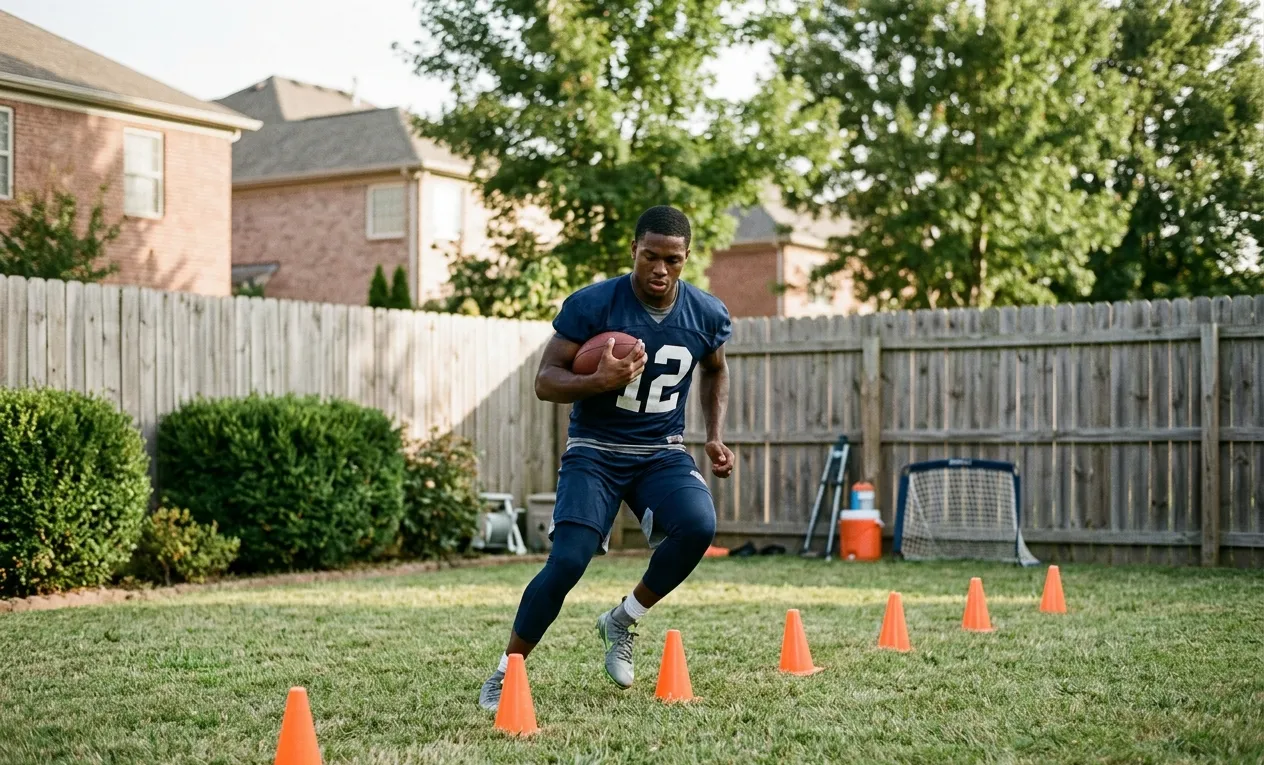
Small space football drills are one of the best ways to improve your skills when you do not have access to a full football field. Many players struggle to find enough space to practice, especially during the off-season or between team workouts. Whether you have a small backyard, driveway, garage, or local park, the right drills can help you continue developing important football skills without needing a large training area.
Football coaches have long used limited-space training to improve footwork, agility, reaction speed, ball security, and position-specific movement. In many cases, working in a smaller area forces players to move more efficiently and focus on proper technique. This guide covers effective small space football drills for quarterbacks, wide receivers, defensive backs, and other athletes who want to get better through consistent practice.
Key Takeaways
- Small space football drills can improve footwork, agility, reaction speed, and ball security.
- You do not need a full football field to practice effectively.
- Many drills can be performed in a backyard, driveway, garage, or other limited area.
- Quarterbacks, wide receivers, defensive backs, and running backs can all benefit from small space training.
- Consistent practice and proper technique are more important than training space.
What Are Small Space Football Drills?
Small space football drills are training exercises performed in a limited area. These drills focus on movement, balance, coordination, ball security, footwork, agility, and reaction speed.
Many players believe they need a full field to improve. In reality, some of the most important football skills can be developed in a backyard, driveway, garage, or small training area.
Small space football drills are popular because they are practical, effective, and easy to perform almost anywhere.
Benefits of Small Space Football Training
Training in a limited area offers several important advantages.
Improves Footwork
Quick foot movements are important for every football position. Small space drills force players to move efficiently while maintaining balance and control.
Builds Faster Reactions
Limited space means less time to react. This helps players improve reaction speed and decision-making.
Improves Ball Security
Many drills focus on carrying and protecting the football while moving through obstacles.
Increases Agility
Agility allows players to change direction quickly. Small space football drills provide many opportunities to practice these movements.
Allows More Practice Time
You do not need a full field or expensive equipment. This makes it easier to train consistently throughout the year.
Why These Drills Are Great for Home Training
Many players cannot visit a football field every day. Small space football drills make it possible to continue improving at home.
Whether you train in a backyard, driveway, garage, or other limited area, these drills can help build footwork, agility, reaction speed, and ball control.
Consistent practice at home can lead to noticeable improvement over time.
Why Training in Tight Spaces Improves Football Performance
Many players think they need a full football field to improve. In reality, training in a small area can help develop several important skills.
Limited space forces players to react faster. There is less time to think and more pressure to make quick decisions. This can improve football awareness and reaction speed.
Small space football drills also encourage better body control. Players learn how to change direction efficiently while staying balanced. This can lead to cleaner footwork and improved movement on game day.
Another benefit is increased repetitions. Since the training area is small, players spend less time resetting between drills and more time practicing.
For quarterbacks, wide receivers, defensive backs, and running backs, tight-space training can improve movement efficiency and overall athletic performance.
Equipment Needed for Small Space Football Drills
You do not need much equipment to get started.
- Football
- Cones
- Agility ladder
- Stopwatch
- Training markers
- Wall or rebound surface
- Resistance bands (optional)
Many drills can be completed with only a football and a few cones.
Important
If you are new to football training, focus on proper technique before increasing speed. Quality repetitions are usually more valuable than rushing through drills with poor form. Start slowly, master the movement pattern, and then increase intensity as your confidence and skill level improve.
Small Space Football Drills at a Glance
| Drill | Main Skill | Space Needed |
|---|---|---|
| Quick Feet Cone Drill | Footwork | 5×5 Yards |
| Ladder Footwork Drill | Agility | 5×5 Yards |
| Figure-8 Ball Security Drill | Ball Security | 5×5 Yards |
| Mirror Reaction Drill | Reaction Time | 5×5 Yards |
| Box Shuffle Drill | Lateral Movement | 10×10 Yards |
| Pocket Movement Drill | Quarterback Footwork | 10×10 Yards |
| Wall Catch Drill | Hand-Eye Coordination | Small Area |
| Target Throwing Drill | Accuracy | Backyard |
| T-Drill | Agility | 10×10 Yards |
| Backpedal and Break Drill | Defensive Movement | 10×10 Yards |
| Cone Weave Drill | Change of Direction | 10×10 Yards |
| High-Knee Sprint Drill | Running Mechanics | Small Area |
| Shuffle and Sprint Drill | Acceleration | 10×10 Yards |
| Reaction Ball Drill | Reaction Speed | Small Area |
| Burst Acceleration Drill | Explosiveness | Small Area |

15 Best Small Space Football Drills
1. Quick Feet Cone Drill
Setup: Place four cones in a square.
How to Perform
- Stand in the center.
- Move your feet quickly between the cones.
- Stay light on your toes.
- Repeat for 20 to 30 seconds.
Coaching Tip: Stay on the balls of your feet and keep your movements short and controlled.
Common Mistake: Taking large steps that slow down foot speed.
Benefits: Improves footwork, balance, and overall movement efficiency.
2. Ladder Footwork Drill

Setup: Lay an agility ladder on the ground.
How to Perform
- Move through each ladder space quickly.
- Keep your chest up.
- Pump your arms naturally.
- Maintain balance throughout the drill.
Benefits: Builds agility, coordination, and quick feet.
3. Figure-8 Ball Security Drill
Setup: Place two cones about five yards apart.
How to Perform
- Carry the football securely.
- Run around the cones in a figure-eight pattern.
- Keep the ball tight against your body.
Coaching Tip: Keep the football high and tight throughout the drill.
Common Mistake: Allowing the football to swing away from the body.
Benefits: Improves ball security and body control.
4. Mirror Reaction Drill
Setup: Work with a partner.
How to Perform
- Face your partner.
- Copy every movement they make.
- Stay low and balanced.
Benefits: Improves reaction speed and defensive movement skills.
5. Box Shuffle Drill
Setup: Create a square using four cones.
How to Perform
- Shuffle around the square.
- Stay in an athletic position.
- Avoid crossing your feet.
Benefits: Improves lateral quickness and balance.
6. Pocket Movement Drill
Setup: Use four cones to create a small pocket.
How to Perform
- Move inside the pocket.
- Step forward, backward, and sideways.
- Keep your eyes up.
- Maintain proper football posture.
Coaching Tip: Keep both hands on the football while moving inside the pocket.
Common Mistake: Crossing your feet during movement.
Benefits: Helps quarterbacks improve pocket awareness and footwork.
7. Wall Catch Drill
Setup: Stand near a wall.
How to Perform
- Throw the football against the wall.
- Catch the rebound.
- Repeat for several repetitions.
- Alternate between both hands when possible.
Benefits: Improves hand-eye coordination and catching ability.
8. Target Throwing Drill
Setup: Place targets at different heights and distances.
How to Perform
- Aim at each target.
- Focus on accuracy.
- Keep proper throwing mechanics.
- Track successful throws.
Coaching Tip: Focus on accuracy before increasing throwing speed.
Common Mistake: Throwing too hard and sacrificing mechanics.
Benefits: Improves quarterback accuracy and consistency.
9. T-Drill
Setup: Arrange cones in a T shape.
How to Perform
- Sprint forward.
- Shuffle sideways.
- Backpedal to the starting point.
- Repeat several times.
Benefits: Improves agility, balance, and change-of-direction skills.
10. Backpedal and Break Drill
Setup: Place cones in a straight line.
How to Perform
- Backpedal quickly.
- Change direction on command.
- Sprint forward.
- Stay balanced throughout the drill.
Coaching Tip: Stay low and keep your eyes forward.
Common Mistake: Standing upright while backpedaling.
Benefits: Helps defensive players react faster and move efficiently.
11. Cone Weave Drill
Setup: Create a line of cones.
How to Perform
- Weave through each cone.
- Maintain control of the football.
- Stay balanced.
- Increase speed gradually.
Benefits: Improves agility and ball control.
12. High-Knee Sprint Drill
Setup: Mark a short running lane.
How to Perform
- Drive your knees upward.
- Maintain quick movement.
- Stay under control.
- Focus on proper running mechanics.
Benefits: Improves running form and coordination.
13. Shuffle and Sprint Drill
Setup: Place two cones several yards apart.
How to Perform
- Shuffle between cones.
- Sprint at the final cone.
- Return and repeat.
- Focus on quick transitions.
Benefits: Improves acceleration and lateral movement.
14. Reaction Ball Drill
Setup: Use a reaction ball or tennis ball.
How to Perform
- Drop the ball.
- React quickly to its bounce.
- Catch it before the second bounce.
- Repeat multiple times.
Benefits: Develops reaction speed and hand-eye coordination.
15. Burst Acceleration Drill
Setup: Mark a short sprint distance.
How to Perform
- Start in a football stance.
- Explode forward.
- Sprint for five to ten yards.
- Focus on powerful first steps.
Benefits: Improves explosiveness and first-step quickness.
Which Drill Should You Start With?
| Goal | Recommended Drill |
|---|---|
| Improve Footwork | Quick Feet Cone Drill |
| Improve Agility | Ladder Footwork Drill |
| Improve Ball Security | Figure-8 Ball Security Drill |
| Improve Reaction Time | Mirror Reaction Drill |
| Improve QB Skills | Pocket Movement Drill |
| Improve WR Skills | Route Break Drill |
| Improve DB Skills | Backpedal and Break Drill |
| Improve Acceleration | Burst Acceleration Drill |
Small Space Quarterback Drills

Quarterbacks can improve several important skills in a limited area.
Three-Step Drop Drill
Practice quick drops while maintaining balance and proper posture.
Pocket Escape Drill
Move around obstacles while keeping your eyes downfield and maintaining ball security.
Accuracy Target Drill
Throw to multiple targets from different positions to improve precision.
These small space football drills allow quarterbacks to improve several key skills without needing a full field. Focus on clean footwork, proper throwing mechanics, and pocket awareness. Consistent practice can help quarterbacks become more comfortable under pressure and improve overall accuracy.
Small Space Wide Receiver Drills
Wide receivers can improve footwork and catching ability at home.
Release Footwork Drill
Practice quick releases from the line of scrimmage.
Route Break Drill
Focus on sharp cuts and efficient movement.
Hand-Eye Coordination Drill
Use a tennis ball or football to improve catching skills.
Wide receivers often benefit from limited-space training because it forces them to make sharp cuts and efficient movements. These drills help improve route running, body control, and catching ability. Even a small backyard can provide enough space to develop important receiver skills.
Small Space Defensive Back Drills

Defensive backs need quick reactions and smooth movement.
Mirror Drill
Follow a partner’s movements while maintaining defensive posture.
Backpedal Drill
Improve defensive footwork and balance.
Reaction Cone Drill
React to visual commands and change direction quickly.
Defensive backs rely on quick reactions and efficient movement. Small space football drills can help improve backpedaling, lateral movement, and transition speed. These skills are important when covering receivers and reacting to offensive plays.
This approach helps players focus on the drills that match their position and training goals.
Best Small Space Drills by Position
| Position | Recommended Drills |
|---|---|
| Quarterback | Pocket Movement Drill, Target Throwing Drill, Three-Step Drop Drill |
| Wide Receiver | Release Footwork Drill, Route Break Drill, Wall Catch Drill |
| Defensive Back | Mirror Drill, Backpedal and Break Drill, Reaction Cone Drill |
| Running Back | Figure-8 Ball Security Drill, Cone Weave Drill, Burst Acceleration Drill |
This approach helps players focus on the drills that match their position and training goals.
Solo Football Drills at Home
Many players train without a partner.
Good solo football drills include:
- Wall Catch Drill
- Ladder Footwork Drill
- Figure-8 Ball Security Drill
- Cone Weave Drill
- Target Throwing Drill
These exercises help players continue improving even when training alone.
Backyard Football Drills
A backyard provides enough room for many effective drills.
Try:
- Route Running Drills
- Cone Drills
- Shuttle Runs
- Ball Security Drills
- Agility Drills
Backyard training allows players to practice consistently without visiting a football field.
How Much Space Do You Need for Football Drills?
The amount of space required depends on the type of drill you want to perform.
| Available Space | Recommended Drills |
|---|---|
| 5×5 Yards | Quick Feet Drill, Figure-8 Ball Security Drill, Reaction Ball Drill, Ladder Footwork Drill |
| 10×10 Yards | Box Shuffle Drill, Cone Weave Drill, Shuffle and Sprint Drill, T-Drill |
| Small Backyard | Pocket Movement Drill, Target Throwing Drill, Route Running Drills, Wall Catch Drill |
| Driveway | Ball Security Drills, Footwork Drills, Reaction Drills |
| Garage | Hand-Eye Coordination Drills, Footwork Drills, Ball Security Drills |
Even a limited training area can provide an effective football workout when used consistently.
20-Minute Small Space Football Workout
This simple workout helps players improve multiple football skills in a short amount of time.
Minutes 1–5
- Light jogging
- Dynamic stretching
- High knees
- Arm circles
Min 6–10
- Ladder Footwork Drill
- Quick Feet Cone Drill
Minutes 11–15
- Figure-8 Ball Security Drill
- Reaction Ball Drill
Minutes 16–20
- Position-specific drills based on your role:
- Quarterbacks: Pocket Movement Drill and Target Throwing Drill
- Wide Receivers: Route Break Drill and Wall Catch Drill
- Defensive Backs: Mirror Drill and Backpedal Drill
This workout can be completed at home, in a backyard, or in another small training area.
Preparing for Football Tryouts in a Small Space

Many players use small space football drills to prepare for upcoming tryouts.
Focus on drills that improve footwork, acceleration, reaction speed, agility, and ball security. These are common areas coaches evaluate during tryouts and team workouts.
Players who follow a structured training routine often arrive at tryouts feeling more confident and prepared. Even if you do not have access to a football field every day, consistent practice in a limited space can help improve overall performance.
Common Small Space Training Mistakes
Avoid these common mistakes when performing small space football drills.
Training Too Fast
Many players try to move at maximum speed before mastering proper technique. Focus on quality repetitions first.
Ignoring Ball Security
Always protect the football during movement drills. Poor ball security habits can carry over into games.
Using Poor Footwork
Stay balanced and controlled throughout every drill.
Skipping Warm-Ups
A proper warm-up helps prepare your body for movement and may reduce the risk of injury.
Training Without a Plan
Following a structured routine often produces better results than random practice sessions.
Conclusion
Small space football drills prove that players do not need perfect training conditions to improve. Many of the skills that matter most on the field, including footwork, agility, balance, reaction speed, and ball security, can be developed in a limited area with the right approach. Consistent practice often matters more than the size of the training space available.
Based on established football training principles and coaching methods, players who focus on proper technique and regular repetition often see the best results over time. Start with a few drills that match your position and available space, then gradually increase the challenge as your skills improve. Whether you train at home, in a backyard, or in another small area, steady effort can help you become a more confident and complete football player.
