



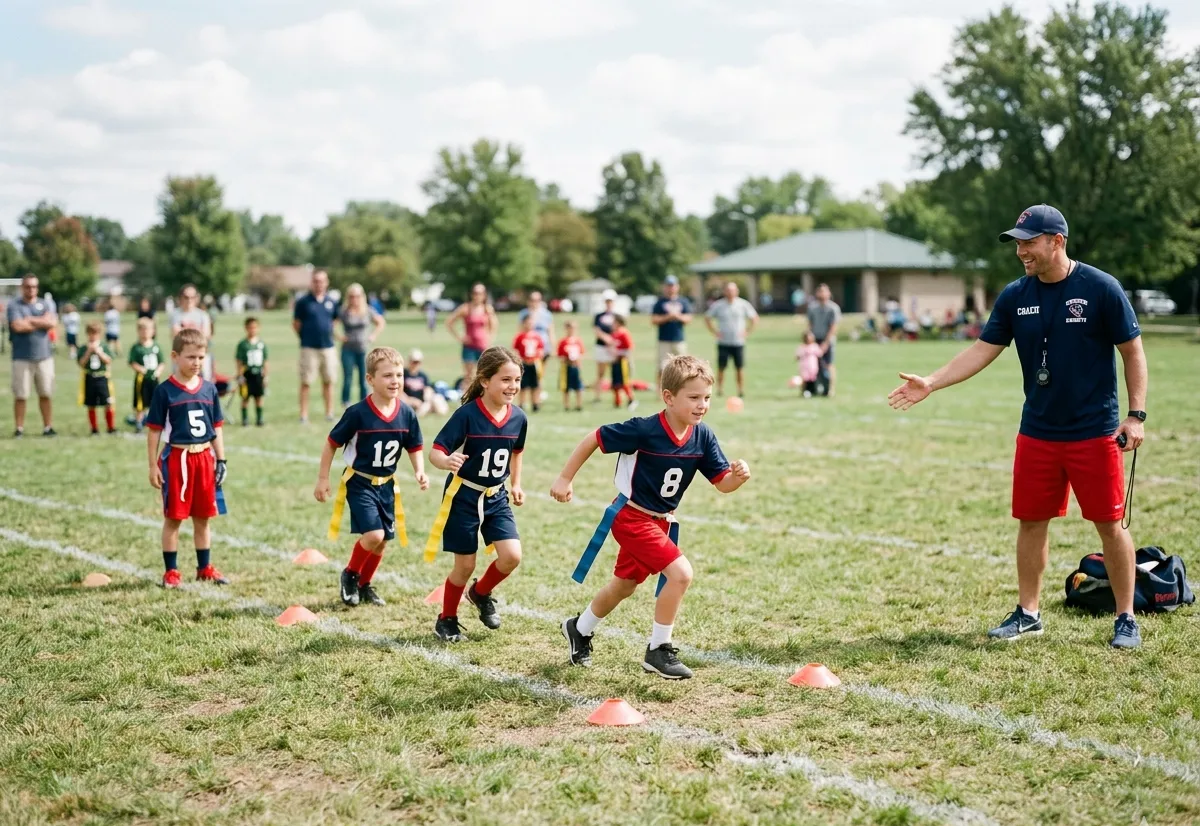
Many parents, beginner coaches, and first-time players search for the best flag football drills for beginners because early practices can feel frustrating. New players often struggle with catching, throwing, route timing, and pulling flags correctly. Some kids lose confidence quickly when drills feel too difficult or practices become disorganized. Simple and beginner-friendly football drills can make learning much easier and help players improve faster during games and team practices.
After reviewing youth football training methods and studying how beginner players develop skills over time, one thing becomes clear: young athletes improve best when coaches focus on simple fundamentals first. Short drills, clear instructions, and consistent practice help players build confidence, coordination, teamwork, and football awareness step by step. This guide covers practical flag football drills that work well for kids, youth teams, PE classes, and beginner players who want to improve safely and confidently.
Quick Beginner Takeaways
- Start with simple football drills first
- Focus on catching, footwork, and flag pulling
- Keep practices short and active
- Use fun drills to keep kids engaged
- Practice two or three times each week
- Build confidence before advanced drills
Drill summary table
| Drill | Main Skill | Difficulty | Players Needed |
|---|---|---|---|
| Partner Passing | Throwing Accuracy | Easy | 2 |
| Cone Zig Zag | Footwork | Easy | 1+ |
| Mirror Flag Pull | Defense | Medium | 2 |
| Catch and Score | Catching | Easy | 2+ |
| Ladder Quick Feet | Agility | Easy | 1 |
What Is Flag Football?
Flag football is a non-contact version of American football. Instead of tackling, defenders stop the play by pulling a flag from the ball carrier.
The game is popular with kids and beginners because it is easier to learn and safer to play. Most youth leagues use 5-on-5 or 7-on-7 formats.
Many parents like flag football because it helps kids stay active while learning teamwork and discipline in a safer environment.
Basic rules include:
- No tackling
- Players wear flags on their hips
- Teams score by reaching the end zone
- The quarterback throws passes to receivers
- Defenders try to pull flags before players score
Flag football helps players improve speed, balance, teamwork, and coordination.
Beginner Flag Football Safety Tips
- Warm up before practice
- Drink water during breaks
- Wear mouthguards during games
- Avoid pushing or tackling
- Practice on safe and open fields
Why Flag Football Drills Matter for Beginners
Beginner players need simple drills that teach football basics. Good drills improve movement, reaction time, catching, throwing, and defense.
Flag football drills for beginners also help players:
- Learn game rules faster
- Build confidence
- Improve teamwork
- Develop football footwork
- Improve hand-eye coordination
- Learn defensive skills
Short and simple drills work best for young players because kids can stay focused and active during practice.
Equipment Needed for Beginner Flag Football Practice
You do not need expensive gear to start flag football training.
Here is the basic equipment needed for practice:
- Flag football belts
- Football
- Age-appropriate football size
- Cones
- Cleats or running shoes
- Mouthguard
- Agility ladder
- Water bottles
Cones are useful for football agility drills and route running drills.
Parents and beginner coaches can start with simple backyard equipment before buying advanced training gear.
Simple Backyard Practice Checklist
- Football
- 3 Cones
- Water Bottle
- Open Space
- 15–20 Minutes for Practice
Warm-Up Drills Before Flag Football Practice

Warm-up drills prepare the body for movement and help prevent injuries.
These drills also help coaches keep kids active and focused at the start of practice.
High Knees Drill
Players jog while lifting their knees high.
This drill improves:
- Speed
- Coordination
- Balance
- Leg movement
Do this for 20 to 30 seconds.
Shuffle and Sprint Drill
Place two cones five yards apart.
Players shuffle sideways between the cones. After reaching the second cone, they sprint forward.
This football warm-up drill improves:
- Quick feet
- Direction changes
- Defensive movement
Dynamic Stretching
Dynamic stretching helps loosen muscles before practice.
Good stretches include:
- Arm circles
- Leg swings
- Walking lunges
- Hip rotations
Warm-ups should last about 5 to 10 minutes.
Coach Tip
Keep beginner drills short and active. Young players learn faster when they stay moving instead of standing in long lines during practice.
Quarterback Drills for Beginners

Quarterbacks need good throwing accuracy and quick decision-making.
These beginner quarterback drills help improve passing skills. Quarterbacks should keep their shoulders balanced and step forward with the opposite foot while throwing.
These drills are great for beginner players who want to improve before games and practices.
Partner Passing Drill
Two players stand five yards apart and throw the football back and forth.
Focus on:
- Spiral throws
- Proper grip
- Short accurate passes
Move farther apart as players improve.
This is one of the easiest football throwing drills for beginners.
Target Throw Drill
Place cones or buckets at different distances.
Quarterbacks try to hit the targets with accurate throws.
This drill improves:
- Passing accuracy
- Throwing control
- Focus
Start with short throws before increasing distance.
Quick Release Drill
The quarterback catches the snap and throws quickly.
Coaches can use cones as receivers.
This drill teaches players to:
- Throw faster
- Make quick decisions
- Improve timing
Quick release drills help beginner quarterbacks during game situations. Players should keep two hands on the football before throwing to improve ball security.
Common Mistake
Many beginners throw while leaning backward. Step forward during the throw to improve passing accuracy and balance.
Running Drills for Beginners
Running drills improve speed, balance, and movement.
These drills help beginner players feel more confident during real game situations.
Cone Zig Zag Drill
Set cones in a zig zag pattern.
Players run around each cone without slowing down.
This football footwork drill improves:
- Agility
- Direction changes
- Body control
Keep knees bent while moving.
Sprint and Cut Drill
Players sprint forward and quickly cut left or right after reaching a cone.
This drill teaches:
- Fast reactions
- Explosive movement
- Better route changes
It also improves offensive movement during games.
Reaction Running Drill
A coach points left or right while players sprint.
Players must react quickly and change direction.
This drill improves:
- Reaction time
- Defensive movement
- Quick decision-making
Receiver Drills for Beginners
Receiver drills help players catch footballs and run routes correctly. Players should keep their hands ready in a triangle position when catching short passes.
These drills are useful for beginner players who want to improve catching skills quickly.
Catch and Score Drill
A receiver catches the football and runs to the end zone.
This drill teaches:
- Catching
- Running after the catch
- Ball control
Players should keep their eyes on the football.
Inside Outside Drill
Receivers practice moving inside and outside around cones before catching passes.
This drill improves:
- Route running
- Footwork
- Timing
It also helps players avoid defenders.
Over-the-Shoulder Catch Drill
The quarterback throws deep passes while receivers run forward.
Receivers look over their shoulder to catch the ball.
This football catching drill improves:
- Tracking the football
- Deep catches
- Coordination
Flag Pulling Drills for Beginners

Flag pulling is one of the most important defensive skills in flag football.
Players should stay balanced and aim for the hips. Defenders should pull flags cleanly without grabbing clothing or pushing runners.
These drills help beginner defenders improve confidence and reaction speed.
Mirror Flag Pull Drill
Two players face each other.
One player moves side to side while the defender mirrors the movement.
The defender tries to pull the flag.
This drill improves:
- Defensive footwork
- Balance
- Reaction speed
Pursuit Drill
A ball carrier runs across the field while defenders chase and pull the flag.
This drill teaches:
- Defensive angles
- Speed
- Pursuit technique
Players should avoid diving for flags.
Breakdown Technique Drill
Defenders slow down before reaching the ball carrier.
Then they pull the flag using both hands.
This helps beginners:
- Stay balanced
- Avoid missed flags
- Improve control
Agility Ladder and Cone Drills

Football agility drills improve speed and movement.
These drills are great for kids who want to become quicker and more active during games.
Ladder Quick Feet Drill
Players move quickly through an agility ladder.
Focus on:
- Fast steps
- Balance
- Coordination
Keep feet moving quickly.
Cone Shuffle Drill
Set cones in a straight line.
Players shuffle sideways between the cones.
This football conditioning drill helps with:
- Defensive movement
- Footwork
- Body control
Backpedal Sprint Drill
Players backpedal first and then sprint forward.
This drill improves:
- Defensive reaction
- Speed changes
- Balance
Route Running Drills for Beginners
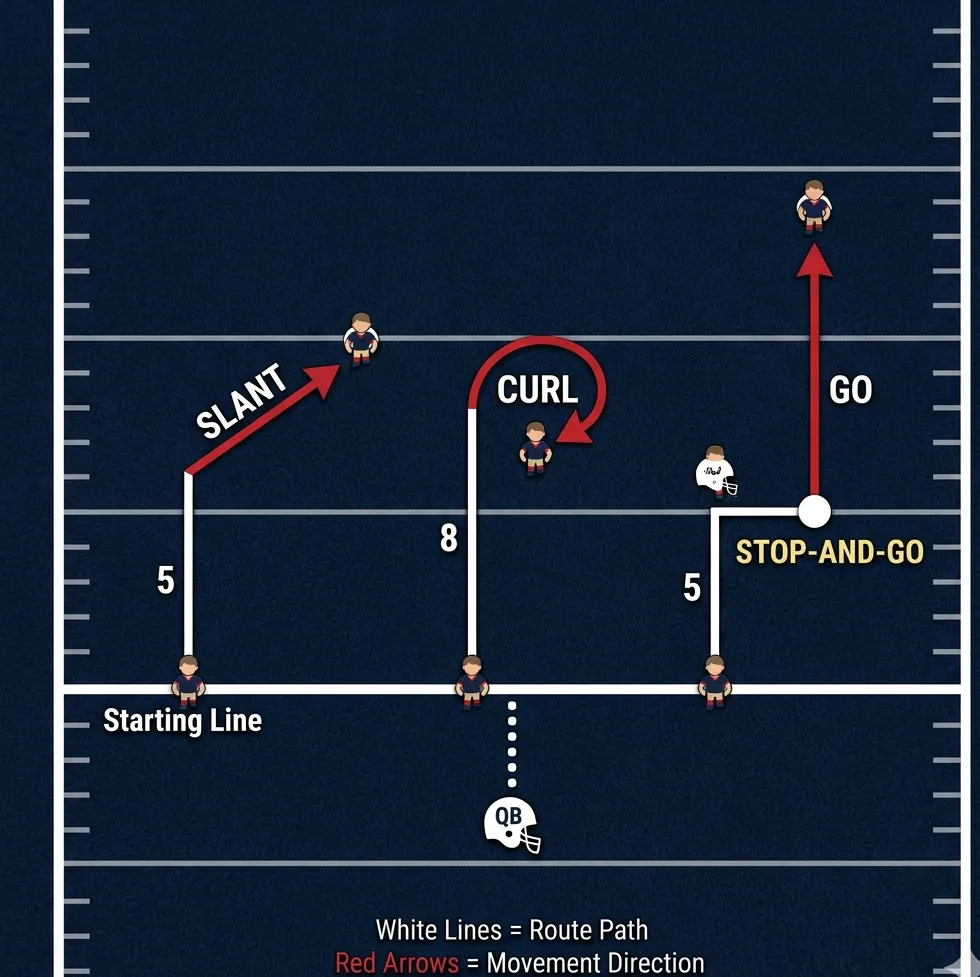
Good routes help receivers create space.
These drills help players learn football movement step by step without making practice too difficult.
Slant Route Drill
Receivers run forward and cut sharply across the field.
This route running drill improves:
- Timing
- Quick cuts
- Offensive movement
Curl Route Practice
Receivers sprint forward and stop quickly before turning around for the catch.
This drill teaches:
- Sharp stops
- Route timing
- Catch positioning
Stop and Go Drill
Receivers slow down briefly and then sprint again.
This helps players:
- Trick defenders
- Change speed quickly
- Create separation
Defensive Flag Football Drills for Beginners
Man coverage means following one receiver during the play. Zone coverage means defending a specific area of the field.
These drills help beginner teams improve communication and teamwork.
Zone Coverage Drill
Players defend different areas instead of following one receiver.
This drill improves:
- Team defense
- Awareness
- Communication
Reaction Defense Drill
The coach points to a direction and defenders react immediately.
This improves:
- Quick reactions
- Defensive movement
- Focus
Quarterback Containment Drill
Defenders stay in front of the quarterback and stop running lanes.
This drill teaches:
- Positioning
- Patience
- Smart defense
Fun Flag Football Drills for Kids

Fun football drills keep young players excited during practice.
These activities are helpful for parents, youth coaches, and PE teachers working with younger players.
The Anchor
Players work together to stay balanced while pulling against teammates.
This drill improves:
- Teamwork
- Strength
- Coordination
Obstacle Course Relay
Players run through cones, ladders, and small obstacles.
This football agility drill improves:
- Speed
- Balance
- Quick movement
Robin Hood
Players try to pull flags from opponents while protecting their own flags.
This drill teaches:
- Awareness
- Defensive movement
- Fast reactions
Flag Football Drills to Practice at Home
Players can improve football skills at home with simple drills.
These drills are useful for parents who want kids to practice outside regular team sessions.
Wall Passing Drill
Throw the football against a wall and catch it.
This helps improve:
- Catching
- Hand-eye coordination
- Quick reactions
Solo Footwork Drill
Use cones in the backyard and practice cuts and direction changes.
This football footwork drill improves agility.
Shadow Route Running
Players practice routes without a football.
This helps beginners learn:
- Route timing
- Foot placement
- Body movement
Beginner Flag Football Practice Plan
A simple practice plan helps beginners improve faster.
This practice structure also helps volunteer coaches stay organized during short training sessions.
30-Minute Beginner Practice Plan
Warm-Up – 5 Minutes
- High knees
- Dynamic stretching
- Shuffle drill
Passing and Catching – 10 Minutes
- Quick water break after warm-ups
- Partner passing
- Catch and score drill
Defense – 10 Minutes
- Mirror flag pull
- Pursuit drill
Fun Team Drill – 5 Minutes
- Robin Hood
- Obstacle course relay
| Week | Main Focus |
|---|---|
| Week 1 | Catching and Footwork |
| Week 2 | Passing and Routes |
| Week 3 | Defense and Flag Pulling |
| Week 4 | Game Situations and Teamwork |
Common Beginner Mistakes in Flag Football
Many beginners make simple mistakes during practice and games.
Learning these mistakes early can help players improve faster and feel more confident during games.
Looking Down While Running
Players should keep their heads up to see defenders and teammates.
Reaching Too Early for Flags
Defenders should stay balanced before pulling flags.
Poor Route Timing
Receivers must run routes at the correct speed.
Dropping Eyes Before the Catch
Some beginners look down too early before securing the football. Players should watch the ball all the way into their hands.
Throwing Off the Back Foot
Quarterbacks should step forward during throws for better accuracy.
Standing Flat-Footed on Defense
Defenders should stay active and ready to move.
Tips to Improve Faster in Flag Football
Players improve faster with regular practice.
Follow these simple football training tips:
- Practice two or three times each week
- Focus on basic football drills first
- Improve footwork daily
- Watch experienced players
- Communicate with teammates
- Stay active during drills
- Practice catching every day
Small improvements make a big difference over time.
Conclusion
From beginner team practices to youth football training sessions, the players who improve the most are usually the ones who focus on simple fundamentals consistently. Passing accuracy, catching technique, footwork, route running, and flag pulling all take time to develop, especially for first-time players. Based on common coaching methods used in youth flag football, short and organized drills often work better than difficult training routines because they help players stay active, confident, and engaged throughout practice. Start with the basic drills in this guide, practice regularly, and focus on steady improvement each week to build stronger football skills over time.
