



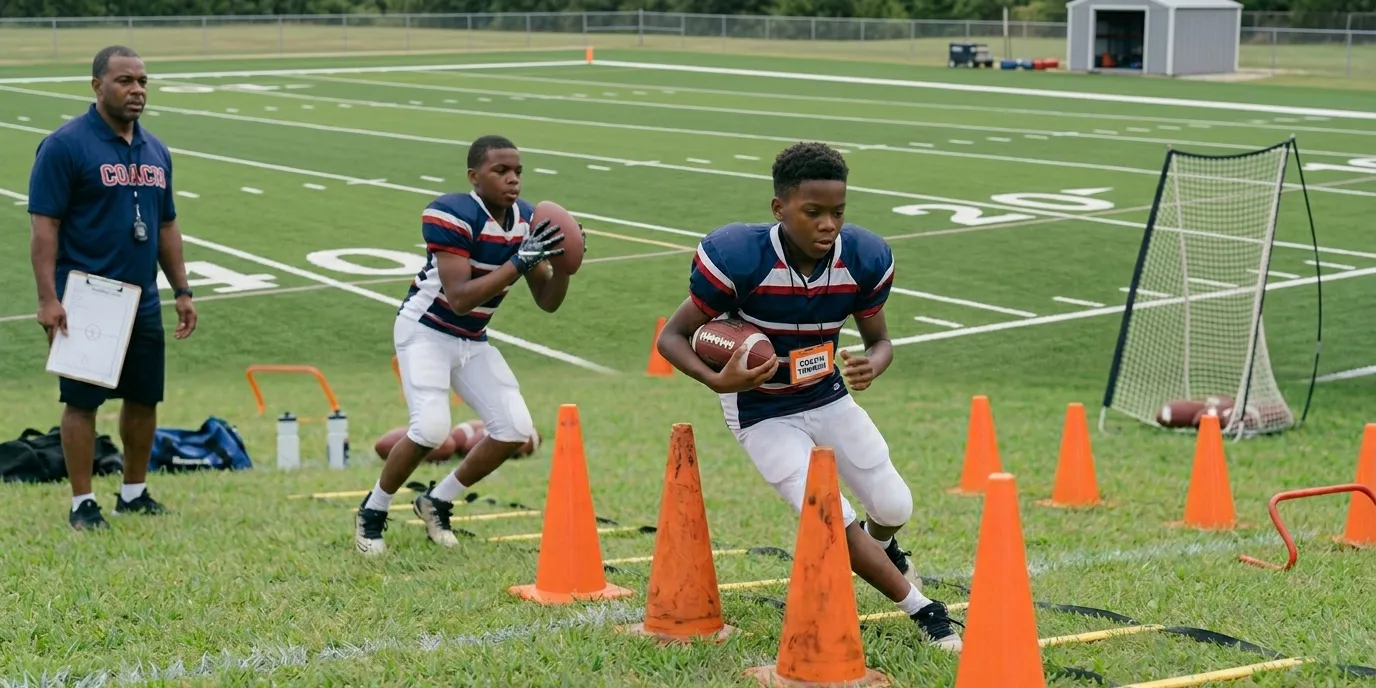
Introduction
Many parents, youth coaches, and beginner players search for a 30 minute football practice plan because they do not have hours to spend on the field. One of the biggest challenges is knowing what to practice and how to organize the time effectively. Without a clear plan, players often spend too much time on one drill, skip important football drills , or finish practice without making real progress.
In youth football, short and focused practices often produce better results than long sessions filled with downtime. Players stay engaged, receive more repetitions, and have more opportunities to improve important skills such as ball security, passing, catching, footwork, and route running. This practice plan provides a simple structure that can be used by parents at home, beginner players training on their own, or coaches working with a small group.
Quick Answer: A 30 minute football practice plan should include a 5-minute warm-up, 5 minutes of ball handling, 5 minutes of passing and catching, 5 minutes of footwork, 5 minutes of position-specific drills, and 5 minutes of competition and cooldown.
Practice Goals
By the end of this 30 minute football practice plan, players should improve several key football fundamentals.
The main goals of this practice are:
- Better ball security
- Improved passing accuracy
- More consistent catching
- Faster footwork
- Better change of direction
- Increased football confidence
This practice also helps players develop athletic movement skills that can be used in game situations.
Who Can Use This Practice Plan?
This practice plan is flexible enough for several types of football players and coaches.
Parents Training Young Players
Parents can use this schedule to help children develop football fundamentals at home. The drills are simple to explain and require very little setup.
Youth Football Coaches
Coaches can use this plan when practice time is limited. The structure keeps players active while covering several important football skills.
Beginner Players
Players who want extra practice outside team activities can use this plan independently or with a friend. Consistent practice can help improve confidence and overall performance.
30 Minute Football Practice Plan at a Glance
The table below shows a simple 30 minute football practice plan for beginners. It covers the key football fundamentals while keeping players active throughout the session.
| Time | Activity |
|---|---|
| 0-5 Minutes | Dynamic Warm-Up |
| 5-10 Minutes | Ball Handling Drills |
| 10-15 Minutes | Passing and Catching Drills |
| 15-20 Minutes | Footwork Drills |
| 20-25 Minutes | Position-Specific Practice |
| 25-30 Minutes | Competition Drill and Cooldown |

This schedule helps players work on several important skills in a short amount of time. The practice begins with a warm-up to prepare the body for movement. It then moves into football fundamentals such as ball security, passing, catching, and footwork.
The final part of the practice includes position-specific work and a fun competition drill. This helps players apply what they learned while keeping the session enjoyable and engaging.
Coaching Tips for a Successful Practice
A simple practice plan works best when players stay active and engaged.
Keep these coaching tips in mind:
- Keep explanations short and clear.
- Demonstrate each drill before starting.
- Limit time spent standing in lines.
- Focus on proper technique before speed.
- Give players positive feedback throughout practice.
Small adjustments can help players learn faster and enjoy the session more.
Complete 30 Minute Football Practice Plan
A good football practice does not need to be long to be effective. The key is using each minute wisely. This 30 minute football practice plan keeps players moving while focusing on the skills that matter most.
0-5 Minutes: Dynamic Warm-Up
A proper warm-up helps increase blood flow and prepares players for football movements. It can also reduce the risk of injuries.
Spend one minute on each activity:
- Light jogging
- High knees
- Butt kicks
- Side shuffles
- Arm circles
Players should focus on controlled movement and good posture during the warm-up. The goal is to get the body ready for faster drills later in the practice.
5-10 Minutes: Ball Handling Drills
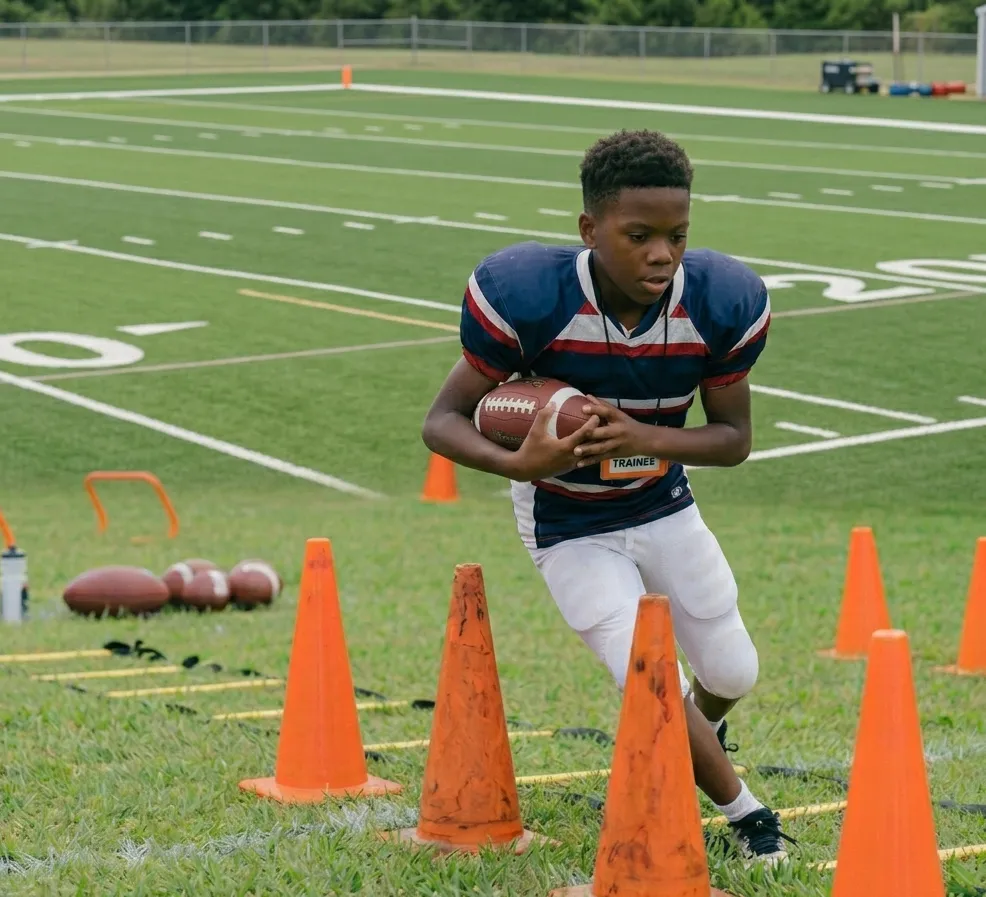
Ball security is one of the most important football skills. Players should learn how to protect the football before working on advanced techniques.
Football Grip Practice
Hold the football correctly with the fingertips on the laces. Practice carrying the football in both hands. Many coaches combine these exercises with football footwork drills to improve movement efficiency and overall athletic development.
Ball Security Drill
Hold the football high and tight against the body. Keep five points of pressure:
- Fingertips
- Palm
- Forearm
- Biceps
- Chest
Walk or jog while protecting the football.
Hand-to-Hand Transfers
Switch the football from one arm to the other while moving. This helps players become comfortable carrying the football on either side.
10-15 Minutes: Passing and Catching Drills

Passing and catching are key football fundamentals. Even a short practice should include both skills. These drills help players improve accuracy, hand-eye coordination, and confidence with the football.
Short Distance Passing
Stand 5 to 10 yards apart with a partner. Throw accurate passes using proper throwing mechanics.
Focus on:
- Keeping your eyes on the target
- Stepping toward the receiver
- Following through after the throw
Start slowly and increase speed as accuracy improves.
Moving Target Throws
Have the receiver walk or jog across the field while the passer throws the football.
This drill helps players learn how to lead a receiver and make throws during game-like situations.
Hands-Only Catch Drill
The receiver should catch the football with their hands instead of trapping it against the body.
Focus on:
- Watching the football into the hands
- Extending the arms toward the ball
- Securing the catch before running
This drill helps develop better catching habits from an early age.
15-20 Minutes: Football Footwork Drills

Good footwork helps players move faster, change direction, and stay balanced. Nearly every position in football depends on strong footwork.
Cone Weave Drill
Set up four to six cones in a straight line.
Players should weave through the cones while keeping quick and controlled steps.
Focus on:
- Staying low
- Keeping balance
- Moving efficiently
Quick Feet Drill
Run in place with fast feet for 10 to 15 seconds.
Rest briefly and repeat several times.
This simple drill improves coordination and lower-body speed.
Backpedal and Sprint
Start by backpedaling for five yards. Then turn and sprint forward for another five yards.
This drill is especially useful for defensive players, but every athlete can benefit from it.
20-25 Minutes: Position-Specific Practice
This part of the practice allows players to spend a few minutes working on skills that match their position.
Quarterbacks
Practice:
- Throwing accuracy
- Quick release mechanics
- Target throws
Focus on consistent foot placement and ball control.
Wide Receivers
Practice:
- Route running
- Sharp cuts
- Catching while moving
Receivers should focus on creating separation and securing every catch.
Running Backs
Practice:
- Ball security
- Change of direction
- Burst through cones
Running backs should learn to protect the football while moving at speed.
Defensive Players
Practice:
- Backpedaling
- Pursuit angles
- Reaction drills
Defenders should focus on staying balanced and reacting quickly.
25-30 Minutes: Competition Drill and Cooldown
The final five minutes should combine fun and skill development. Competition drills help players stay engaged while applying what they practiced.
Catch Challenge
Players compete to see who can make the most catches in a set amount of time.
This drill encourages concentration and consistency.
Relay Race
Set up a short relay course using cones.
Players can run, carry the football, and change direction throughout the course.
This adds movement and energy to the end of practice.
Light Stretching
Finish with simple stretches for:
- Legs
- Hips
- Shoulders
- Arms
A short cooldown helps players recover and prepares them for the next practice session.
Why This 30 Minute Football Practice Plan Works
Many players think they need long training sessions to improve. In reality, a focused practice can produce great results. This 30 minute football practice plan works because it targets the most important football skills without wasting time.
Builds Strong Fundamentals
Every part of this practice focuses on core football skills.
Players work on:
- Ball security
- Passing accuracy
- Catching technique
- Footwork
- Position-specific skills
These fundamentals create a strong foundation for future development.
Keeps Players Engaged
Long practices can be difficult for younger players. Attention levels often drop after long periods of training.
This practice changes activities every few minutes. Players stay active and focused throughout the session.
Creates Consistent Skill Repetition
Improvement comes from regular practice. A short practice plan is easier to follow several times each week.
Players can repeat these drills consistently without feeling overwhelmed.
Works for Different Skill Levels
Beginners can use this practice plan to learn football fundamentals.
More experienced players can increase the speed, intensity, or difficulty of each drill while following the same structure.
Fits Into a Busy Schedule
Many players, parents, and coaches have limited time.
A 30 minute football practice provides enough time to work on key skills while still fitting into school, family, and other activities.
Equipment Needed for This Practice Plan
One advantage of this football practice plan is that it requires very little equipment.
Equipment Needed
| Equipment | Required |
|---|---|
| Football | Yes |
| Cones | Yes |
| Water Bottle | Yes |
| Stopwatch | Yes |
| Agility Ladder | Optional |
| Football Gloves | Optional |
Most players can complete this practice with only a football and a few cones.
How to Adjust This Practice for Different Age Groups
Players develop at different rates. Small adjustments can make this practice plan more effective for different age groups.
Ages 6-8
Young players should focus on having fun while learning basic football movements.
Recommended adjustments:
- Use shorter drill distances
- Spend extra time on catching
- Keep instructions simple
- Reduce drill speed if needed
The focus should be on learning rather than competition.
Ages 9-12
Players in this age group can begin developing stronger football fundamentals.
Recommended adjustments:
- Increase passing distance
- Add more movement during drills
- Introduce simple position-specific work
- Encourage proper technique
This age range is ideal for building good habits.
Ages 13-15
Older players can handle more challenging drills.
Recommended adjustments:
- Increase drill intensity
- Add quicker transitions
- Use game-speed repetitions
- Include more advanced footwork
Players should continue focusing on technique while improving speed and athletic performance.
How to Make This Practice More Challenging
Week 1
Focus on learning proper technique and completing each drill correctly.
Week 2
Increase the pace of each drill while maintaining good form.
Week 3
Add competition between players during passing, catching, and footwork drills.
Week 4
Perform drills at game speed and add reaction-based movements when possible.
This progression helps players continue improving without changing the entire practice structure.
30 Minute Football Practice Plan for Different Group Sizes
This practice plan can work with one player, a small group, or an entire team.
One Player
A single player can complete most drills independently.
Options include:
- Throwing against a wall
- Solo footwork drills
- Cone-based movement drills
- Ball security exercises
Even without a partner, players can still develop important football skills.
Two to Four Players
Small groups allow players to work together while receiving plenty of repetitions.
Players can:
- Throw and catch with partners
- Compete in relay races
- Run passing drills
- Practice route running
This setup often provides more touches than a large team practice.
Small Team Practice
Coaches can divide players into stations and rotate groups every few minutes.
This keeps players active and reduces time spent standing in line.
A fast-paced practice often leads to better engagement and more skill development.
How Parents Can Use This Practice Plan at Home
Parents do not need football coaching experience to help young players practice.
A few simple steps can make each session more effective:
- Review the practice schedule before starting.
- Demonstrate drills when possible.
- Encourage effort and improvement.
- Keep instructions simple.
- Make practice enjoyable.
The goal is to create a positive environment where players can develop football fundamentals and confidence.
How to Run This Practice in a Backyard

Not every player has access to a football field. The good news is that this 30 minute football practice plan can also work in a backyard or other small training area.
Players with limited training space can also use backyard football drills to add variety to their practice sessions.
Space Requirements
| Practice Type | Recommended Space |
|---|---|
| Solo Practice | 10 x 10 yards |
| Small Group | 15 x 20 yards |
| Team Practice | Half Field or More |
A small open space is enough for most of the drills in this practice plan.
Players should make sure the area is:
- Free from obstacles
- Free from slippery surfaces
- Large enough for short sprints and movement drills
Even a backyard can provide enough room to improve football fundamentals.
Simple Backyard Setup
Place four to six cones in a straight line for footwork drills.
Create a small passing area if a partner is available.
Use one side of the yard for ball handling drills and another side for movement drills.
Keeping the setup organized helps maximize practice time.
Backyard Drill Adjustments
Some drills may need small changes when space is limited.
Examples include:
- Shortening passing distances
- Using fewer cones
- Reducing sprint distances
- Replacing long runs with quick change-of-direction drills
The goal is to maintain quality repetitions while working within the available space.
A backyard practice can still improve ball security, passing, catching, and footwork when performed consistently.
How Coaches Can Keep Players Active During Short Practices
Short practices work best when players spend more time moving and less time waiting.
Coaches can improve practice efficiency by:
- Setting up drills before practice begins.
- Using multiple stations when possible.
- Keeping explanations brief.
- Rotating players quickly.
- Limiting long lines.
These adjustments can increase repetitions and help players stay engaged throughout the session.
Common Football Practice Mistakes
A short practice can be very effective. However, certain mistakes can reduce its value.
Avoid these common problems during training.
Skipping the Warm-Up
Many players want to jump straight into drills.
A proper warm-up prepares the body for movement and helps reduce the risk of injury.
Even a five-minute warm-up can make a difference.
Spending Too Much Time on One Drill
A 30 minute football practice requires efficient use of time.
If players spend half the practice on one activity, other important skills may be ignored.
Follow the schedule and keep the session moving.
Focusing Only on Conditioning
Conditioning is important, but football practice should also include skill development.
Players need time to work on:
- Ball handling
- Passing
- Catching
- Footwork
A balanced practice produces better results.
Ignoring Proper Technique
Speed is helpful, but technique comes first.
Players should focus on correct movement patterns before increasing intensity.
Good habits built early can improve long-term performance.
Skipping the Cooldown
The final few minutes of practice should include light stretching and recovery.
This helps players finish the session properly and prepares them for future workouts.
Sample Weekly Practice Schedule
| Day | Activity |
|---|---|
| Monday | 30 Minute Football Practice |
| Wednesday | 30 Minute Football Practice |
| Friday | 30 Minute Football Practice |
| Saturday | Backyard Skills Session |
Key Takeaways
Consistent practice throughout the week leads to steady improvement.
A 30 minute football practice can improve key fundamentals when structured properly.
Focus on ball security, passing, catching, footwork, and position-specific skills.
Keep players active by limiting downtime between drills.
Adjust drill intensity based on age, experience, and available space.
Want to Keep Improving?
Continue building football fundamentals with additional training focused on footwork, passing, catching, ball security, conditioning, and backyard football drills.
Final Thoughts
A successful football practice does not need to be complicated. Over time, coaches and parents often notice that players improve the most when they consistently work on the fundamentals rather than trying to learn too many skills at once. Ball security, passing accuracy, catching technique, footwork, and athletic movement remain some of the most important building blocks for long-term football development.
The key is to follow a structured routine and focus on quality repetitions during every session. Whether you are a parent helping a young athlete, a coach managing limited practice time, or a beginner player working on individual skills, this 30 minute football practice plan provides a practical framework for steady improvement. Small gains made each week can add up to significant progress throughout a season.
