



Introduction
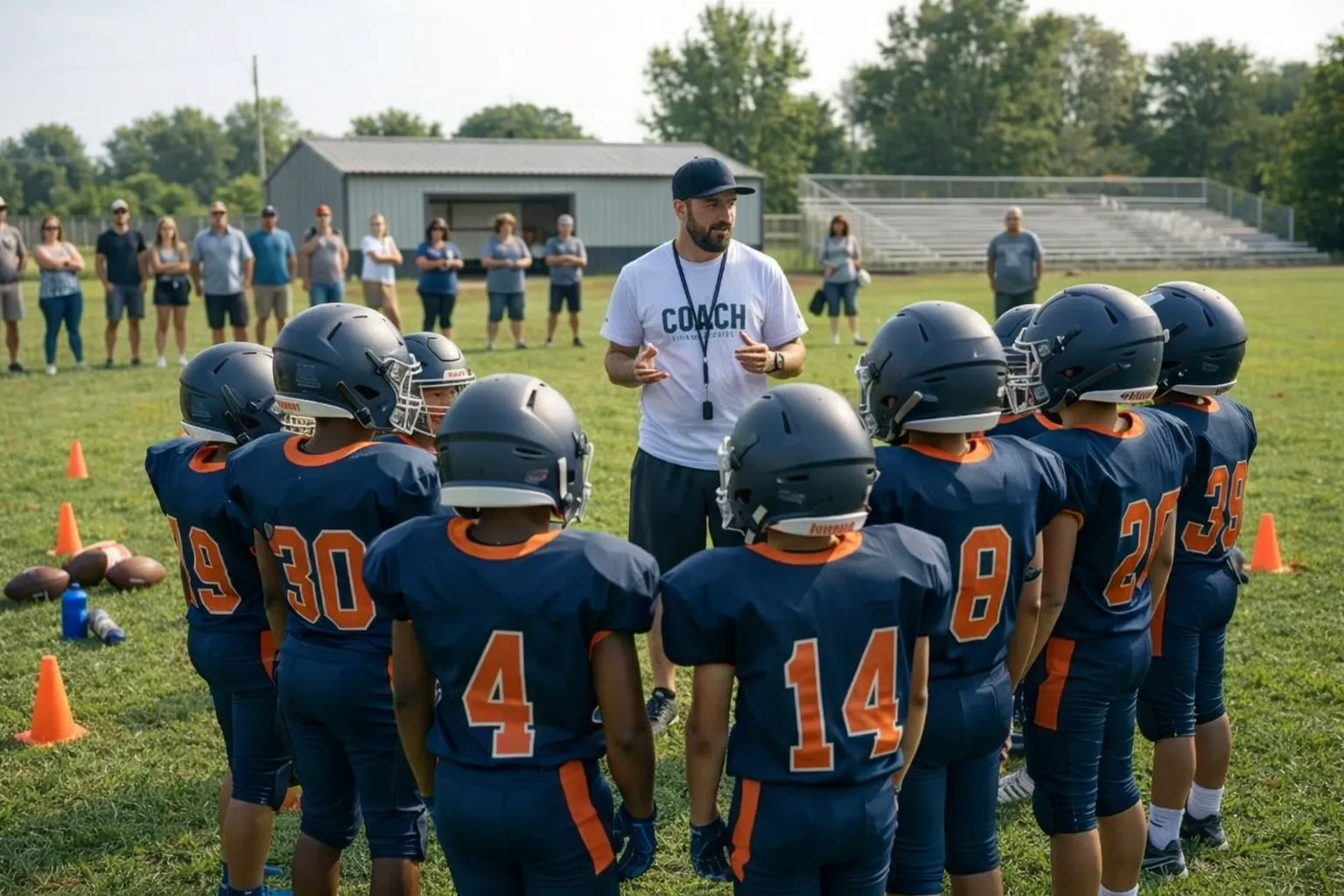
The first day football practice drills is stressful. I know this from experience. Players feel nervous. Parents stand on the sideline and watch closely. New and volunteer coaches often feel pressure to prove they know what they are doing. Many try to fit too much into the first practice, and that usually creates confusion.
I learned early that the first day is not about plays or winning. It is about safety, basics, and comfort. When players feel safe and understand what is happening, they learn faster. This practice plan is built from real first-day mistakes and lessons. It is simple, clear, and made for youth teams and beginner coaches who want a smooth start.
Key Takeaways
- The first day of football practice should focus on safety and basics.
- Keep drills simple and non-contact.
- Use short time blocks to stay organized.
- Help players feel comfortable and confident.
- End practice on a positive note.
Equipment Check (5 minutes)
Before practice starts, check all equipment.
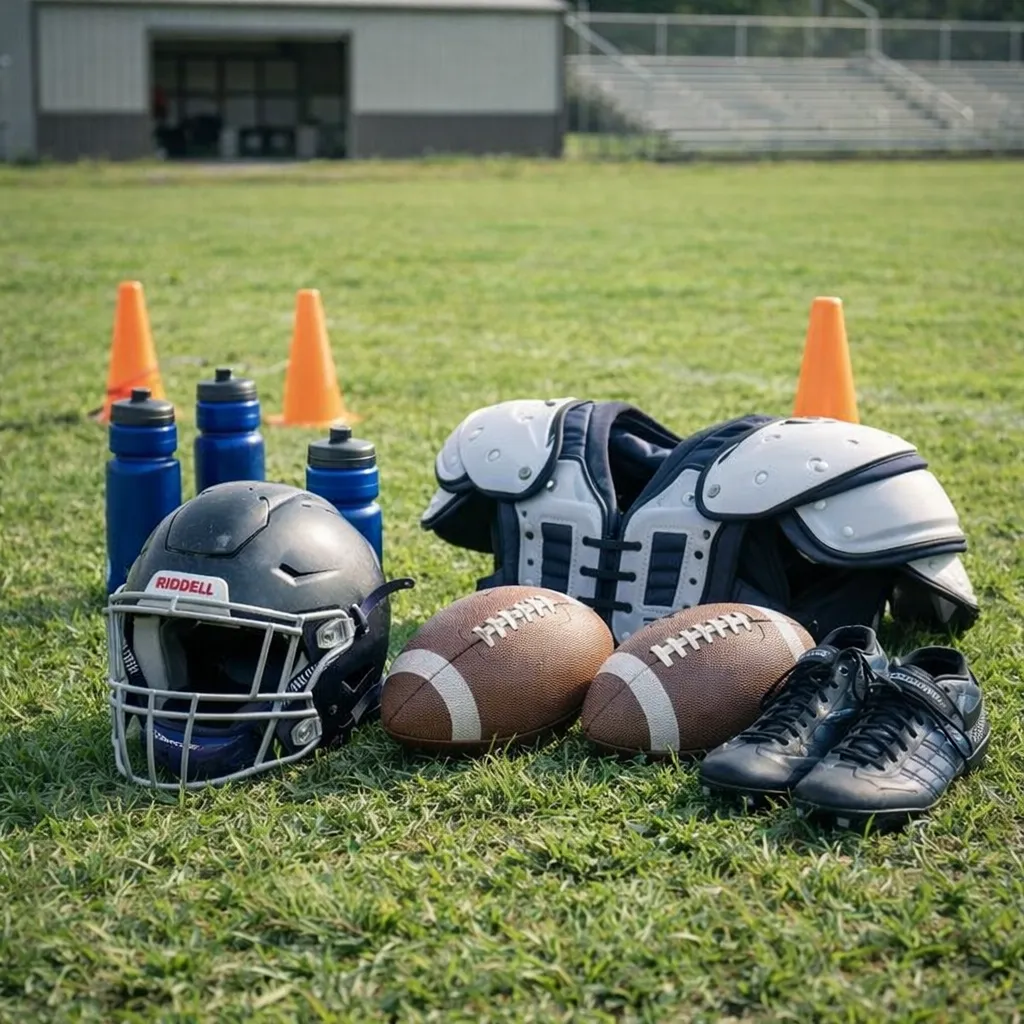
Helmets must fit well.
Pads should sit correctly.
Shoes should be tied and safe.
Count footballs and cones.
Set water bottles on the sideline.
Doing this early avoids delays later. Parents also notice when safety is taken seriously.
For younger players, help them adjust gear correctly.
Pre-Drill Introductions (5 minutes)
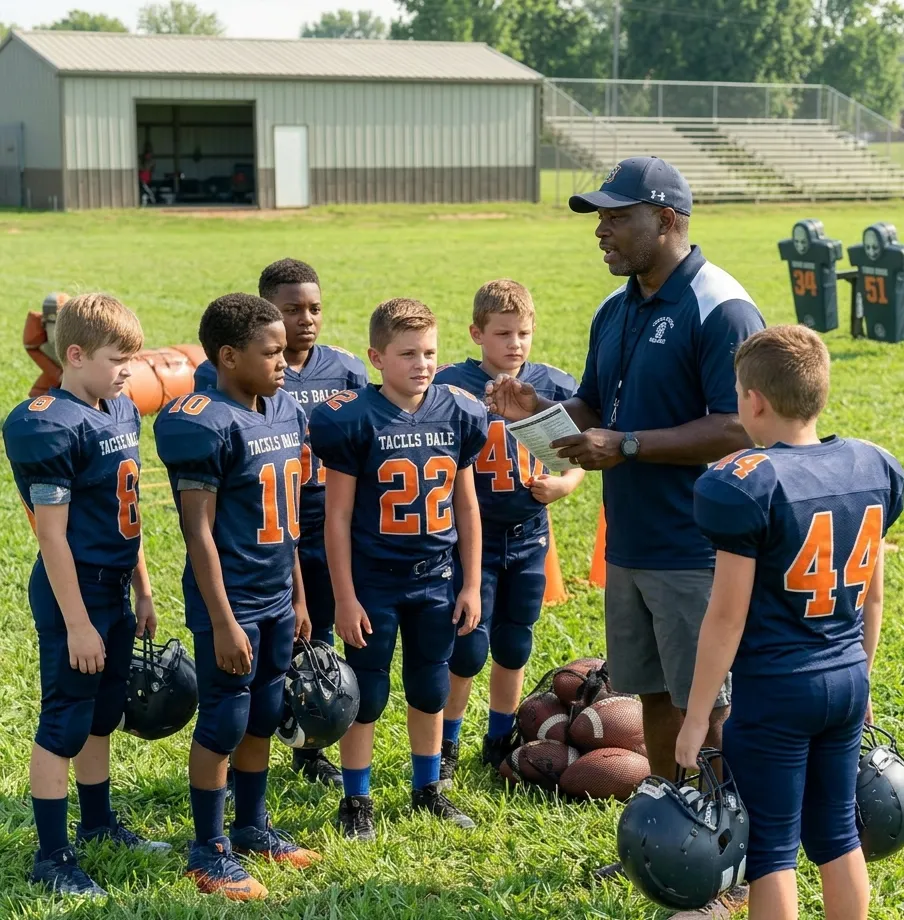
Before starting drills, bring all players together.
Introduce coaches and helpers.
Do a quick roll call.
Explain simple rules:
- Listen to the whistle
- Stay with your group
- Ask questions if confused
Tell players what today’s practice will look like.
Keep the talk short and friendly.
This helps nervous players relax before drills begin.
First Day Practice Time Breakdown
| Practice Section | Time |
|---|---|
| Equipment Check | 5 minutes |
| Pre-Drill Introductions | 5 minutes |
| Warm Ups | 15 minutes |
| Fundamentals & Drills | 40 minutes |
| Team Work | 25 minutes |
| Cool Down & Wrap Up | 10 minutes |
Dynamic Warm Up (8–10 minutes)
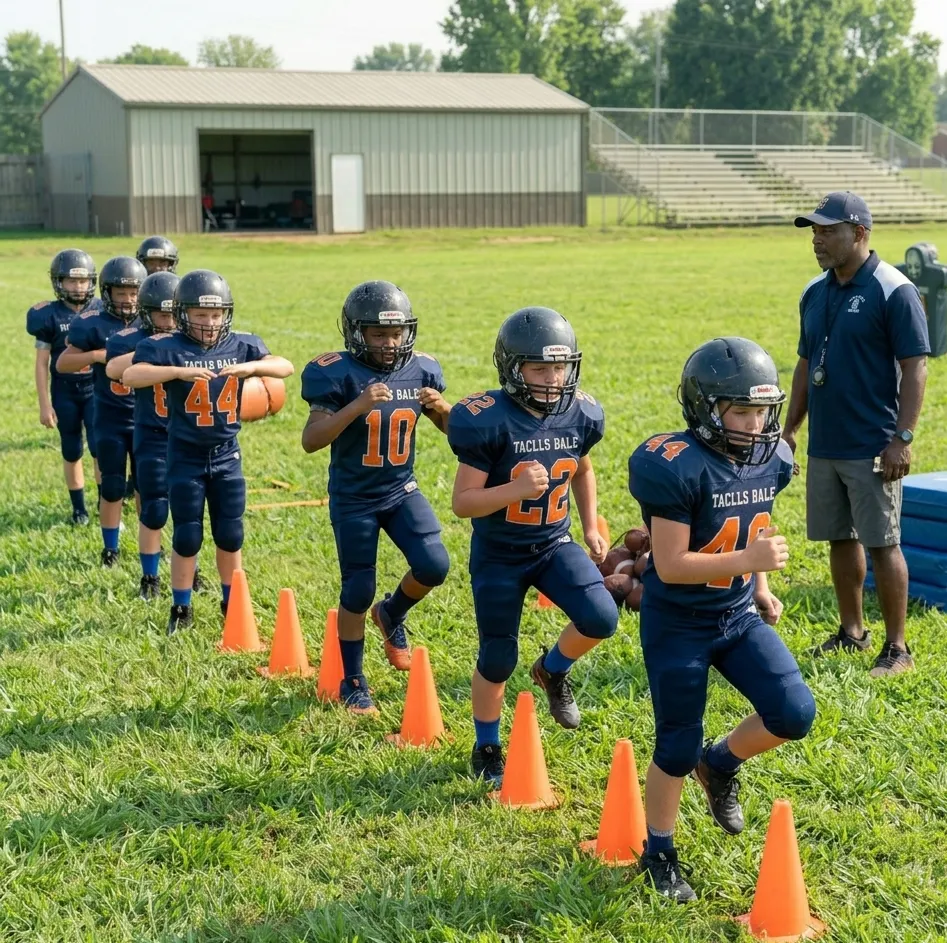
Start with light movement.
Jogging, high knees, arm circles, backward running.
Keep players spread out.
Watch how they move.
This prepares the body and lowers injury risk.
For youth players, keep movements slow.
For older beginners, increase pace slightly.
Warm Up (5–8 minutes)
Move into football-style actions.
Jump and land.
Shuffle steps.
Quick starts.
Keep reps short.
Focus on form, not speed.
Speed and Agility (8–10 minutes)
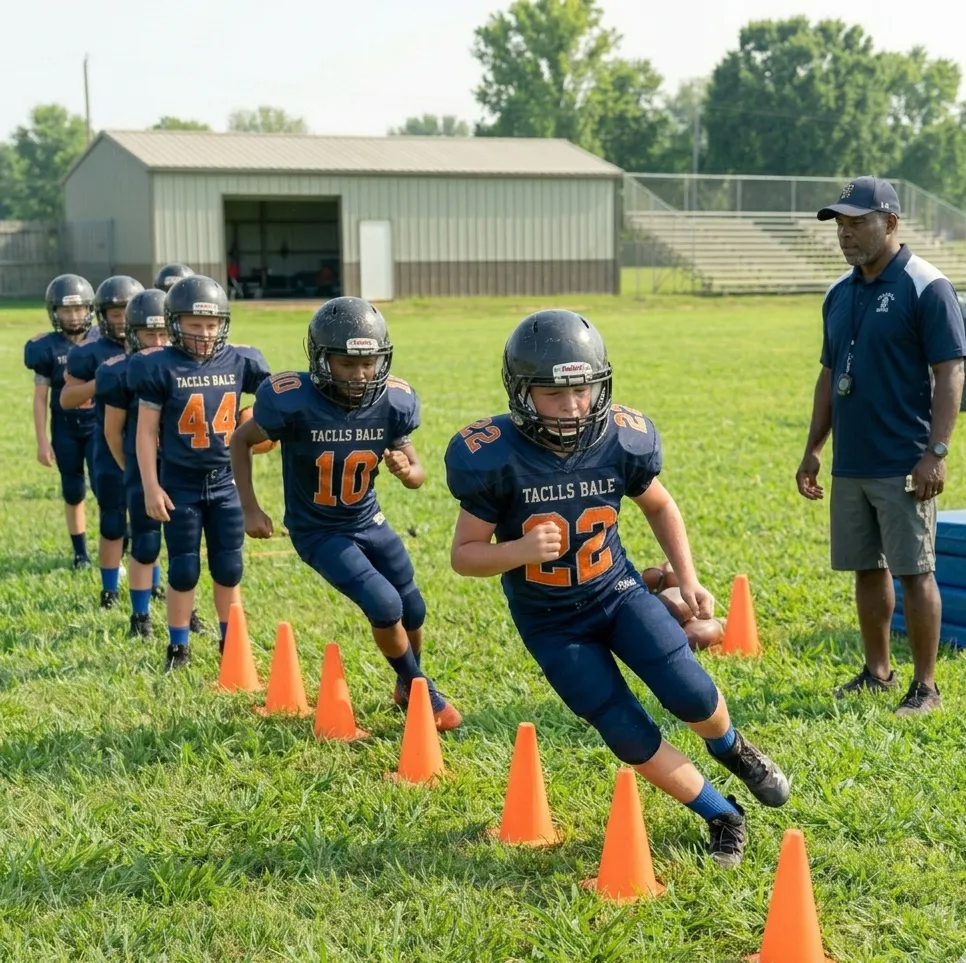
Speed work should stay controlled.
Straight-line sprints.
Cone shuttles.
Change-of-direction drills.
No racing.
No long runs.
Teach players how to start and stop safely.
Fundamentals (12–15 minutes)
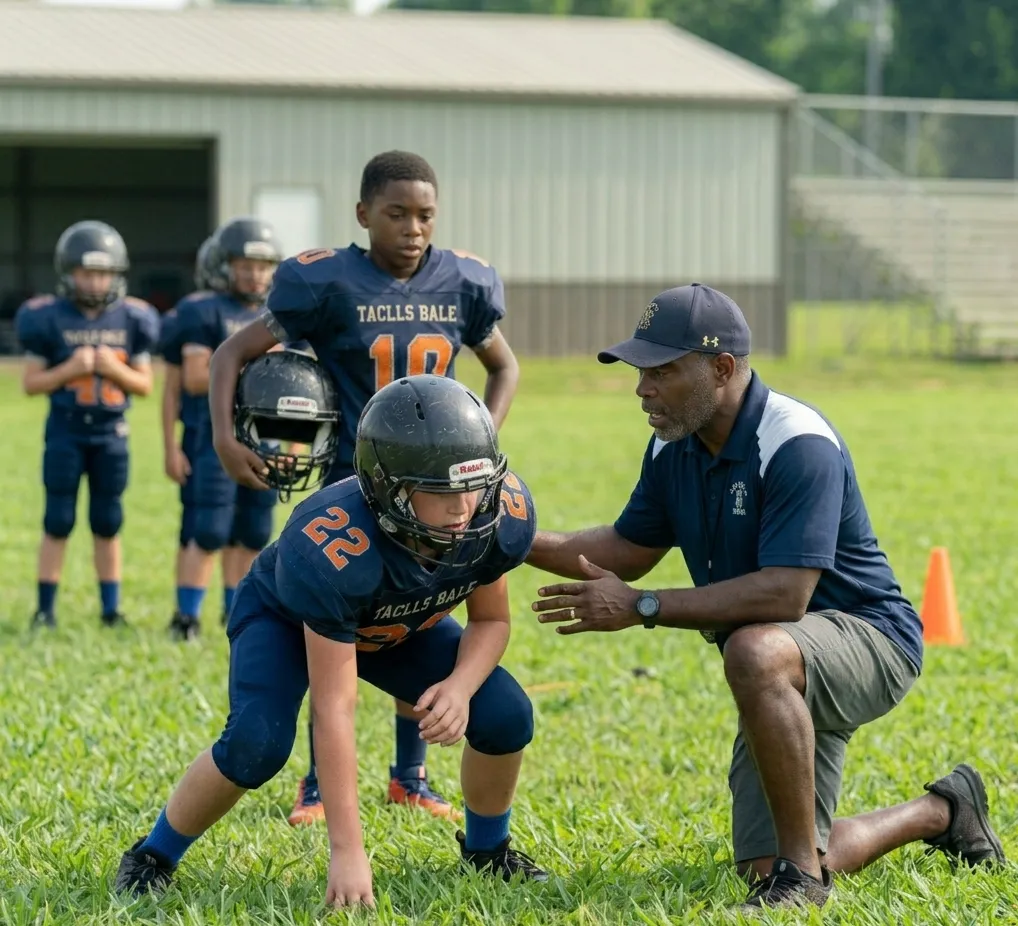
This is the most important part.
Work on stance, balance, and body position.
Show the drill first.
Then let players try.
Correct mistakes early.
Praise effort often.
Most beginner teams improve faster when basics are taught clearly.
Purpose of First Day Drill Types
| Drill Type | Purpose |
|---|---|
| Warm Ups | Prepare muscles safely |
| Fundamentals | Teach correct movement |
| Individual Drills | Build basic skills |
| Group Drills | Improve teamwork |
| Team Drills | Practice communication |
| Cool Down | Aid recovery |
Individual Drills (10–12 minutes)
Split players into small groups.
Catching.
Hand-offs.
Blocking footwork.
Keep lines short.
Avoid idle time.
Technical Drills (8–10 minutes)
Focus on hand placement, footwork timing, and head position without contact.
Use simple coaching words.
Do not overload players.
Group Drills (10 minutes)
Blocking fits.
Route timing.
Defensive alignment walks.
Stop often.
Fix spacing and roles.
Tactical Work (8–10 minutes)
Walk through where to line up and where to move.
No full speed.
No contact.
Team Drills (10 minutes)
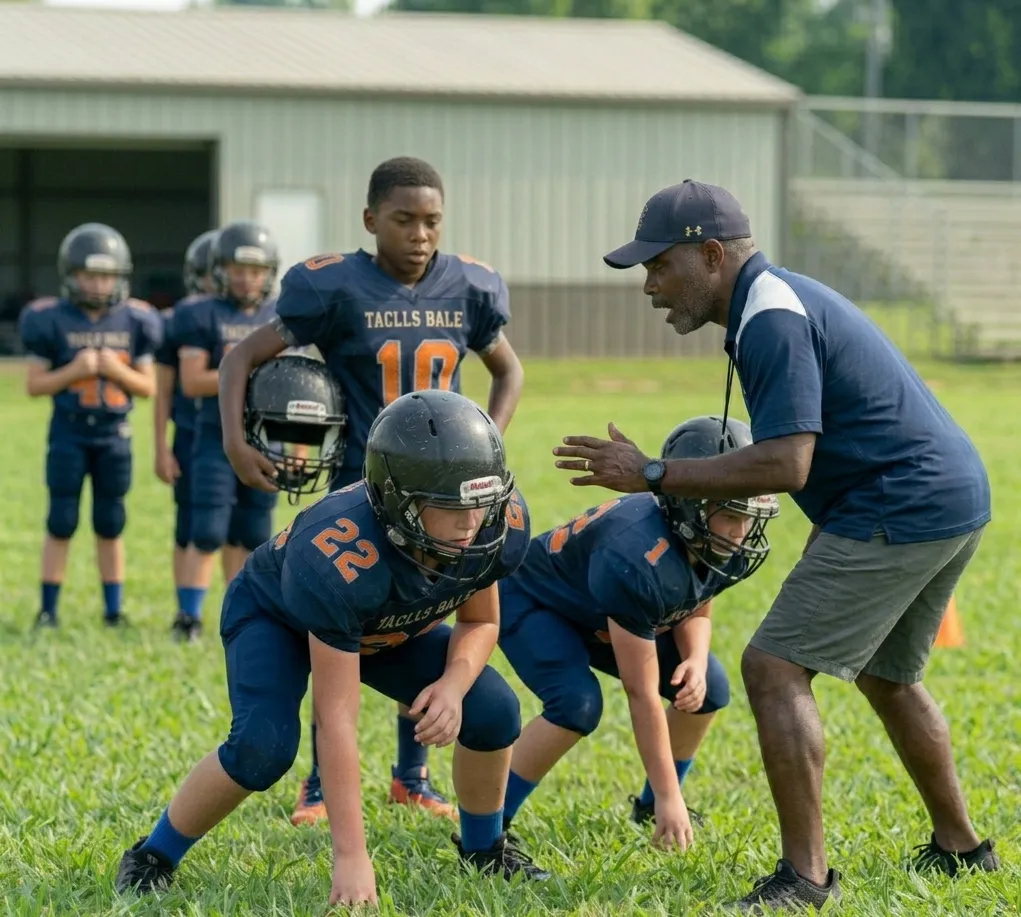
Run plays at walk speed.
Then jog speed.
Focus on alignment and listening.
Team Period (8–10 minutes)
Short sequences.
Limited reps.
No over coaching.
Install Period (5–8 minutes)
Introduce two or three plays only.
Repeat them.
Answer questions.
Small Sided Games (Optional – 5 minutes)
5v5 touch games.
Short and fun.
Conditioning (5 minutes)
Short sprints.
Movement relays.
No punishment runs.
Cool Down (5 minutes)
Walk.
Stretch lightly.
Breathe.
Thank players.
Wrap Up (5 minutes)
End with a short talk. Share what went well, what comes next, and what to bring next time. After coaching youth and beginner teams, one thing is clear. The first practice shapes the season. When day one is calm and organized, players gain confidence and trust their coach. Simple drills, clear rules, and short time blocks work better than long and hard sessions. Parents also trust coaches more when they see safety and structure. Getting the first day right makes every practice after it easier.
Common First Day Practice Mistakes
- Starting full contact drills on day one
- Teaching too many plays
- Running long conditioning sessions
- Letting players stand in long lines
- Skipping warm ups or cool down
Conclusion
From real coaching experience, the first day of football practice is where everything starts to take shape. When the session is simple, organized, and focused on safety, players feel more comfortable and ready to learn. I have seen beginner teams improve much faster when the first practice focuses on basics instead of complex drills or long sessions.
The most effective first practices follow a clear plan. Short drills, clear instructions, and steady pacing help players stay engaged and avoid confusion. Coaches who keep things simple on day one build stronger trust with both players and parents.
If you apply these first day football practice drills in a structured way, you set a strong base for the rest of the season. A calm and well-planned first practice makes every next session easier, more productive, and more enjoyable for everyone involved.
FAQS
1. What are the best first day football practice drills?
The best first day football practice drills include dynamic warm ups, stance and balance drills, catching, hand-offs, and simple movement drills. These drills help players learn basics while staying safe and confident.
2. How do you plan a first day football practice?
A first day football practice should follow a simple structure: introductions, warm up, fundamentals, basic drills, and a short team session. Keep the plan clear and avoid adding too many activities.
3. How long should the first football practice be?
For beginners and youth teams, the first football practice should last between 60 to 90 minutes. Short sessions help players stay focused and avoid fatigue
4. Should there be tackling on the first day of football practice?
No, tackling should not be introduced on the first day. Coaches should focus on non-contact drills to teach movement, positioning, and safety.
5. What should players bring to the first football practice?
Players should bring a helmet, shoulder pads if required, cleats, a water bottle, and proper sports clothing. Having the right gear ensures safety and smooth practice flow.
6. How can coaches keep players engaged on the first day?
Coaches can keep players engaged by using short drills, giving clear instructions, and avoiding long lines. Simple and active drills help players stay involved.
7. Why is the first day of football practice important?
The first day sets the tone for the season. A well-organized and positive practice builds confidence, improves learning, and helps players trust their coach.
