



Quick Takeaways
| Category | Details |
|---|---|
| Best For | Defensive and offensive skill players |
| Skill Level | Beginner to Advanced |
| Players Needed | 2 |
| Equipment | Open space (cones optional) |
| Focus | Reaction time, footwork, lateral movement, balance |
Introduction (Quick Answer)
The 1-on-1 Mirror Technique is a football reaction drill where one player mirrors another player’s movements without making contact. It helps improve reaction time, lateral movement, balance, and footwork. Coaches use this drill to develop quicker reactions and better body control during one-on-one situations. Players looking to improve these skills can also practice football agility drills.
What Is the 1-on-1 Mirror Technique?
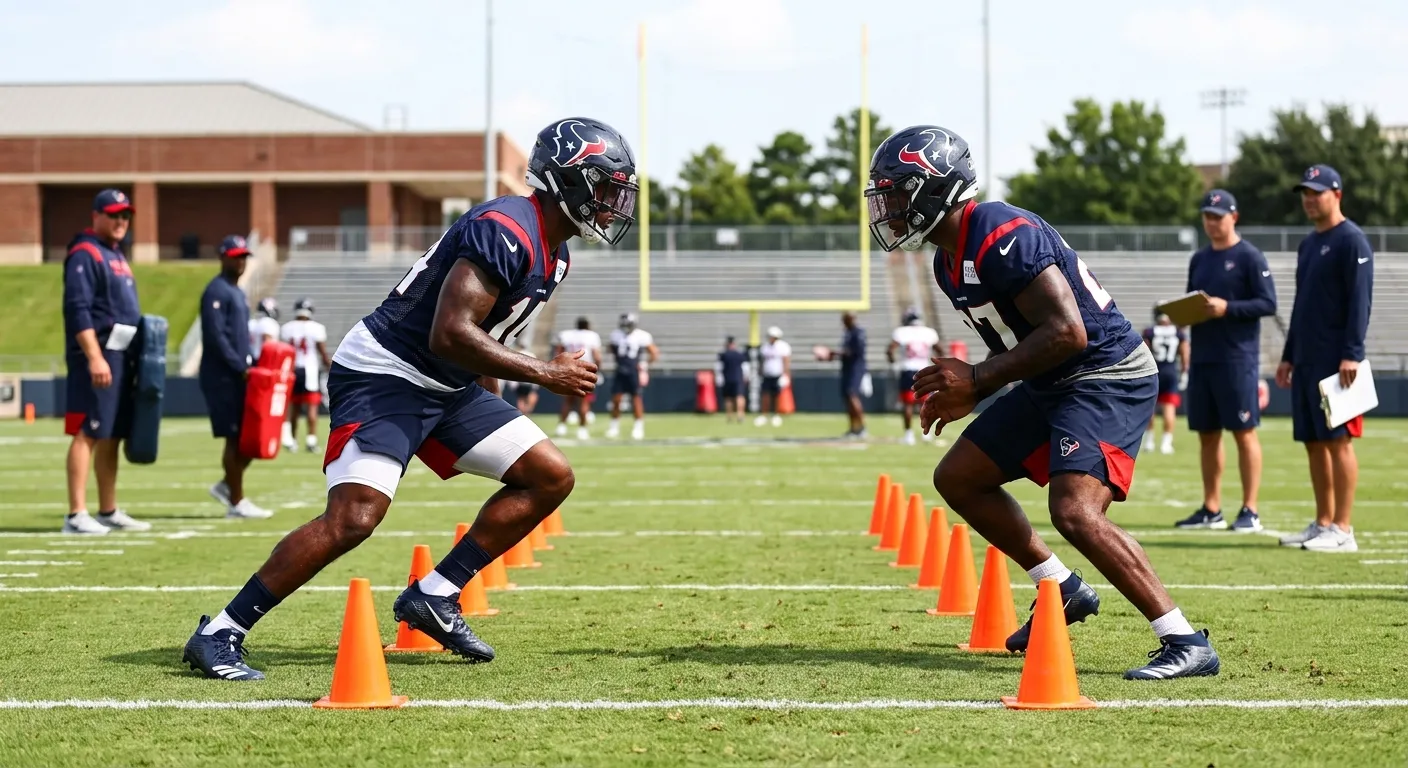
The 1-on-1 Mirror Technique, also called the Mirror Drill, is a partner football drill that develops defensive movement and agility. One player leads while the other mirrors every move using quick feet and a low athletic stance. The drill teaches players to react to movement, stay balanced, and maintain proper positioning on the field.
Benefits of the 1-on-1 Mirror Technique
The 1-on-1 Mirror Technique helps players build important football skills, including:
- Improves reaction time and decision-making.
- Develops quick footwork and lateral movement.
- Builds balance and body control during direction changes.
- Reinforces proper defensive positioning.
- Increases confidence in one-on-one situations.
The 1-on-1 Mirror Technique improves reaction time, agility, and change-of-direction ability. To build planned change-of-direction skills, pair this drill with the T Drill. These movement skills are recognized by recognized by the National Strength and Conditioning Association in Essentials of Strength Training and Conditioning..
Skills Developed
The 1-on-1 Mirror Technique develops several football skills that help players perform better on the field.
This drill develops reactive agility by teaching players to respond quickly to an opponent’s movements. To further improve change-of-direction speed, practice the 5-10-5 Shuttle Drill.
- Reaction Time: Respond quickly to an opponent’s movement.
- Lateral Movement: Move side to side with control.
- Footwork: Take short, quick steps without crossing your feet.
- Balance: Stay stable while changing direction. Build better stability and body control with football balance drills it is supported by guidance in ACSM’s Guidelines for Exercise Testing and Prescription.
- Body Control: Maintain good posture and movement throughout the drill.
- Defensive Positioning: Stay square and in front of your opponent.
Equipment Needed
You need very little equipment to perform this drill.
- 2 players
- Open practice area
- Football cleats
- Cones (optional for marking boundaries)
Setup

- Mark a small practice area if needed.
- Position two players facing each other about 3–5 yards apart.
- Choose one player as the leader and the other as the mirror.
- Start in a low athletic stance with your eyes on your partner.
How to Perform

- The leader moves side to side, forward, or backward.
- The mirror follows every movement while staying balanced.
- Keep your feet moving and avoid crossing them.
- Stay square to your partner throughout the drill.
- Continue for 10–20 seconds, then switch roles.
Recommended Reps: Complete 4–6 repetitions with 30–45 seconds of rest between sets.
Key Tip: Stay low, keep your eyes on your partner’s hips, and use short, quick steps instead of crossing your feet.
Coaching Tips
- Stay low throughout the drill.
- Watch your partner’s hips instead of their feet.
- Take short, quick steps.
- Keep your chest square to your partner.
- React to movement instead of guessing.
- Focus on control before increasing speed.
Keep your movements controlled, stay in an athletic stance, and avoid crossing your feet. These coaching principles align with recommendations found in National Federation of State High School Associations football coaching resources.
Common Mistakes

Avoid these common mistakes to get the most from the 1-on-1 Mirror Technique.
- Crossing your feet: Shuffle instead to stay balanced.
- Standing too upright: Keep a low athletic stance for quicker reactions.
- Watching the feet: Focus on your partner’s hips to read movement.
- Taking long steps: Use short, controlled steps for better footwork.
- Guessing the next move: React to your partner instead of anticipating.
Variations
Beginner Variation
Move at a slow pace and only use side-to-side movements. Focus on balance and proper footwork.
Intermediate Variation
Add forward and backward movements while increasing speed.
Advanced Variation
Use random movement changes or have the leader hold a football to create a more game-like reaction drill.
Best For
The 1-on-1 Mirror Technique is ideal for players who need quick reactions, lateral movement, and body control during one-on-one situations. It is especially beneficial for:
- Defensive Backs (DBs): Improve coverage and stay in front of receivers.
- Cornerbacks: React quickly to route changes.
- Safeties: Develop better pursuit angles and movement.
- Linebackers: Improve lateral movement when tracking ball carriers.
- Defensive Ends: Build quicker reactions off the line of scrimmage.
- Running Backs: Practice cutting and avoiding defenders.
- Wide Receivers: Improve footwork and separation at the start of routes.
FAQs
What is the purpose of the 1-on-1 Mirror Technique?
It improves reaction time, footwork, lateral movement, balance, and defensive positioning.
Can beginners perform this drill?
Yes. Beginners can start with slow side-to-side movements before increasing speed.
How long should each repetition last?
Most coaches recommend 10–20 seconds per repetition with short rest periods between sets.
Do I need cones for this drill?
No. Cones are optional and can be used to mark the practice area.
What football skills does this drill improve?
The drill develops reaction time, agility, footwork, balance, body control, and change of direction.
Which football positions benefit the most?
It is especially helpful for defensive backs, linebackers, defensive ends, running backs, and wide receivers.
