


Youth football drills for beginners can feel confusing at the start. Many coaches and parents face the same problem. Kids do not understand drills, and practice quickly becomes messy. Some players lose interest because drills are too hard or not explained in a simple way. Beginners often struggle with basic things like holding the ball, moving their feet, or following instructions. This makes training slow and frustrating for everyone.
From real training experience, the best results come from simple and clear drills. Beginners do not need complex setups. They need easy steps, repetition, and a safe learning environment. In this guide, you will find youth football drills for beginners that are easy to teach, safe for kids, and useful in real practice. These drills help build confidence and make learning football more enjoyable.
Key Takeaways
- Start with basic skills like stance and ball control
- Use simple drills for beginners
- Keep practice short (30–60 minutes)
- Focus on safety and proper technique
- Repeat drills to build confidence
This guide is for:
- Youth football coaches
- Parents teaching kids at home
- Beginner players (ages 5–12)
What Beginners Should Learn First
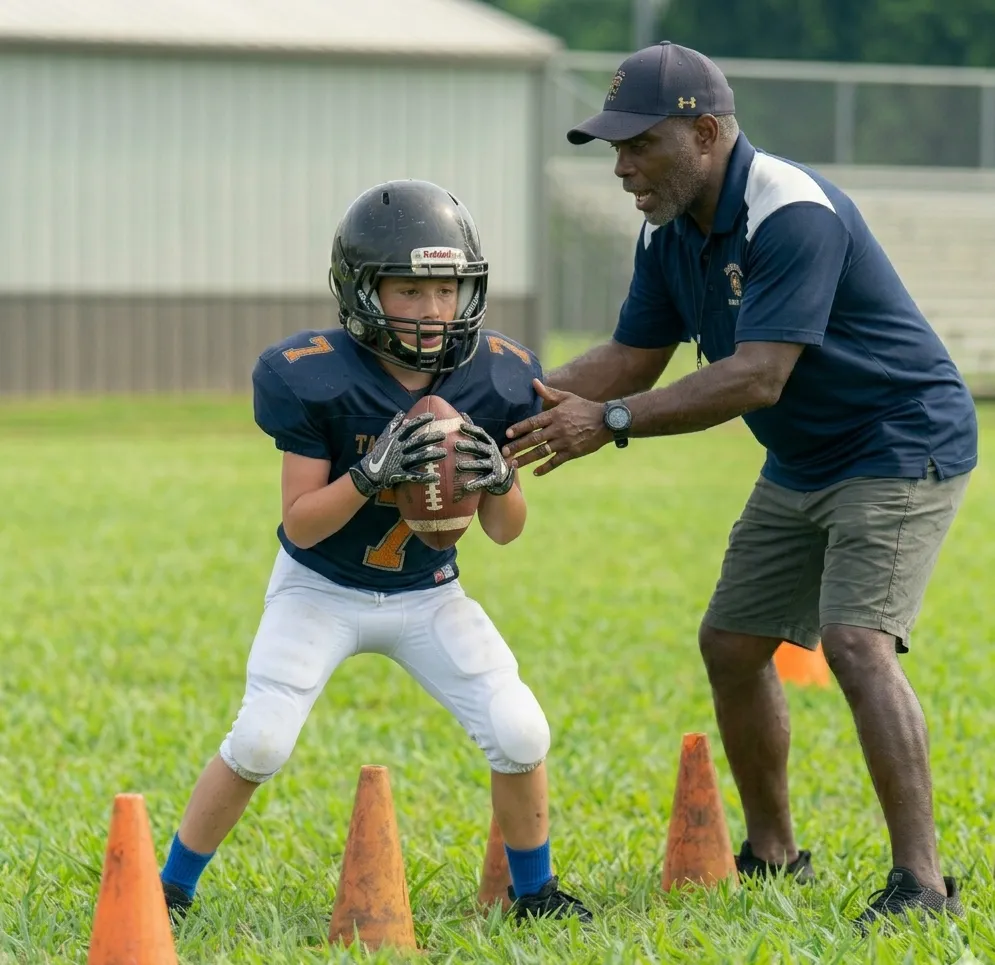
- Basic stance (stay low and balanced)
- How to hold the football
- Simple movement (run, stop, turn)
- Basic game awareness
Coaches should spend time on these basics before moving ahead. Parents can also practice these at home.
Youth Football Drills to Improve Game-Day Performance
These drills improve speed, control, and confidence. They are easy to use in team practice or at home.
Youth Football Drills for Beginners (By Skill Level)
Linebacker and Defense Drills
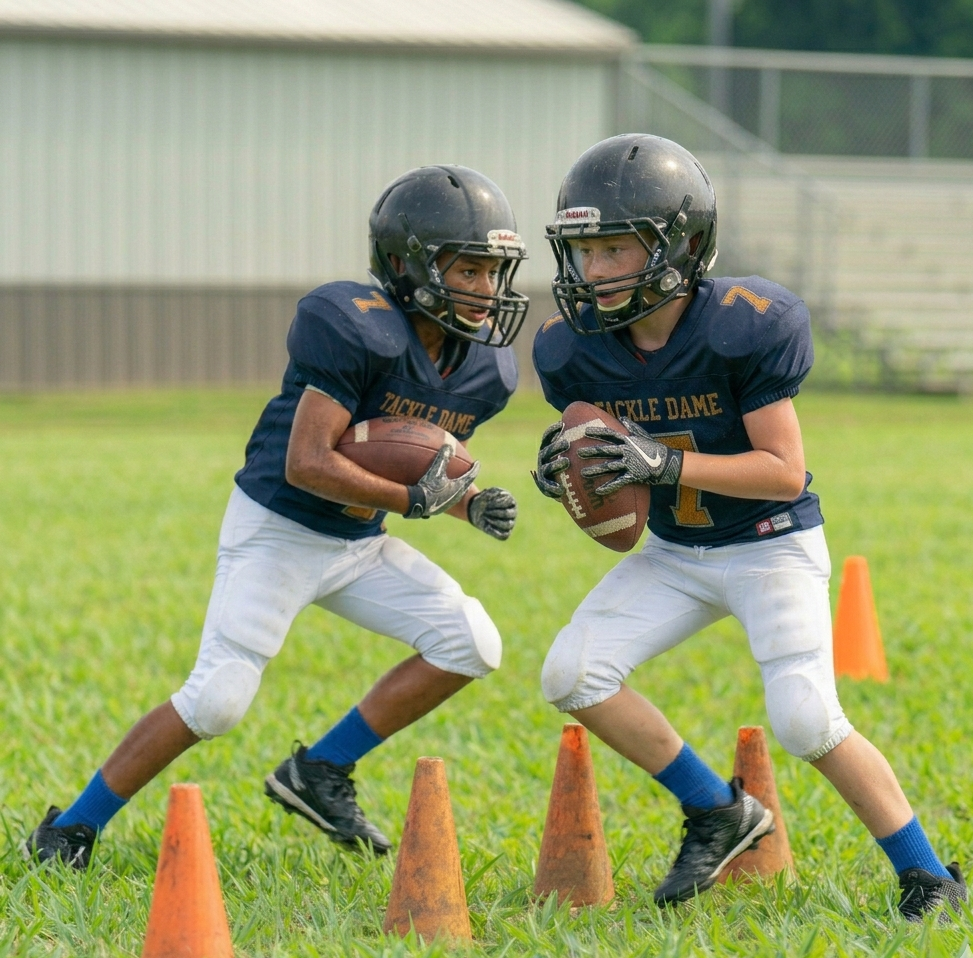
Mirror Dodge Drill
Setup: Two players, 3–5 yards apart
Steps: Move and mirror
Tip: Stay low
Mistake: Standing straight
Why: Improves reaction speed
Difficulty: Easy
Open Field Tackling
Setup: Runner and defender
Steps: Approach and wrap safely
Tip: Keep head up
Mistake: Diving
Why: Builds control
Difficulty: Medium
Start with flag football for younger kids
Tackling Drills
Kneeling Tackle Drill
Why: Teaches safe form
Difficulty: Easy
Breakthrough Drill
Why: Builds strength
Difficulty: Medium
Passing and Catching Drills
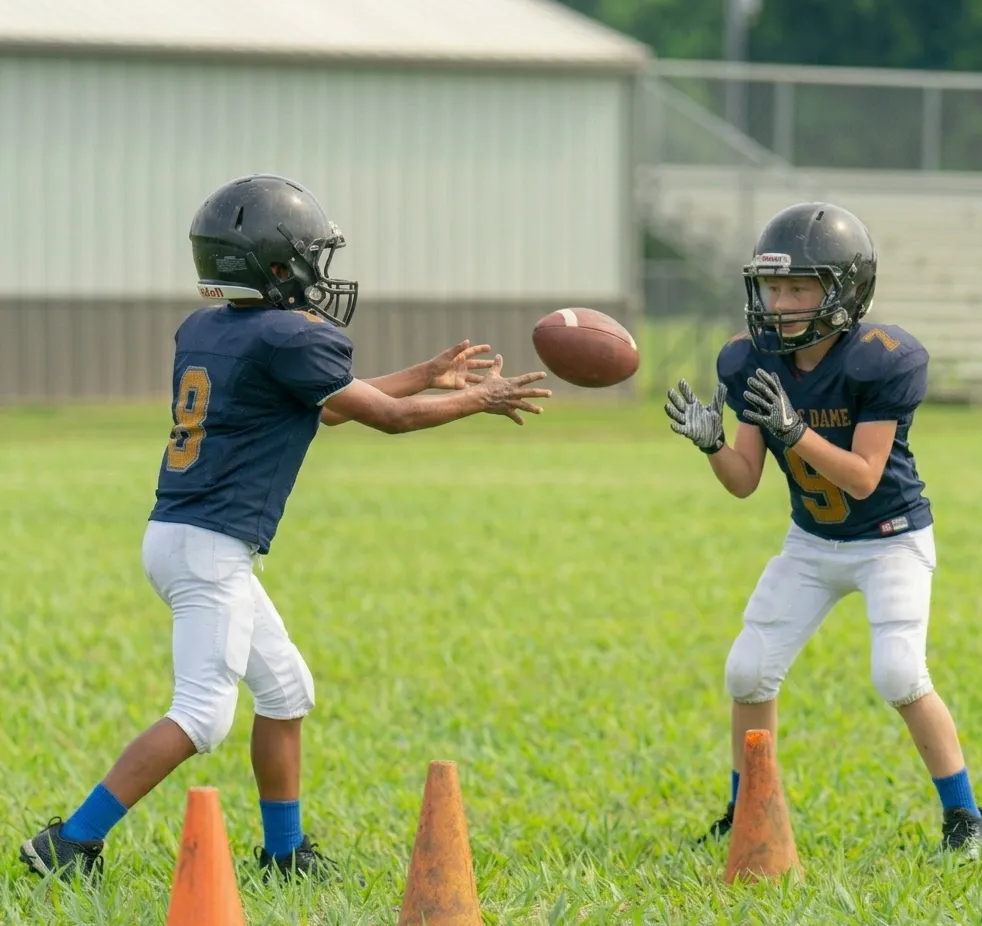
Over the Middle Drill
Why: Improves catching
Difficulty: Easy
Routes on Air
Why: Builds route basics
Difficulty: Easy
3 on 3 Passing Drill
Why: Improves teamwork
Difficulty: Medium
Quarterback Drills
QB Scramble Drill
Why: Improves control under pressure
Difficulty: Medium
Wide Receiver Drills
90 Degree Cut Drill
Why: Improves footwork
Difficulty: Easy
Blocking Drills
Tennis Ball Block Drill
Why: Improves hand control
Difficulty: Easy
Mirror Stalk Block
Why: Builds balance
Difficulty: Medium
Movement and Reaction Drills
Shuffle and Switch
Why: Improves agility
Difficulty: Easy
Read and Go Drill
Why: Builds reaction speed
Difficulty: Easy
Football Practice Tips
- Keep drills simple
- Give rest breaks
- Repeat drills
- Provide feedback
Equipment Needed
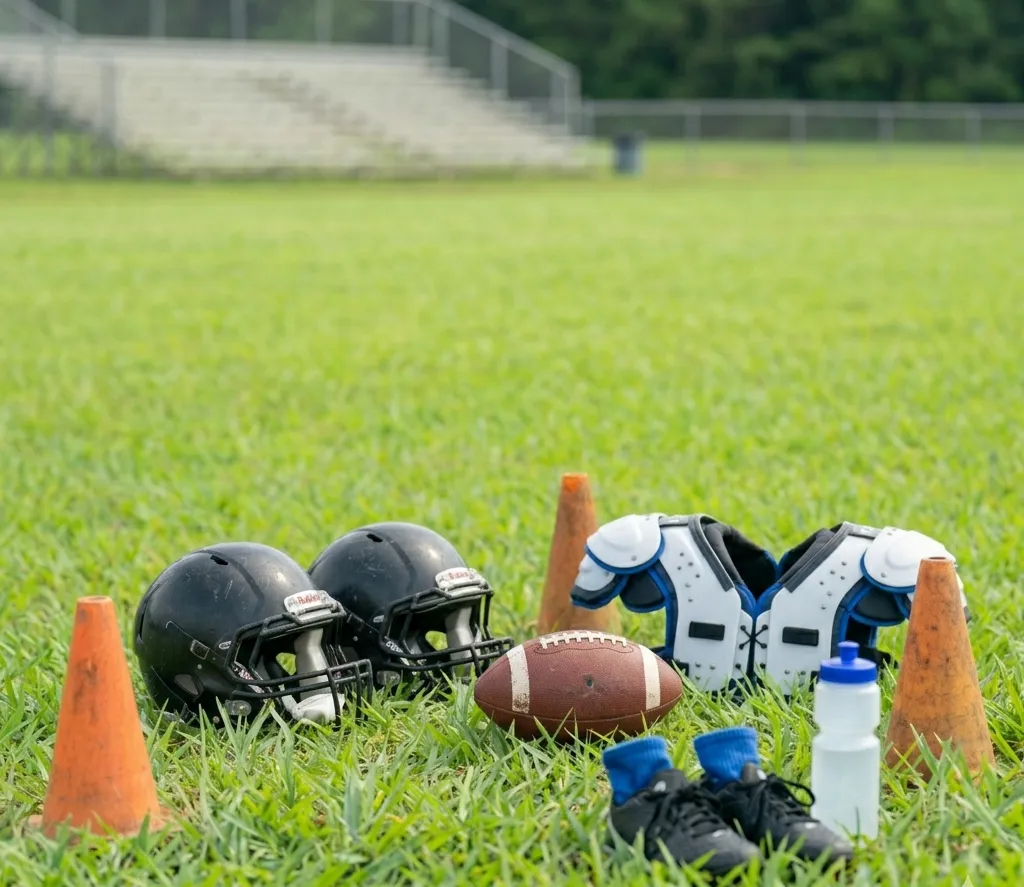
- Football
- Cones
- Cleats
- Helmet
- Shoulder pads
- Mouthguard
| Step | Activity | Time |
|---|---|---|
| Warm-up | Light running | 5–10 min |
| Skill | Drills | 10–15 min |
| Game | Practice play | 10–15 min |
Common Mistakes
| Mistake | Fix |
|---|---|
| Poor stance | Practice daily |
| Looking down | Keep head up |
| Weak grip | Learn hold |
Beginner Practice Plan
- 30 min: Warm-up + drills
- 60 min: Full session
First Day Football Practice
- Keep it simple
- Focus on fun
- Avoid tackling
Safety Tips
- Warm up
- Use gear
- Stay hydrated
Beginner Football Checklist
- Learn basics
- Practice daily
- Stay safe
- Use equipment
Conclusion
Youth football drills for beginners work best when they are simple, clear, and easy to repeat. From experience, beginner players learn faster when drills are not confusing and are practiced step by step. Kids build confidence when they understand what to do and feel comfortable during practice. Coaches and parents should focus on basic football skills like stance, movement, and simple passing drills.
A strong foundation in youth football drills for beginners helps players improve over time. When practice is safe, structured, and enjoyable, kids stay engaged and continue learning. Keep drills simple, give clear instructions, and focus on building confidence instead of pressure. This approach helps beginners enjoy the game and grow their skills with every practice.
FAQs
What are the best youth football drills for beginners?
The best youth football drills for beginners are simple drills like cone drills, passing drills, and reaction drills. These drills help kids learn basic skills such as movement, ball control, and coordination. Beginners should start with easy drills and repeat them regularly.
How do you teach kids football basics?
You can teach kids football basics by starting with simple skills like stance, ball handling, and basic movement. Use easy drills and explain each step clearly. Keep practice short and fun so kids stay engaged.
How long should youth football practice be for beginners?
Youth football practice for beginners should be around 30 to 60 minutes. Younger kids can practice for 30–45 minutes, while older beginners can train for up to 60 minutes. Short sessions help kids stay focused and active.
Can kids practice football drills at home?
Yes, kids can practice football drills at home. Simple drills like cone drills, catching practice, and footwork drills can be done in a small space. Home practice helps improve skills faster.
What age should kids start football drills?
Kids can start basic football drills at the age of 5 or 6. At this stage, drills should be simple, safe, and focused on fun and movement.
Are youth football drills safe for beginners?
Yes, youth football drills are safe for beginners when proper safety rules are followed. Use the right equipment, teach safe techniques, and avoid heavy contact for younger players.
What drills should beginners start with in football?
Beginners should start with basic drills like running, catching, and simple reaction drills. These drills build strong fundamentals and prepare players for more advanced training.
