


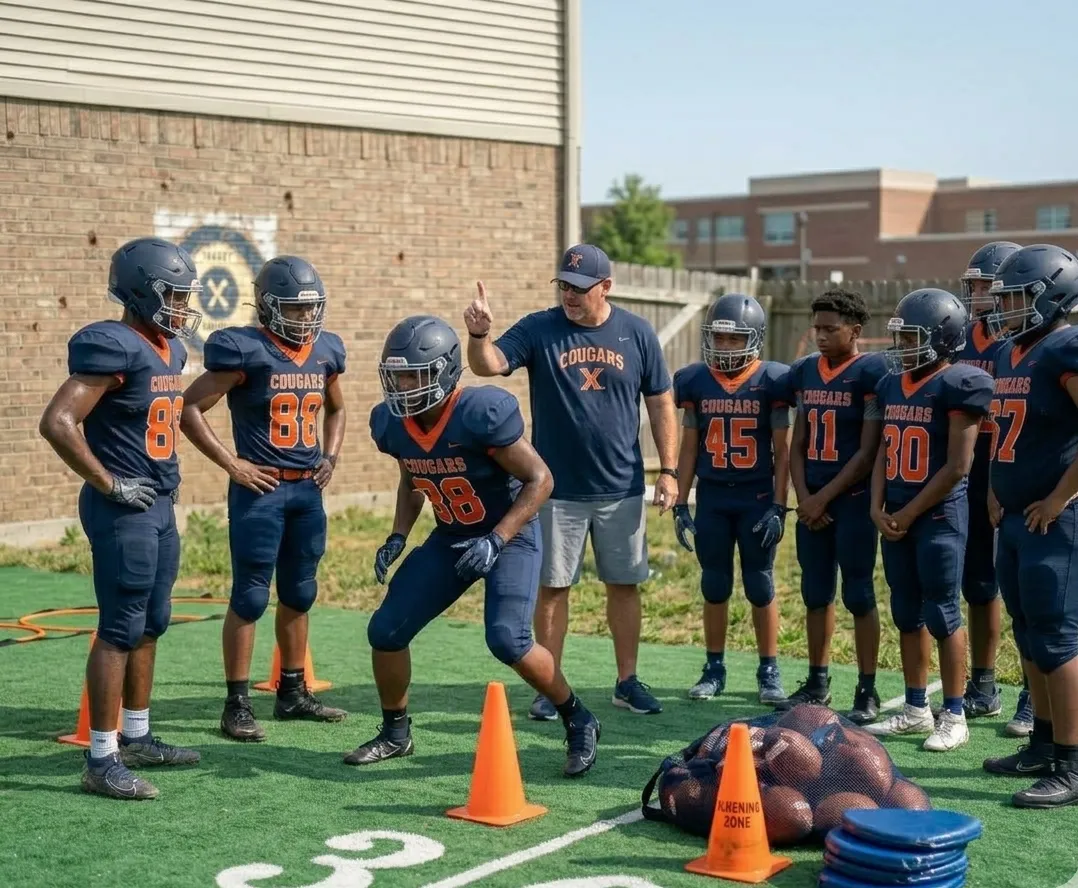
Football fundamental drills look easy on paper, but real practice tells a different story. I have seen youth teams with fast players still struggle because they could not line up right, catch the ball clean, or move with balance. Coaches get frustrated when the same mistakes happen every week. Parents feel unsure how to help. Players lose confidence when basics are weak.
From real practice experience, I have learned that strong fundamentals fix most problems. When players repeat simple drills the right way, everything improves. Timing gets better. Movement feels natural. Confidence grows. This guide focuses on football fundamental drills that work for youth coaches, parents, and beginner players who want clear, safe, and effective training in American football.
Warm-Up Fundamentals Before Football Drills
Every football practice should start with a warm-up. Warm-ups prepare the body for movement and reduce injury risk.
Warm-up drills should be simple and short.
Common warm-up movements include:
- Light jogging
- High knees
- Arm circles
- Side shuffles
For younger players, warm-ups should last 5 to 8 minutes.
For older youth players, 8 to 10 minutes is enough.
Parents helping kids at home should also start with these warm-ups.
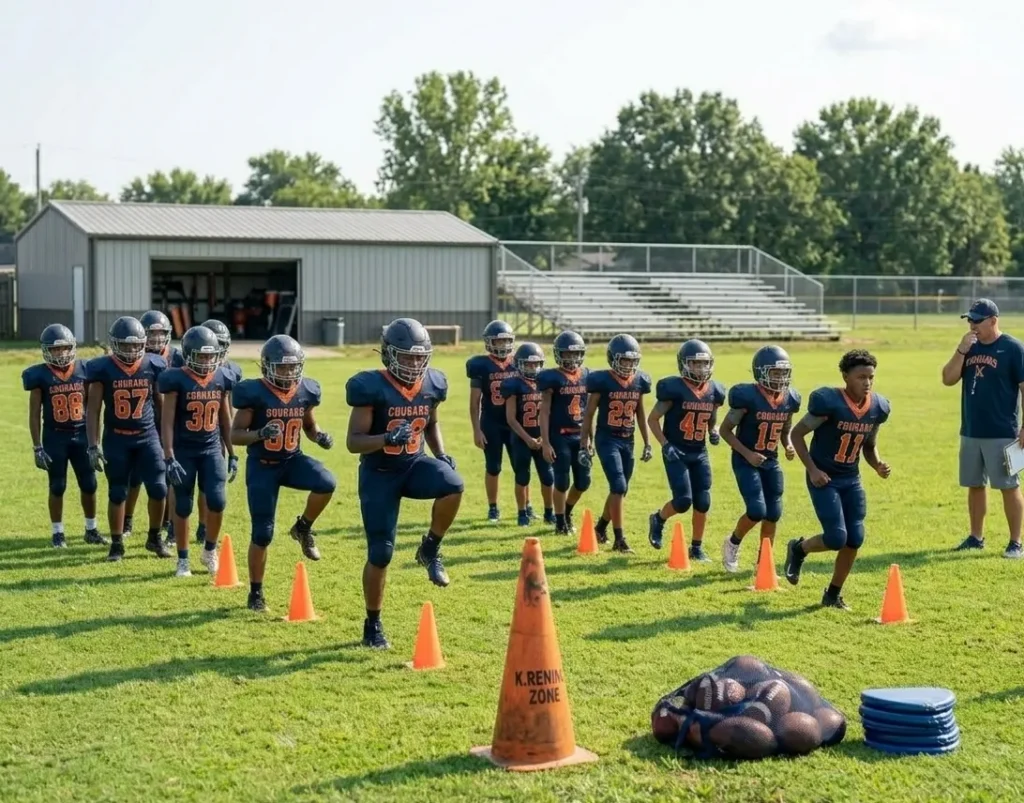
Flag Football Drills
Flag football drills teach spacing, movement, and awareness. They are ideal for beginners and young players.
These drills focus on speed, balance, and ball control. They also reduce contact risk while learning core skills.
Common flag football drills include:
- Short passing drills
- Flag pulling drills
- Movement drills with cones
These drills build confidence early and are easy to run at home.
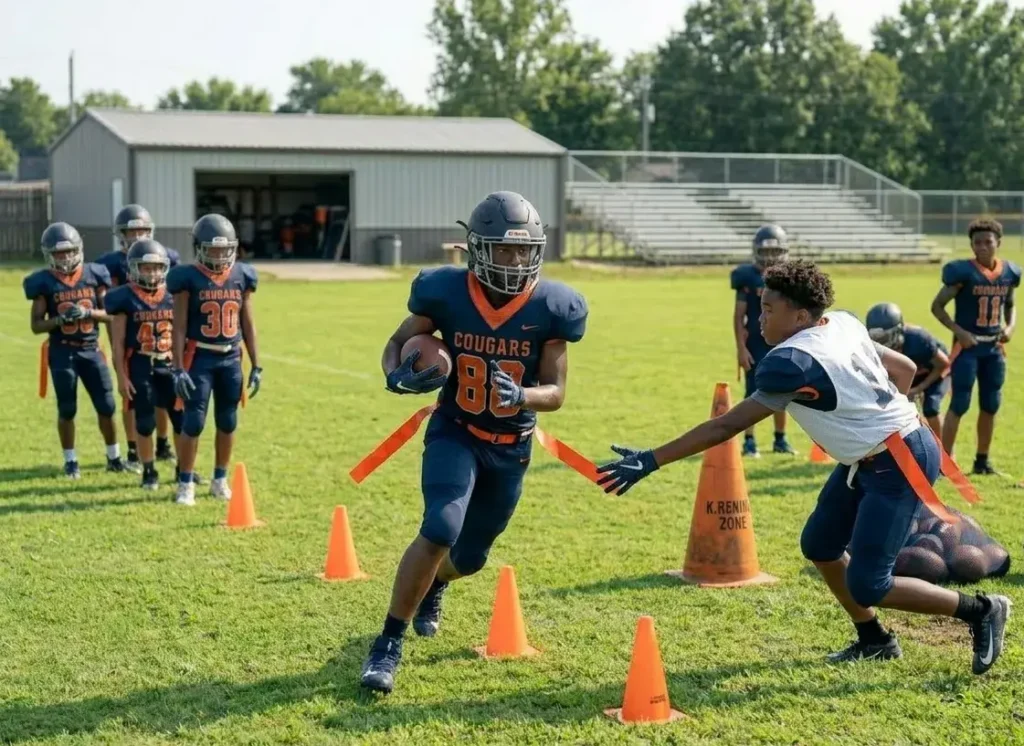
Running Back Drills
Running back drills train footwork and balance. Players learn how to move fast while staying under control.
Key focus areas:
- Lateral movement
- Quick steps
- Ball security
Simple cone drills help players change direction. Shuttle runs improve burst speed.
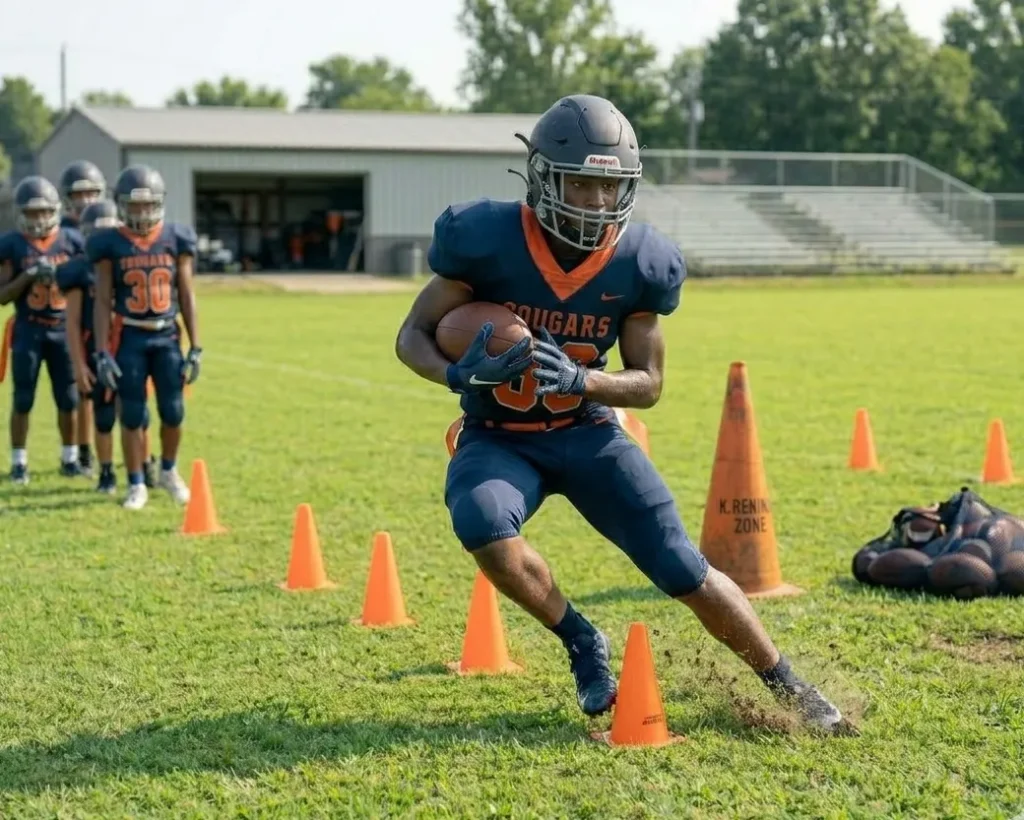
Quarterback Drills
Quarterback drills teach throwing form and timing. These drills help players throw with control.
Basic quarterback drills include:
- Short throw accuracy drills
- Drop-back footwork drills
- Quick release drills
Young quarterbacks should start with short throws and increase distance slowly.
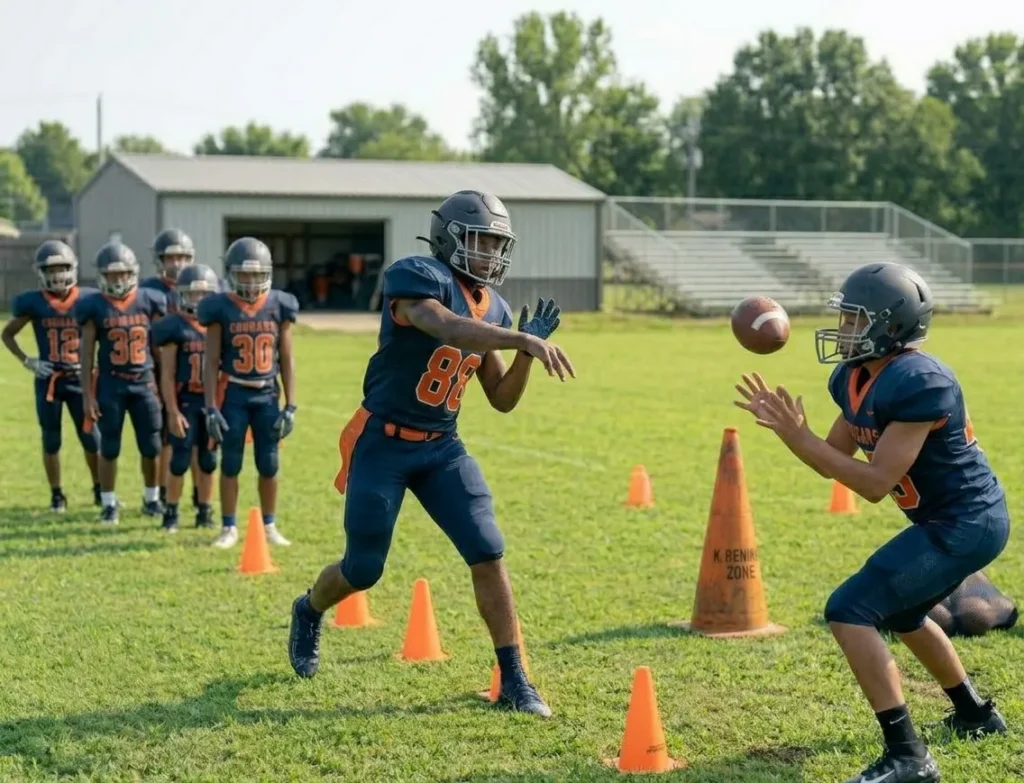
Wide Receiver Drills
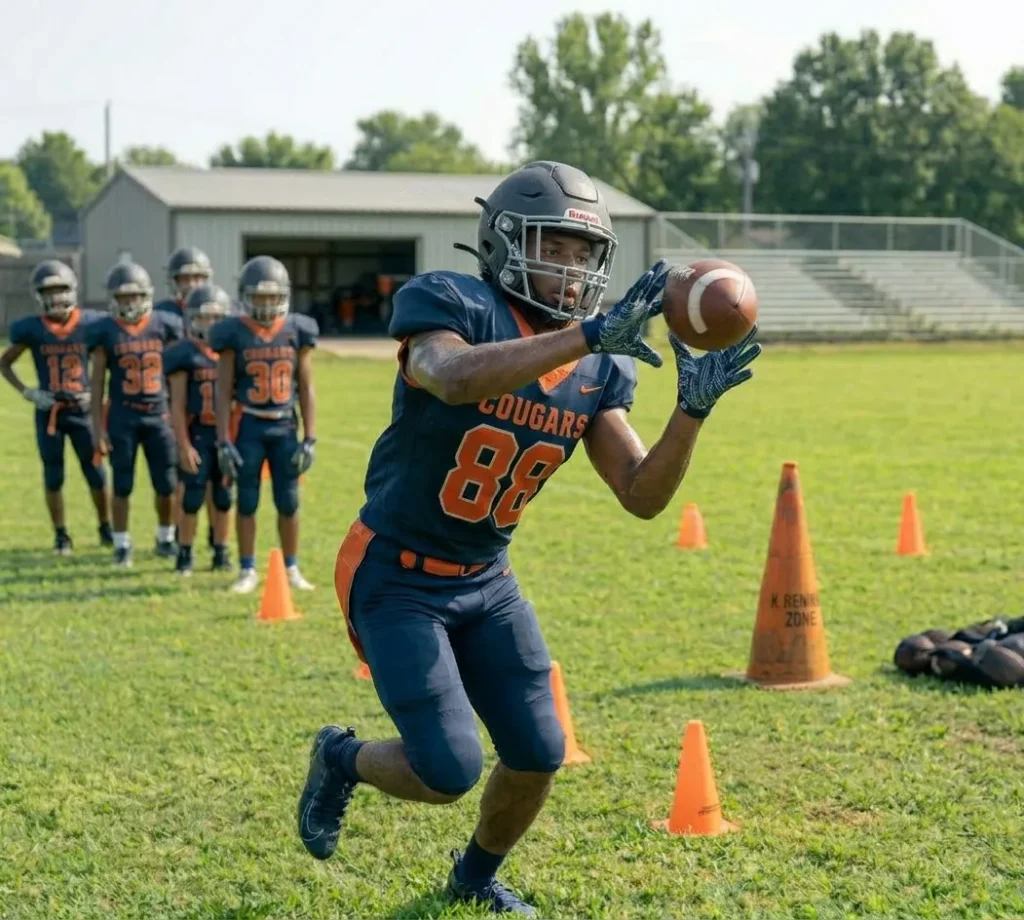
Wide receiver drills focus on catching and route movement. Hands and timing are key.
Common drills:
- Catch and turn drills
- Short route drills
- Quick stop and go drills
These drills help receivers stay balanced and focused.
Football Agility Drills
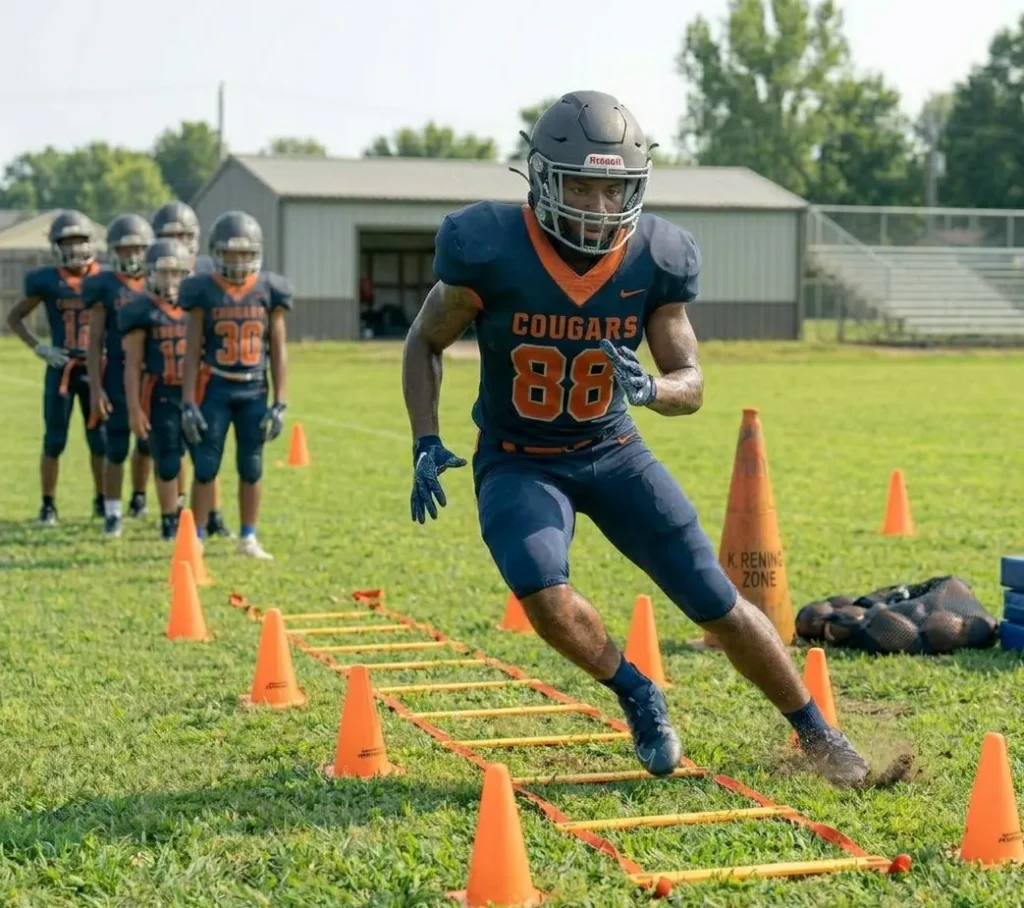
Agility drills improve movement in all directions. Every position needs these skills.
Popular agility drills include:
- Ladder drills
- Cone shuffle drills
- Sprint change drills
These drills improve reaction time and body control.
Football Conditioning Drills
Conditioning drills build stamina and strength. Players must stay active for full practice sessions.
Basic conditioning drills:
- Short sprint repeats
- Shuttle runs
- Relay drills
Conditioning should support skill work, not replace it.
Flag Pulling Drills
Flag pulling drills teach defensive basics. Players learn timing and positioning.
These drills improve:
- Reaction speed
- Angle control
- Body balance
They work well in youth practice sessions and flag leagues.
How to Catch a Football
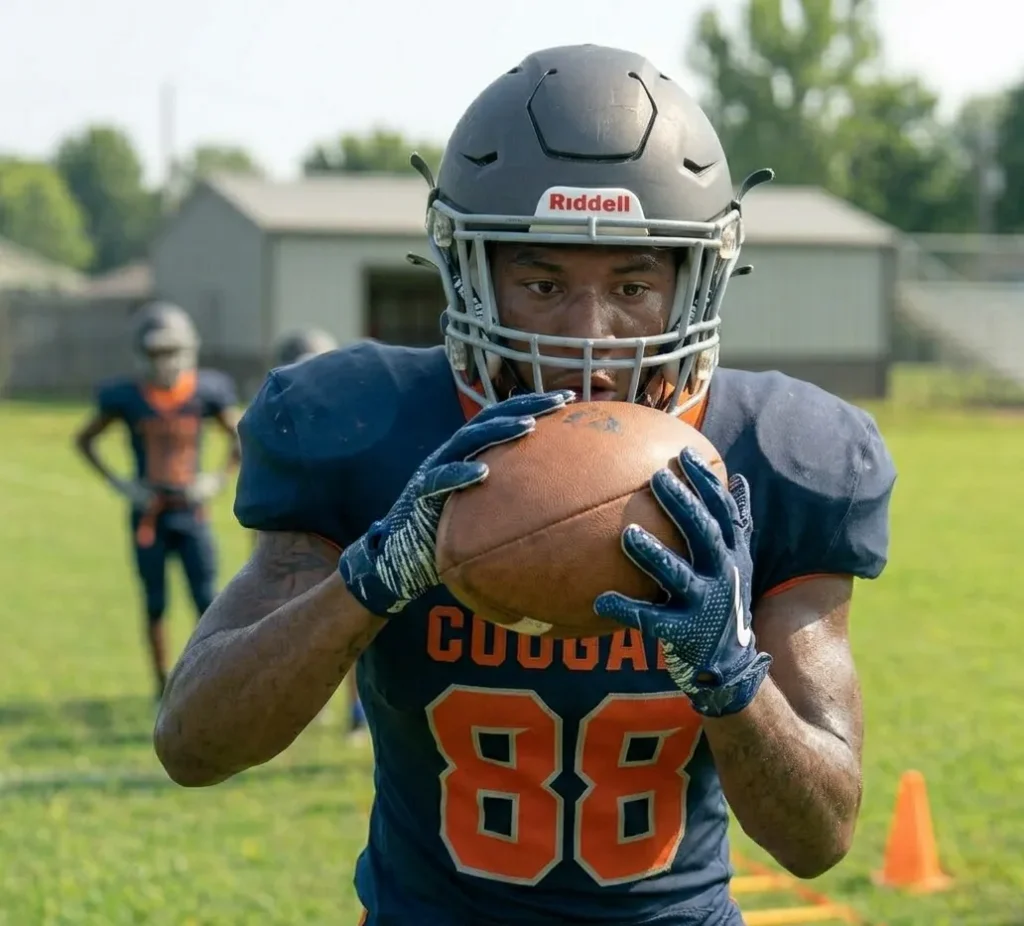
Catching drills train hand control and focus. Players should use soft hands.
Simple catching drills:
- Partner toss drills
- High and low catch drills
- Moving catch drills
Eyes should stay on the ball at all times.
How to Throw a Football
Throwing drills improve arm control and accuracy. These drills start with short passes.
Focus points:
- Grip
- Arm motion
- Follow through
Control matters more than strength for beginners.
How to Snap a Football
Snapping drills are important for centers. A clean snap helps the whole play.
Basic snap drills:
- Stationary snaps
- Snap and step drills
- Short snap accuracy drills
Consistency matters more than speed.
Safety and Age Guidelines for Football Fundamental Drills
Football fundamental drills should match the player’s age and skill level.
For younger players:
- Focus on non-contact drills
- Use flag football techniques
- Keep drill time short
For older youth players:
- Add controlled contact drills
- Teach proper body position
- Increase drill intensity slowly
Coaches and parents should stop drills if form breaks down.
| Age | Focus | Contact |
|---|---|---|
| 6–8 | Movement, balance | No contact |
| 9–11 | Catching, footwork | Limited |
| 12–14 | Position drills | Controlled |
How to Structure a Football Practice Using Fundamental Drills
A simple practice structure helps players learn faster.
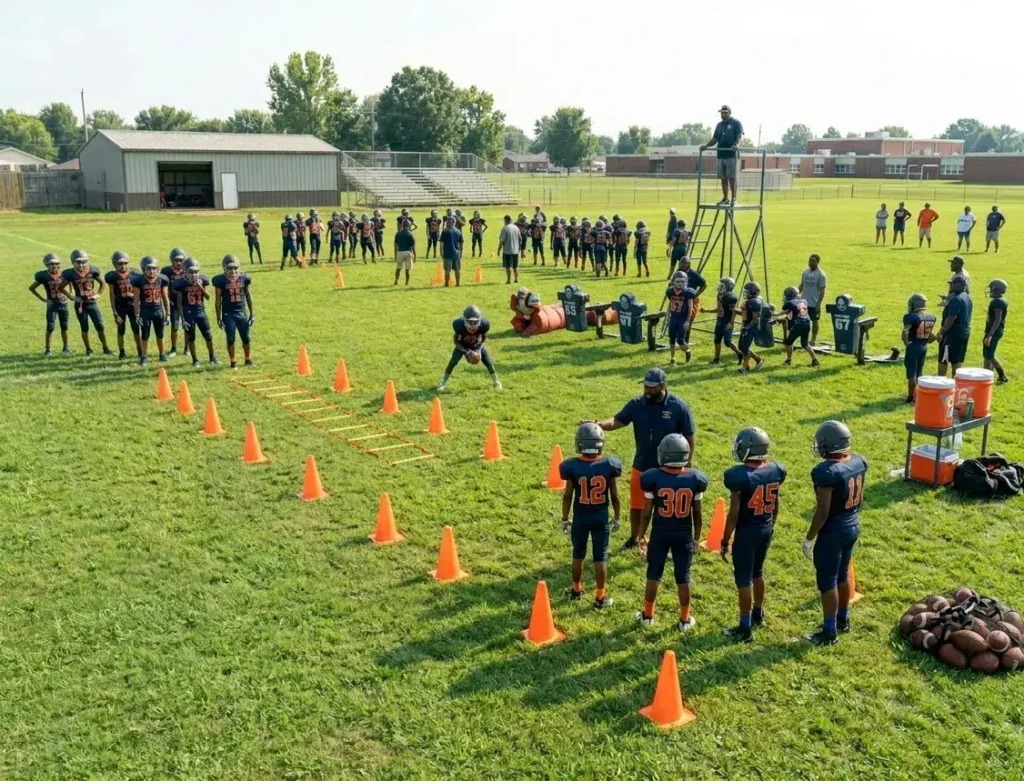
A basic football practice can follow this order:
- Warm-up and movement drills
- Fundamental skill drills
- Position-specific drills
- Conditioning drills
- Cool down
This structure works for team practices and home training.
NFL Football Practice Drills (Speed and Movement)
These drills focus on speed, control, and movement used in advanced training.
Speed Rush Drill – Linebacker and Defensive End
Trains fast forward movement and first-step speed.
Back Pedal and Break Drill – Defensive Back and Linebacker
Improves back movement and quick reaction.
Lateral Shuffle to Sprint Drill
Builds side movement and acceleration.
Lateral High Step and Go Drill – Running Back
Improves knee lift and quick starts.
Quick Pass Drill – Quarterback and Wide Receiver
Builds timing between passer and receiver.
Dynamic Skater Jump to Sprint Drill
Improves balance and power.
Medicine Ball Shuttle Relay
Builds strength and teamwork.
Over Speed to Resisted Sprint Drill
Trains speed control.
Resistance Training Run – 45 Yard Range
Improves drive and endurance.
Slant and Go Drill – Wide Receiver
Improves route timing.
QB Pass With Resistance
Builds throwing control.
Why Football Fundamental Drills Matter
Football fundamental drills build strong habits early. They help players move better and think faster.
These drills:
- Reduce mistakes
- Improve skill control
- Build confidence
Practice improves results over time.
Progress Tracking Tips
- Track clean catches during drills
- Watch footwork balance and control
- Focus on effort, not just speed
- Review progress weekly
Common Practice Mistakes
Common mistakes include:
- Skipping warm-ups
- Rushing drills
- Ignoring form
Simple drills done correctly work best.
Equipment Needed for Football Fundamental Drills
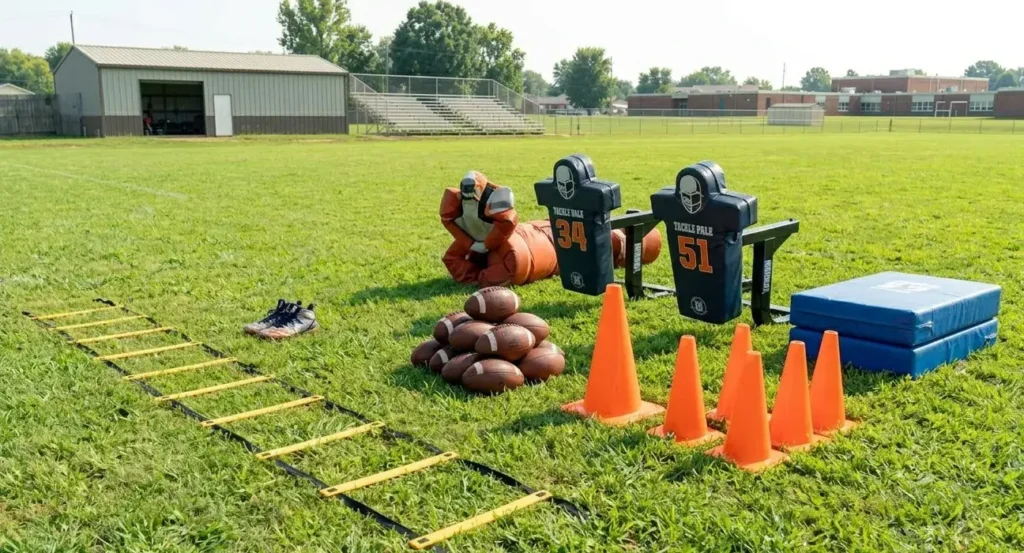
Most football fundamental drills need basic equipment only.
Common equipment includes:
- Footballs
- Cones
- Agility ladders
- Training bags or pads
- Flags for flag football drills
Parents can run many drills with just a football and cones.
| Equipment | Required |
|---|---|
| Football | Yes |
| Cones | Yes |
| Agility Ladder | Optional |
| Training Pads | Optional |
Key Takeaways
- Football fundamentals matter at every level
- Short, focused practice works best
- Safety and age level come first
- Consistency beats intensity
- Basics build confidence
Conclusion
Football fundamental drills build the base for long-term success in American football. I have seen players improve quickly when they focus on simple movement, clean catching, and proper footwork. Strong results come from short, focused practice sessions and consistent effort.
When players practice football fundamental drills the right way, they gain confidence, improve control, and perform better in games. Coaches see fewer mistakes, and parents feel more confident in their child’s progress. In American football, strong fundamentals always make the biggest difference.
