


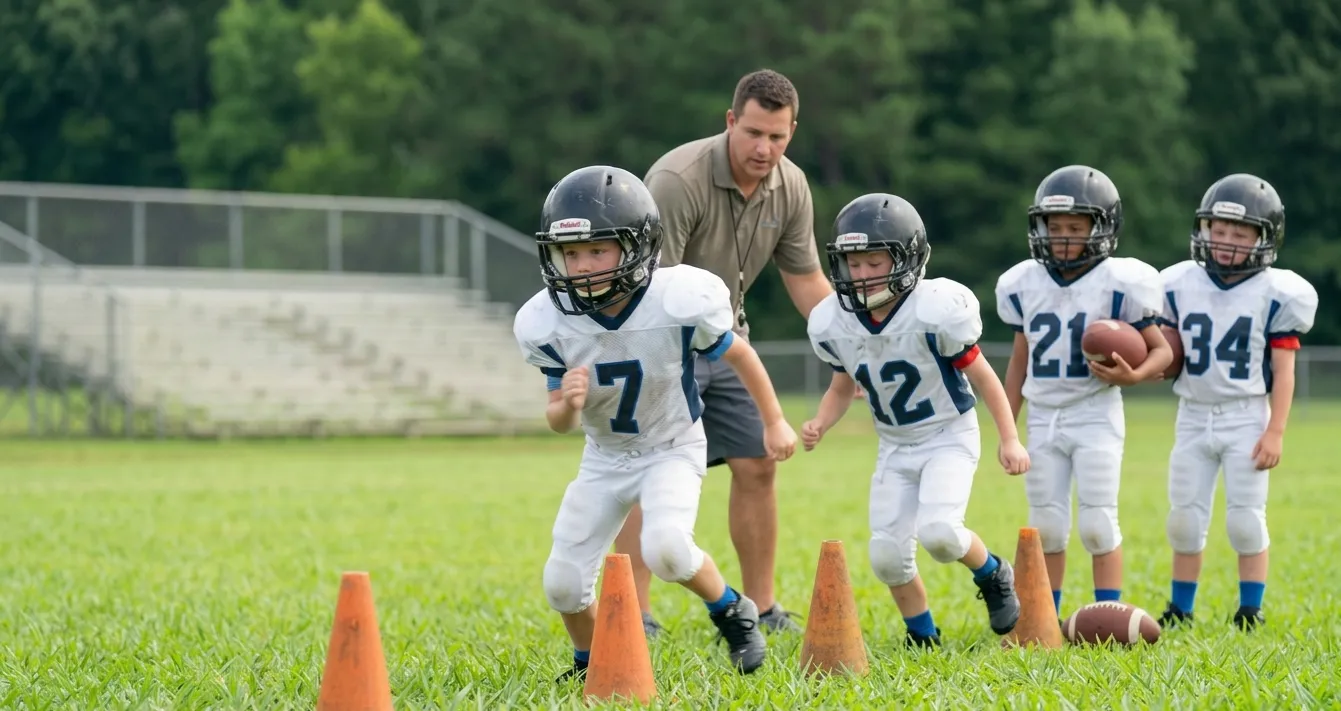
Football drills for ages 6-8 can feel overwhelming, especially if you are a volunteer coach or a parent helping for the first time. I have seen practices where kids lose focus after ten minutes, drills take too long to explain, and parents quietly worry about safety. At this age, attention spans are short and energy is high. Without structure, practice quickly turns into chaos.
After working with beginner youth players, I learned something simple. Ages 6–8 are about fundamentals, not complex plays. When drills are short, clear, and safe, kids improve faster and enjoy the sport more. This guide gives you football drills for ages 6–8 that focus on skill development, confidence, and safe progression so you can run a practice that actually works.
Quick Takeaways for Coaches
- Keep drills 5–8 minutes long
- Focus on fundamentals, not advanced plays
- Use flag drills for most 6–7 year olds
- Rotate drills often to keep attention
- End practice with a fun mini game
Why Football Drills for Ages 6–8 Must Be Different
Players in this age group:
- Lose focus quickly
- Are still developing coordination
- Need repetition
- Should avoid heavy contact
- Build confidence through success
Focus on:
- Catching
- Ball security
- Running form
- Simple agility
- Confidence
The goal is development, not competition.
Equipment Needed for Youth Football Practice
- Youth size football
- Cones
- Flag belts (recommended)
- Blocking pads or bags
- Mouth guards
- Water
For most 6–7 year olds, flag football is safer. No live tackling at this stage.
Catching and Ball Skills Drills
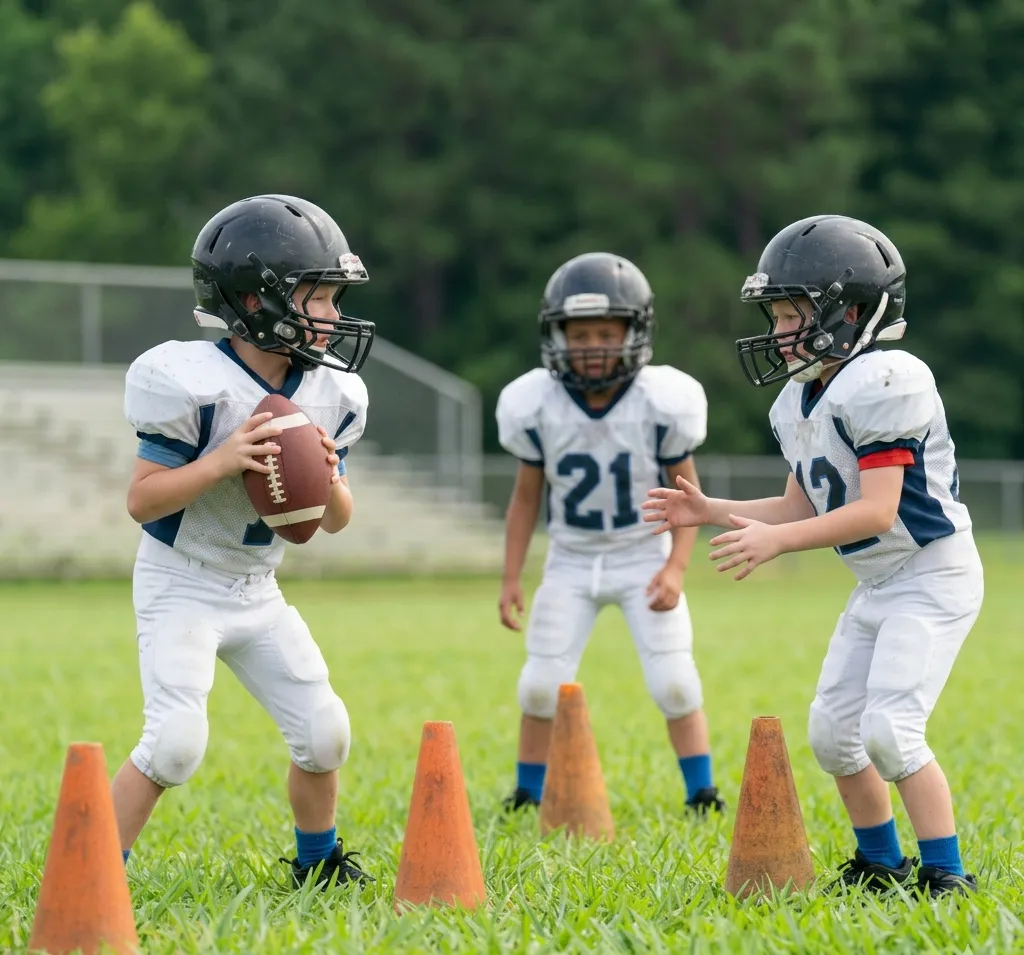
Catching Triangle Drill
Players form a triangle and pass while moving.
Coaching cues:
- Watch the ball
- Catch with fingers
Follow the Ball Drill
Players shuffle while tracking the coach.
Coaching cues:
- Stay low
- Eyes on ball
Over the Middle Drill
Run through cones and catch.
Coaching cues:
- Hands ready
- Catch then tuck
Game Speed Catches
Run, catch, and accelerate.
Coaching cues:
- Run fast
- Secure ball first
Handoff and Ball Security Drills
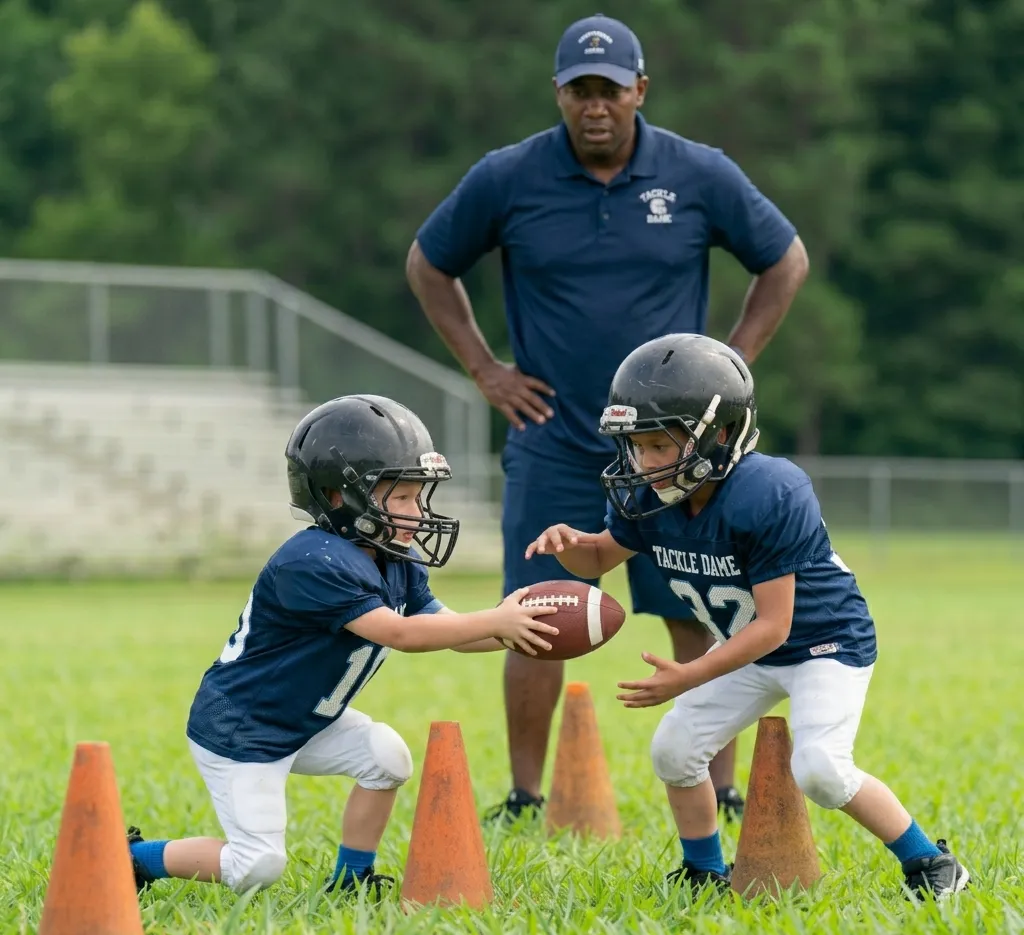
Ball Switch Handoff Drill
Quarterback hands off to runner.
Coaching cues:
- Wide pocket
- Tight grip
Strip the Ball Drill
Light pressure on runner.
Coaching cues:
- High and tight
- Protect with arm
(No tackling involved)
Running and Movement Drills
Up Field Drill
Coach signals direction.
Coaching cues:
- React fast
- Stay balanced
Mirror Dodge Drill
Mirror partner movement.
Coaching cues:
- Quick feet
- Stay low
Routes on Air
Run simple routes without defense.
Agility and Footwork Drills
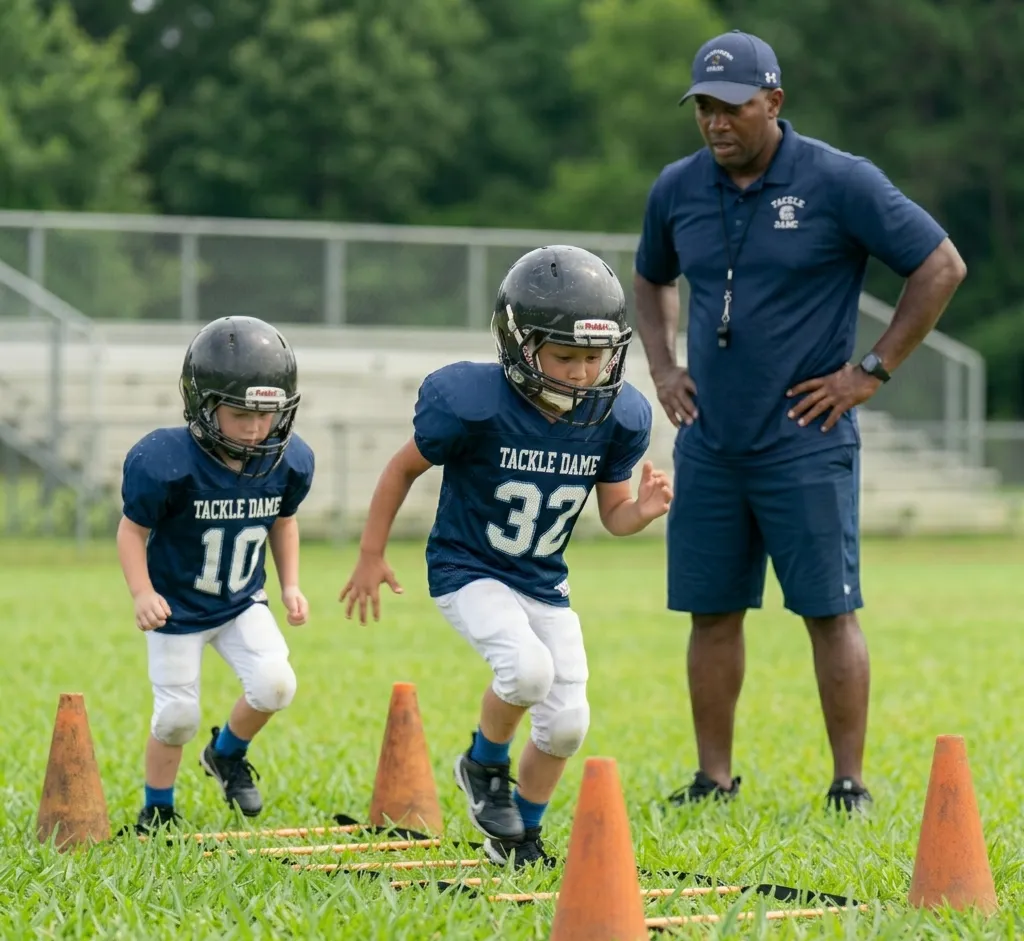
- In-and-Out Ladder
- Three Yard Star Drill
- Balance Drill
Focus on control and movement.
Blocking and Defensive Basics
Drive Blocks
Use pads only. No contact.
Linebacker Agility Drill
Shuffle and sprint movement.
Additional Fun Football Drills
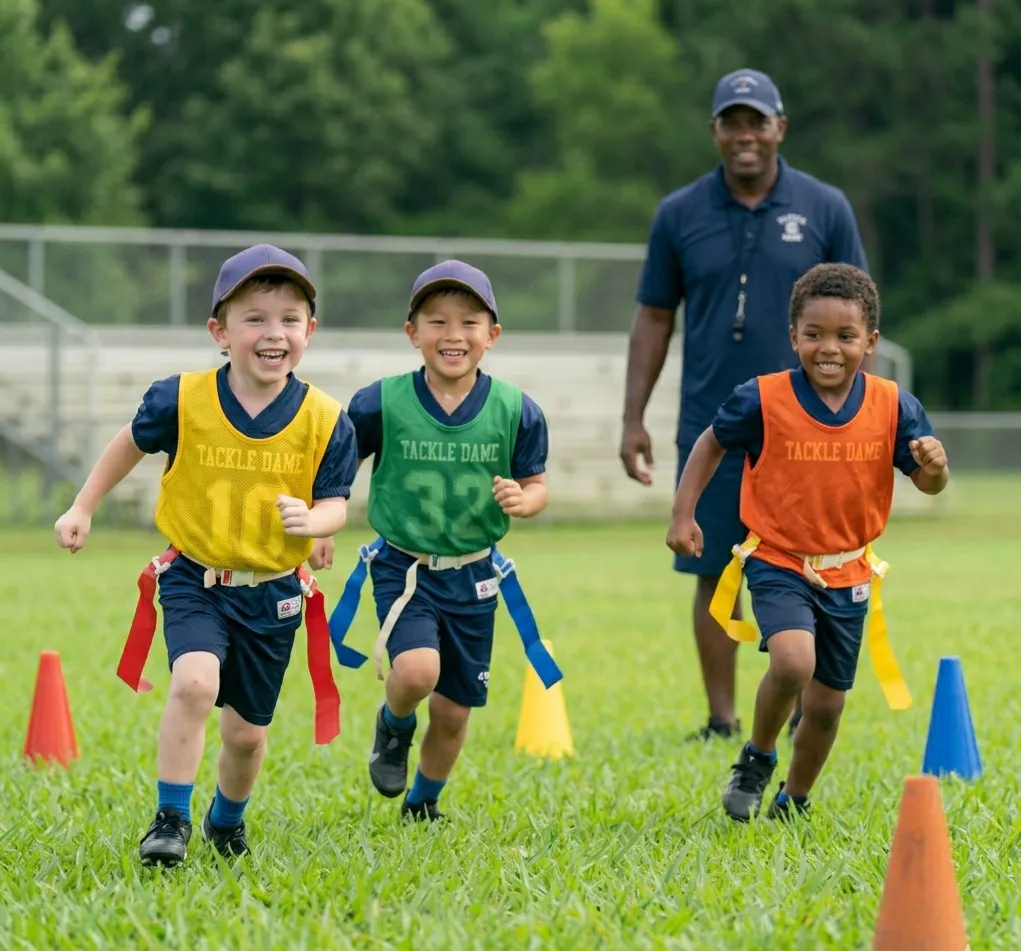
- First to the Flag
- Cone Weave
- Quick Toss and Turn
- Red Light Green Light
These help keep kids engaged.
Drill Progression Model
Level 1: Learn movement
Level 2: Add reaction
Level 3: Game speed
This builds skills step by step.
40-Minute Youth Football Practice Structure
| Practice Block | Time | Focus |
|---|---|---|
| Warm-Up Game | 5 min | Movement |
| Catching Drill | 7 min | Coordination |
| Handoff Drill | 7 min | Ball Control |
| Agility Drill | 6 min | Footwork |
| Route Drill | 7 min | Movement |
| Small Game | 8 min | Fun & Learning |
Skill Development Focus by Age
| Age | Primary Focus | Secondary Focus |
|---|---|---|
| 6 | Catching | Running |
| 7 | Handoffs | Agility |
| 8 | Defense | Blocking form |
Safety Tips
- Use flags
- Limit contact
- Hydrate often
- Check equipment
- Stop unsafe drills
conclusion
From experience, youth football at ages 6–8 is about building a strong base. When practice is simple, safe, and structured, kids improve faster and enjoy the game more.
Short drills, clear instructions, and positive feedback help young players stay focused and confident during practice. This keeps them active and ready to learn.
Focus on fundamentals like catching, movement, and ball control. Keep sessions short and fun, and use steady progression to build skills over time. That is how real development begins in American football.
