


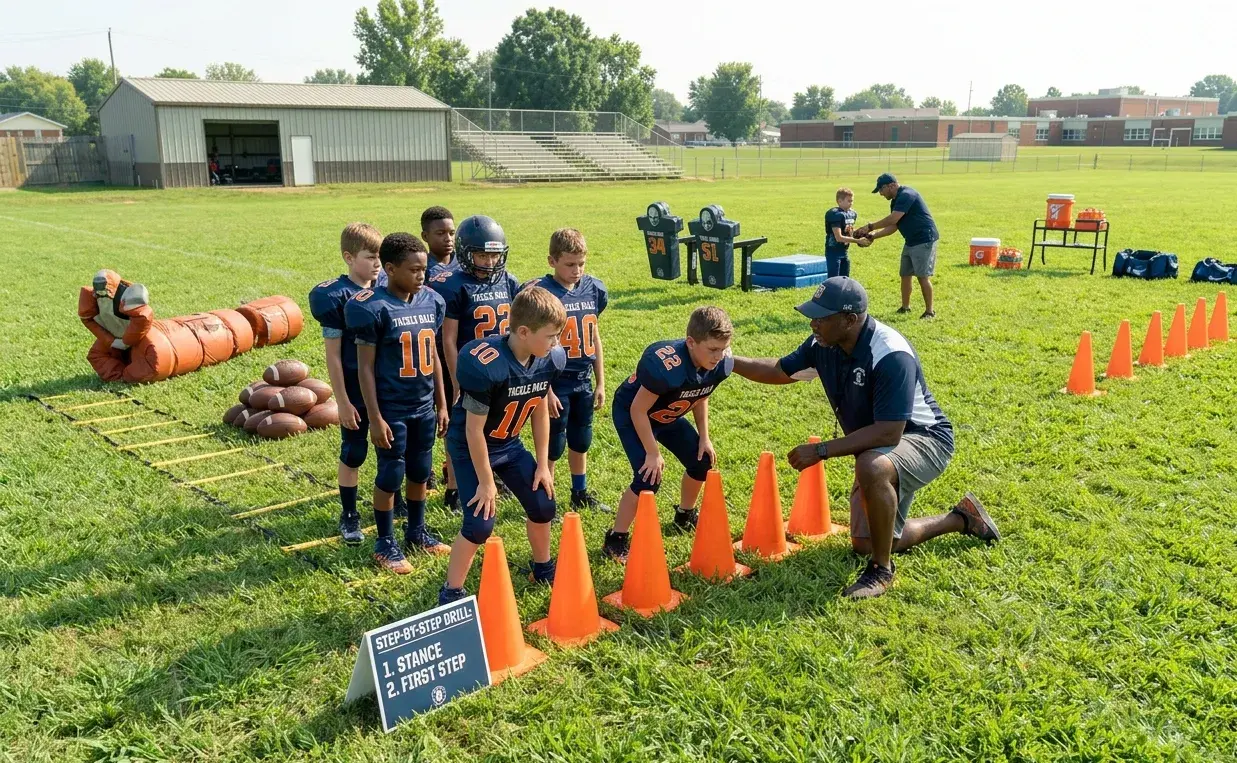
Football drills step by step sound simple. But for beginners, practice can feel confusing and overwhelming. I have seen young players stand still during drills because they did not understand what to do next and parents worry when practice looked too advanced. I have also seen new coaches struggle to organize drills clearly. The real problem is not effort. It is lack of structure.
When drills are not taught step by step, beginners lose confidence fast. They rush movements and build bad habits. Some even think they are not good at football. In reality, they just need clear instruction and progression. This guide gives you a simple system: learn the movement first, add speed second, and track progress third. Whether you are a beginner player, youth coach, or parent helping at home, this football drills step by step guide gives you a structure you can trust.
How to Use These Football Drills Step by Step
These drills follow a simple level system. Do not rush through them.
| Level | Focus | Goal |
|---|---|---|
| Level 1 | Form and balance | Learn correct technique |
| Level 2 | Controlled speed | Improve coordination |
| Level 3 | Game speed | Add pressure and reactio |
Master each level before moving forward.
Why Structured Football Drills Matter for Beginners
Many beginners practice hard but improve slowly. The reason is usually not effort. It is structure. When drills are done in random order or at full speed too early, players build bad habits. They focus on speed before learning balance and control.
Structured football drills step by step solve this problem. First, the player learns the correct movement. Then speed is added gradually. Finally, game pressure is introduced. This order protects technique and builds confidence. It also reduces injury risk because the body adapts step by step instead of rushing into high intensity drills.
In case of coaches, structure keeps practice organized. For parents, it makes training safer and easier to understand. if players, it creates steady progress that can be measured weekly.
Structured Warm-Up Routine (Start Every Session Here)
Never skip warm-up. It reduces injury risk and improves performance.
5–10 Minute Beginner Warm-Up
1. High Knees (20 yards)
- Stand tall
- Drive knees up
- Pump arms
2. Side Shuffle (20 yards each direction)
- Stay low
- Keep chest up
3. Backpedal (15 yards)
- Short quick steps
- Stay balanced
4. Arm Circles (20 seconds forward, 20 seconds backward)
5. Light Jog (1 minute)
If you are new, never skip this step, even during short home practice sessions.
Running Back Drills
Running back football drills step by step improve burst and control.
Lateral High Step & Go Drill
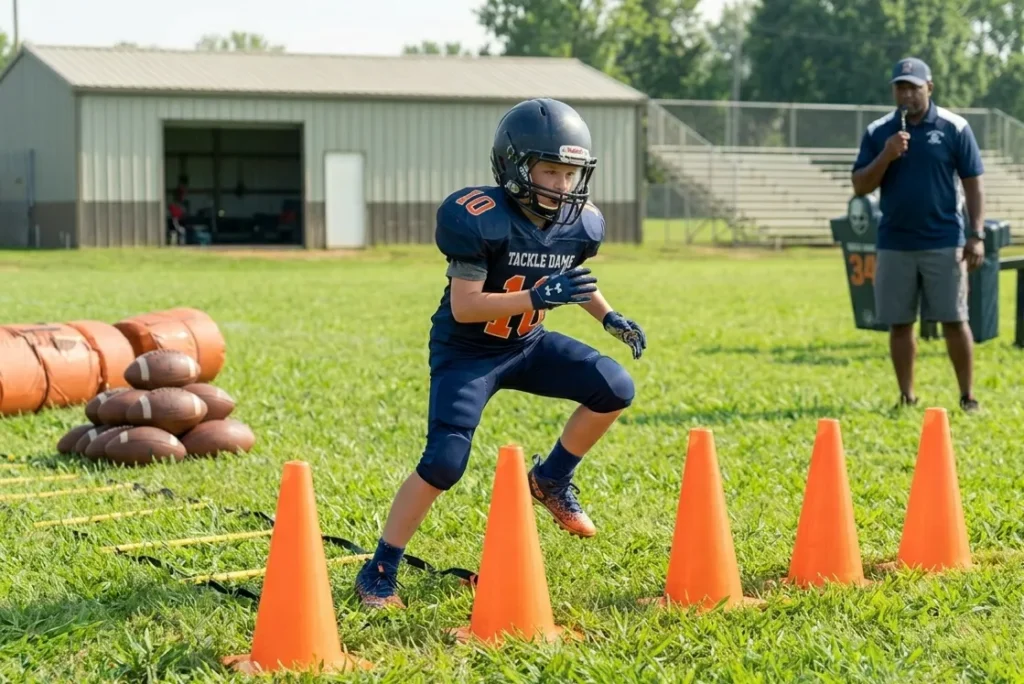
- Place cones in a line.
- High step laterally over cones.
- Stay low and balanced.
- Explode forward.
- Sprint 10 yards.
Reps: 5 rounds
Progression
- Level 1: Walk through slowly
- Level 2: Medium speed
- Level 3: Full speed while carrying football
Track 10-yard sprint time weekly.
Coach Cue:
Watch hip level. If hips rise too high, reset and slow down.
If You Are New:
Practice without the football until footwork feels smooth.
Motivation:
Improving your first 10 yards can help you stand out during team evaluations.
Quarterback Drills
Quarterback football drills step by step build accuracy and balance.
Quick Pass Drill
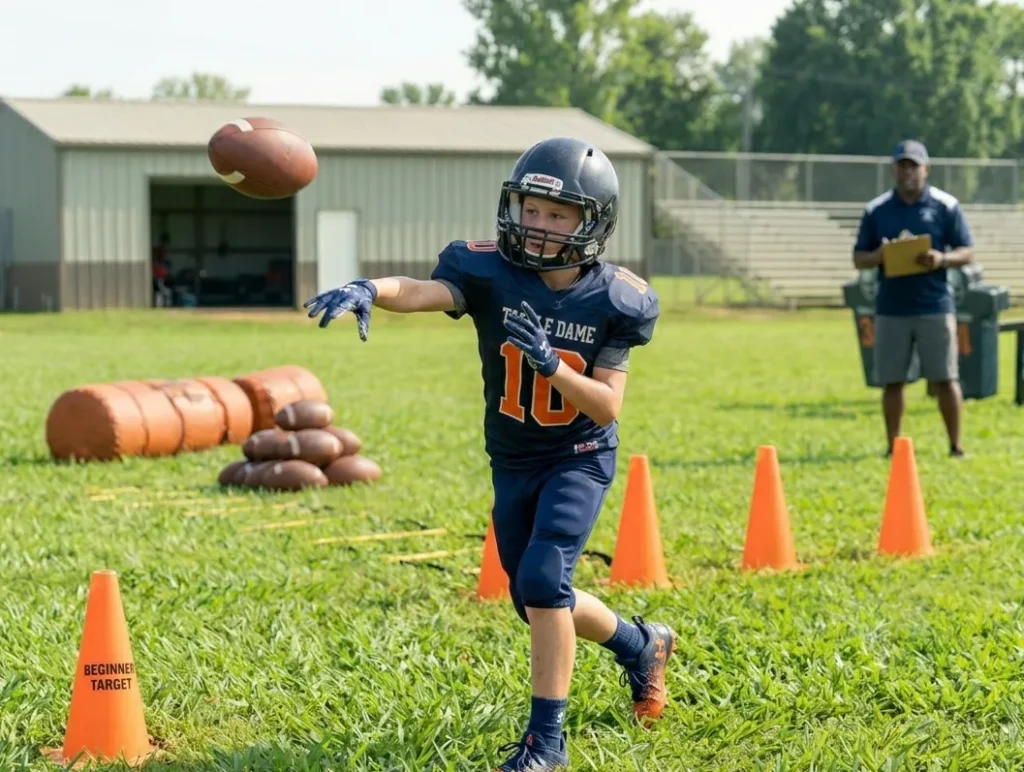
- Stand balanced.
- Take one quick step back.
- Snap wrist and throw.
- Aim at chest target.
- Reset quickly.
Track accurate throws out of 10.
Coach Cue:
Check that the front shoulder points toward the target before release.
If You Are New:
Focus on balance before trying to throw harder.
Motivation:
Consistent short accuracy builds trust with coaches faster than long throws.
3-Step Drop Drill
- Take three controlled steps back.
- Plant firmly.
- Deliver throw.
- Follow through fully.
Focus on foot placement and control.
Wide Receiver Drills
Wide receiver football drills step by step improve routes and hands.
Slant & Go Drill
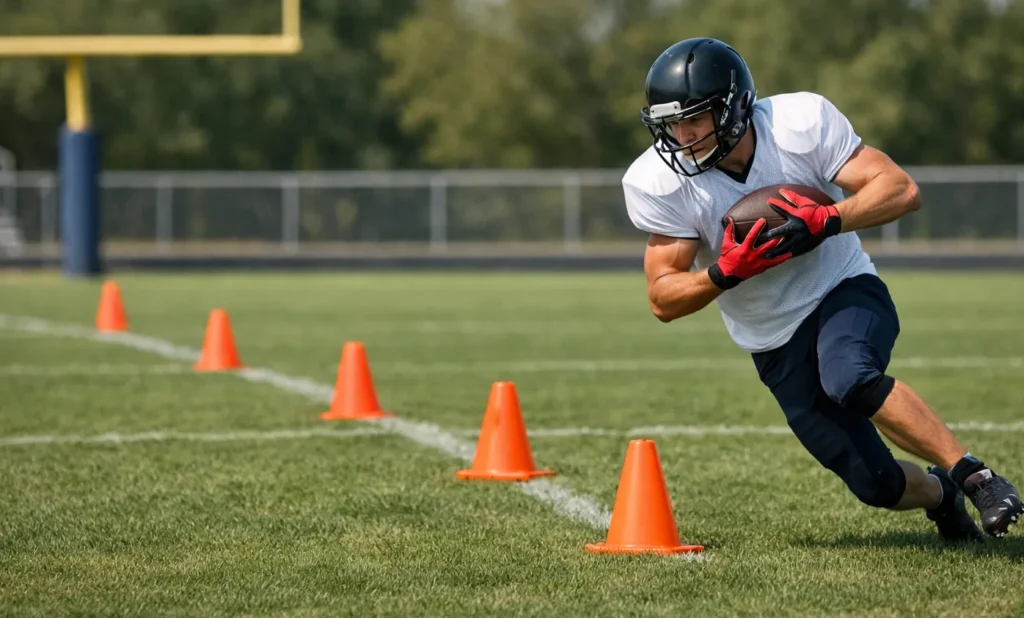
- Sprint 5 yards.
- Plant outside foot.
- Cut sharply inside.
- Accelerate forward.
- Catch pass in stride.
Track catch percentage each session.
Coach Cue:
Watch the plant foot. It should land under the body, not too wide.
If You Are New:
Practice the cut slowly before adding speed.
Offensive Line Drill
Line fundamentals build strong team performance.
Drive Block Drill
- Start in proper stance.
- Take short power step forward.
- Keep back flat.
- Drive forward 3 yards.
Coach Cue:
Keep the back flat and head up. Do not allow bending at the waist.
Parent Reassurance:
This drill focuses on body control and technique before adding contact.
Defensive Line Drill
Get-Off Reaction Drill
- Start in three-point stance.
- React to coach signal.
- Explode forward 5 yards.
Coach Cue:
Make sure players react to the signal and do not guess early.
If You Are New:
Master the stance before worrying about speed.
Linebacker Drill
Shuffle and Break Drill
- Shuffle laterally.
- React to signal.
- Break quickly toward direction.
Coach Cue:
Stay square to the line while shuffling.
Football Agility Drills
Back Pedal & Break
- Back pedal 5 yards.
- Plant foot on signal.
- Sprint forward.
Lateral Shuffle to Sprint
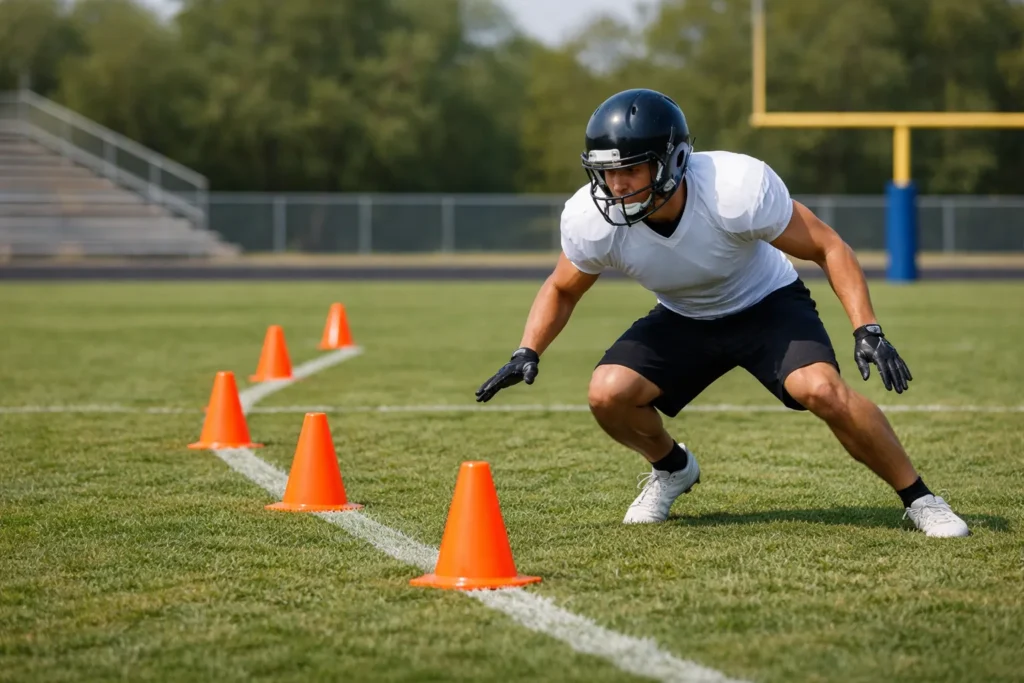
- Shuffle 5 yards.
- On signal, sprint forward.
Time this drill weekly.
Conditioning Drills
Conditioning football drills step by step build endurance safely.
Medicine Ball Shuttle
Use 4–6 lb ball for youth players.
- Sprint 10 yards with ball.
- Place ball down.
- Sprint back.
45-Yard Sprint Drill
- Lean slightly forward.
- Sprint 45 yards.
- Maintain posture.
Track sprint time weekly.
Motivation:
Improving sprint time over four weeks shows clear athletic growth.
Flag Pulling Drill (Non-Contact Option)
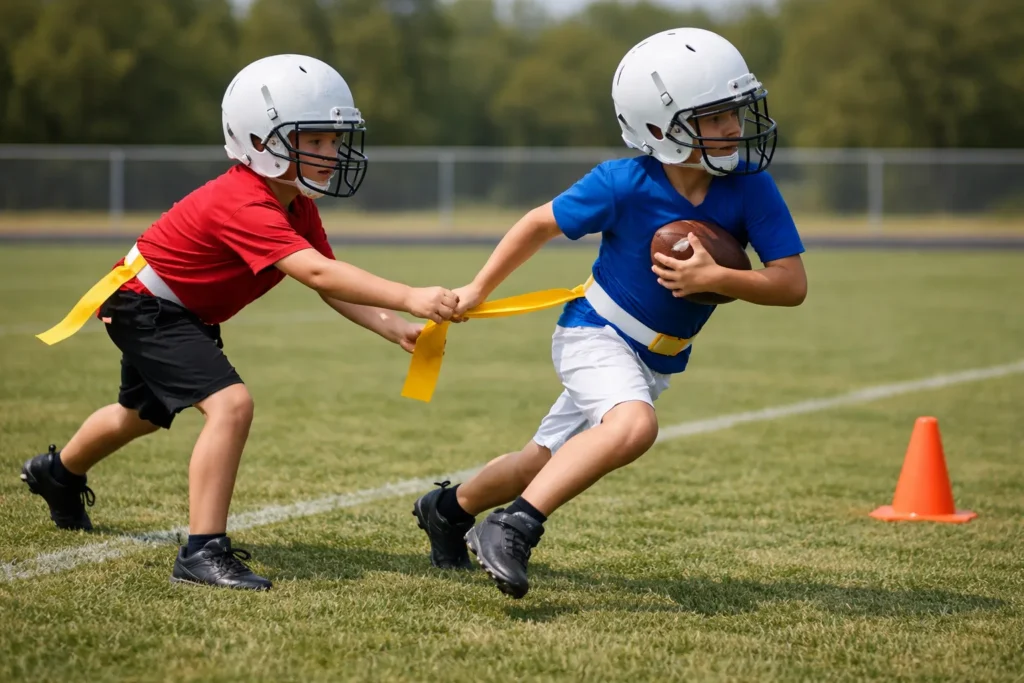
- Defender stands 5 yards away.
- Ball carrier moves forward.
- Defender pulls flag at hip level.
Parent Reassurance:
This drill teaches defensive control without full tackling contact.
How to Catch a Football
- Eyes on ball.
- Form triangle with hands.
- Catch with fingers.
- Secure ball to chest.
Practice 20 catches daily.
How to Throw a Football
- Grip laces.
- Step forward.
- Rotate hips.
- Snap wrist.
- Follow through.
How to Snap a Football
- Bend knees.
- Snap ball between legs.
- Stay balanced.
Repeat 15 times per set.
First Step Drill
- Start in ready stance.
- React to signal.
- Explode forward 5 yards.
Improves quickness for all positions.
30-Minute Beginner Practice Plan
- 5 min warm-up
- 5 min catching
- 5 min quarterback drill
- 5 min running back drill
- 5 min agility
- 5 min flag pulling
60-Minute Practice Plan
- 10 min warm-up
- 10 min catching and throwing
- 10 min quarterback drills
- 10 min wide receiver routes
- 10 min line drills
- 10 min team drill
Track your progress
| Week | Catch % | Throw Accuracy | 10-Yard Time | 45-Yard Time |
|---|---|---|---|---|
| Week 1 | ||||
| Week 2 | ||||
| Week 3 | ||||
| Week 4 |
Tracking builds confidence and steady improvement.
Common Beginner Mistakes
- Skipping warm-up
- Rushing to full speed
- Ignoring stance and balance
- Not tracking progress
- Practicing without supervision
Equipment Checklist
- Football
- Cones or markers
- Athletic shoes
- Water bottle
- Helmet and pads (for contact drills)
Safety Guidelines
- Always warm up first.
- Avoid head-first contact.
- Focus on technique before speed.
- Stop practice if pain occurs.
- Train under supervision.
Conclusion
After working with beginner players and youth teams, one thing is clear. Improvement does not come from random drills. It comes from structured repetition. The athletes who grow fastest are the ones who master basics step by step. Football drills step by step create that foundation. They help beginners build skill safely, give coaches a clear system, and give parents confidence. Stay patient, focus on form, track progress weekly, and improve one small step at a time. That is how beginners build strong fundamentals in American football.
