


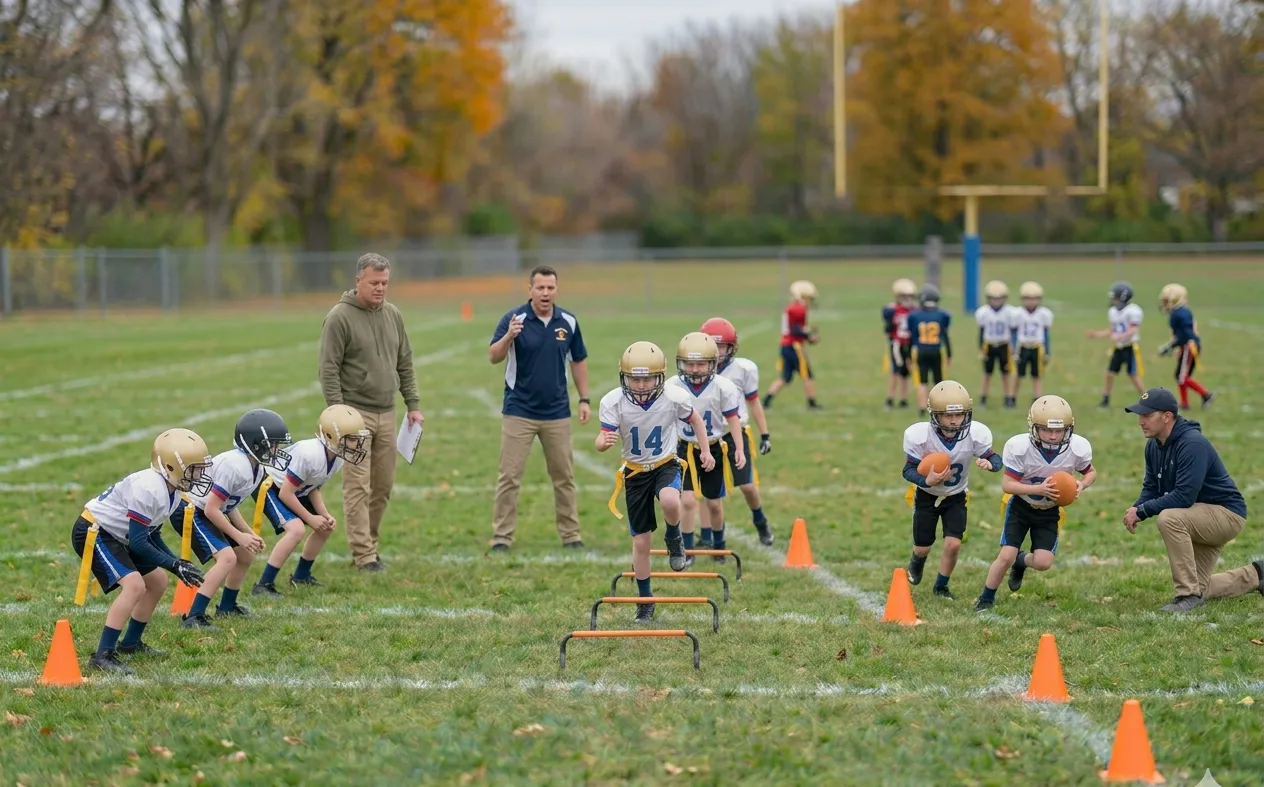
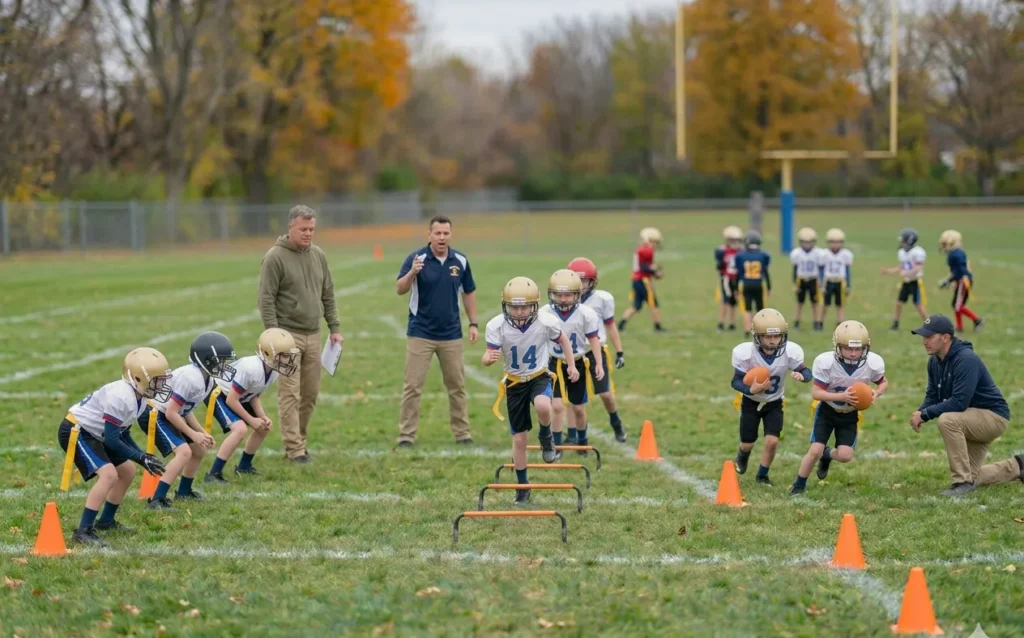
Many new players feel confused during their first football practices. They drop easy catches, struggle to throw the ball straight, or move too slowly during drills. This can be frustrating, especially for kids who are excited to learn the game. Parents and beginner coaches often face the same problem. They want to help young players improve but are unsure which drills actually build the right skills.
After watching many youth practices and beginner training sessions, one thing becomes clear. Players improve much faster when they start with simple drills that focus on fundamentals. Skills like footwork, catching, and ball control are the base of every good football player.
In this guide, you will learn practical football drills for beginners that help build strong fundamentals. These drills are easy to follow and work well for youth players, parents helping kids practice, and beginner coaches planning team training.
Key Takeaways
- Beginner players should focus on footwork, catching, and ball control.
- Simple drills build strong football fundamentals.
- Practice sessions should include warm-ups, agility drills, passing, and catching.
- Short practice sessions done regularly improve skills faster.
- Safety and correct technique are important for youth players.
Essential Skills Every Beginner Football Player Must Learn
Before starting drills, it helps to understand the basic football skills.
Footwork
Good footwork helps players move quickly and stay balanced.
Catching
Receivers should catch the ball using their hands.
Throwing
Quarterbacks must throw the ball with control and accuracy.
Ball Security
Running backs must protect the football while running.
Agility
Agility helps players change direction quickly during play
The chart below shows how different drills help beginner players develop important football skills.
| Skill | Example Drill | Why It Helps |
|---|---|---|
| Footwork | Ladder Drill | Improves quick movement and balance |
| Agility | 4-Corner Cone Drill | Helps players change direction quickly |
| Catching | Hand Catch Drill | Builds strong catching technique |
| Passing | Target Passing Drill | Improves throwing accuracy |
| Ball Security | High-and-Tight Carry Drill | Teaches players how to protect the football |
Warm-Up Football Drills for Beginners
High Knees Drill
Steps
- Stand straight
- Start jogging slowly
- Lift each knee to waist height
- Move forward while doing the drill
This drill improves coordination and speed.
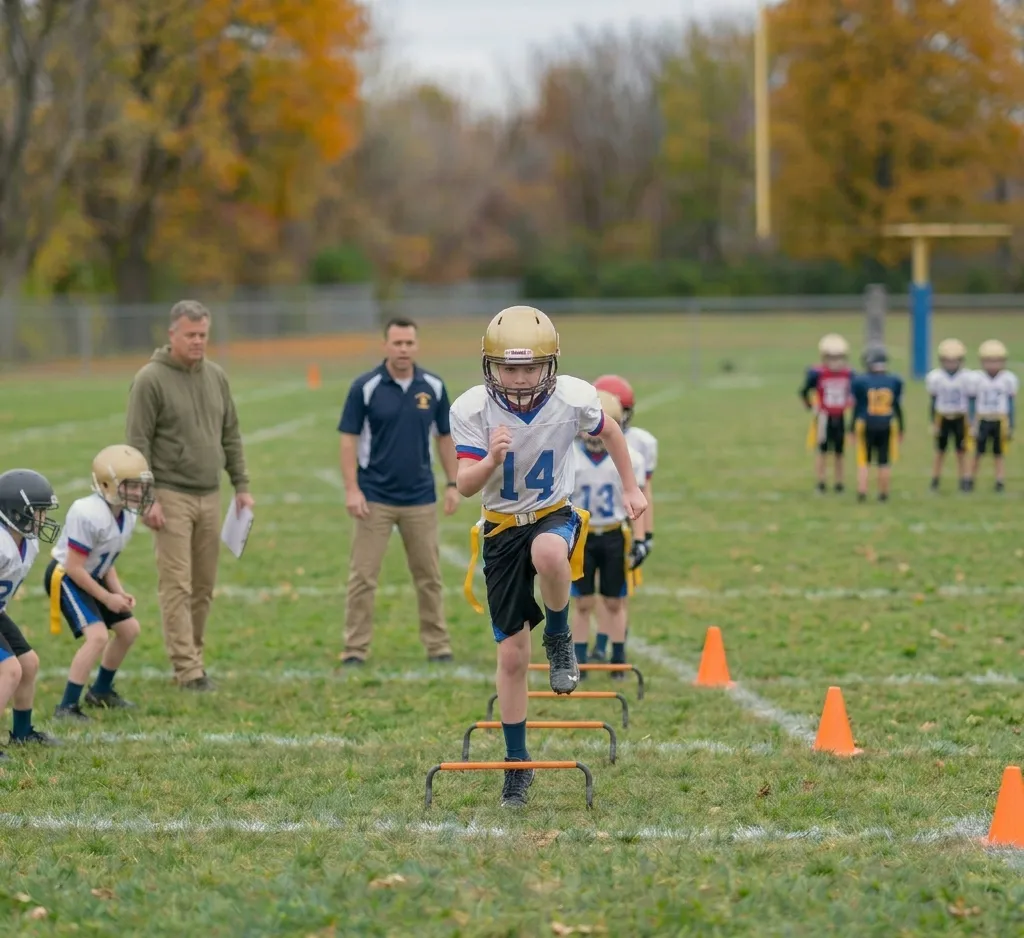
Quick Feet Ladder Drill
Steps
- Place a ladder on the ground
- Step quickly into each square
- Keep your feet light and fast
Beginner players should focus on technique before speed. Proper footwork and catching form help players improve faster during early training.
Agility Football Drills for Beginners
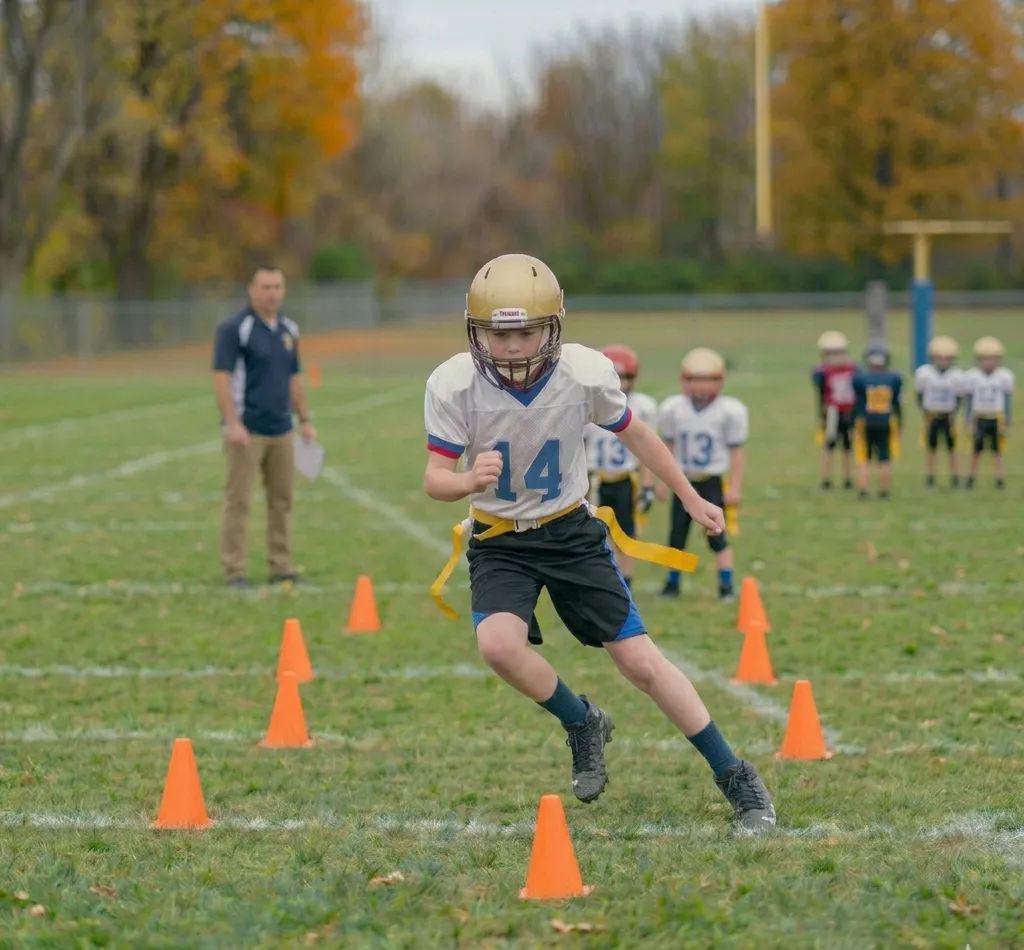
4-Corner Cone Drill
Steps
- Place four cones in a square
- Sprint from one cone to another
- Change direction at each cone
Zig-Zag Cone Drill
Steps
- Place cones in a zig-zag line
- Run around each cone
- Keep steps short and controlled
Passing and Throwing Drills for Beginners
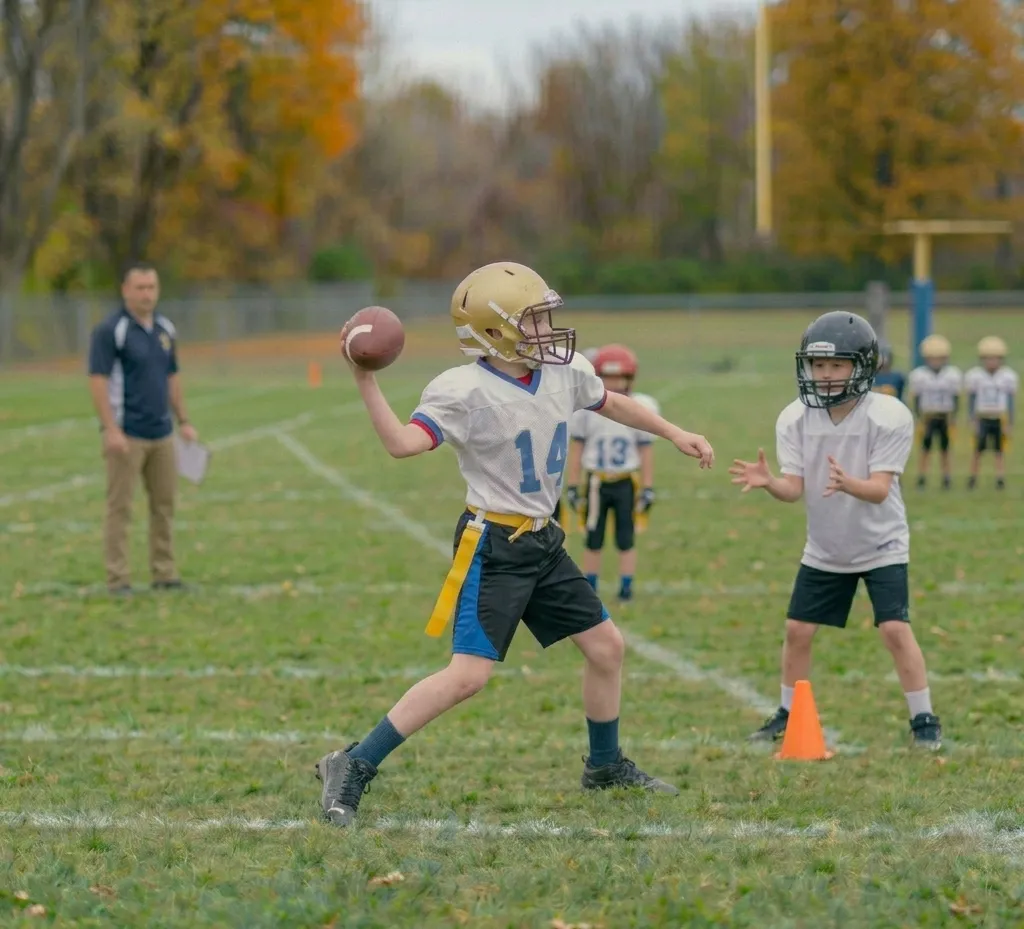
One-Knee Throwing Drill
Steps
- Kneel on one knee
- Hold the football correctly
- Throw the ball to your partner
This drill improves throwing form.
Target Passing Drill
Steps
- Place a cone as a target
- Throw the ball toward the cone
- Focus on accuracy
Catching Drills for Beginners
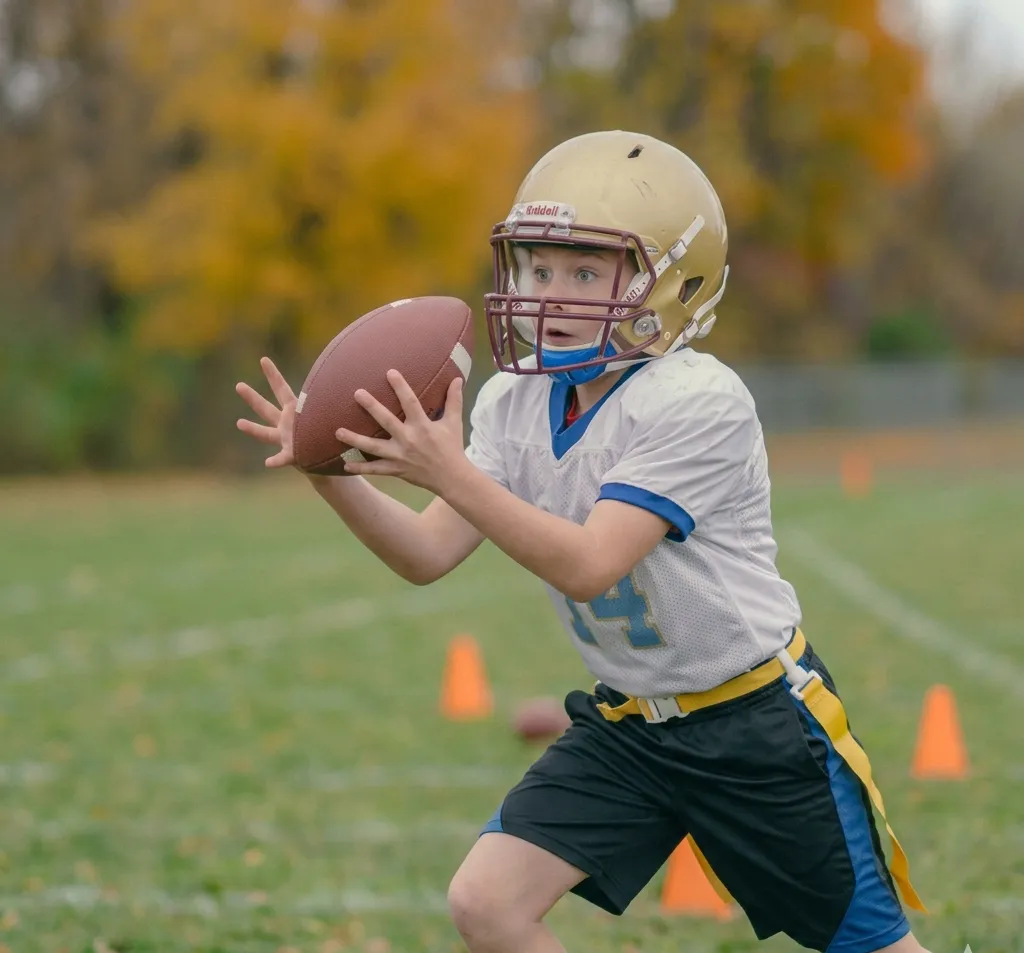
Hand Catch Drill
Steps
- Face your partner
- Keep your hands open
- Catch the ball using your fingers
- Bring the ball to your chest
Over-Shoulder Catch Drill
Steps
- Run forward
- Look over your shoulder
- Catch the ball while running
Ball Security Drill
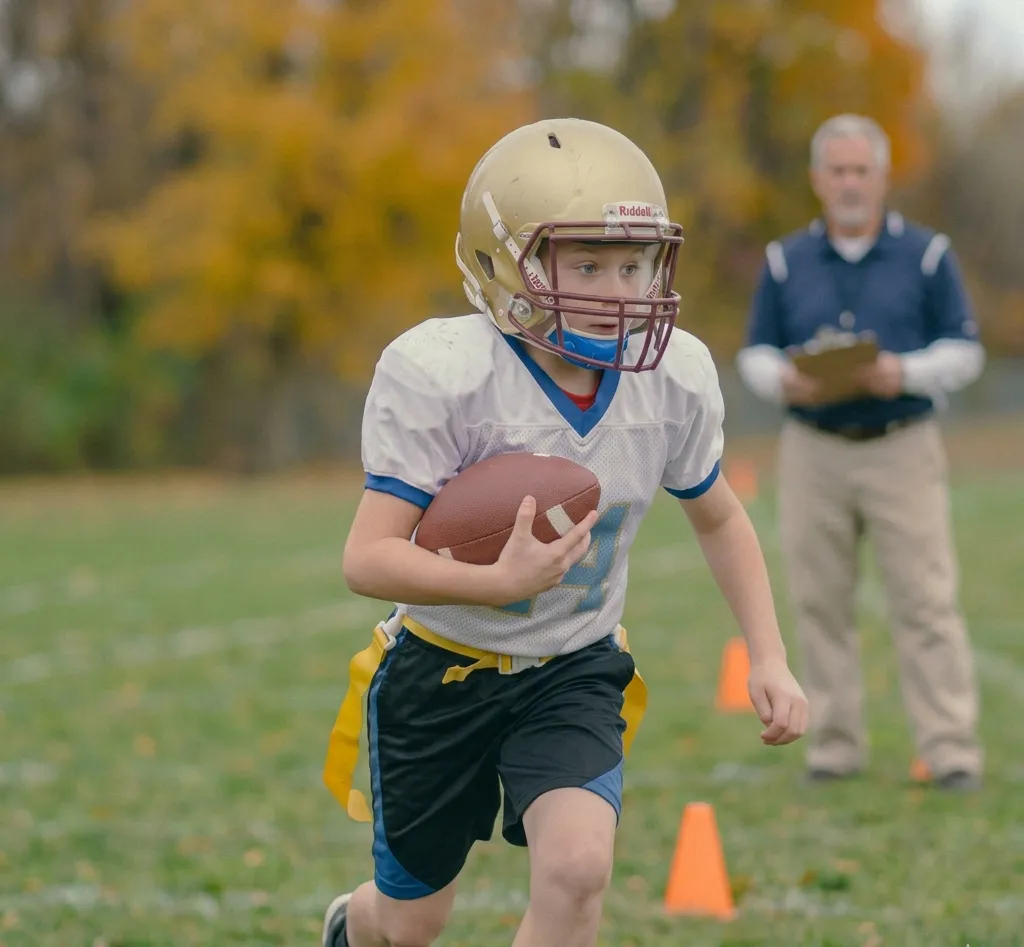
High-and-Tight Carry Drill
Steps
- Hold the football close to your chest
- Keep the elbow tight
- Cover the front of the ball
This helps prevent fumbles.
Beginner Football Drills by Position
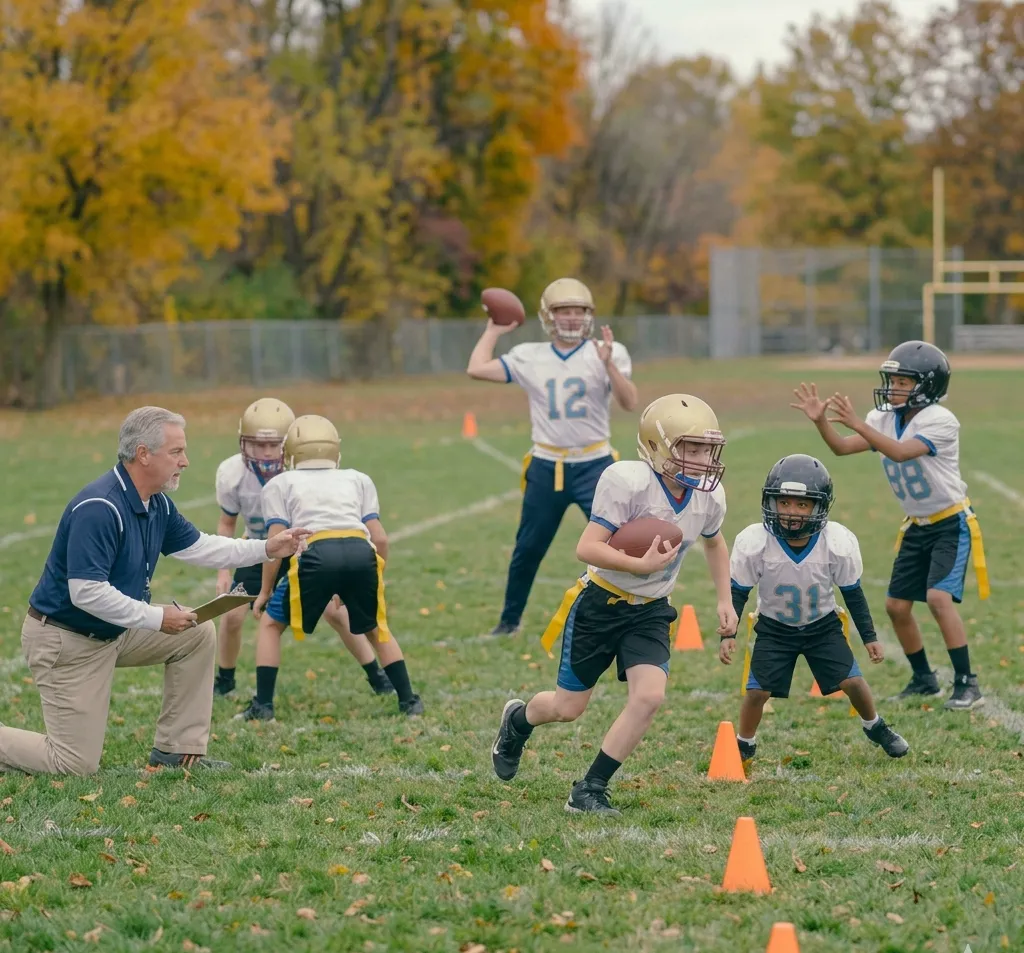
Quarterback Drills
Under Center Snap Drill
Steps
- Stand behind the center
- Place hands under the center
- Receive the snap
3-Step Drop Drill
Steps
- Take three steps backward
- Plant your feet
- Throw the ball
Running Back Drill
Cone Cut Drill
Steps
- Run toward the cones
- Cut quickly around each cone
Wide Receiver Drill
Route Running Drill
Steps
- Run forward
- Cut at the cone
- Catch the pass
Blocking Drills for Beginners
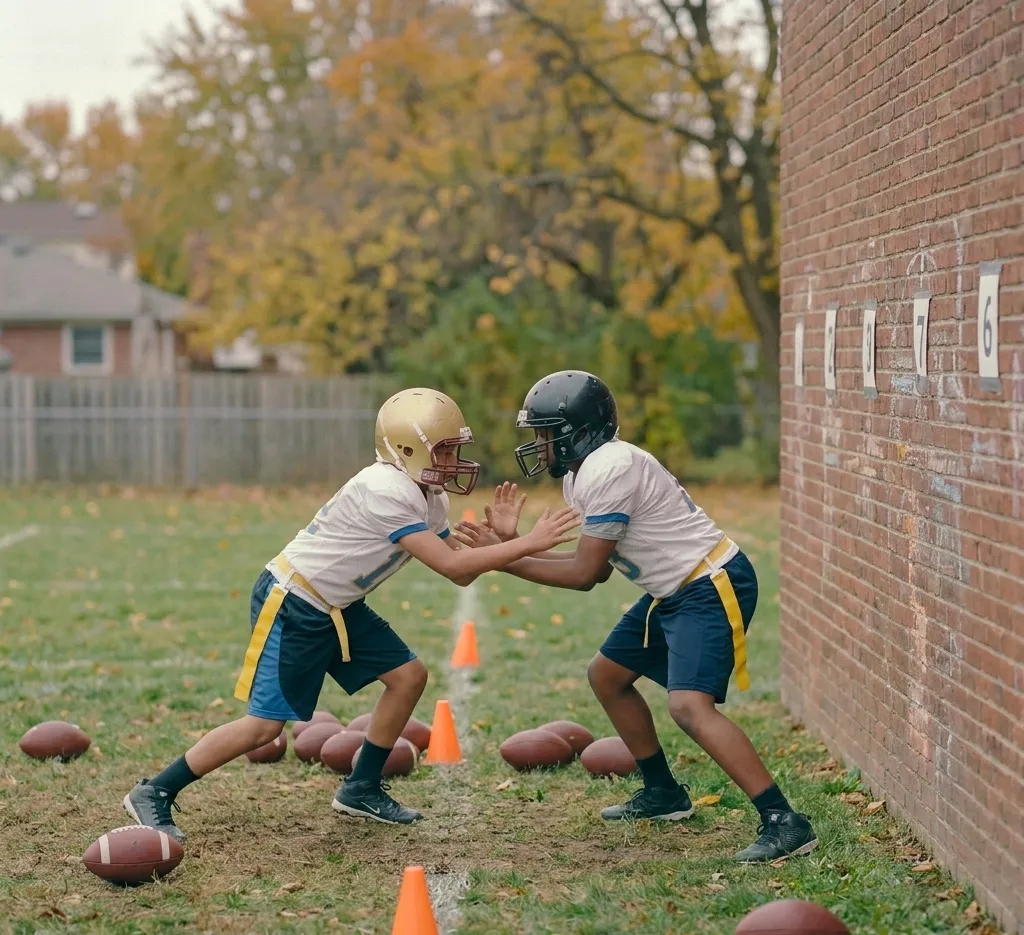
Basic Drive Block Drill
Steps
- Start in a low stance
- Keep your back straight
- Push forward using your legs
Tackling Drill for Beginners
Form Tackling Drill
Steps
- Keep your head up
- Wrap arms around the opponent
- Drive forward using your legs
Football Drills Beginners Can Practice Alone
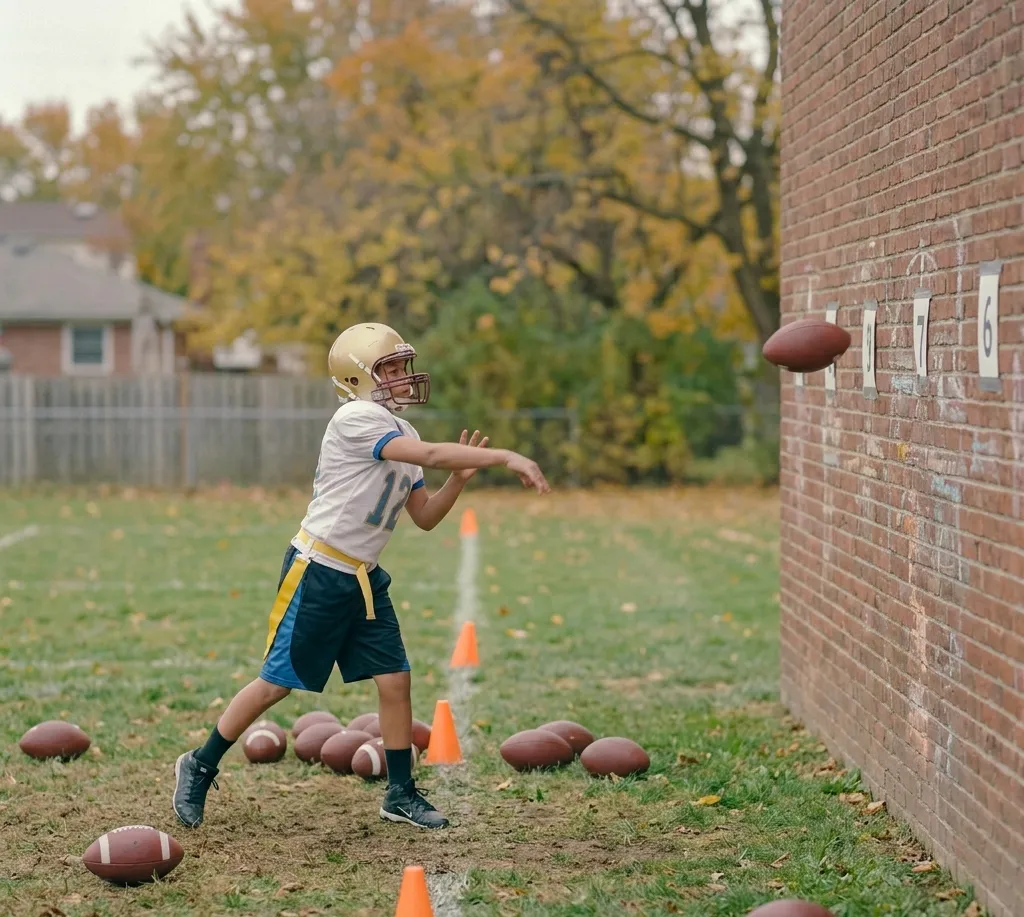
Wall Passing Drill
Throw the ball against a wall and catch it.
Footwork Ladder Drill
Practice fast foot movement.
Reaction Ball Drill
Drop a reaction ball and catch it after the bounce.
30 Minute Beginner Practice Plan
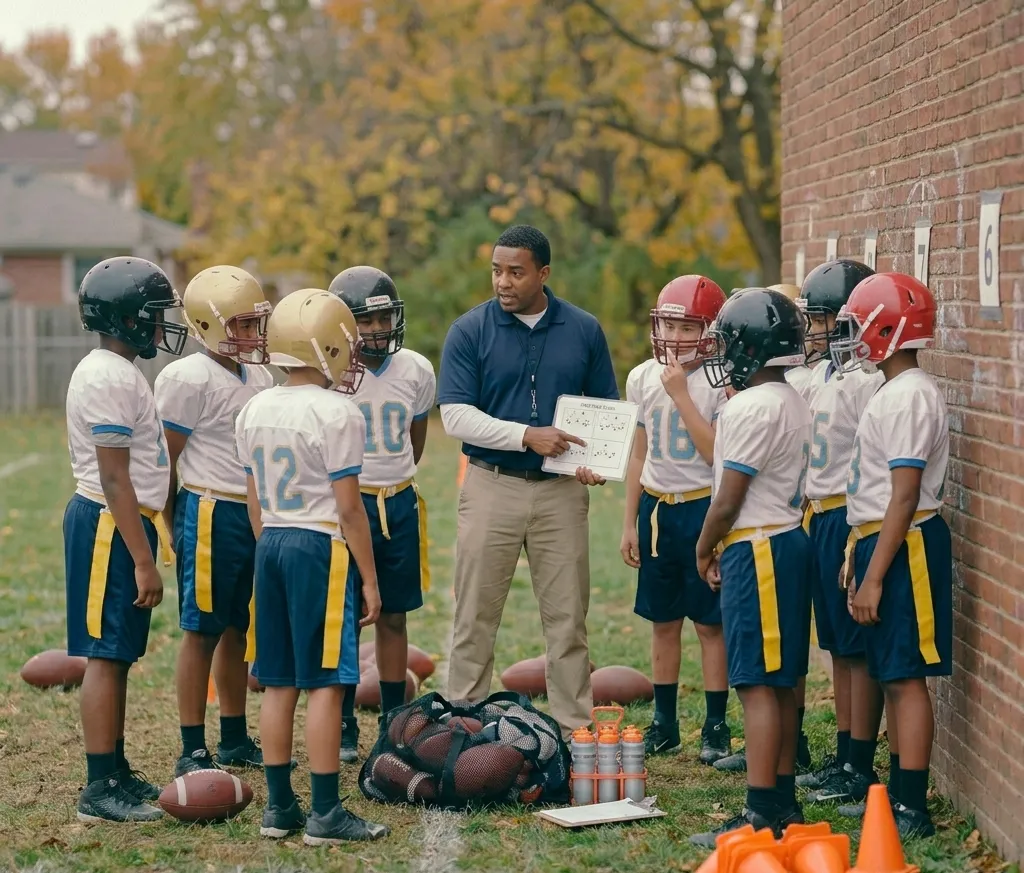
30-Minute Beginner Practice Plan
This simple practice plan helps beginner players practice important football skills in a short training session.
| Time | Practice Activity |
|---|---|
| 5 minutes | Warm-up drills such as high knees and ladder footwork |
| 10 minutes | Agility drills including cone drills and quick movement practice |
| 10 minutes | Passing drills such as one-knee throws and target passing |
| 5 minutes | Catching drills like hand catches and over-shoulder catches |
Weekly Beginner Practice Plan
The table below shows an example weekly practice schedule for beginner football players.
| Day | Focus Area |
|---|---|
| Day 1 | Footwork and agility drills |
| Day 2 | Passing drills and catching practice |
| Day 3 | Ball security drills and running drills |
| Day 4 | Complete beginner practice routine |
Common Beginner Football Mistakes
- Watching the ball late
- Slow foot movement
- Weak ball protection
- Poor throwing technique
Equipment Needed for Football Drills
- Football
- Cones
- Agility ladder
- Training markers
Safety Tips for Beginner Football Training
- Start slowly
- Focus on proper form
- Drink water regularly
- Avoid hard contact drills early
Conclusion
Learning football takes time and consistent practice. Many beginner players struggle during their first practices because they are still learning the basics. This is completely normal. With simple drills and regular training, players improve step by step.
From experience in youth training environments, drills that focus on fundamentals always produce the best results. Footwork drills improve movement, catching drills build confidence, and ball security drills teach players how to protect the football during games.
When beginners practice these drills regularly and focus on proper technique, they develop stronger skills and better confidence on the field. Over time, these simple drills help young players grow into more complete football athletes.
What are the best football drills for beginners?
The best football drills for beginners focus on basic skills like footwork, catching, and passing. Simple drills such as ladder drills, cone drills, and hand catching drills help new players build strong fundamentals.
How often should beginners practice football drills?
Beginners should practice football drills about three to four times per week. Short practice sessions with simple drills help players improve faster without feeling tired.
Can beginners practice football drills at home?
Yes, beginners can practice many football drills at home. Drills like wall passing, footwork ladder drills, and reaction drills help improve skills even without a team.
What skills should beginner football players focus on first?
Beginner football players should focus on basic skills such as catching, passing, footwork, and ball control. These skills are important for all positions in football.
Are football drills safe for young players?
Yes, football drills are safe for young players when done correctly. Beginners should start with simple drills, use proper technique, and avoid hard contact drills early in training.
What equipment is needed for beginner football drills?
Beginner football drills need simple equipment such as a football, cones, and an agility ladder. These tools help players practice different drills and improve their skills.
How long should a beginner football practice session be?
A beginner football practice session should be around 20 to 30 minutes. Short sessions help players stay focused and improve skills step by step.
