


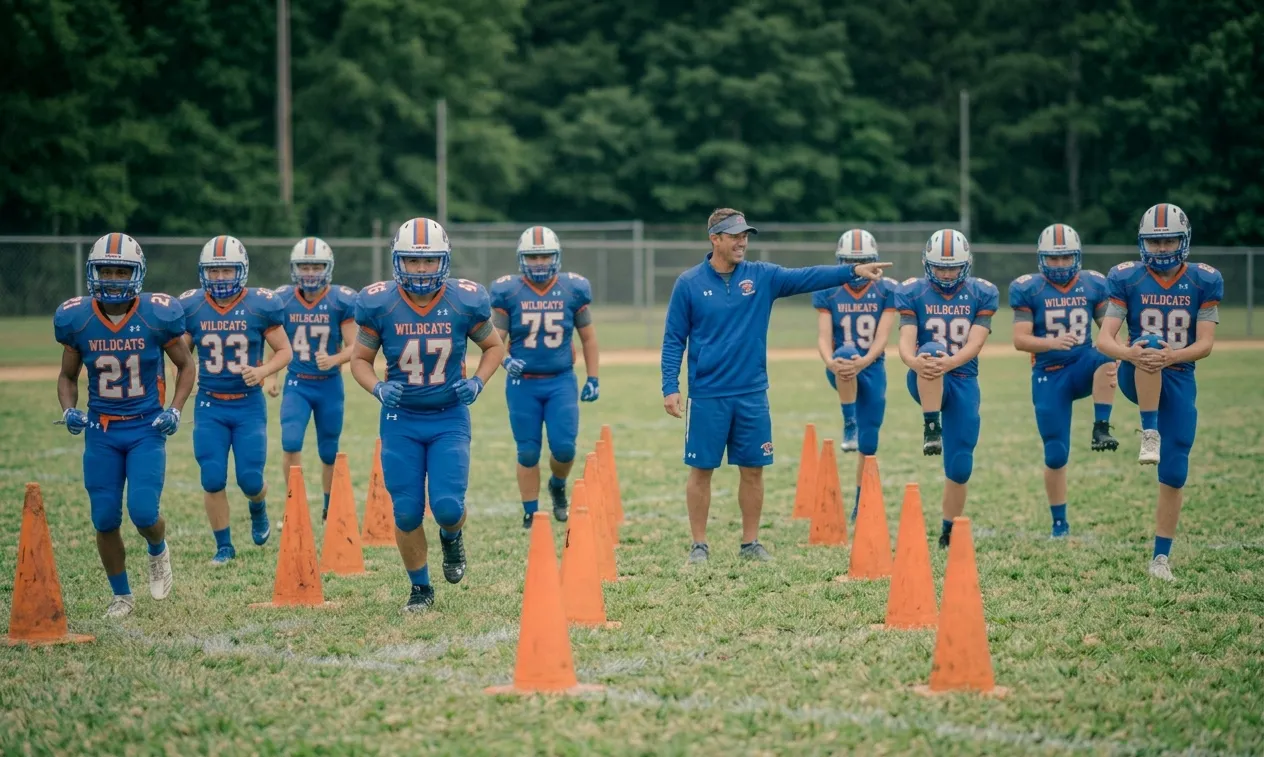
Introduction
Starting football can feel confusing, especially when no one explains the basics clearly. Many beginners jump straight into drills without knowing how to prepare their body. They feel tired too quickly, struggle with movement, or even get small injuries in the first few sessions. This is where most players go wrong. Football warmup and conditioning drills for beginners is often ignored, but it is the main reason why some players improve fast while others fall behind.
From what I have seen while working with new players, the biggest problem is not effort, it is lack of structure. Beginners try hard, but without a simple plan, they waste energy and lose confidence. Once they start following a proper warm-up and conditioning routine, everything changes. They move better, last longer in practice, and feel more in control. That is exactly what this guide will help you do.
Quick Takeaways
- Warmup prepares your body before football
- Conditioning builds speed, strength, and stamina
- Follow a simple 10–15 minute routine
- Start slow and increase intensity step by step
- Stay consistent to see results
What are Football Warmup and Conditioning drills for Beginners
A football warmup prepares your body before practice. It increases blood flow and loosens your muscles.
Conditioning builds fitness for football. It improves speed, strength, and stamina.
Simple difference:
| Warm-Up | Conditioning |
|---|---|
| Prepares your body | Builds fitness |
| Short duration | Longer sessions |
| Low intensity | Medium to high intensity |
Why Warmup and Conditioning Matter in Football
Warmup and conditioning are important for every beginner.
- Reduce injury risk
- Improve speed and movement
- Help muscles work better
- Increase focus and reaction time
Skipping warmup can lead to muscle strain or poor performance.
Football Warm-Up Flow
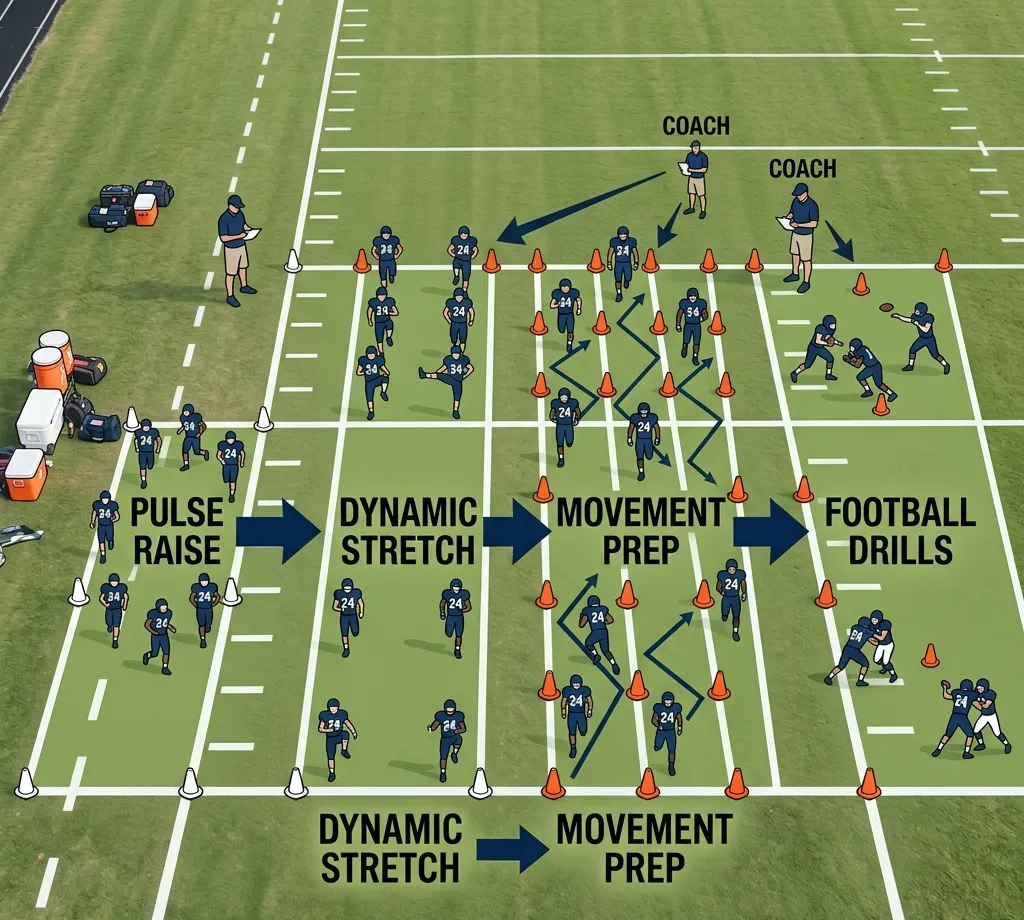
Pulse Raise → Dynamic Stretch → Movement Prep → Football Drills
Dynamic Warm Up for Football
A good warm-up follows a clear order. Do not rush. Move step by step. Start slow and build your speed.
Pulse Raising Activities (2–3 minutes)
- Light jogging
- Jumping jacks
- Arm circles
Goal: Increase your heart rate slowly.
Dynamic Stretching Exercises (3–5 minutes)
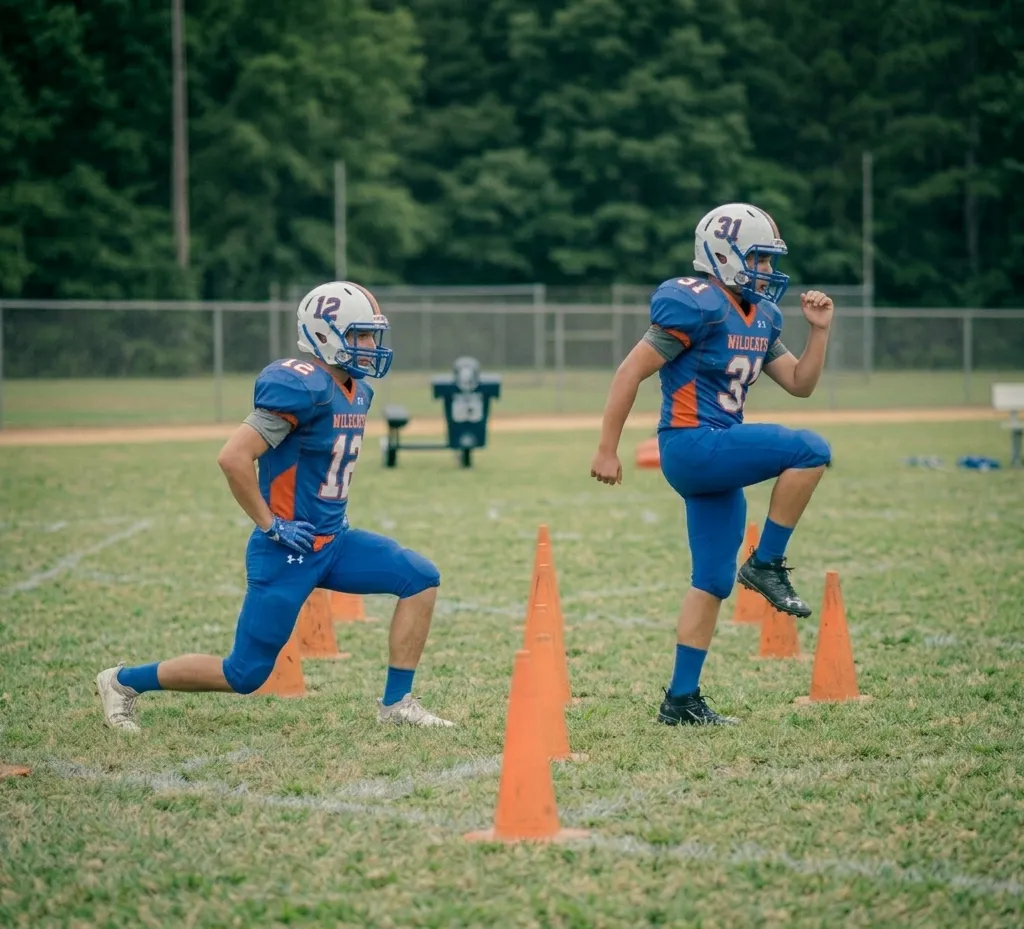
- Walking lunges
- High knees
- Leg swings
- Butt kicks
Avoid static stretching here.
Movement Preparation Drills (3–5 minutes)
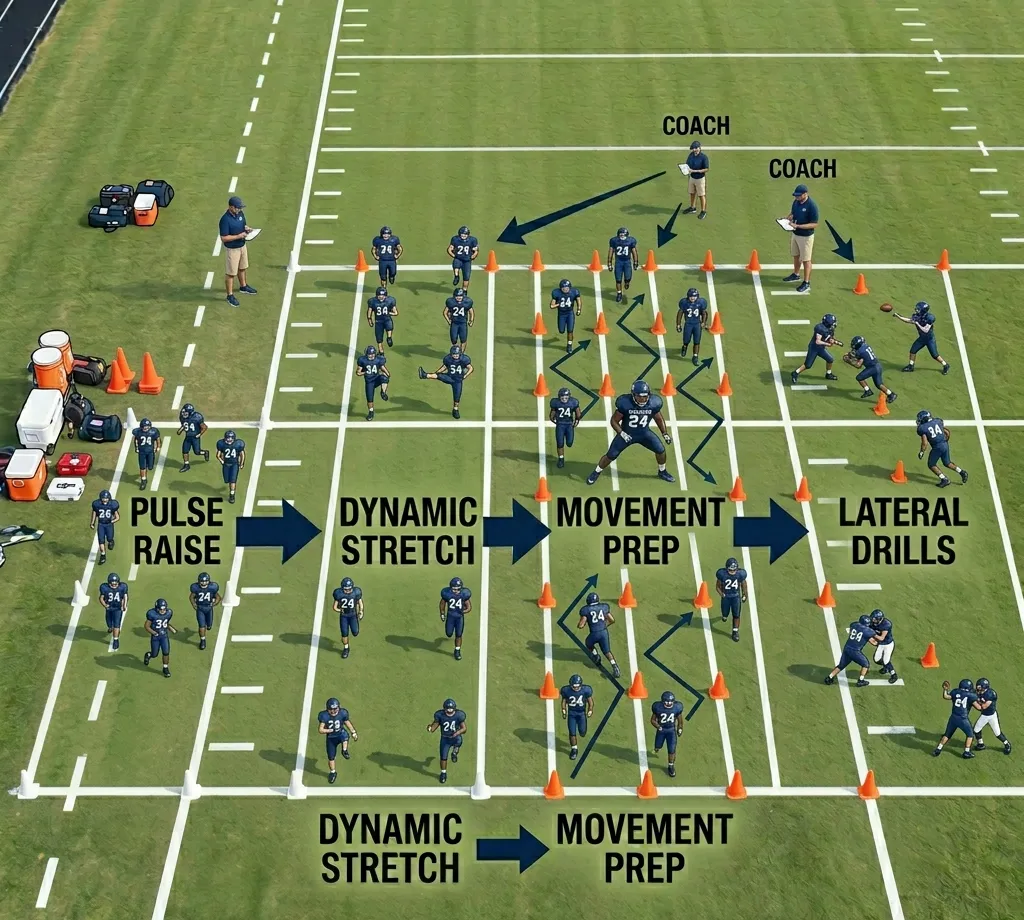
- Side shuffle
- Backpedal
- Short acceleration runs
Focus on control before speed.
Football Specific Warm Up Drills (3–5 minutes)
- Quick start from stance
- Short route running
- Reaction drills
Position focus:
- Linemen: explosive starts
- Wide receivers: route work
- Defense: backpedal and react
Football Speed Drills for Beginners
Now that your body is ready, move to speed training.
Acceleration Drills

- 10–20 yard sprints
- Explosive starts
4–6 reps, 30–60 sec rest
Agility Drills
- Cone drills
- Ladder drills
Change of Direction Drills
- Zig-zag runs
- Shuttle runs
Reaction Drills
- Partner signal drills
- Ball drop drills
Football Conditioning drills for Beginners (Simple Breakdown)
After speed drills, build your fitness.
Speed Conditioning
- 5–8 sprint reps
- 30–60 sec rest
Agility Conditioning
- 3–5 rounds
- 45–60 sec rest
Endurance Conditioning
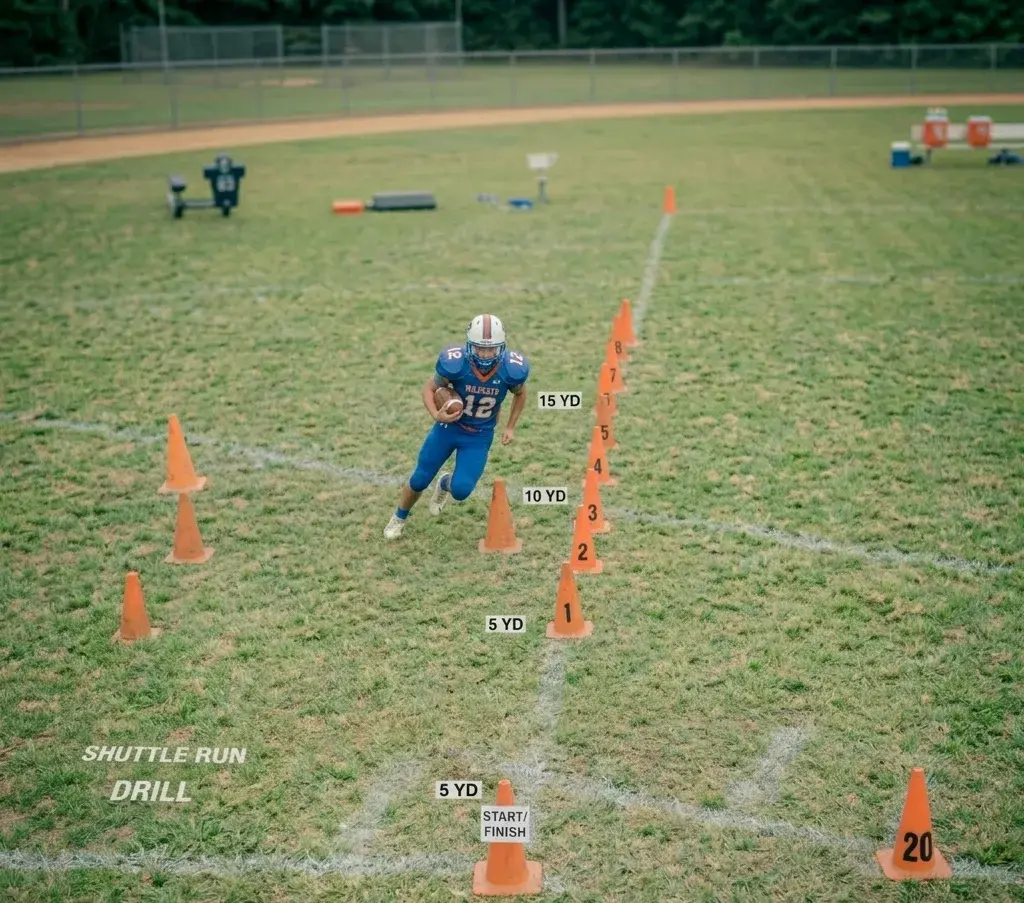
- Shuttle runs
- Interval runs
Strength Conditioning
- Squats
- Push-ups
- Lunges
15-Minute Football Warmup and Conditioning Plan
| Time | Activity |
|---|---|
| 0–3 min | Pulse raising |
| 3–7 min | Dynamic stretching |
| 7–11 min | Movement drills |
| 11–15 min | Football drills |
Use this before practice or games.
| Situation | What to Do |
|---|---|
| Before practice | Follow full 15-minute routine |
| Before game | Do shorter version (10 minutes) |
| At home | Use warmup + conditioning drills |
| Limited time | Do quick warmup only |
Beginner Progression Plan (Week 1–4)
- Week 1: Learn basic warmup
- Week 2: Add light speed drills
- Week 3: Increase reps
- Week 4: Combine full routine
Recommended Sets and Reps for Beginners
| Drill | Reps | Rest |
|---|---|---|
| Sprint | 5–8 | 30–60 sec |
| Shuttle | 4–6 | 45–60 sec |
| Agility | 3–5 rounds | 60 sec |
Common Mistakes Beginners Make
- Skipping warmup
- Starting too fast
- No rest
- Poor form
Safety Tips for Beginners
- Stay hydrated
- Wear proper shoes
- Take breaks
- Stop if you feel pain
Football Warmup Without Equipment
- High knees
- Short sprints
- Bodyweight drills
How Coaches Can Use This Plan
- Divide players into groups
- Keep drills simple
- Follow timing
- Rotate drills
Before You Start Training
- Did you warm up properly?
- Are you starting slow?
- Do you have water ready?
- Are you following the plan?
Conclusion
If you are new to football, keep things simple and focus on the basics. I have seen beginners improve quickly just by fixing their warm-up and conditioning. When they follow a clear routine, they stop feeling lost and start seeing real progress. Their speed gets better, their stamina improves, and they feel more confident during practice and games.
The key is consistency, not complexity. You do not need advanced drills in the beginning. You need a plan that you can follow every time you train. Stick to this routine, listen to your body, and build step by step. Over time, these small efforts will turn into strong performance on the field.
FAQS
What are football warmup and conditioning drills for beginners?
Football warmup and conditioning drills for beginners means preparing your body before practice and building fitness over time. Warmup gets your muscles ready, while conditioning improves speed, strength, and stamina.
How long should a football warmup be for beginners?
A football warmup should be around 10 to 15 minutes. This gives enough time to raise your heart rate, stretch your muscles, and prepare for drills safely.
What are the best football warmup drills for beginners?
The best football warmup drills for beginners include high knees, lunges, leg swings, backpedal drills, and short sprints. These drills improve movement and reduce injury risk.
What are football conditioning drills for beginners?
Football conditioning drills for beginners include sprint runs, shuttle runs, cone drills, and bodyweight exercises. These drills help improve speed, endurance, and strength.
Can beginners do football conditioning every day?
Beginners should not do conditioning every day. Training 3 to 4 times per week with rest days in between is better for recovery and performance.
What is the difference between warmup and conditioning in football?
Warmup prepares your body before training and uses light movements. Conditioning builds your fitness and uses more intense drills over time.
How can I improve football conditioning drills fast as a beginner?
To improve football conditioning drills fast, stay consistent, increase reps slowly, and combine speed, agility, and endurance drills in your routine.
Do you need equipment for football warmup drills?
No, beginners can do many football warmup drills without equipment. Simple drills like jogging, high knees, and bodyweight exercises work well at home.
Is warmup important before football practice?
Yes, warmup is very important before football practice. It helps prevent injuries, improves performance, and prepares your body for intense movement.
What is a simple football warmup routine for beginners?
A simple football warmup routine includes light jogging, dynamic stretching, movement drills, and short football actions. This can be done in 10 to 15 minutes.
