



Introduction
Football trench drills for beginners are the key to winning at the line of scrimmage. But here’s what most new players face. You step on the field, the ball snaps, and you feel slow. You get pushed back. Your hands are out of place. You lose balance in seconds. It feels frustrating because you are trying, but nothing works.
I have seen this many times with beginner players and young teams. The problem is not effort. The problem is missing basics like pad level, hand placement, and first step reaction. Once these are fixed, everything starts to improve. In this guide, you will learn simple trench drills, clear steps, and real coaching tips that actually work for beginners, parents, and coaches.
Key Takeaways
- Trench drills improve line of scrimmage skills
- Low pad level and hand placement are key
- Both offensive and defensive players benefit
- Simple drills can improve performance fast
- Consistent practice gives the best results
What Are Football Trench Drills for Beginners?
Trench drills are practice exercises for players who play close to the line of scrimmage. This includes:
- Offensive linemen (blocking)
- Defensive linemen (stopping plays)
These drills focus on:
- Strength and control
- Hand placement
- Leverage
- Quick reaction
Why Trench Drills Matter for Beginners
Beginner players often make the same mistakes:
- Standing too high
- Poor hand use
- Slow reaction
- Losing balance
Trench drills fix these problems. They help you:
- Stay low with good pad level
- Win first contact
- Control your opponent
- Improve blocking and pass rush
Key Fundamentals of football trench drills
Before drills, you must understand these basics.
Stance
Keep your feet shoulder-width apart with a slight stagger. Put more weight on your front foot. Stay balanced and ready to move.
Leverage
Low player wins. Bend your knees and keep your hips down.
Pad Level
Stay low. Do not stand straight. Low pad level gives you more control.
Hand Placement
Strike your hands inside the chest plate of the opponent. Keep your hands tight and strong.
Types of Football Trench Drills
Get-Off and Reaction Drills
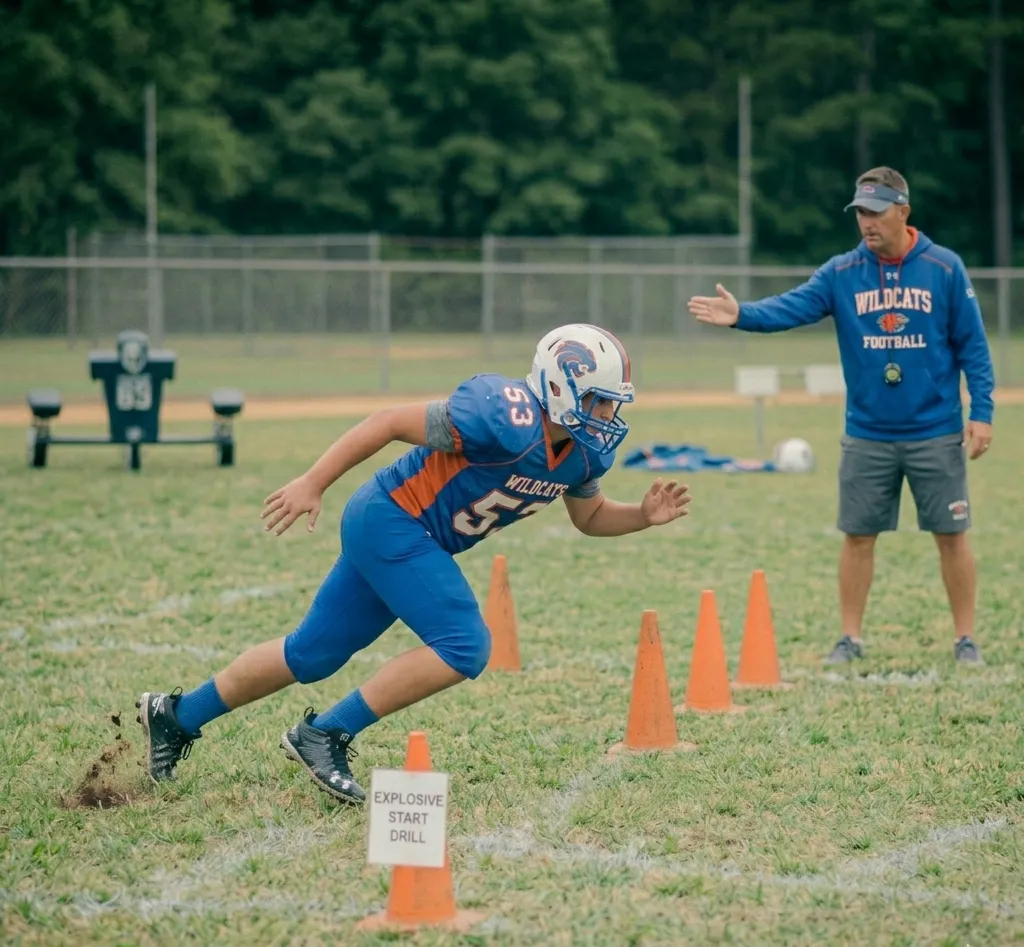
Improve your first step and quickness.
Hand Fighting Drills

Teach how to control or escape blocks using your hands.
Leverage and Pad Level Drills
Help you stay low and strong.
Block Shedding Drills
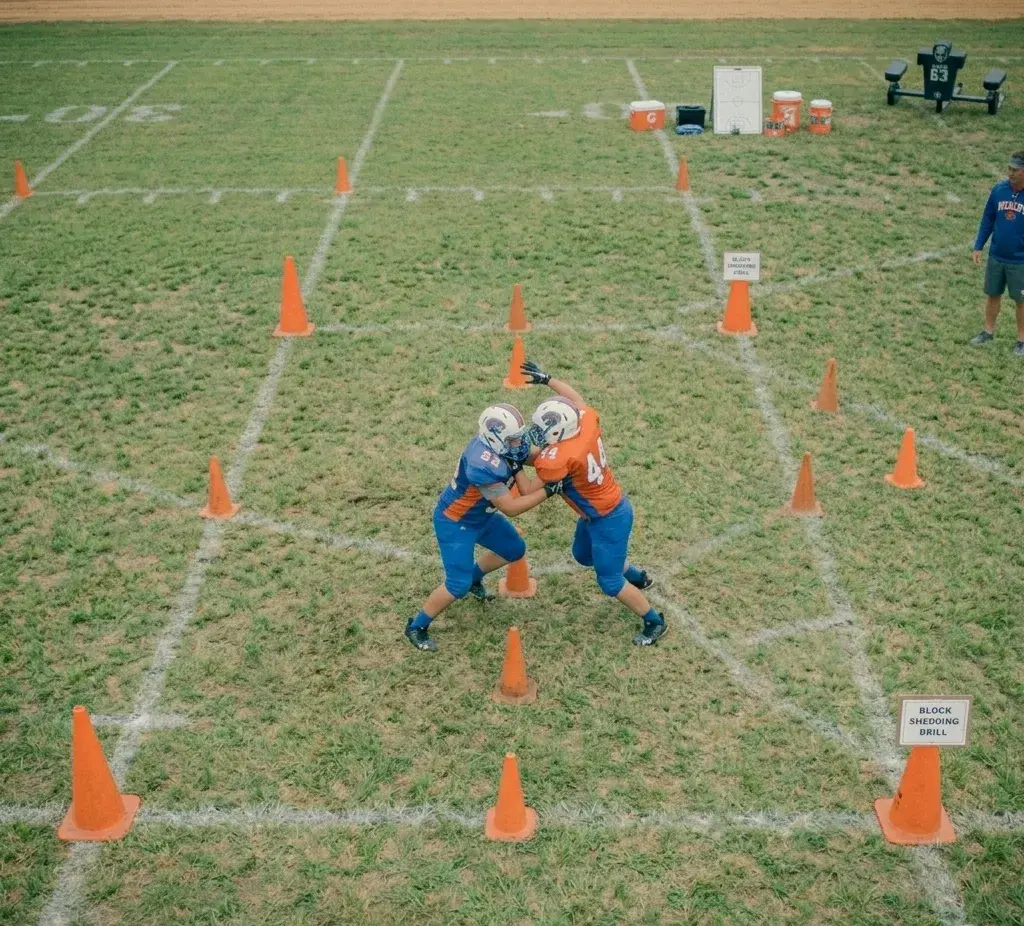
Teach defenders to break free from blockers.
Drive Blocking and Power Drills

Help offensive players push defenders back.
Offensive vs Defensive Trench Drills
Offensive Focus
- Drive blocking
- Pass protection
- Footwork and balance
Defensive Focus
- Block shedding
- Pass rush
- Gap control
Best Football Trench Drills for Beginners
1. Get-Off Drill
Setup:
Player in stance. Coach gives signal.
Steps:
- Start in a low stance
- React to the signal, do not guess
- Take 2–3 explosive steps
Coach Tip: Coaches should tell players to react fast and stay low.
Mistake: Standing up too early
Game Use: Helps you win the first step at the line of scrimmage.
Confidence Tip: This is a simple drill. You will improve with regular practice.
2. Hand Fighting Drill
Setup:
Two players face each other.
Steps:
- Strike hands inside the chest plate
- Push and control
- Keep moving your feet
Coach Tip: Keep hands inside and active at all times.
Mistake: Letting hands go outside
Game Use: Helps you control blockers and win contact in real game situations.
Safety Tip: This drill is safe for beginners if done with proper control.
3. Leverage Sled Drill
Setup:
Use a blocking sled.
Steps:
- Stay low
- Drive forward
- Keep legs moving
Coach Tip: Keep hips low and back flat.
Mistake: Standing tall
Game Use: Builds power for blocking and stopping running plays.
4. Block Shedding Drill
Setup:
One blocker, one defender.
Steps:
- Engage the blocker
- Use your hands to push away or use a swim or rip move
- Move toward the ball
Coach Tip: Use quick and strong hand movements.
Mistake: Staying stuck on the block
Game Use: Helps defenders break free and make tackles.
5. Mirror Drill
Setup:
Two players face each other.
Steps:
- One player leads movement
- The other follows
- Stay low and balanced
Coach Tip: Watch the chest, not the feet.
Mistake: Crossing your feet
Game Use: Improves balance and reaction.
6. Drive Blocking Drill
Setup:
Offensive player vs defender.
Steps:
- Strike low with your pads
- Keep pushing forward
- Move your feet quickly
Coach Tip: Use short, fast steps.
Mistake: Stopping your feet
Game Use: Helps create running lanes.
7. Pass Rush Drill
Setup:
Defender vs blocker.
Steps:
- Explode forward quickly
- Use hands to break free
- Move to the target
Coach Tip: Stay low and attack fast.
Mistake: Slow first step
Game Use: Helps pressure the quarterback.
8. Gap Control Drill
Setup:
Mark A-gap and B-gap.
Steps:
- Stay in your assigned gap
- React to movement
- Do not overcommit
Coach Tip: Stay disciplined and read the play.
Mistake: Leaving your gap
Game Use: Each defender controls one gap to stop the run.
Drill Progression Table
| Level | Drill Focus | Goal |
|---|---|---|
| Beginner | Get-Off, Mirror | Learn movement and balance |
| Intermediate | Hand Fighting, Gap Control | Improve control and reaction |
| Advanced | Pass Rush, Drive Blocking | Build power and game skills |
When to Use These Trench Drills
- Use get-off drills at the start of practice
- Use hand fighting drills during skill training
- Use block shedding drills in defensive sessions
- Use drive blocking drills in offensive practice
Simple Trench Drill Practice Plan
Warm-Up (5 min)
- Light movement drills
- Stance practice
Drills (12 min)
- Get-Off Drill (3 sets of 5 reps)
- Hand Fighting Drill (3 sets of 5 reps)
- Block Shedding Drill (3 sets of 5 reps)
- Drive Blocking Drill (3 sets of 5 reps)
Note: Coaches can use this simple plan during practice sessions.
Cool Down (3 min)
- Light stretching
Common Mistakes Beginners Make
- Standing too high
- Slow reaction
- Poor hand placement
- Not moving feet
- Losing balance
Safety Tips for Youth Players
- Start with low contact drills
- Use proper football gear
- Focus on technique first
- Do not rush into full contact
- Always warm up
Parent Tip: Make sure players follow proper technique and stay safe.
Quick Trench Drill Checklist
- Stay low at all times
- Keep hands inside
- Move your feet constantly
- React fast to the snap
- Stay in your assigned gap
Conclusion
Football trench drills for beginners are not just about practice. They build the foundation of strong line play. I have seen beginner players improve fast when they focus on simple drills like get-off, hand fighting, and block shedding. The biggest change comes when players stay low, use proper hand placement, and move their feet with control.
From real coaching experience, the players who improve the most are the ones who stay consistent and focus on technique, not just strength. These drills may look simple, but they are used at every level of football because they work. If you follow this guide, practice regularly, and stay patient, you will start to win more battles at the line of scrimmage.
Start small. Stay consistent. Focus on the basics. That is how you build real strength in the trenches.
FAQs
What are football trench drills for beginners?
Football trench drills for beginners are simple practice drills that help players improve blocking, hand placement, leverage, and reaction at the line of scrimmage. These drills are used by both offensive and defensive line players.
Why are trench drills important in football?
Trench drills are important because they teach players how to win at the line of scrimmage. They improve pad level, hand control, and first step quickness, which are key for blocking and pass rush.
Which players should practice trench drills?
Trench drills are best for offensive linemen and defensive linemen. However, beginner players at any position can use these drills to improve strength, balance, and reaction.
What are the best trench drills for beginners?
The best trench drills for beginners include get-off drills, hand fighting drills, block shedding drills, and drive blocking drills. These drills build basic skills needed for game performance.
How often should beginners do trench drills?
Beginners should practice trench drills 2 to 3 times per week. Regular practice helps improve technique, reaction time, and control at the line of scrimmage.
Are trench drills safe for youth football players?
Yes, trench drills are safe for youth players if they start with low-contact drills and focus on proper technique. Using correct gear and supervision also improves safety.
How do trench drills improve blocking skills?
Trench drills improve blocking by teaching proper hand placement, leverage, and foot movement. Players learn how to stay low, control defenders, and create space.
What is leverage in trench drills?
Leverage means staying low and using body position to gain control over the opponent. In trench drills, players learn to bend their knees and keep hips low to generate power.
What is gap control in football drills?
Gap control means each defender is responsible for a specific space, like the A-gap or B-gap. Trench drills help players stay in position and stop running plays.
Can parents help kids practice trench drills at home?
Yes, parents can help by guiding simple drills like stance, get-off, and hand placement. Start slow, focus on safety, and make sure the player uses proper technique.
