


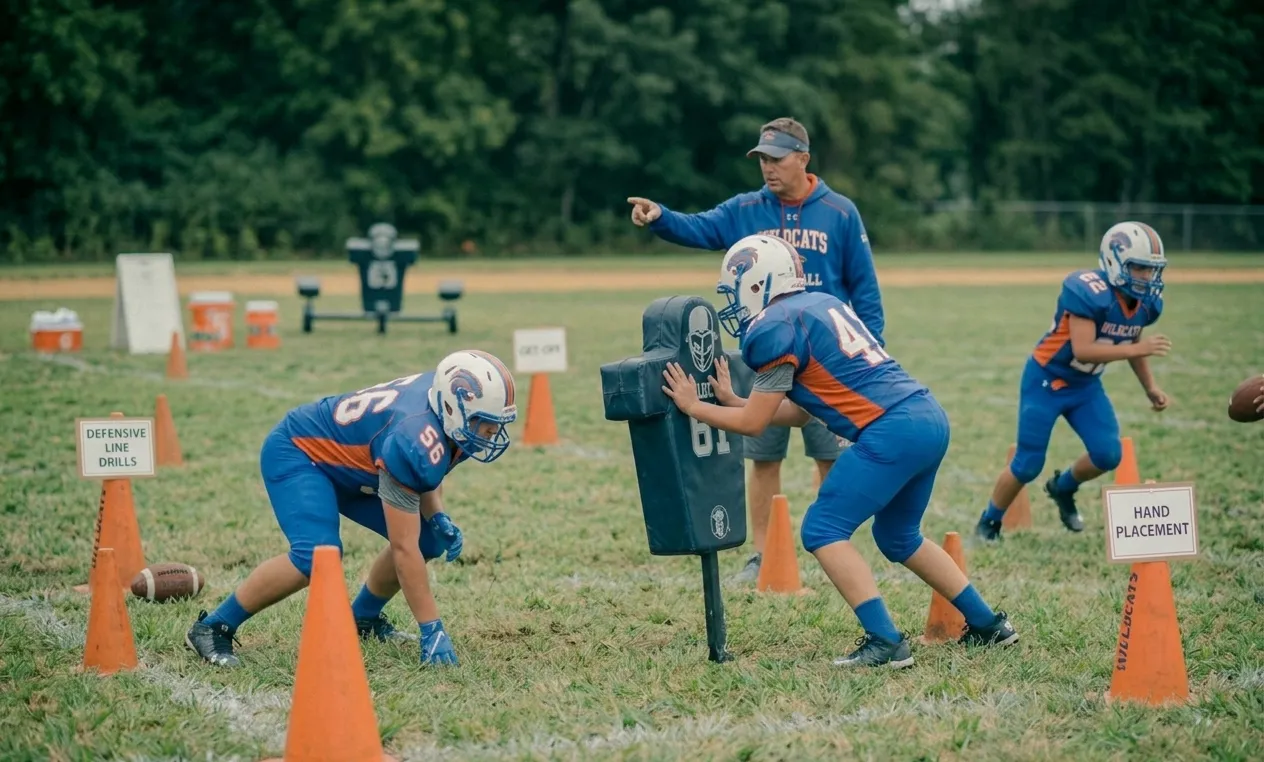
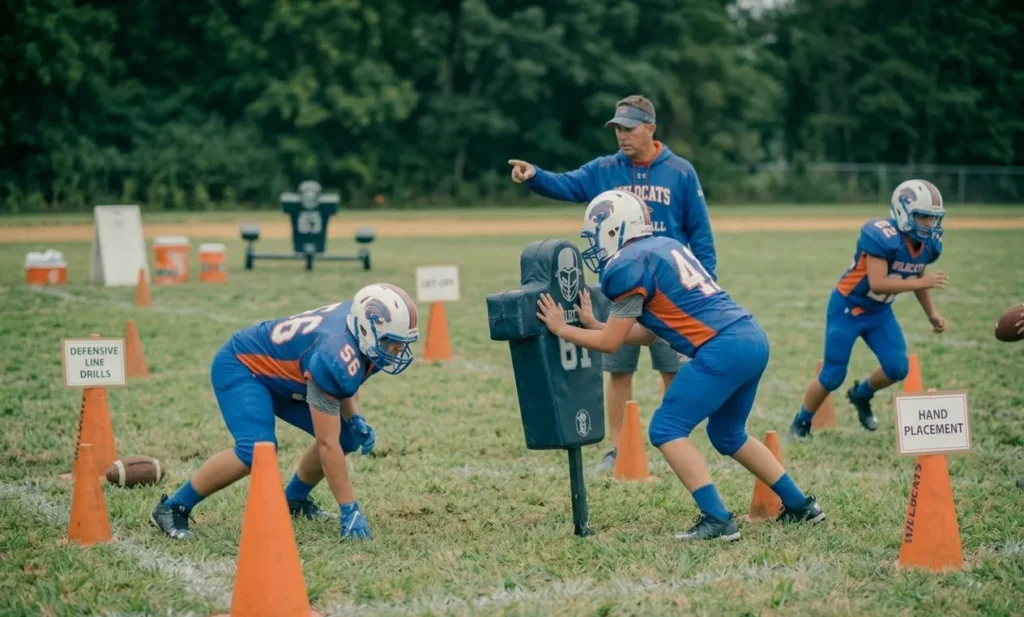
Defensive line drills for beginners can feel confusing when you first start. Many beginners struggle with a slow get-off, weak hand placement, and getting pushed back at the line of scrimmage. It can be frustrating when you try hard but still lose against blockers. Most players face this problem because they do not have a clear and simple training plan.
I have seen this happen many times with new players during early practice. The issue is not effort, it is a lack of proper basics. When beginners follow simple drills in the right order, their performance improves fast. This guide focuses on easy and effective drills used in youth training to help you build strong fundamentals and play with more confidence.
Key Takeaways
- Focus on simple defensive line drills for beginners
- Build strong basics like stance, get-off, and hand placement
- Practice drills in a step-by-step order
- Stay low and use quick, short steps
- Train regularly with a simple practice plan
What Makes a Good Defensive Lineman?
A good defensive lineman controls the line of scrimmage and reacts fast to the snap. Size helps, but technique matters more.
Key traits include:
- Fast get-off at the snap
- Strong hand placement
- Low pad level
- Good balance and body control
- Clear gap responsibility
- Quick reaction time
These skills help you stop the run and rush the passer. A strong defensive lineman also finishes every play by chasing the ball until the whistle.
Defensive Line Techniques
Before you start drills, you need to learn basic techniques. These are the foundation of all defensive line drills for beginners.
Stance
Stay low and balanced. Keep your weight slightly forward. Your eyes should focus on the ball.
Alignment
Line up based on your position. Stay balanced and ready to move. Keep your eyes on the ball and your body square to the line of scrimmage.
Get-Off
Explode as soon as the ball moves. A fast first step gives you an advantage.
Hand Placement
Keep your hands inside. Strike the blocker’s chest quickly after your first step, not before contact slows you down.
Leverage
Stay lower than your opponent. Low players win more battles.
Gap Control
Each defensive lineman is responsible for a gap between offensive players. Staying in your gap stops running lanes and keeps the defense strong.
Get-Off Drills
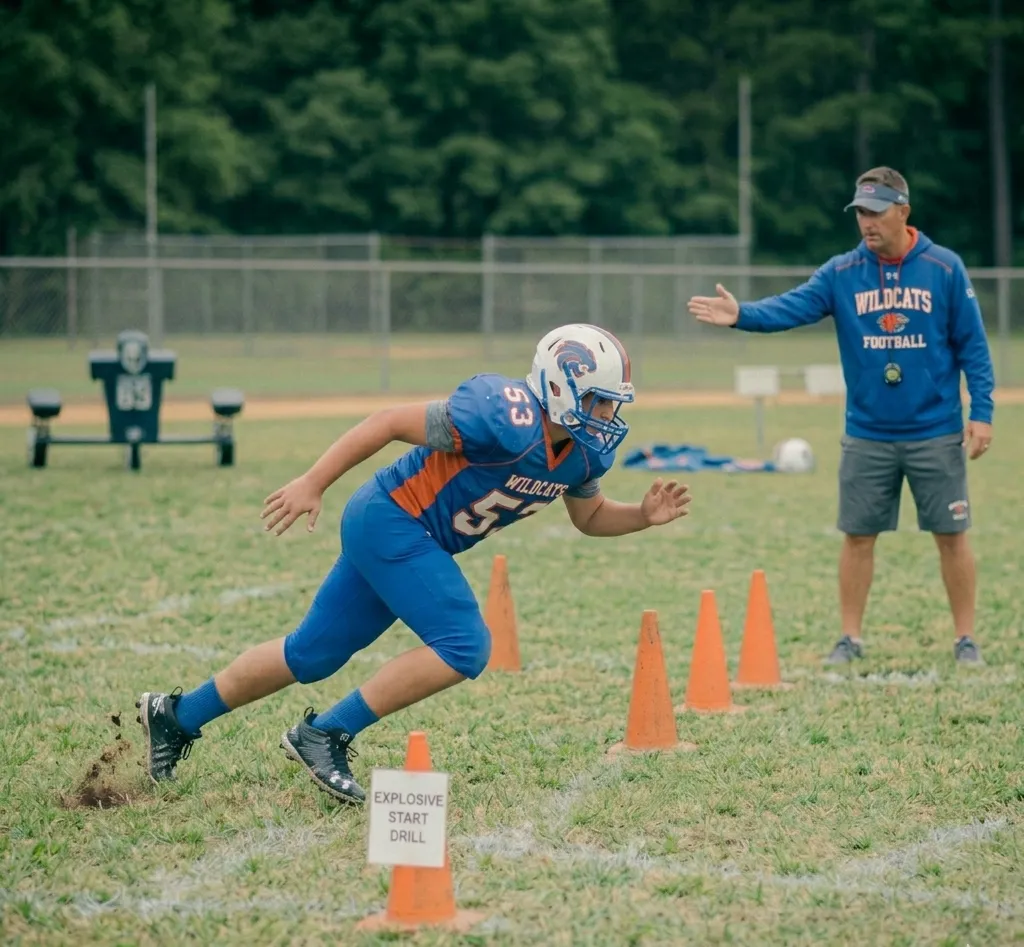
This drill helps improve reaction time and first step speed at the line of scrimmage. It is simple and helps beginners improve quickly.
Get-Off Drill
Purpose: Improve first step speed and reaction time
Setup:
- Player in stance
- Coach gives a signal
Steps:
- Start in proper stance
- Watch the ball or coach
- Explode forward on signal
Coaching Points:
- Keep your pad level low
- Take a short, quick first step
- Do not pop up too early
Common Mistake:
- Slow reaction or false step
👉 This drill is often used at the start of practice because it builds a strong foundation.
Pass Rush Drills
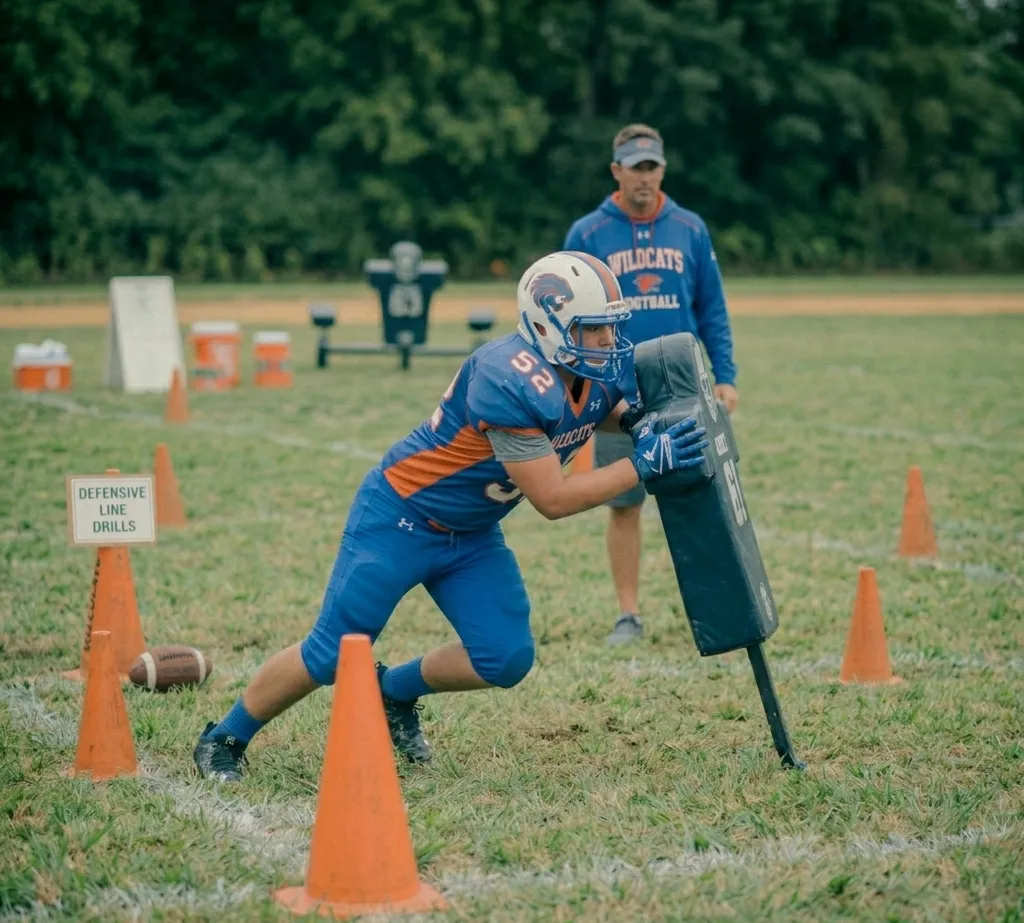
This drill helps build pass rush skills and pressure on the quarterback.
Pass Rush Drill
Purpose: Improve pressure on the quarterback
Setup:
- One blocker or dummy
- One defender
Steps:
- Start in stance
- Explode forward
- Use a simple move like a rip or swim
- Finish past the blocker
Coaching Points:
- Stay low
- Use hands fast
- Keep your feet moving with short steps
- Take a proper angle to the quarterback
Common Mistake:
- Stopping feet on contact
👉 This drill helps players learn how to beat blockers and reach the quarterback faster.
Run Defense Drills
This drill helps stop the run and control blockers.
Block Shedding Drill
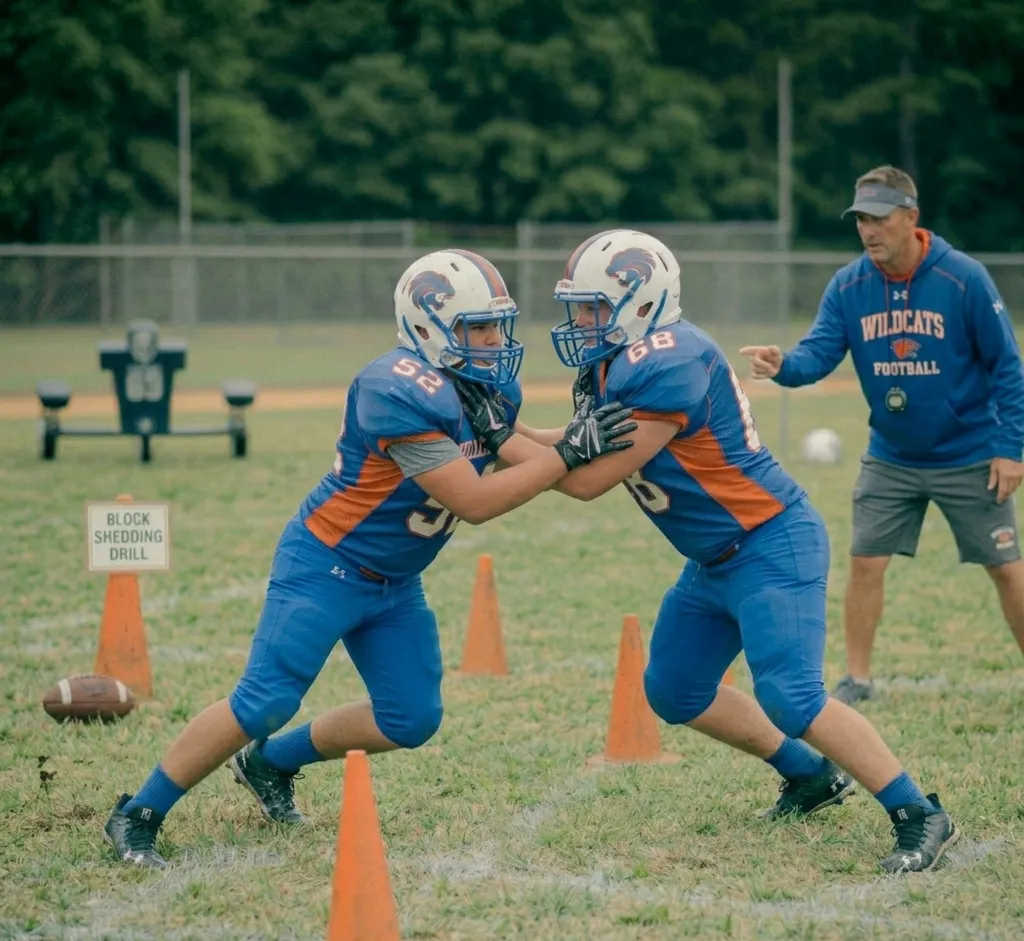
Purpose: Learn how to escape blockers
Setup:
- Partner acts as blocker
Steps:
- Strike with both hands
- Lock out arms
- Shed to one side
- Move toward the ball
Coaching Points:
- Keep hands inside
- Use a strong punch
- Keep your feet active
- Eyes on the ball
Common Mistake:
- Letting blocker control your chest
👉 This drill is simple and safe for beginners and can also be practiced at home with a partner.
Defensive Line Drills
These drills improve hand speed, movement, and reaction.
Hand Fight Drill
Purpose: Improve hand speed and control
Setup:
- Two players face each other
Steps:
- Start in stance
- Rapid hand strikes
- Try to control opponent
Coaching Points:
- Keep hands active
- Stay low
- Maintain balance
👉 This drill helps build strong hands for better control at the line of scrimmage.
Mirror Drill
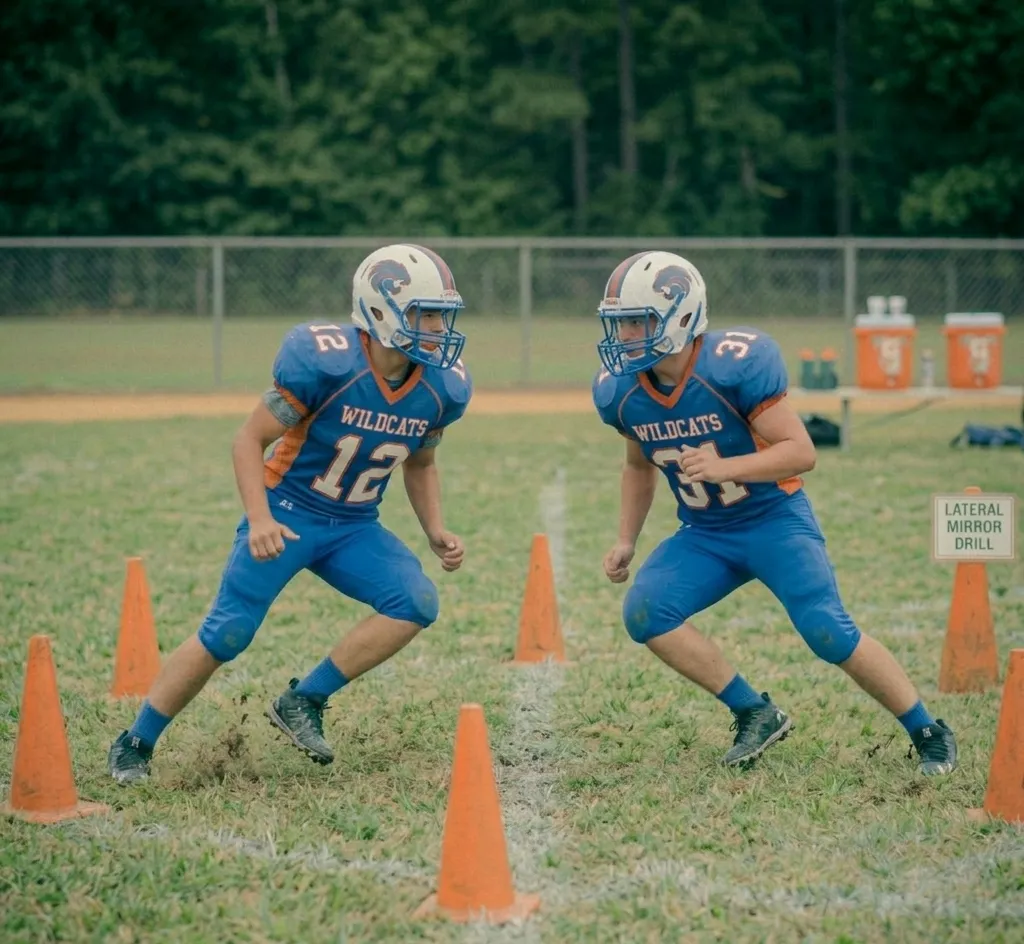
Purpose: Improve movement and reaction
Setup:
- One leader, one follower
Steps:
- Leader moves side to side
- Follower mirrors movement
Coaching Points:
- Stay in stance
- Use quick feet
- Do not cross your feet
👉 This drill is great for beginners to improve balance and reaction without equipment.
Ball Reaction Drill
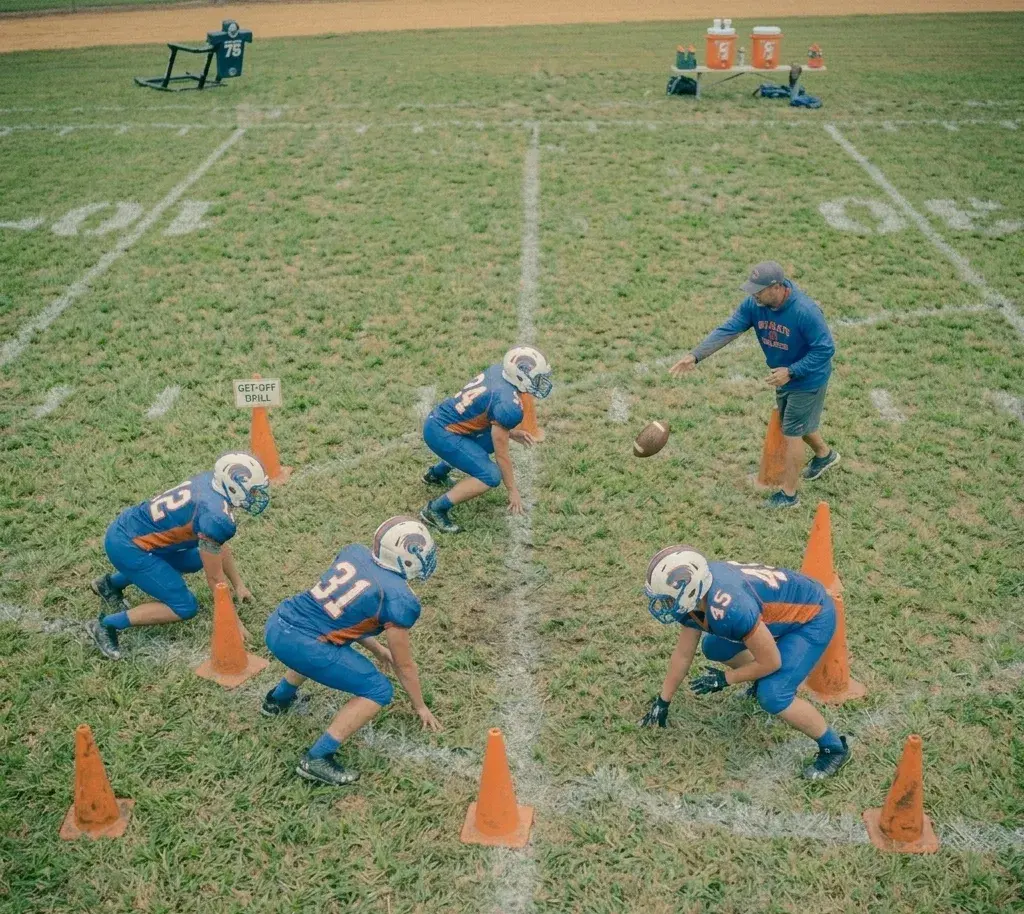
Purpose: Train reaction to the snap
Setup:
- Coach holds ball
Steps:
- Watch the ball
- Move as soon as it moves
Coaching Points:
- Eyes on the ball
- Explode instantly
👉 This drill improves reaction speed and helps players get off the line faster.
Drill Summary Table
| Drill Name | Main Skill | Best For Beginners |
|---|---|---|
| Get-Off Drill | Reaction Speed | Yes |
| Hand Fight Drill | Hand Placement | Yes |
| Mirror Drill | Footwork & Balance | Yes |
| Ball Reaction Drill | Quick Reaction | Yes |
| Pass Rush Drill | Pressure Skills | Yes |
| Block Shedding Drill | Run Defense | Yes |
When to Use Each Drill
- Use get-off drills at the start of practice
- Use hand fight drills after warm-up
- Use pass rush drills in the middle of practice
- Use block shedding drills during run defense training
- Use reaction drills to improve quick response
Step-by-Step Defensive Line Training Progression
- Day 1: Stance and get-off drills
- Day 2: Hand fight drills
- Day 3: Block shedding drills
- Day 4: Pass rush drills
- Day 5: Combine all drills
This plan helps beginners learn in the right order. It also helps coaches organize practice sessions in a simple way.
Common Defensive Line Mistakes Beginners Make
- Playing too high
- Slow first step
- Poor hand placement
- Losing gap control
- Watching the player instead of the ball
Fixing these will improve your performance fast.
Defensive Line Drills Without Equipment
- Stance and get-off reps
- Mirror drill
- Shadow pass rush
- Reaction drills
These drills are safe and easy for beginners to practice at home.
20-Minute Beginner Practice Plan
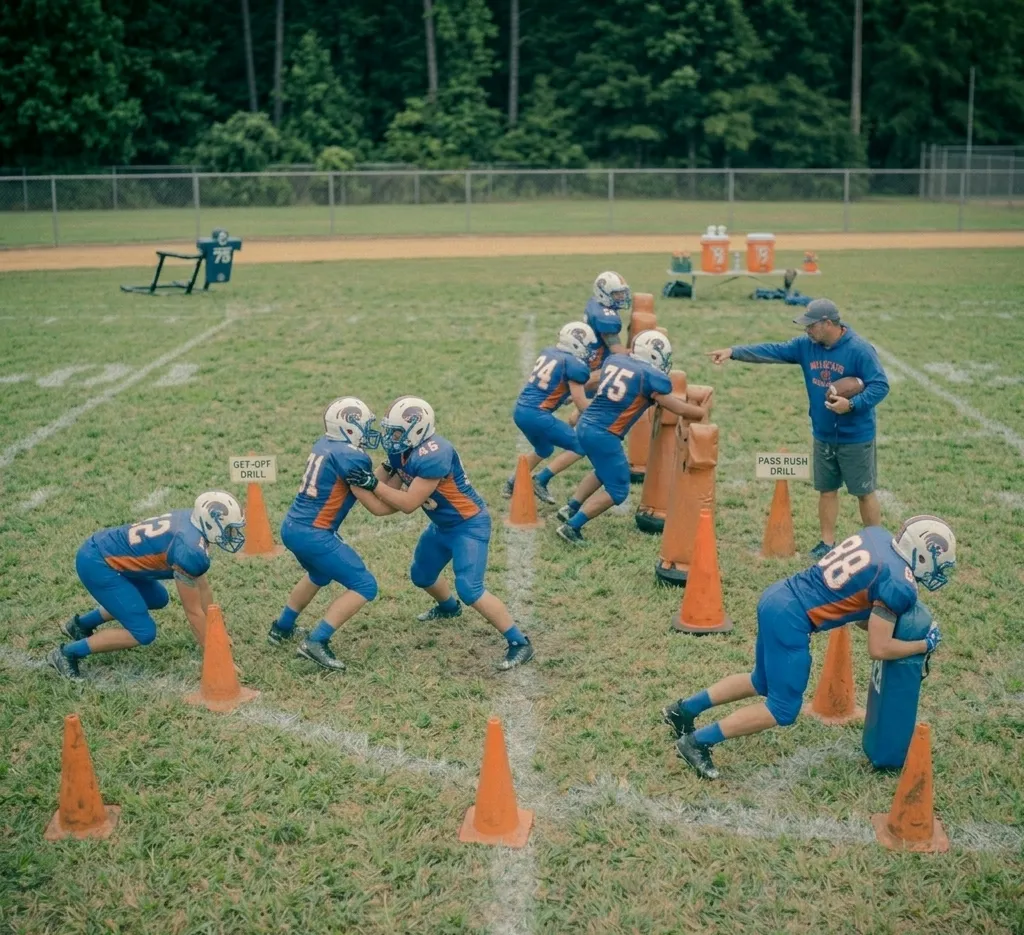
- 5 minutes: Warm-up
- 5 minutes: Get-off drills
- 5 minutes: Hand and block drills
- 5 minutes: Pass rush drills
This plan helps coaches and parents run a simple and effective practice session.
You can also improve your movement with football footwork drills and build tackling skills with tackling drills.
Beginner Defensive Line Checklist
- Stay low in your stance
- Watch the ball at all times
- Take a quick first step
- Keep your hands inside
- Do not stop your feet on contact
Tips to Improve Faster as a Defensive Lineman
- Stay low
- Explode on the snap
- Keep hands active
- Watch the ball
- Use short steps
Final Thoughts on Defensive Line Drills for Beginners
Learning defensive line drills for beginners takes time, but real progress comes from doing the basics correctly. Many beginners try advanced moves too early, which leads to poor technique. From experience, players who focus on stance, get-off, and hand placement improve much faster and perform better during games.
Coaches also follow this same approach. They train players with simple drills, repeat them often, and build skills step by step. If you stay consistent and practice with the right technique, you will gain confidence and control at the line of scrimmage. Keep your training simple, stay patient, and focus on steady improvement.
What are the best defensive line drills for beginners?
The best defensive line drills for beginners include get-off drills, hand fight drills, mirror drills, and block shedding drills. These drills help improve reaction time, hand placement, and control at the line of scrimmage.
How can beginners improve their get-off speed in football?
Beginners can improve get-off speed by practicing ball reaction drills and stance drills daily. Focus on watching the ball and taking a quick first step as soon as it moves.
What is the most important skill for a defensive lineman?
The most important skill for a defensive lineman is a fast get-off combined with strong hand placement. These two skills help players win at the line of scrimmage.
Can defensive line drills be practiced at home?
Yes, many defensive line drills for beginners can be practiced at home. Mirror drills, stance drills, and shadow pass rush drills do not need any equipment.
How do beginners learn block shedding in football?
Beginners learn block shedding by starting with proper hand placement and practicing simple drills with a partner. Focus on striking, locking out arms, and moving toward the ball.
How often should beginners practice defensive line drills?
Beginners should practice defensive line drills 3 to 4 times per week. Short and consistent practice sessions help build skills faster.
What are simple defensive line drills for youth players?
Simple defensive line drills for youth players include get-off drills, ball reaction drills, and mirror drills. These drills are easy to learn and safe for beginners.
How long should a beginner defensive line practice session be?
A beginner defensive line practice session can be 15 to 20 minutes long. Focus on a few key drills like get-off, hand placement, and pass rush.
