


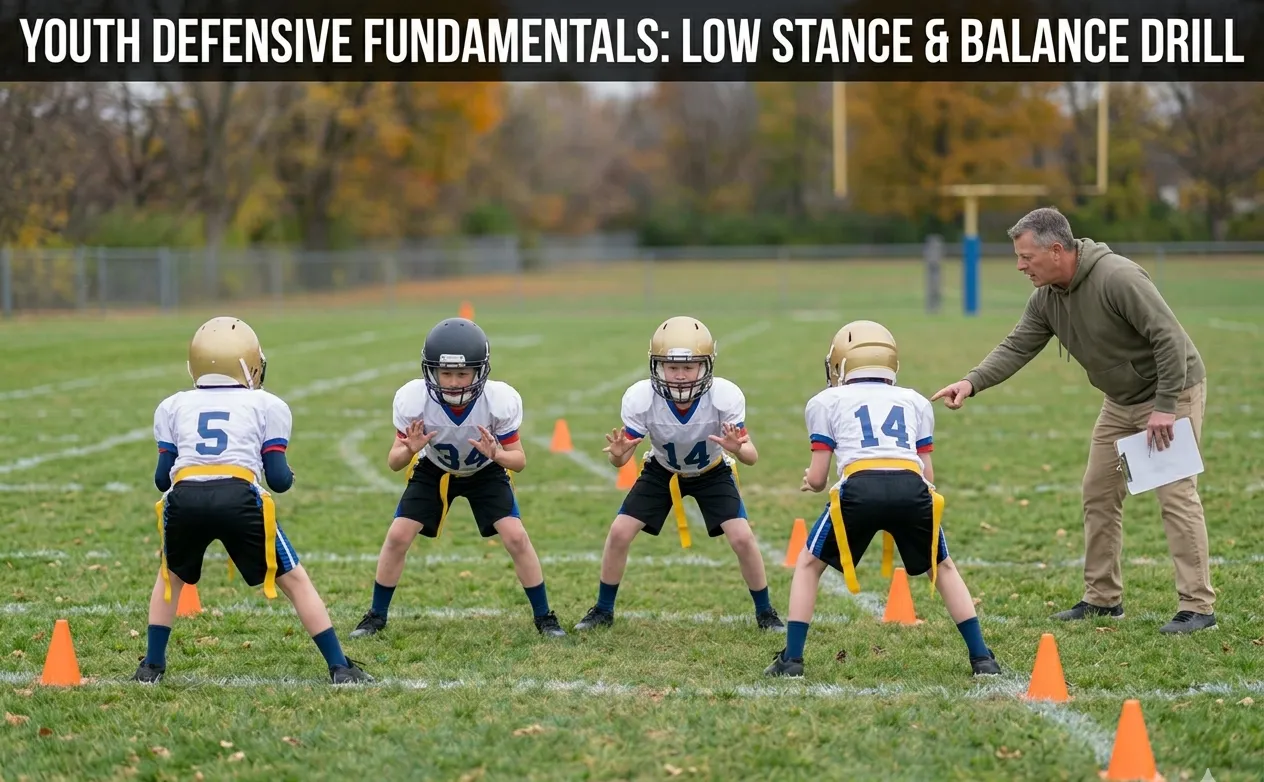
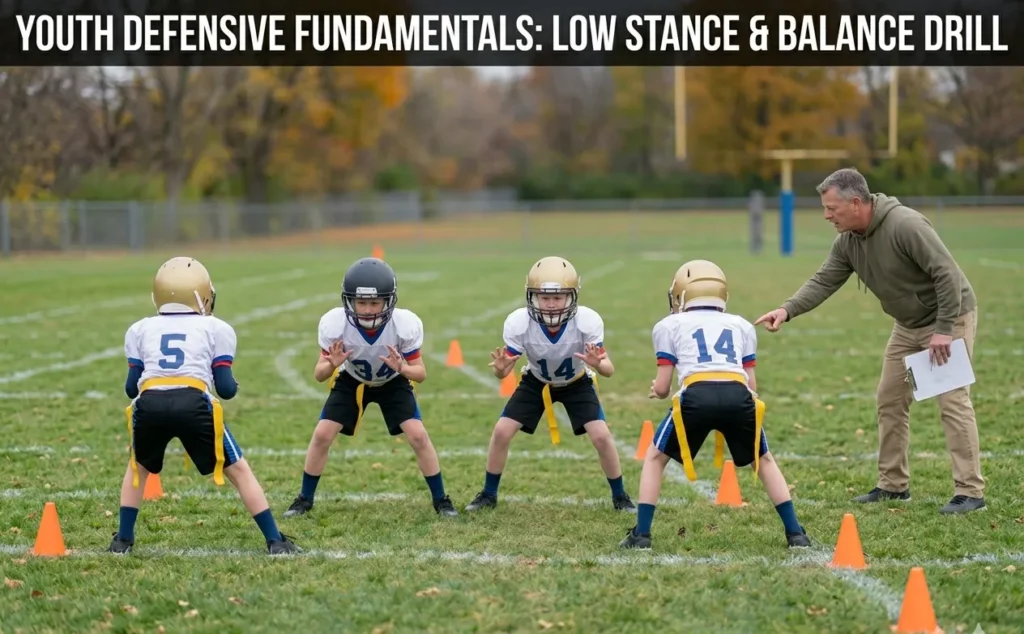
Many beginners struggle when they start learning defense, and that is where non contact defensive drills become important. Players often feel nervous, react late, and take wrong angles. Some freeze when the play starts, while others lose balance and miss easy stops. Parents also worry about injuries and do not want their kids pushed into contact too early.
I have worked with beginner players who faced these same problems in their first practices. Once they started with simple non contact drills, their confidence improved and their movement became more controlled. These drills help players learn positioning, balance, and reaction step by step before moving into contact.
Key Takeaways
- Non contact defensive drills help players learn safely
- Focus on movement, balance, and positioning first
- Pursuit angle and leverage are key defensive skills
- Coaches can use simple drills to build confidence
- Beginners should master basics before contact
What Are Non Contact Defensive Drills
These are the drills with no physical hitting.
Players do not:
- tackle
- hit
- wrap
Instead, they focus on:
- body position
- movement
- reaction
- control
These drills are used in:
- first practice sessions
- youth training
- safety-focused programs
- school or PE sessions
They help players understand defensive alignment, positioning, and movement near the line of scrimmage before moving into contact drills. They also improve reaction time and defensive footwork.
Who This Guide Is For
- Beginner football players
- Youth coaches
- Parents looking for safe training
- Flag football players
Why Non Contact Defensive Drills Matter
These drills are very important for beginners.
- Safer training
No contact means lower injury risk, which is important for young players - Better technique
Players learn the right form early, including closing space on the ball carrier - More confidence
Beginners feel comfortable and relaxed - Faster learning
Players focus on skills, not fear
Parents can feel more confident knowing their child is learning safely. Coaches can run structured and controlled practice sessions.
What Makes a Good Defensive Drill
A good defensive drill should be:
- simple to understand
- easy to repeat
- game-like
- focused on one skill
Good drills also include coaching points like:
- stay low
- keep balance
- watch the ball
They should also improve defensive awareness and quick reaction.
How to Coach Defensive Drills
Follow these simple coaching tips:
- explain the drill in short steps
- show the movement first
- correct mistakes early
- keep reps short and fast
Always focus on form before speed. Coaches should keep instructions simple so players understand basic defensive responsibilities.
Heads Up Tackling Fundamentals (No Contact Focus)
Breakdown Position
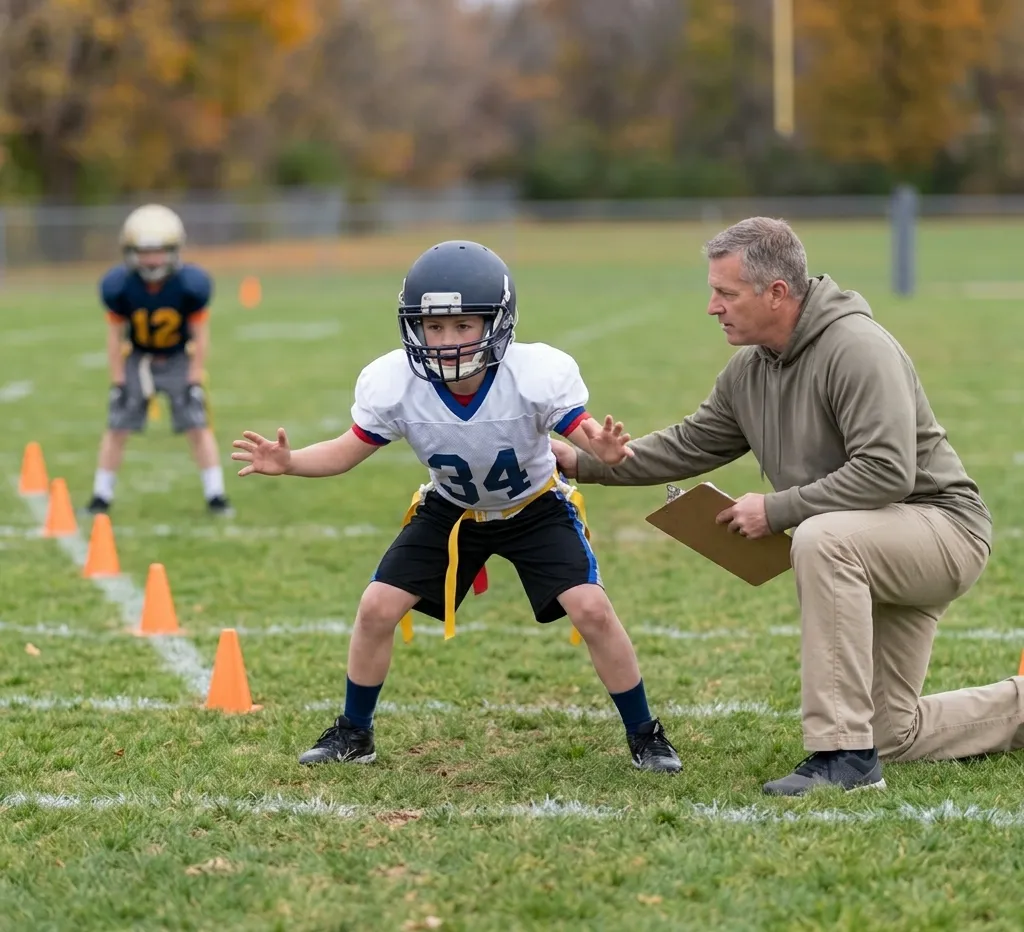
- bend knees
- keep chest up
- stay balanced
Buzz Feet
- take short, quick steps
- stay under control
Hit Position (No Contact)
- keep head up
- track near hip
- control body
Drive for 5 (Footwork Only – No Contact)
- move forward with balance
These fundamentals help players learn proper angles, leverage, and gap responsibility before contact.
Defensive Drills
Circle the Flag
Players move in a circle and react to the ball.
Focus:
- reaction
- balance
- quick feet
Great for beginners and group practice.
Angle Race Drill
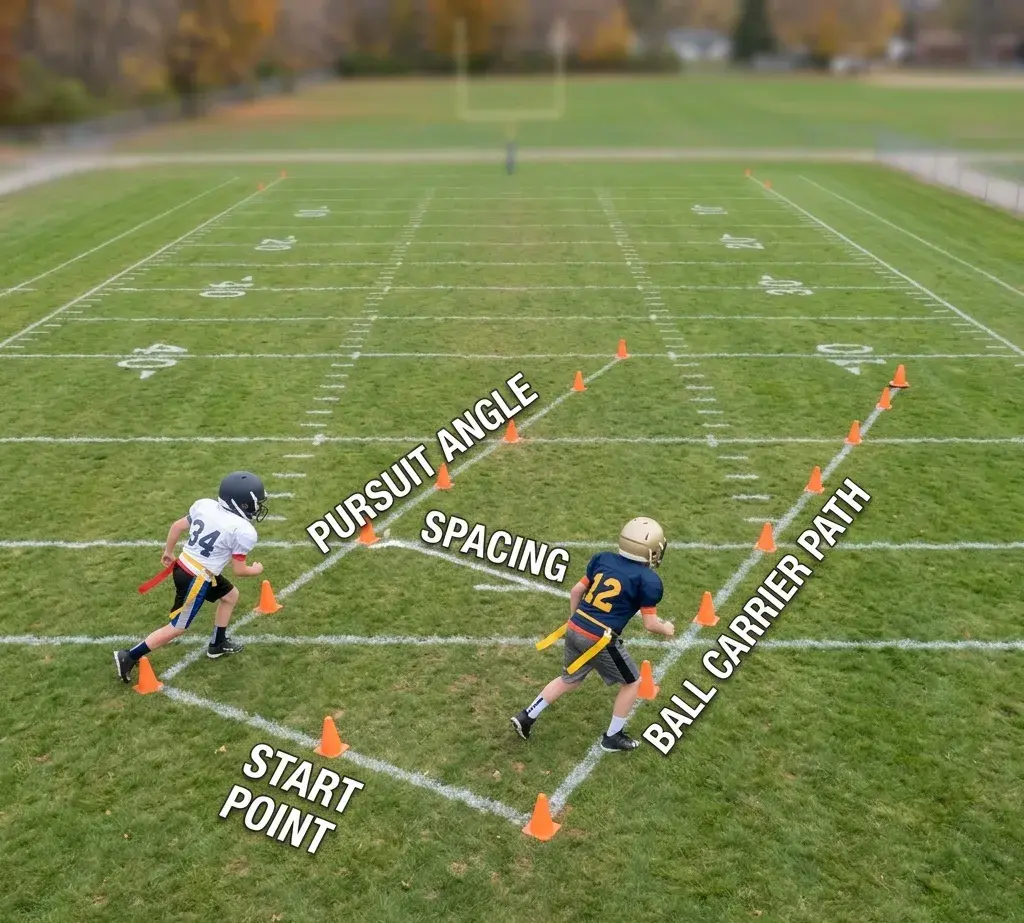
Players run at angles to reach a point.
Focus:
- pursuit angle
- closing space
- speed control
Helps improve pursuit angles in open field situations.
Angle Tackle Drill (No Contact)
Players track the runner without contact.
Focus:
- positioning
- control
- tracking
Teaches tracking the ball carrier safely.
Tracking Drill (No Contact)
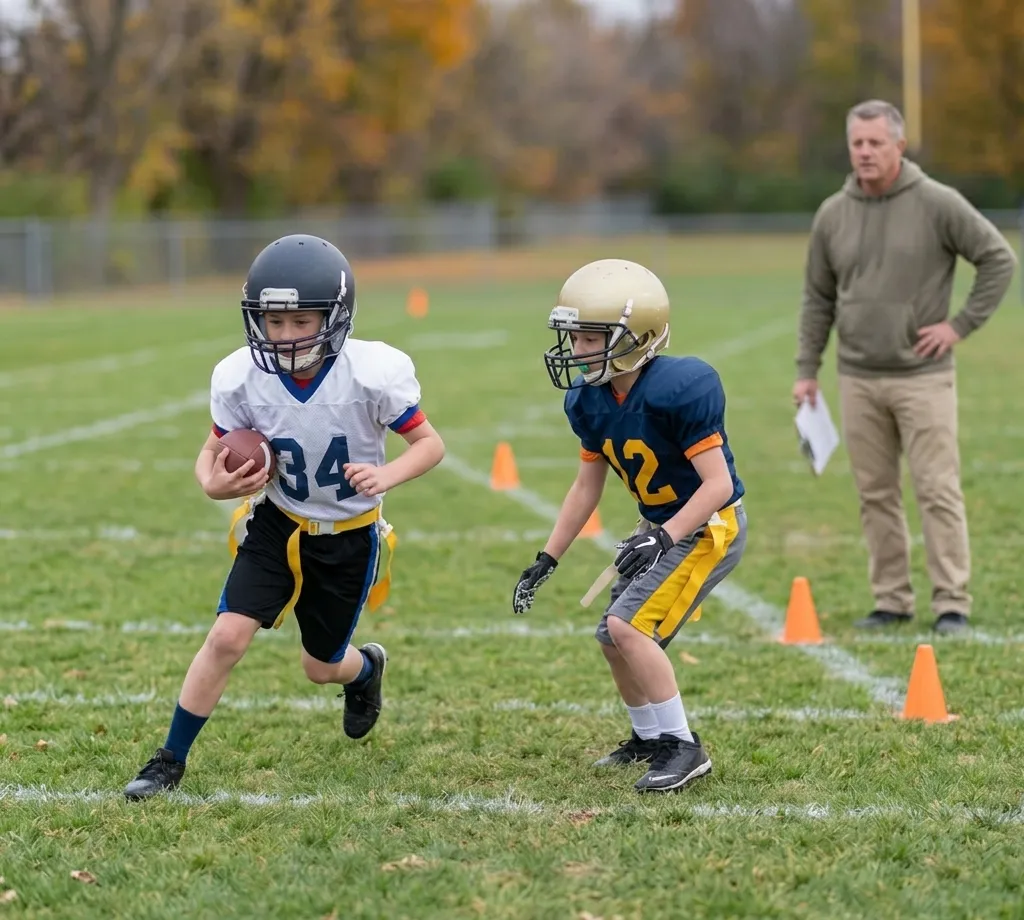
Players follow the ball carrier without contact.
Focus:
- near hip tracking
- balance
- control
Useful for defensive back movement and open field defense.
Defensive Drill Examples
Pursuit Drill
Setup:
- cones placed in angles
Steps:
- run toward ball path
- maintain angle
Coaching points:
- take the right angle
- stay balanced
- do not overrun
Builds team pursuit and defensive flow across the field.
Tackling Drill (Non Contact)
Setup:
- players face each other
Steps:
- approach under control
- stop at fit position
Coaching points:
- keep head up
- stay low
- control movement
Improves body positioning and closing space.
Best Non Contact Defensive Drills by Skill
Pursuit Drills
- angle pursuit
- sideline tracking
Leverage tip:
- inside leverage = force inside
- outside leverage = push outside
Builds defensive positioning and gap control.
Reaction Drills
- mirror drill
- quick direction change
Improves reaction time and agility.
Coverage Drills
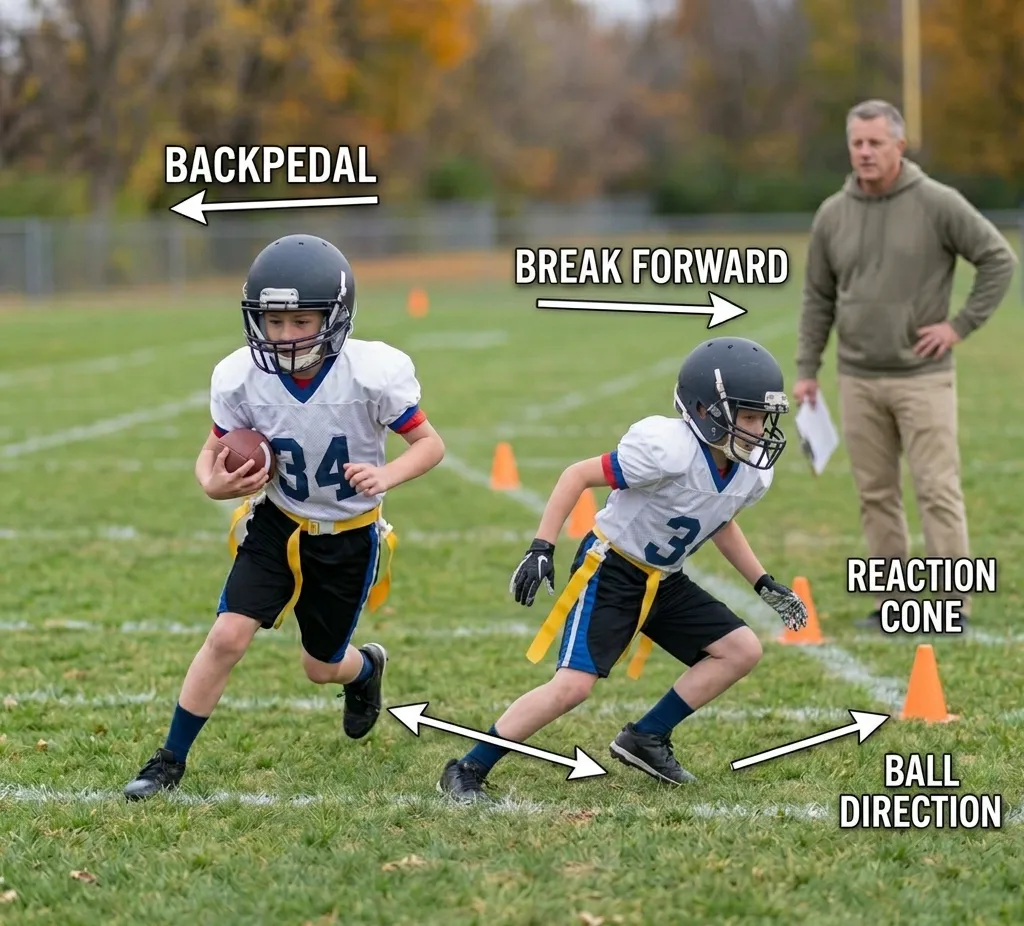
- backpedal and break
- zone reaction
Helps learn zone coverage and basic man coverage movement.
Tackling Form Drills
- breakdown steps
- fit position
Takeaway Drills (No Contact)
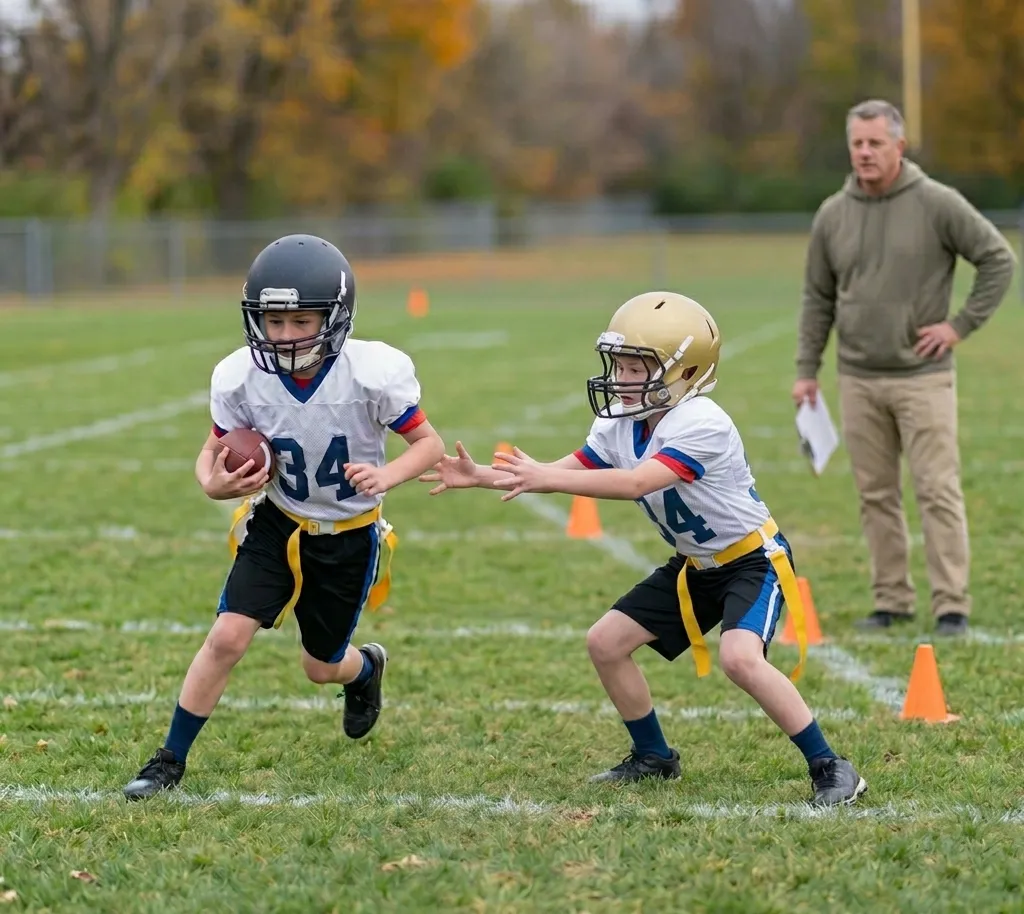
- strip motion (no contact)
- ball tracking
Builds ball awareness and turnover skills.
| Drill Type | Example | Skill |
|---|---|---|
| Pursuit | Angle Drill | Angles |
| Reaction | Mirror Drill | Quick reaction |
| Coverage | Backpedal | Positioning |
| Takeaway | Ball Tracking | Awareness |
20-Minute Non Contact Defensive Practice Plan
| Time | Focus | Purpose |
|---|---|---|
| 5 min | Movement | Balance |
| 5 min | Pursuit | Angles |
| 5 min | Reaction | Speed |
| 5 min | Takeaway | Ball skills |
Common Mistakes to Avoid
- bad angles
- poor balance
- standing too tall
- not closing space
Quick Checklist
- Stay low
- Take the right angle
- Keep balance
- Watch the ball
Non Contact vs Limited Contact vs Full Contact
- non contact = no hitting
- limited contact = controlled contact
- full contact = game tackling
Start with non contact for safe skill development.
Coaching Cues
- eyes up
- stay low
- quick feet
- track near hip
Conclusion
Non contact defensive drills are one of the best ways to build strong defensive skills from the start. In my experience, players who focus on balance, positioning, and control before contact become more confident and make better decisions on the field. Coaches can run safer and more organized practices, and parents can feel more comfortable with how their child is learning. Strong defense is not about hitting first, it is about understanding movement, angles, and control, and these drills help build that foundation the right way.
FAQS
What are non contact defensive drills?
Non contact defensive drills are drills where players do not tackle or hit. They focus on movement, positioning, reaction, and defensive control.
Are non contact defensive drills effective for beginners?
Yes, non contact defensive drills are very effective for beginners. They help players learn basic defensive skills safely and build confidence before contact training.
When should coaches use non contact defensive drills?
Coaches should use non contact defensive drills at the start of training, during skill development, and when teaching new defensive techniques.
What is the difference between non contact and limited contact drills?
Non contact drills have no physical contact, while limited contact drills include controlled and light contact during practice.
Can players improve tackling without contact?
Yes, players can improve tackling by learning body position, pursuit angles, and tracking the ball carrier without contact.
Which skills improve with non contact defensive drills?
Non contact defensive drills improve pursuit angles, defensive positioning, reaction time, balance, and ball tracking.
