


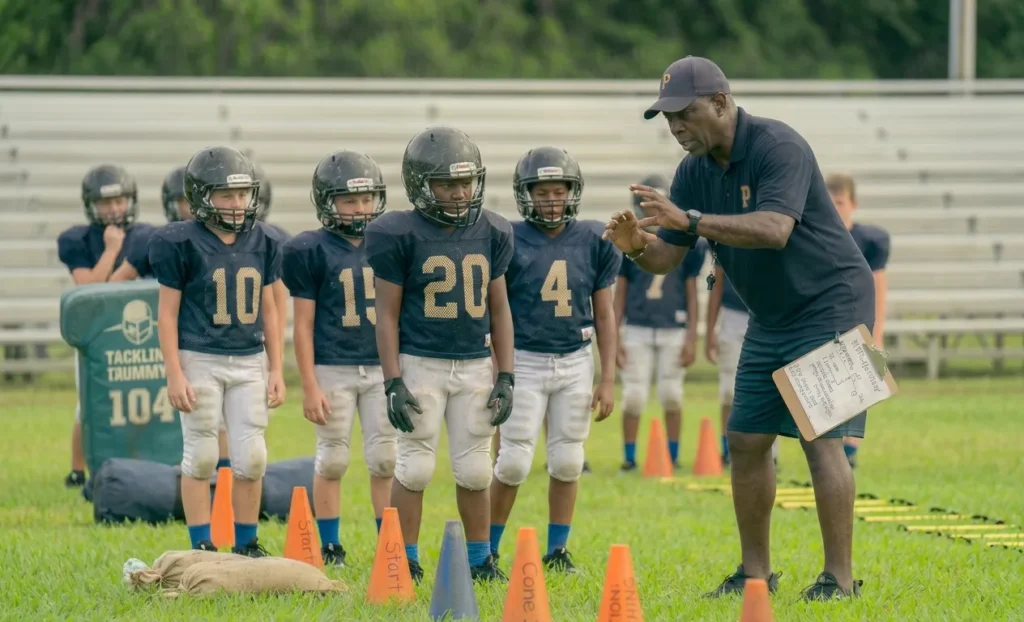
Many beginner football players struggle with tackling during games. They run toward the ball carrier but still miss the tackle. Some players grab with their arms only, while others slow down before contact because they are unsure about the correct technique. This is why tackling drills for beginners are an important part of football training.
I have seen this many times during beginner football practices. Young players often have speed and effort, but they lack proper tackling fundamentals. Coaches also face this challenge during training sessions. The good news is that tackling drills for beginners can fix these problems quickly. With the right drills and regular practice, players build confidence and start making better tackles during games.
This guide explains tackling drills for beginners that improve technique, fix common mistakes, and help players become stronger defenders.
Key Takeaways
Key Takeaways
- Good tackling starts with proper body position and balance.
- Beginners should focus on shoulder contact and wrapping the runner.
- Tracking the ball carrier and using the correct pursuit angle prevents missed tackles.
- Regular tackling drills improve confidence and defensive performance.
- Safe tackling technique helps reduce injury risk during practice and games.
Common Tackling Problems Beginners Face
Many beginner football players face similar problems when learning how to tackle. These issues often reduce performance during games.
Fear of contact
Some players slow down before contact because they are unsure about tackling.
Missing tackles in open field
Open space makes tackling harder, especially for beginners.
Poor pursuit angles
Defenders often run directly at the runner instead of cutting off the path.
Arm tackling
Players try to grab instead of wrapping properly.
Stopping their feet
Beginners sometimes stop moving their legs during contact, which reduces power.
These problems are common, but the right tackling drills can fix them quickly.
The Basics of Football Tackling Drills
Tackling is not about hitting hard. It is about technique, control, and balance.
Players should focus on these basics:
- stay low with bent knees
- keep eyes up
- use shoulder contact
- wrap the runner
- drive through the tackle
These fundamentals are the foundation of all beginner tackling drills.
Why Tackling Drills Are Important
Tackling drills help players improve many parts of their game.
- they build proper technique
- they increase confidence
- they reduce missed tackles
- they improve safety
Many youth football programs follow safe tackling methods recommended by USA Football. These methods focus on safe and effective tackling.
Basic Tackling Techniques
Players should practice these techniques during drills.
Breakdown position
The defender slows down and stays balanced before contact.
Pursuit angle
The defender takes the correct path to reach the runner.
Leverage
The defender stays between the runner and the goal line.
Wrap tackle
The defender wraps both arms and drives forward.
Step-by-Step Tackling Progression
Learning tackling step by step helps beginners improve faster.
Step 1 – Track the runner
Step 2 – Get into breakdown position
Step 3 – Make shoulder contact
Step 4 – Wrap the runner
Step 5 – Drive through the tackle
This progression builds safe and strong tackling habits.
Best Tackling Drills for Beginners
Below are simple tackling drills for beginners that coaches use during practice.
Angle Tackling Drill
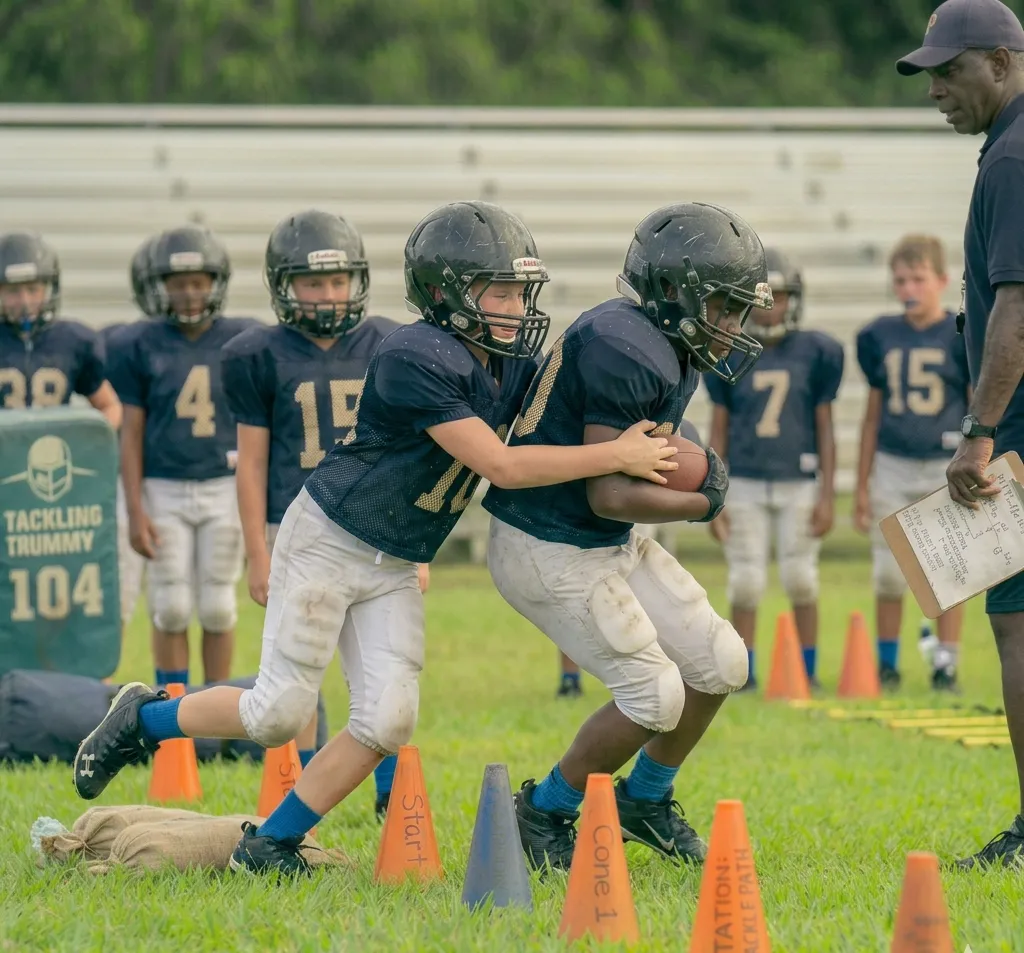
Setup: Place cones to guide the runner’s path.
Execution: The defender approaches from an angle and wraps the runner.
Sideline Tackling Drill
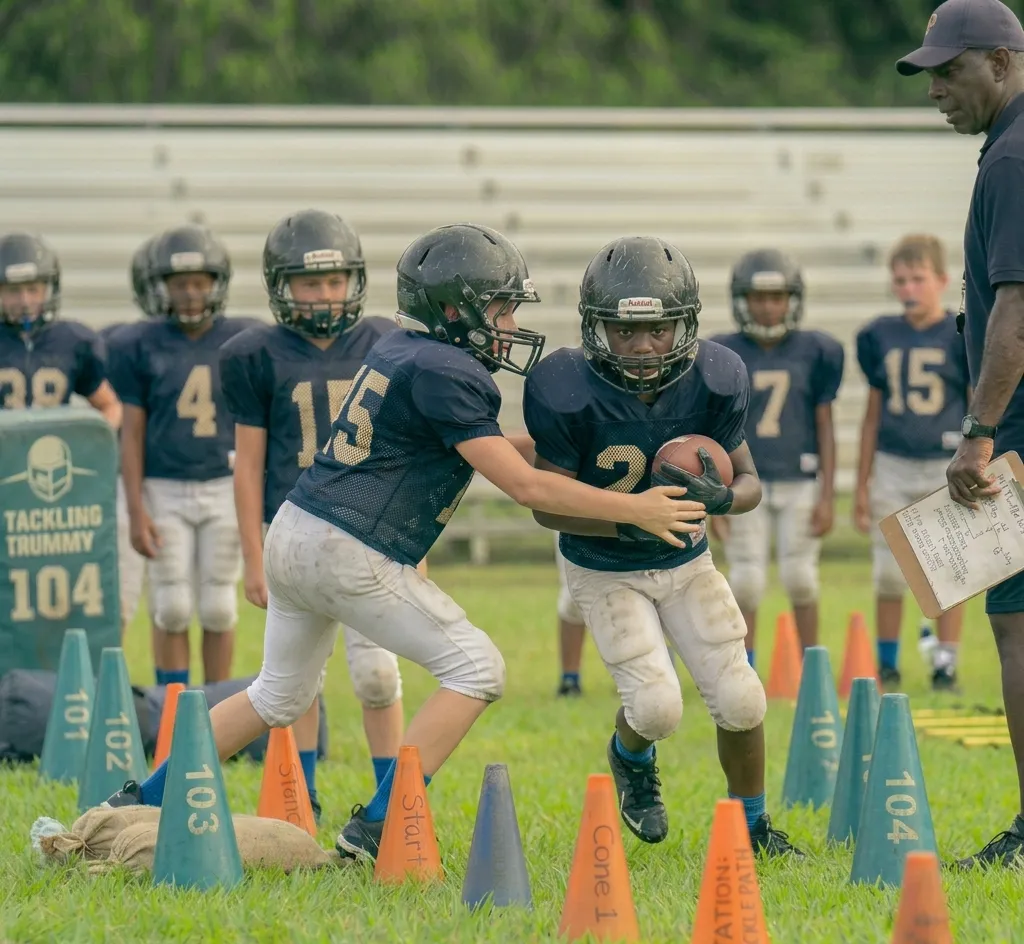
Setup: Create a narrow lane near the sideline.
Execution: The defender forces the runner toward the sideline and completes the tackle.
Breakdown Position Drill
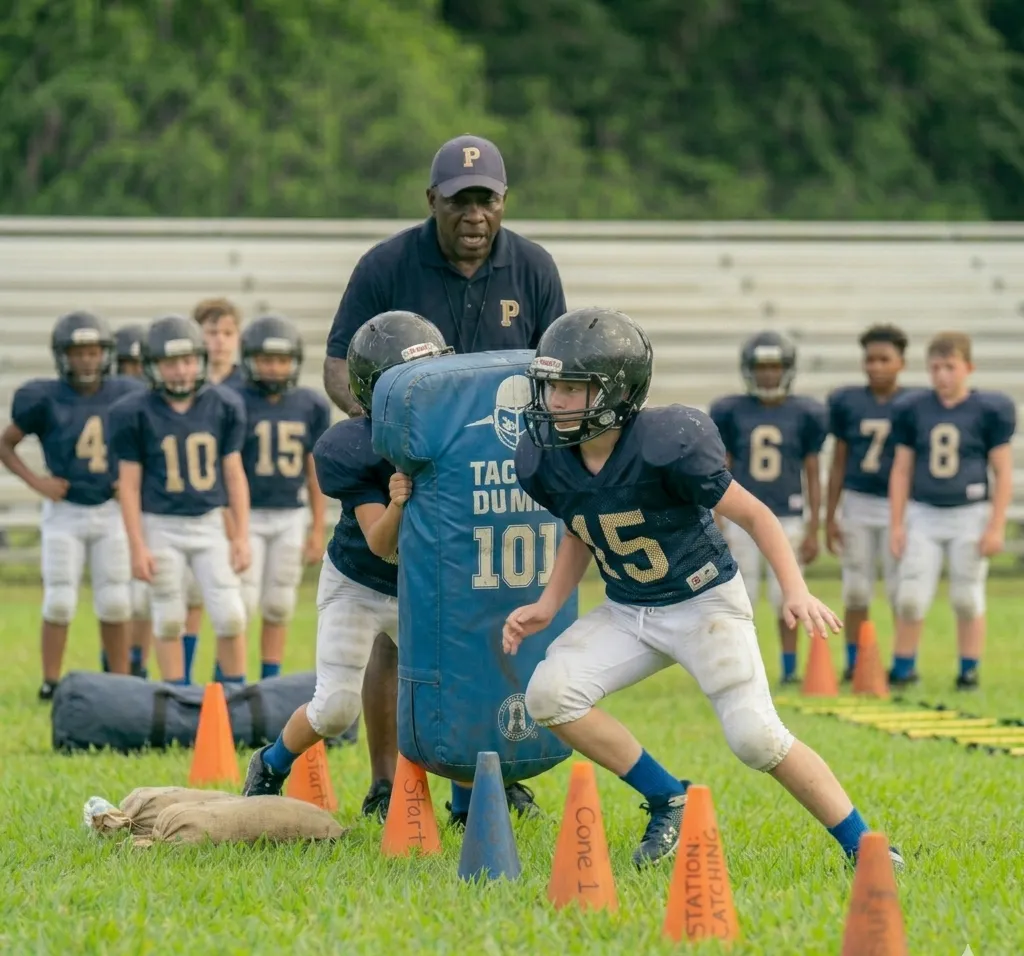
Setup: Place a tackling dummy ahead of the defender.
Execution: The defender approaches and drops into breakdown position before contact.
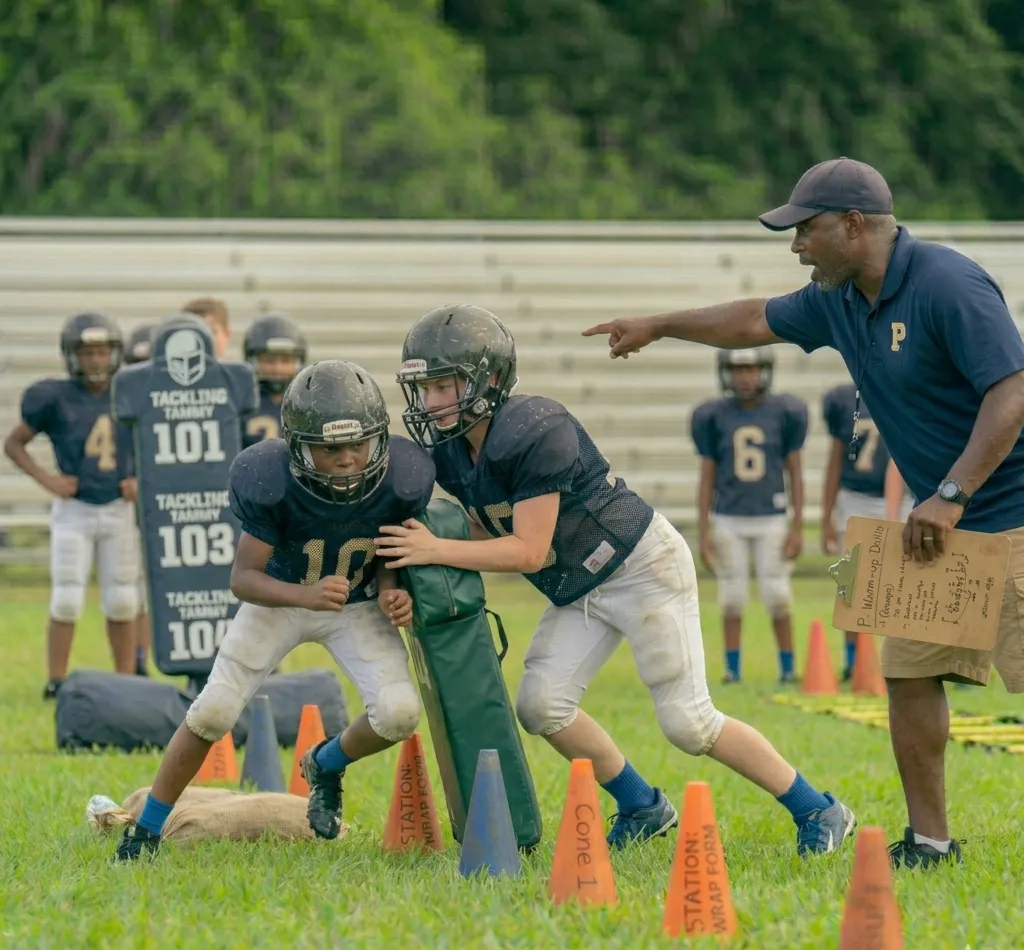
Form Tackling Drill
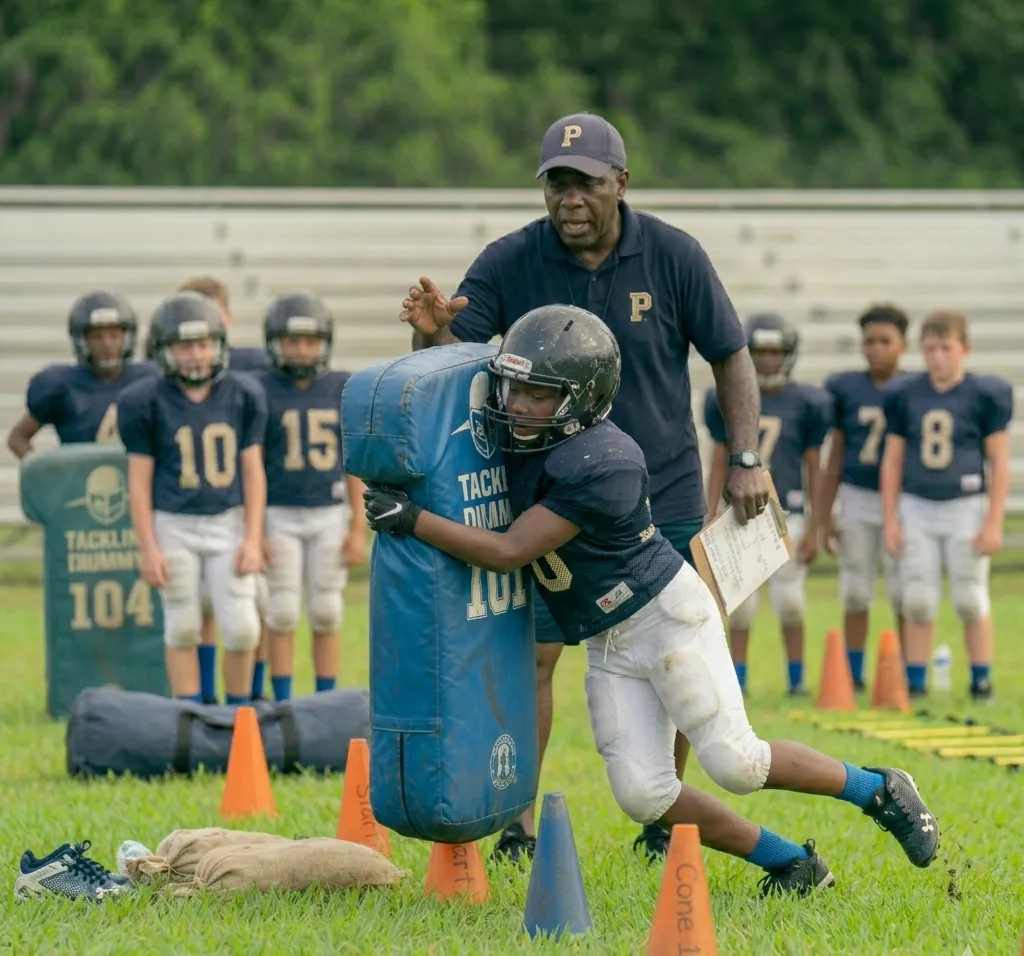
Setup: Use a tackling pad or dummy.
Execution: Practice shoulder contact, wrapping, and driving the legs.
Open Field Tackling Drill
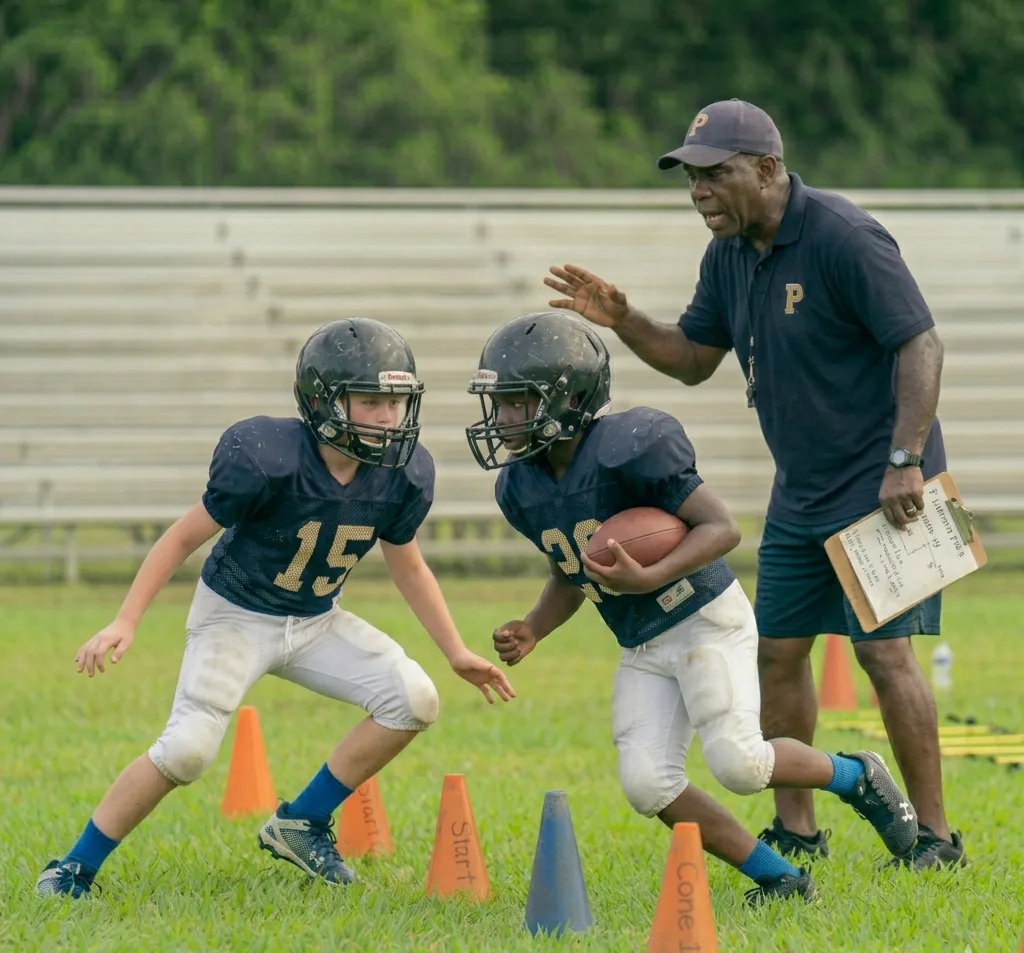
Setup: Mark an open space with cones.
Execution: The defender tracks the runner and makes the tackle in open space.
Tracking Drill
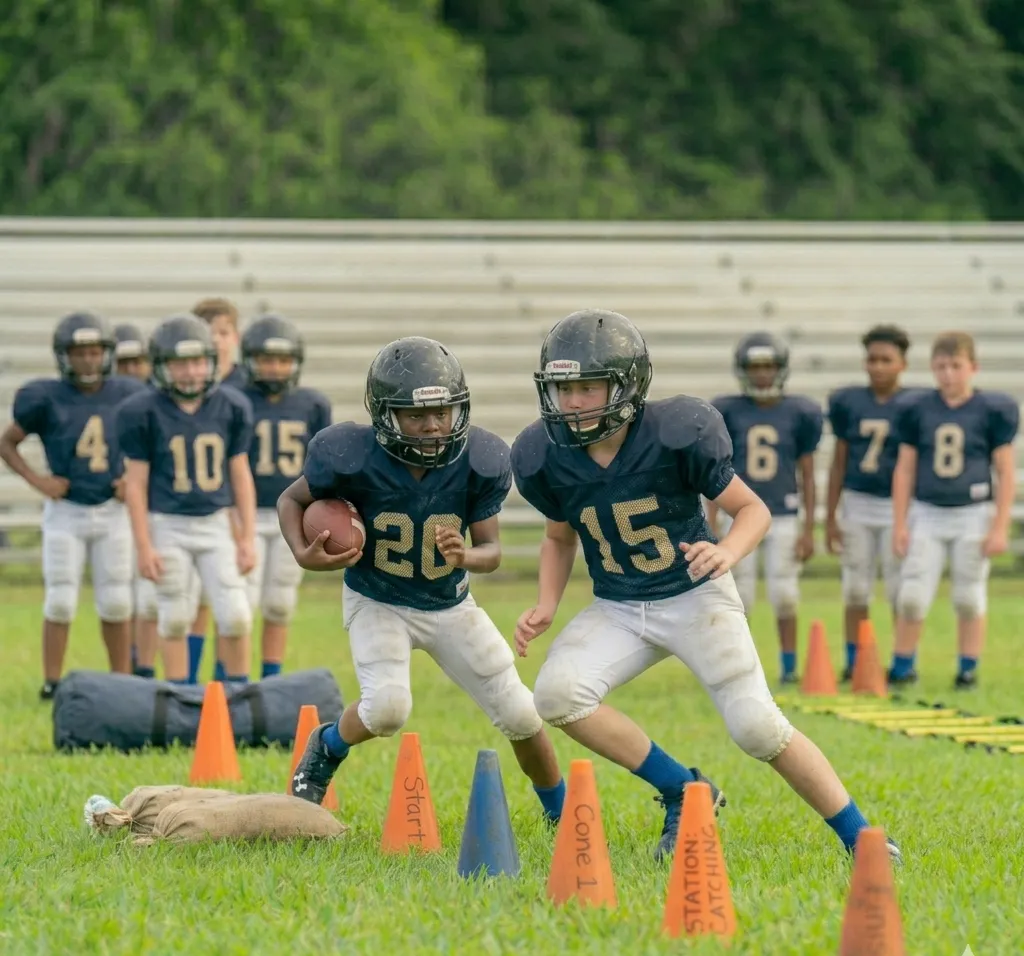
Setup: The runner starts ahead of the defender.
Execution: The defender adjusts pursuit angle while following the runner.
One-on-One Tackling Drill
Setup: Use a small area with two players.
Execution: The defender must stop the runner before reaching the goal line.
Tackling Drill Difficulty Levels
The table below shows tackling drills based on difficulty level.
| Level | Drills | Focus |
|---|---|---|
| Beginner | Tracking, Breakdown, Form | Balance |
| Intermediate | Angle, Sideline | Control |
| Advanced | Open Field, One-on-One | Timing |
Defensive Tackling Drills for Beginners
Defenders must also learn positioning.
- gap control drill helps defend running lanes
- contain drill helps stop outside runs
These drills improve defensive awareness.
Tackling Drills by Defensive Position
Different positions require different tackling styles.
- linebackers focus on inside tackles
- defensive backs focus on open field tackles
- linemen focus on short-distance tackles
Common Tackling Mistakes and Fixes
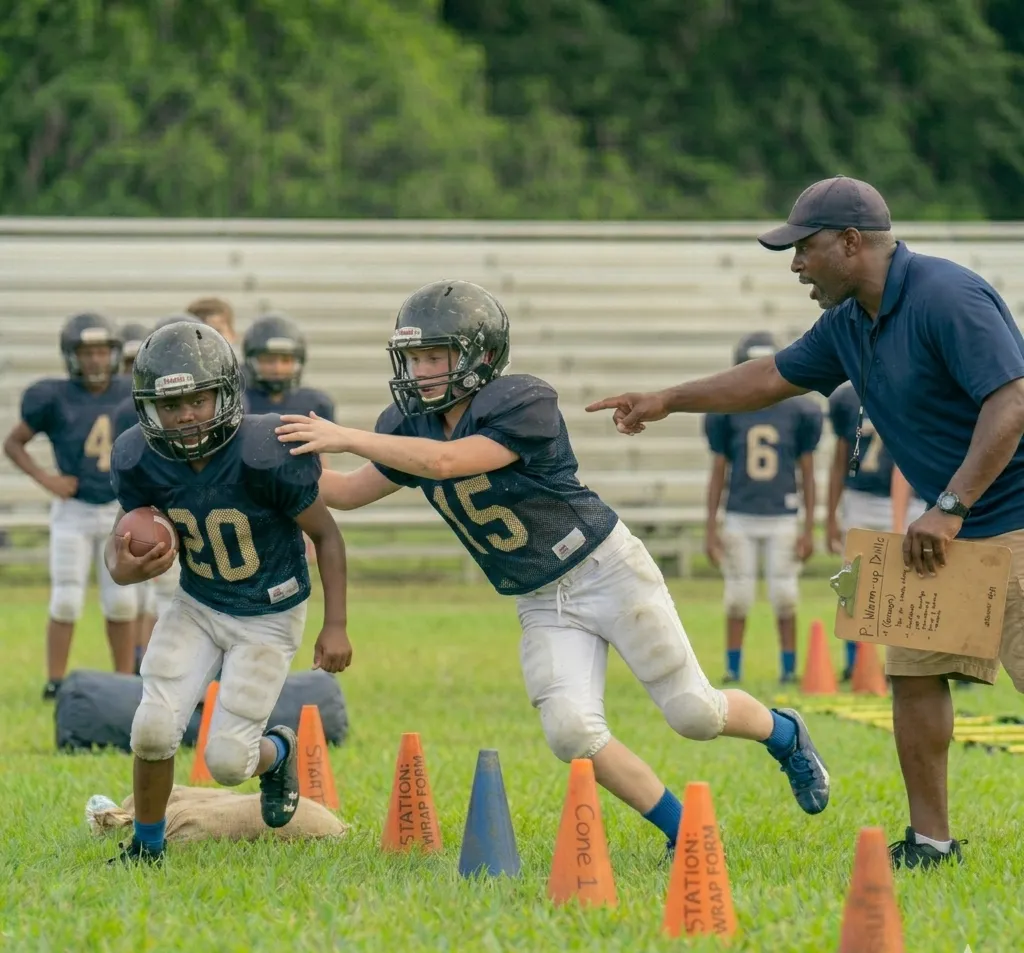
The table below shows common mistakes and how to fix them.
| Mistake | Fix |
|---|---|
| Dropping head | Keep eyes up |
| Arm tackling | Wrap arms |
| Bad angle | Adjust path |
| Stopping feet | Drive legs |
Equipment Used in Tackling Drills
Coaches use equipment to improve safety.
- tackling dummy
- blocking shield
- cones
- training pads
Coaching Cues for Tackling
Coaches use simple reminders:
- eyes up
- shoulder contact
- wrap tight
- drive feet
- stay low
Beginner Tackling Practice Plan
| Activity | Time |
|---|---|
| Warm up | 5 minutes |
| Tracking drills | 10 minutes |
| Form tackling | 10 minutes |
| Game drill | 5 minutes |
Conclusion
Tackling is one of the most important defensive skills in football, but it can be difficult for beginners to learn. From coaching experience, players improve the most when they focus on simple fundamentals like proper positioning, wrapping, and driving through contact. With regular practice using tackling drills for beginners, players gain confidence, improve technique, and become more reliable defenders. These skills help build a strong foundation for long-term football development.
FAQS
What are tackling drills for beginners in football?
Tackling drills for beginners are simple practice exercises that teach players how to safely and correctly stop the ball carrier. These drills focus on body position, shoulder contact, wrapping, and driving through the tackle.
How can beginners improve tackling skills in football?
Beginners can improve tackling skills by practicing form tackling drills, tracking drills, and breakdown position drills. Regular practice helps players build confidence and reduce missed tackles.
What is the safest tackling technique for youth football?
The safest tackling technique is to keep the head up, use the shoulder for contact, wrap both arms around the runner, and drive the legs forward. This helps reduce injury risk and improves control.
Why do beginner players miss tackles in football?
Beginner players miss tackles because of poor pursuit angles, arm tackling, stopping their feet during contact, or fear of contact. These issues can be fixed with proper drills and coaching.
What are the best tackling drills for beginners?
The best tackling drills for beginners include the angle tackling drill, form tackling drill, tracking drill, and open field tackling drill. These drills help improve technique and game performance.
How often should tackling drills be practiced?
Tackling drills should be practiced during every defensive training session. Consistent practice helps players develop strong habits and improve performance.
How do you tackle safely in youth football?
To tackle safely in youth football, players should focus on proper technique, avoid leading with the head, and practice controlled drills under coach supervision.
What are the most important tackling fundamentals?
The most important tackling fundamentals include staying low, keeping eyes up, using shoulder contact, wrapping the runner, and driving through the tackle.
Can beginners learn tackling without full contact?
Yes, beginners can learn tackling using non-contact drills like tracking drills and tackling dummy drills before moving to full contact practice.
